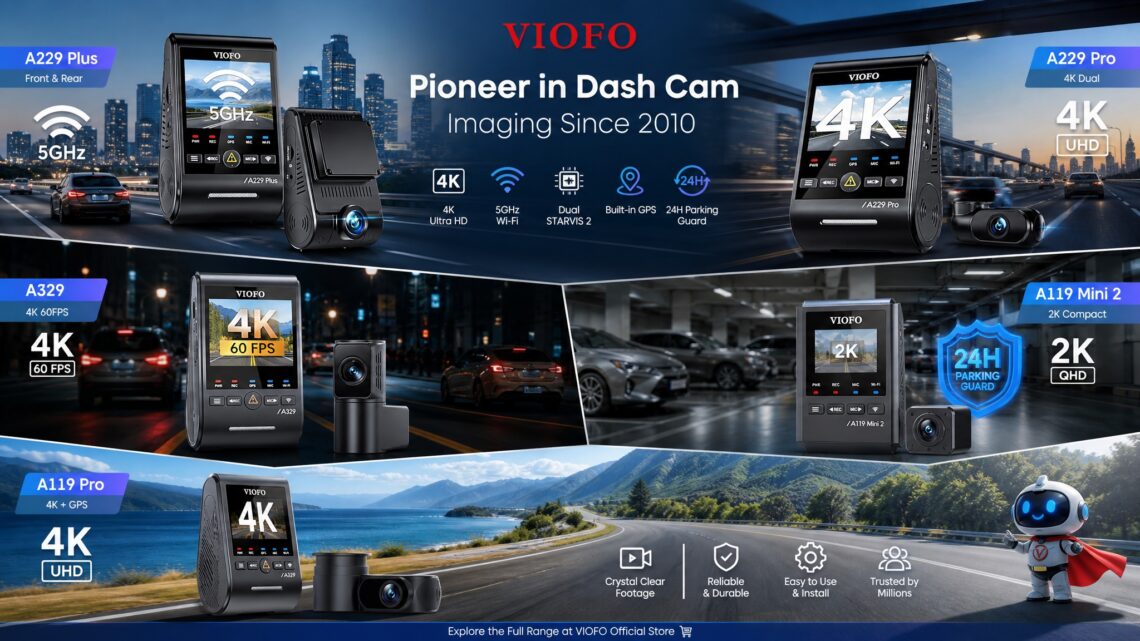
Choosing a dash cam used to be a niche decision—something for rideshare drivers or road trip enthusiasts. Today, it feels closer to essential equipment. Between unpredictable traffic, insurance complexities, and the simple desire to document the everyday, more drivers are quietly adding a camera to their windshield and forgetting about it—until they need it. That’s where a brand like VIOFO enters the conversation, not with flashy promises, but with a reputation built around dependable recording and thoughtful design.
This guide isn’t about chasing specs for their own sake. It’s about understanding what actually matters in a dash cam, how VIOFO approaches those priorities, and what kind of experience you can realistically expect when you install one in your car and let it run day after day.
Why 4K Recording Has Become the Baseline—Not a Luxury
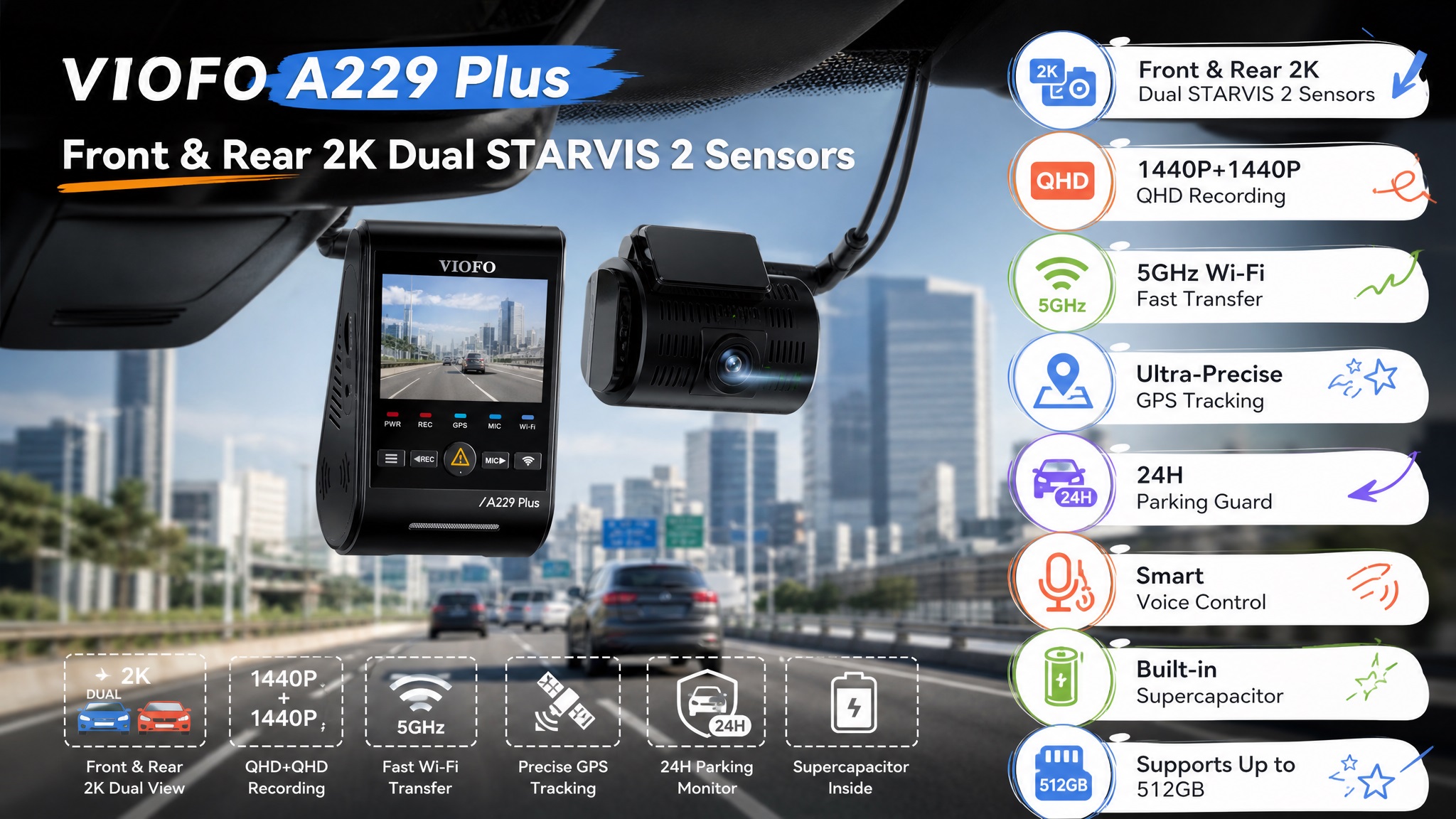
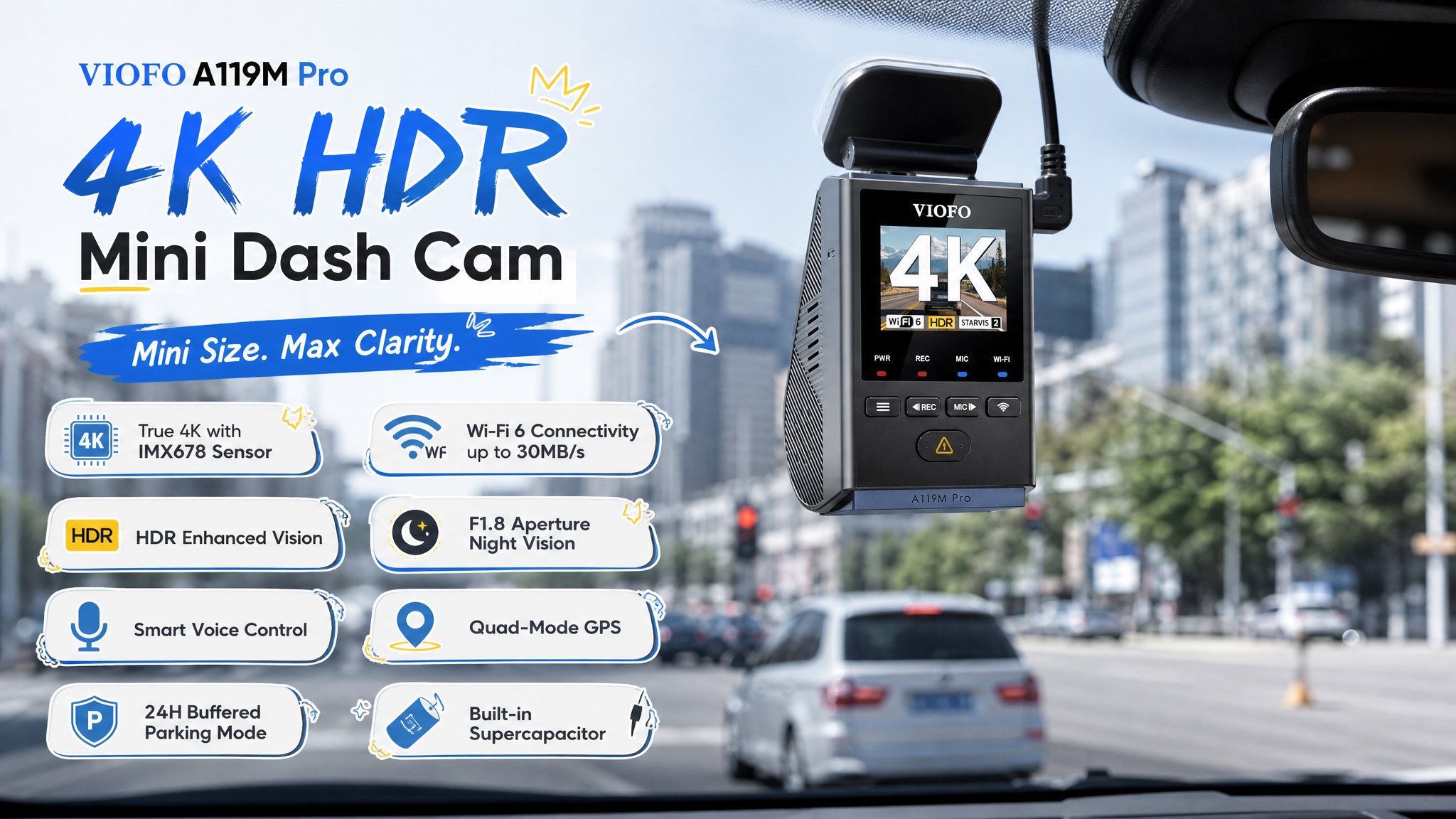
There was a time when “HD” felt sufficient. That time has passed. On modern roads, clarity isn’t just about nice-looking footage—it’s about capturing details that may matter later. License plates, road signs, lane markings, and subtle movements all benefit from higher resolution. In practice, 4K recording offers a wider margin of usefulness when conditions aren’t perfect.
Consider the everyday variables: glare from a low sun, nighttime driving under uneven street lighting, rain streaking across the windshield. In those moments, lower-resolution footage can quickly degrade into something ambiguous. With 4K, you’re not guaranteed perfection, but you’re far more likely to retain usable detail.
VIOFO has leaned into this shift by making high-resolution recording more accessible across its lineup. Rather than treating 4K as a premium add-on, it becomes part of the baseline experience. That shift reflects how drivers actually use dash cams today—not as novelty gadgets, but as passive witnesses.
The Quiet Importance of Sensor Quality
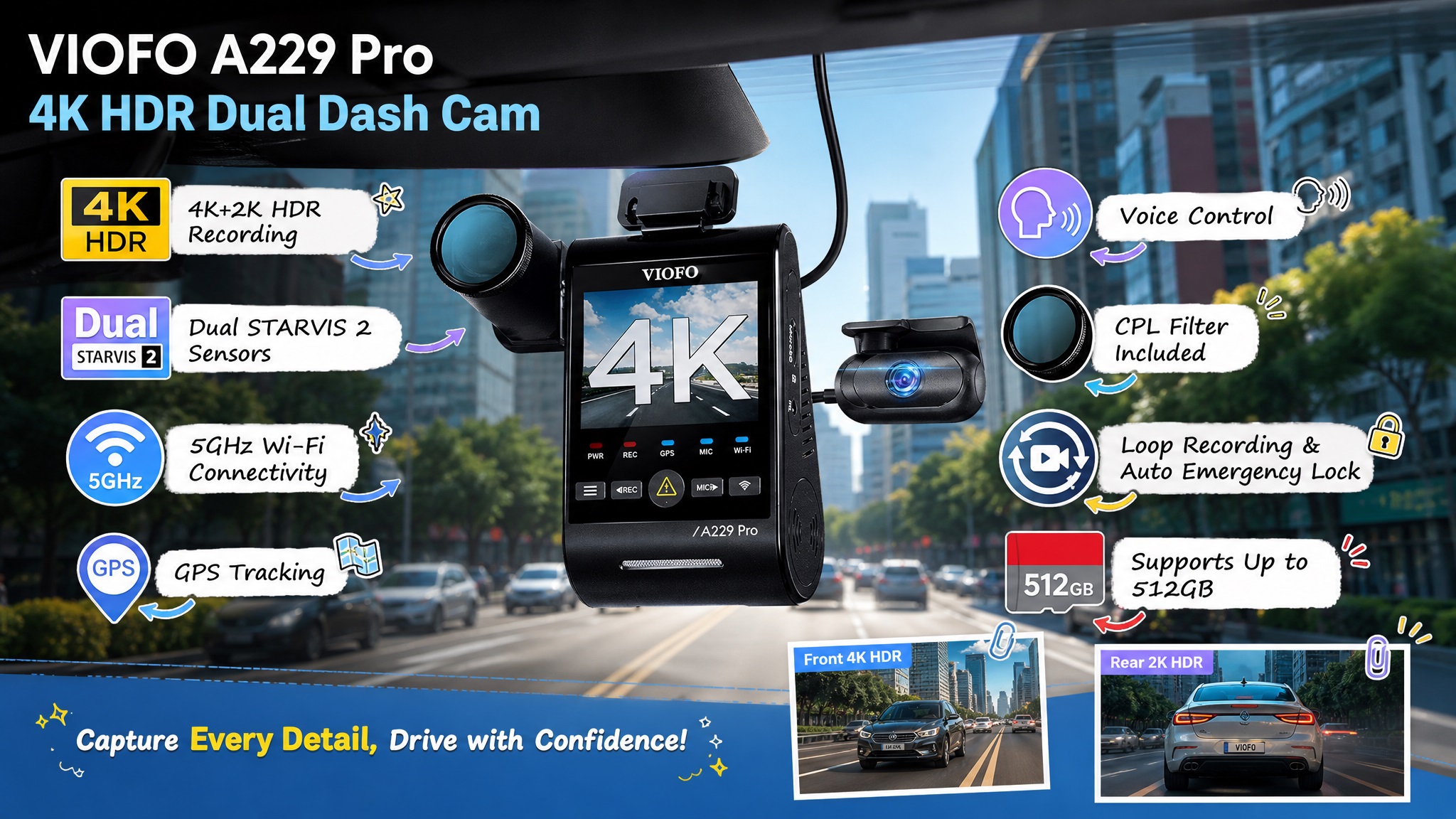
Resolution alone doesn’t tell the whole story. Anyone who has compared footage across different cameras knows this instinctively. Two dash cams can both claim 4K recording, yet produce dramatically different results. The difference often comes down to the image sensor and how it handles light.
VIOFO’s approach tends to emphasize balanced exposure and realistic color, rather than overly sharpened or artificially brightened footage. This matters because exaggerated processing can sometimes obscure fine details—the very thing you want to preserve.
In real-world driving, lighting conditions shift constantly. You move from bright sunlight into shadow, from well-lit highways to dim residential streets. A good sensor adapts without drawing attention to itself. You shouldn’t have to think about it—and that’s exactly the point.
Design That Doesn’t Compete for Attention
One of the more overlooked aspects of dash cams is how they fit into your daily driving experience. A camera that’s too large, too bright, or too intrusive can become an annoyance. Over time, even small inconveniences add up.
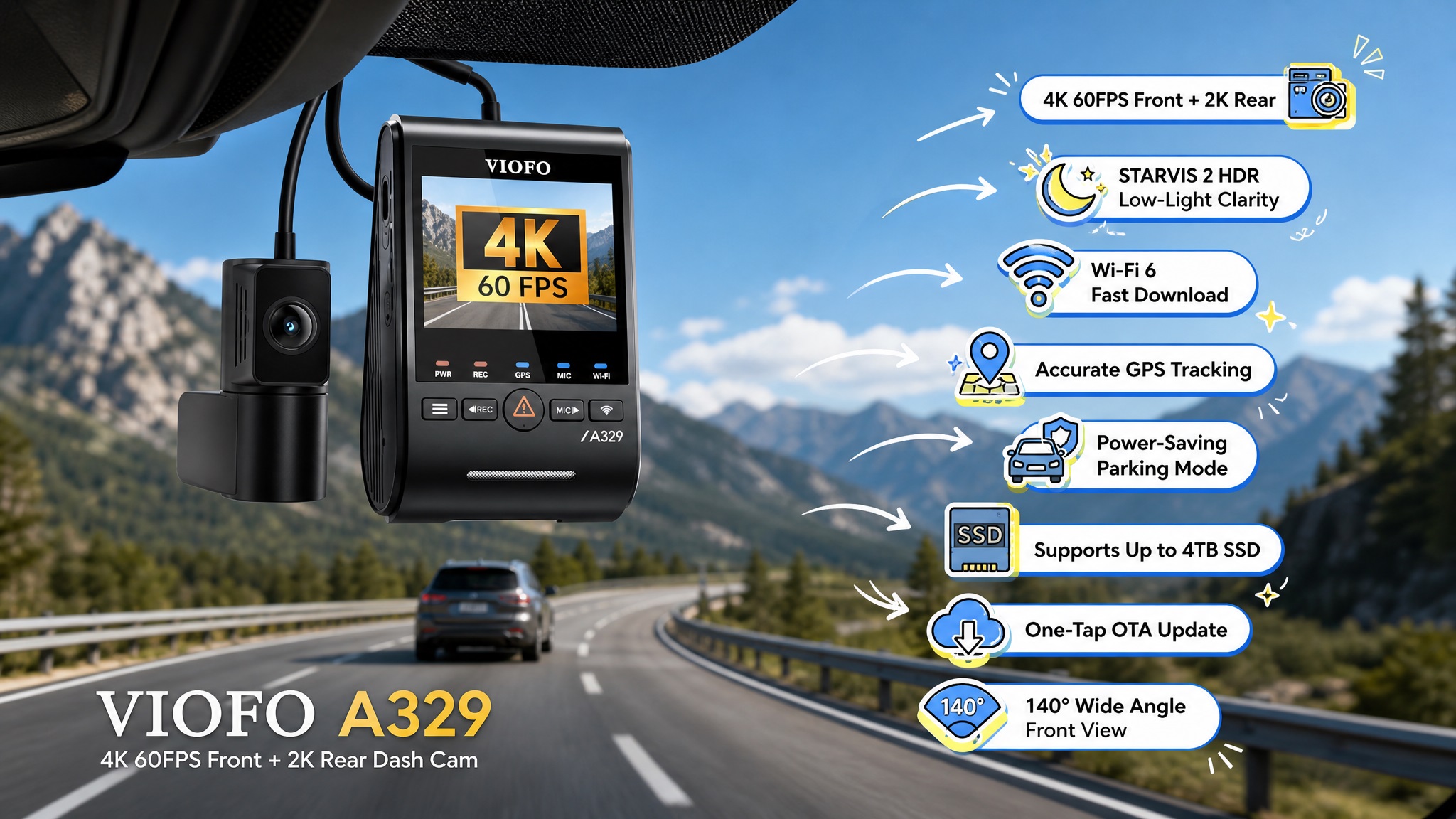
VIOFO devices tend to follow a low-profile design philosophy. They’re meant to sit discreetly near the top of the windshield, blending into the background rather than dominating your field of view. Buttons are typically minimal, and screens—if present—are functional rather than distracting.
This design approach reflects a broader idea: the best dash cam is one you forget is there. It powers on automatically, records without interruption, and quietly stores footage in the background.
Daily Reliability: The Feature That Matters Most
Specs are easy to compare. Reliability is harder to measure—and arguably more important. A dash cam isn’t useful if it fails at the moment you need it. That’s why consistency matters more than any single headline feature.
VIOFO has built a reputation around stable performance over long periods of use. This includes how the camera handles heat, manages storage, and maintains recording without freezing or dropping frames. These aren’t glamorous attributes, but they define the actual ownership experience.
For drivers in warmer climates, thermal performance becomes especially relevant. Dash cams sit in direct sunlight for hours at a time, often in enclosed spaces where temperatures rise quickly. A well-designed system accounts for this reality, using components that can tolerate prolonged exposure.

Parking Mode: Protection When You’re Not Around
Many incidents don’t happen while you’re driving—they happen when your car is parked. A minor fender bender in a parking lot, someone brushing past your vehicle, or even attempted theft can go unnoticed without some form of monitoring.
Parking mode addresses this gap. Depending on the configuration, it can record continuously at a lower frame rate, trigger recording when motion is detected, or capture events based on impact. The goal isn’t to record everything indiscriminately, but to preserve relevant moments without draining your car’s battery.
VIOFO’s implementation of parking mode tends to balance flexibility with practicality. Users can choose settings that align with their driving habits and parking environments, whether that’s a busy urban street or a quiet suburban driveway.
Storage and Loop Recording: The Invisible System
Dash cams rely on loop recording, continuously overwriting older footage as new footage is captured. This system ensures that you don’t need to manually manage storage—but it also raises questions about reliability and data integrity.
High-resolution recording generates large files, and not all storage solutions handle that load equally well. VIOFO devices are generally designed to work with high-endurance microSD cards, which are built to withstand frequent write cycles. This detail may seem minor, but it plays a significant role in long-term performance.
From a user perspective, the process is simple: install the card, format it periodically, and let the camera handle the rest. When an event occurs—either manually triggered or automatically detected—the relevant footage is locked to prevent overwriting.
Ease of Installation: A Practical Consideration
Even the best dash cam loses its appeal if installation feels complicated. Fortunately, most modern systems, including those from VIOFO, are designed with straightforward setup in mind.
Typically, installation involves mounting the camera to the windshield using an adhesive pad, routing a power cable along the edge of the interior trim, and connecting it to a power source. For those who want advanced features like parking mode, a hardwire kit may be required, but even that process is manageable with basic tools.
The key is that once installed, the camera operates automatically. There’s no need to press a button every time you start your car. It becomes part of the vehicle’s routine.
User Experience: Small Details That Add Up
Over time, it’s the small things that define how a product feels. Does the camera boot up quickly? Are menu options intuitive? Can you access footage without frustration? These details rarely appear in spec sheets, but they shape the overall experience.
VIOFO’s interface design tends to prioritize clarity over complexity. Menus are organized in a way that makes sense, even for users who aren’t particularly tech-savvy. Companion apps, where available, provide an additional layer of convenience, allowing you to review footage or adjust settings without removing the memory card.
This kind of usability matters because dash cams are long-term devices. You’re not interacting with them constantly, but when you do, you want the process to be smooth and predictable.
Comparing Everyday Use Cases
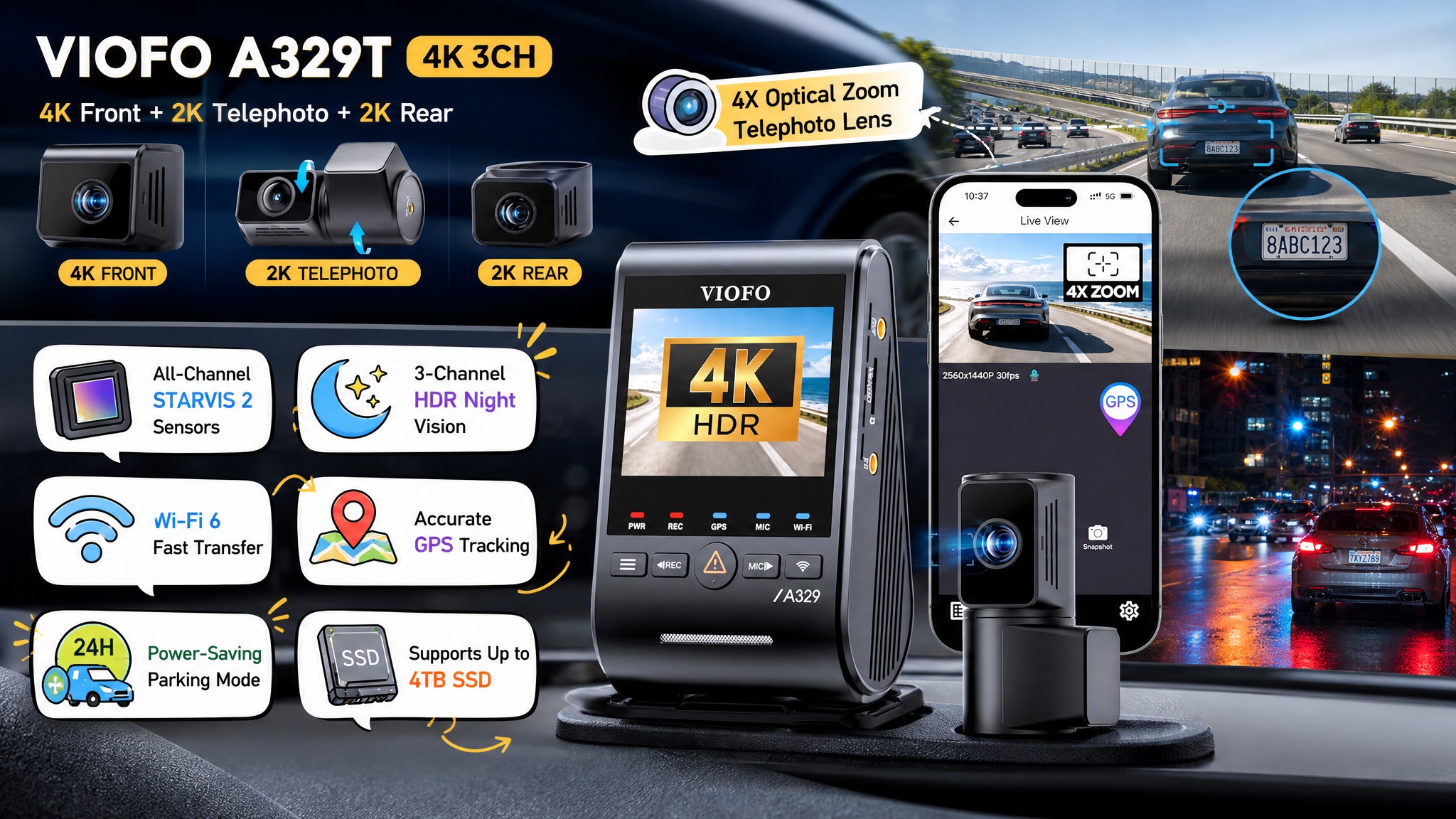
Different drivers have different expectations. A commuter navigating dense city traffic may prioritize wide-angle coverage and reliable event detection. A road trip enthusiast might care more about scenic capture and extended recording times. Meanwhile, rideshare drivers often look for dual-channel setups that record both the road and the interior.
VIOFO’s range reflects this diversity. Rather than offering a one-size-fits-all solution, it provides options that cater to specific needs. Some models emphasize front-and-rear recording, while others focus on ultra-high resolution for the front camera. The idea is to match the tool to the context, rather than forcing every driver into the same configuration.
This flexibility is part of what makes the brand approachable. You don’t need to overbuy features you won’t use, but you also have room to expand if your needs evolve.
Video Quality in Real Conditions
It’s easy to evaluate footage in ideal conditions—clear skies, open roads, and consistent lighting. Real driving is rarely so cooperative. That’s why it’s more useful to think about how a dash cam performs under less predictable circumstances.
At night, for example, the balance between brightness and noise becomes critical. Too much brightness can wash out details, while too little leaves important elements in shadow. During rain, reflections and water droplets can interfere with clarity. Even something as simple as driving through a tunnel introduces abrupt lighting changes.
VIOFO’s cameras are generally tuned to handle these transitions smoothly. The goal isn’t cinematic perfection, but dependable visibility across a wide range of conditions. In practice, that means footage that remains usable even when the environment isn’t ideal.
Long-Term Ownership: What Changes Over Time
One of the less discussed aspects of dash cams is how they age. Over months and years of use, components are exposed to heat, vibration, and constant operation. A camera that performs well initially may not maintain that performance indefinitely.
Durability, therefore, becomes part of the equation. VIOFO’s approach tends to emphasize components that can withstand extended use, particularly in challenging environments. This doesn’t eliminate wear entirely—no electronic device is immune—but it helps ensure that the camera remains functional over time.
From a practical standpoint, maintenance is minimal. Occasional checks of the memory card, firmware updates when available, and ensuring the lens remains clean are usually sufficient.
A Note on Expectations
It’s worth setting realistic expectations. A dash cam is a tool, not a guarantee. It won’t prevent accidents, and it won’t capture every detail perfectly in every situation. What it does offer is an additional layer of documentation—something that can provide clarity when events are unclear.
VIOFO’s strength lies in delivering that functionality consistently. It doesn’t rely on exaggerated claims or unnecessary complexity. Instead, it focuses on doing the core job well: recording clear, reliable footage whenever your car is in use.
Where It Fits in Everyday Driving
For many drivers, the decision to install a dash cam comes down to peace of mind. It’s not something you actively think about during your commute, but it’s reassuring to know it’s there. In that sense, the best dash cam isn’t the one with the most features—it’s the one that integrates seamlessly into your routine.
That’s ultimately where VIOFO positions itself. Not as a novelty or a luxury, but as a practical addition to modern driving. It reflects a broader shift in how we think about documentation, accountability, and everyday technology.
As more drivers adopt dash cams, the conversation is likely to evolve. Features will improve, designs will become even more refined, and expectations will continue to rise. But the core idea will remain the same: capturing the road as it is, in real time, without getting in the way.
And sometimes, that’s exactly what you need.