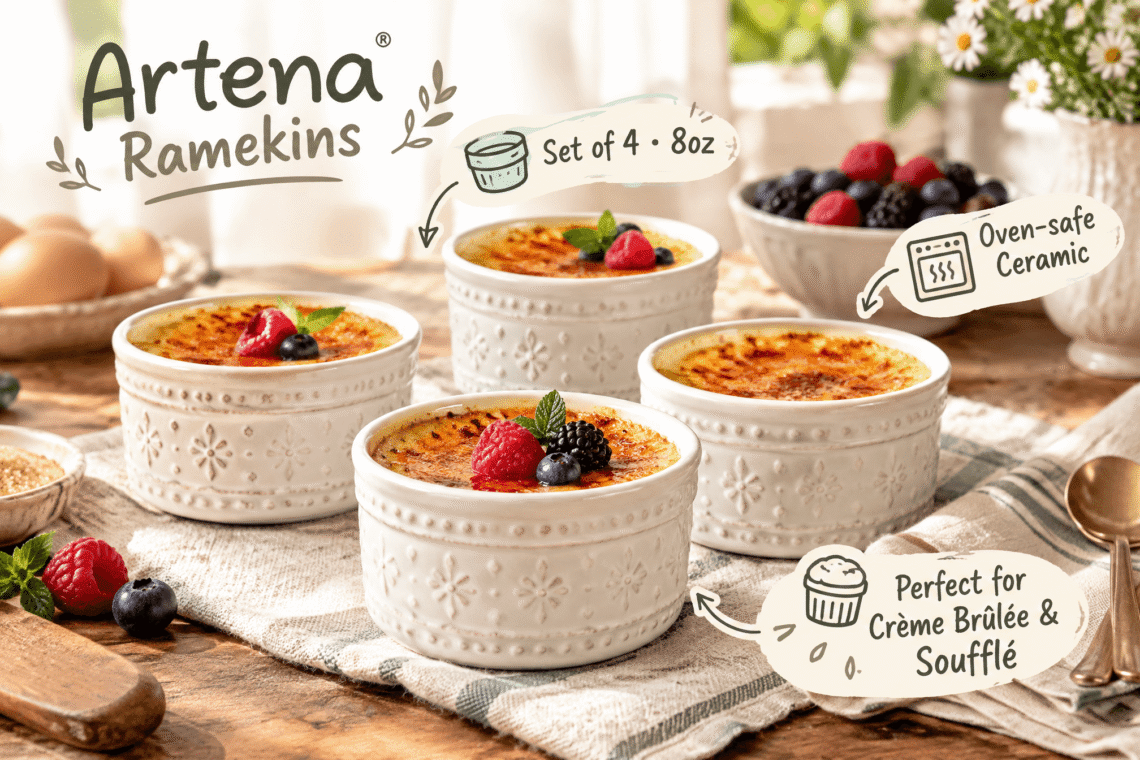
A good dinnerware brand does more than create objects that hold food. It quietly influences how breakfast is served, how leftovers are reheated, how a weeknight dinner is presented, and even how much space remains in the kitchen cabinet. Artena occupies this practical middle ground with ceramic tableware designed to bring visual detail into everyday routines without turning ordinary meals into formal occasions.
Rather than building its identity around a single statement piece, Artena appears to work through a connected system of bowls, plates, mugs, spoons, bakeware, and coordinated dinnerware. Texture, useful capacity, multipurpose shapes, and relatively restrained colors recur throughout the assortment. The result is a brand identity that feels decorative without becoming fragile-looking and functional without becoming purely utilitarian.
That balance is the most interesting way to understand Artena. The brand is not simply selling “pretty bowls.” It is developing a ceramic kitchen ecosystem in which individual pieces can move between quick breakfasts, family dinners, casual entertaining, reheating, serving, and storage-oriented routines.
The Artena Idea: Design That Starts With Daily Life
Artena‘s own brand description centers on the idea that design comes from life and connects its tableware with an elegant everyday lifestyle. Its current catalog reinforces that message through dedicated bowl, plate, mug, spoon, handled-bowl, and broader dinnerware categories rather than a narrow specialization in one product type.
That positioning matters because today’s kitchen is rarely divided into perfectly defined categories. A bowl bought for pasta may end up holding grain salads, roasted vegetables, curry, fruit, or dessert. A large mug can become a soup vessel. A casserole dish often goes directly from oven to table. Artena’s assortment increasingly reflects this overlap.
The company’s visual language also makes the catalog recognizable. Embossed exteriors, raised patterns, glazed interiors, white and blue variations, earth tones, and floral or botanical-inspired motifs recur across different product families. On Amazon, the brand presentation currently groups products such as baking dishes, embossed dinnerware, coffee mugs, pasta bowls, soup bowls, and ramen bowls with chopsticks under the same overall identity.
The useful distinction is that Artena generally uses decoration as surface detail rather than as visual overload. Texture adds personality, but the underlying shapes remain familiar. That makes the pieces easier to mix with existing flatware, serving boards, glasses, table linens, and other dinnerware already in the home.
Original Assortment Audit: Six Products, One Connected System
For this article, I reviewed the six selected Artena products as a small assortment rather than treating them as isolated listings. This is an original editorial product-line analysis, not a consumer survey. The goal is to identify what these six items collectively reveal about the merchant’s design priorities.
| Product | Format | Size or Capacity | Primary Role | Broader Use |
|---|---|---|---|---|
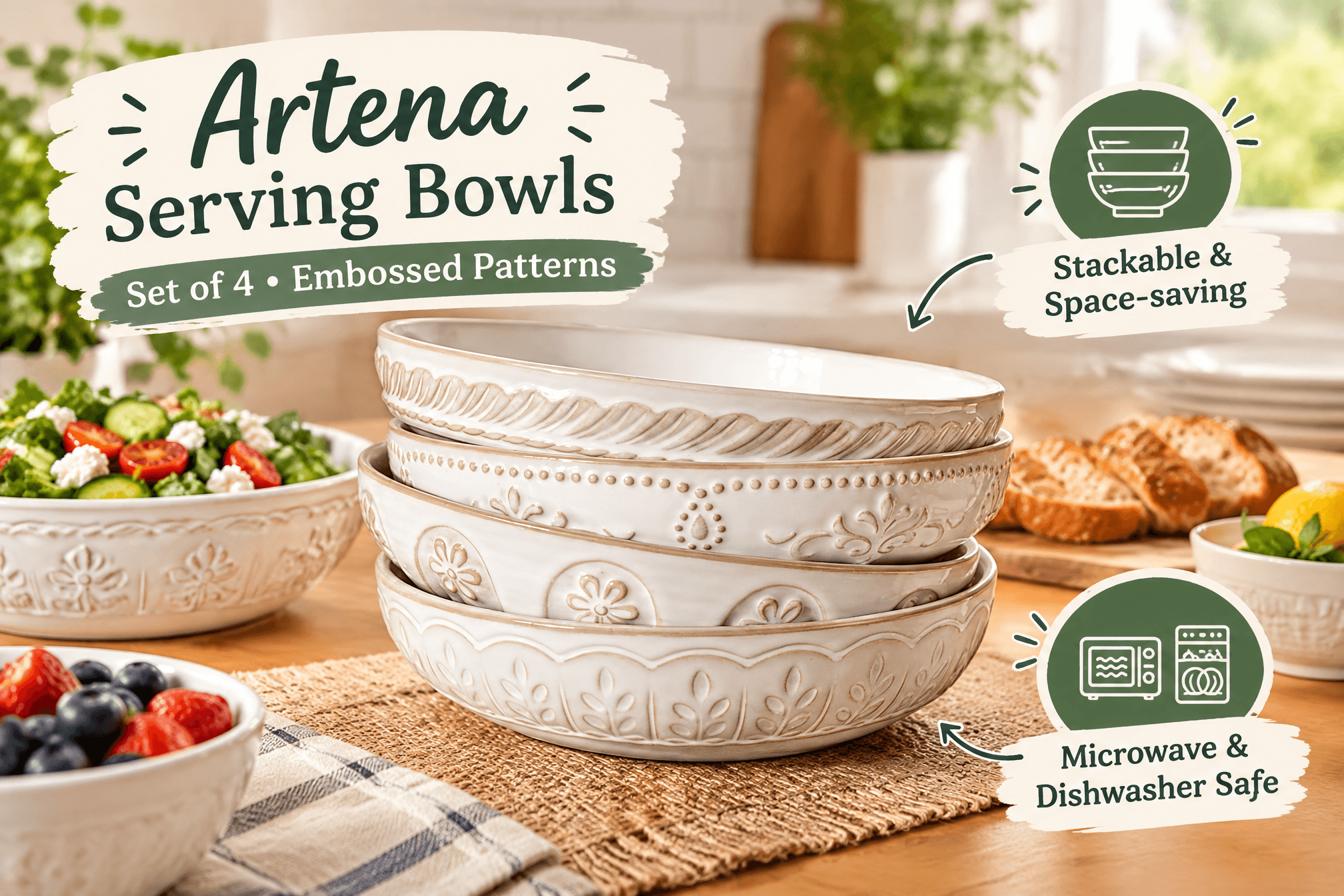
| Artena Pasta Bowls | Wide shallow ceramic bowls, set of 4 | 50 oz, 9.75 in | Pasta and salads | Entrées, soup, serving |
| Artena Baking Dish | Rectangular ceramic bakeware with lid | 5.1 qt | Casseroles and lasagna | Roasting, serving, potlucks |
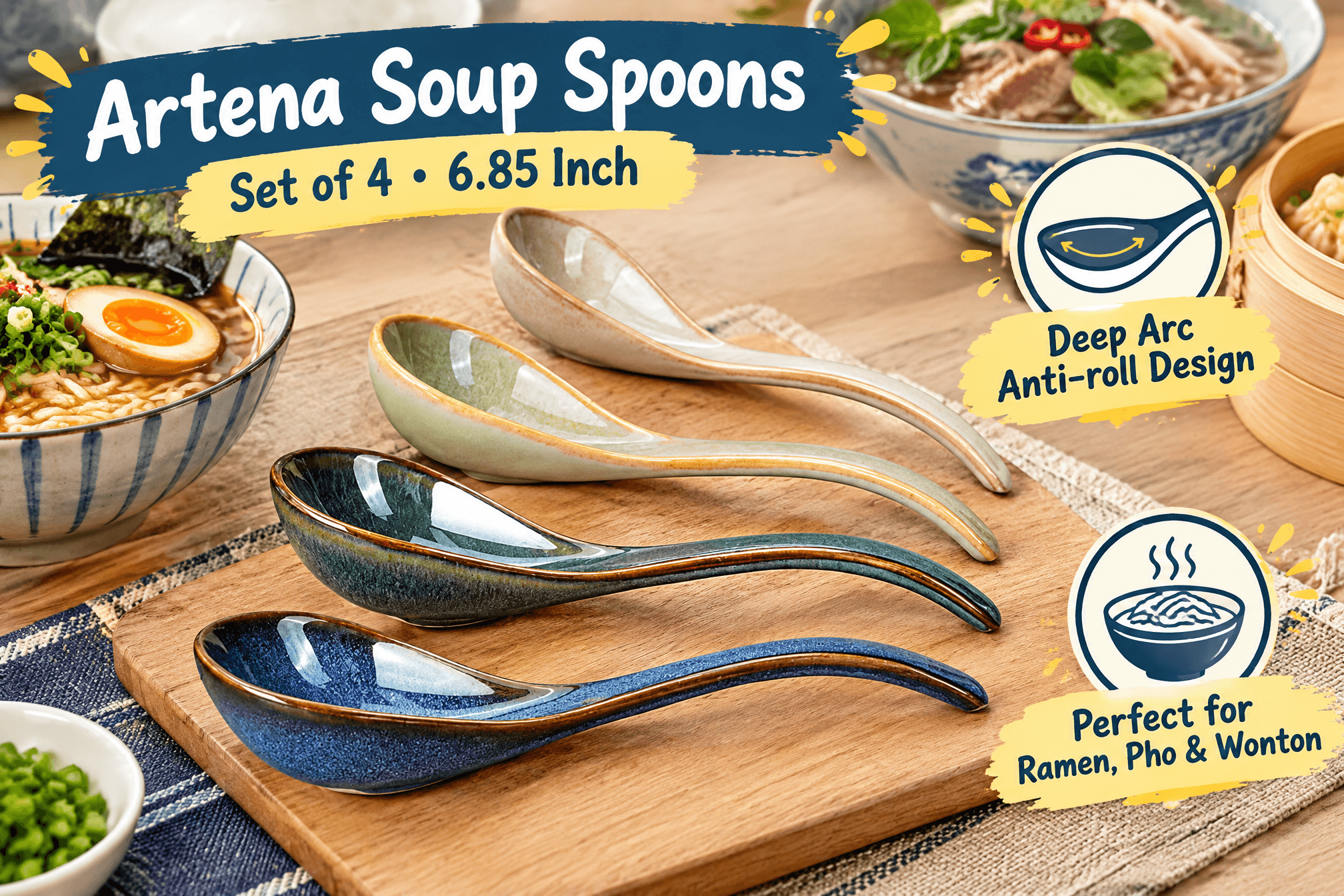
| Artena Chinese Soup Spoons | Ceramic spoons, set of 4 | 6.85 in | Ramen, pho, wonton soup | Asian-style meals and serving |
| Artena Soup Bowls | Embossed ceramic bowls, set of 4 | 32 oz, 6.3 in | Soup, noodles and cereal | Pasta, snacks, salads |
| Artena Coffee Mugs | Embossed ceramic mugs, set of 4 | 16 oz | Coffee, latte and tea | Cocoa, milk and generous hot drinks |
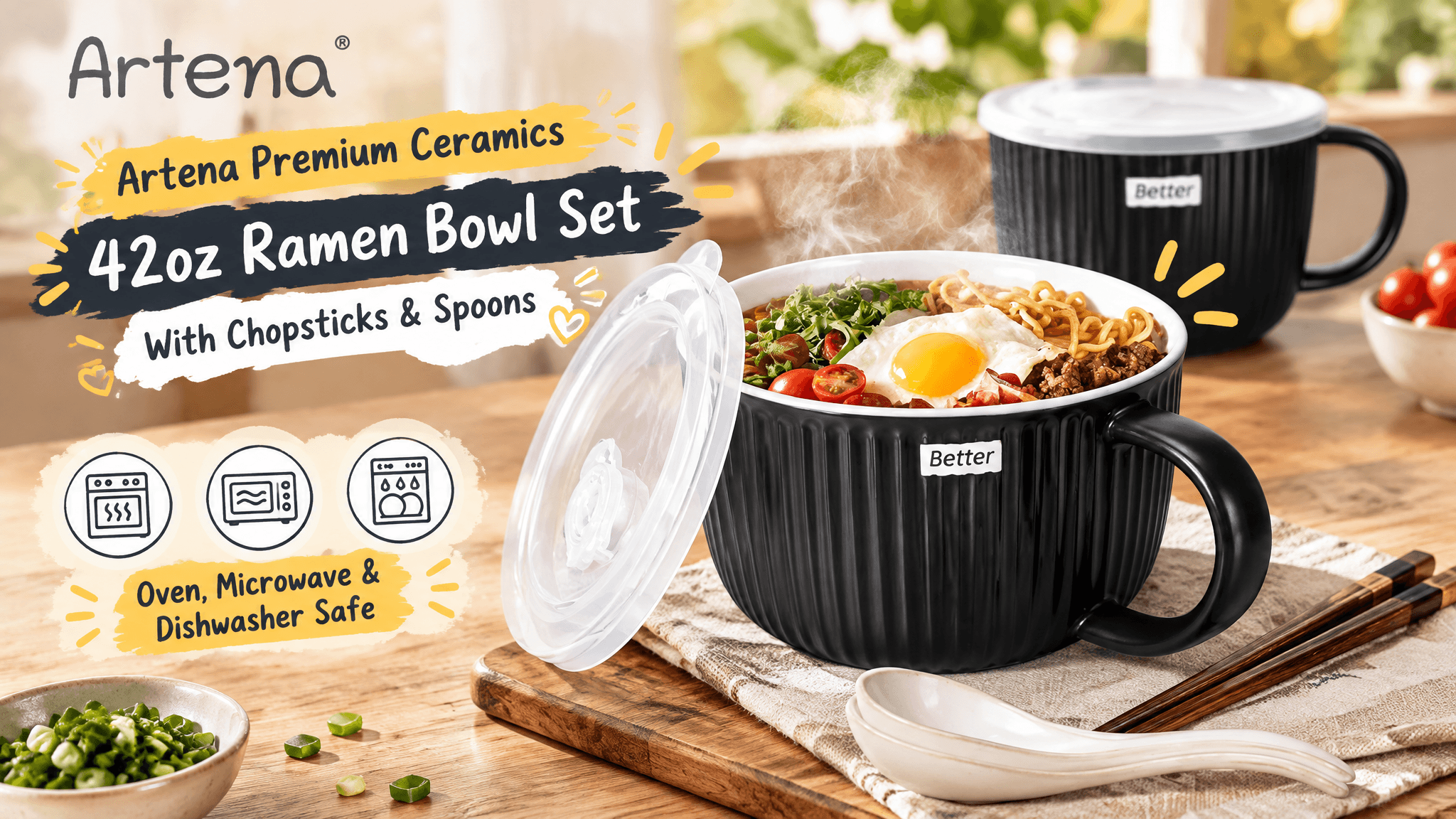
| Artena Handled Soup Bowl Sets | Bowls with lids, spoons and chopsticks, set of 2 | 38 oz, 6 in | Ramen and soup | Oatmeal, meal prep, reheating |
The pattern is revealing. All six products are ceramic-based, but they address very different moments in the kitchen. Four are centered around individual eating or drinking, one expands into family-size oven cooking, and one completes the experience with a specialized utensil. In other words, Artena is not simply repeating the same bowl in different dimensions; it is using a common material and design philosophy to solve adjacent kitchen needs.
The capacities are also intentionally generous. Fifty-ounce pasta bowls, 32-ounce soup bowls, 38-ounce handled ramen bowls, and 16-ounce mugs point toward a preference for comfortable everyday portions rather than miniature or highly formal tableware. That makes the assortment particularly relevant to modern one-dish meals, large salads, noodle dishes, grain bowls, soups, and casual dining.
Strategic Product Segmentation: The Artena Collection
Artena’s product portfolio is meticulously curated to cover every aspect of the dining experience. Rather than offering overwhelming and redundant choices, the brand focuses on mastering essential categories. Below is an analytical breakdown of their core offerings, demonstrating how each piece serves a distinct culinary purpose while maintaining a cohesive brand aesthetic.
Category 1: Dinnerware Essentials
The foundation of any table setting relies on versatile, high-capacity bowls that can handle everything from hearty salads to rich pasta dishes. Artena’s approach to everyday dinnerware emphasizes generous proportions and tactile textures that elevate simple meals.
- Artena Pasta Bowls (50oz): These large, shallow dinner bowls are designed with an elegant embossed pattern. Measuring 9.75 inches, they function perfectly as both serving dishes and individual plates for expansive meals. Their wide, flat base ensures stability, while the crisp white ceramic offers a pristine backdrop for vibrant ingredients.
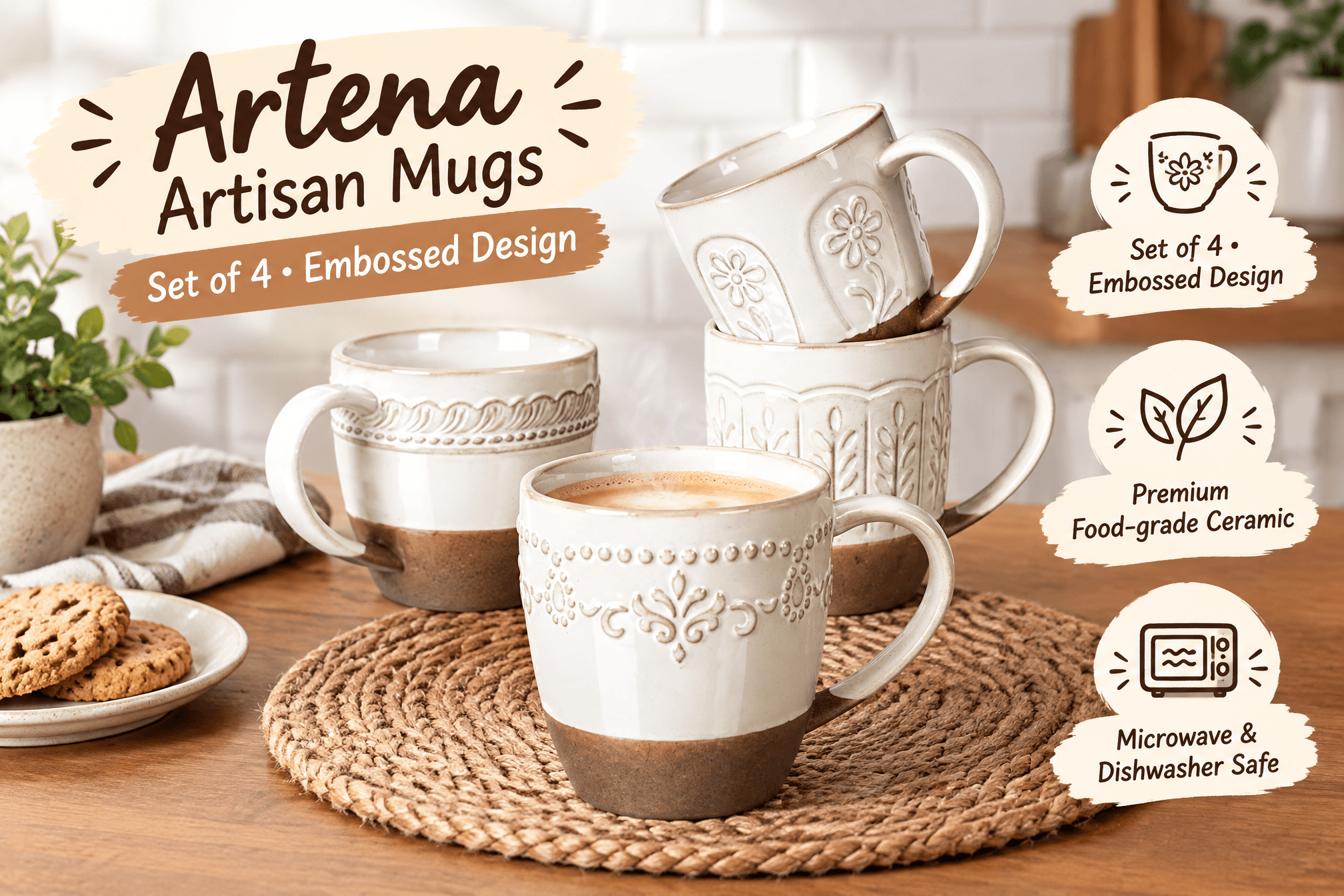
- Artena Soup Bowls (32oz): A mid-sized powerhouse, this set of four cereal bowls features a 6.3-inch diameter and a deep profile. They are the ideal vessel for morning oatmeal, evening ramen, or casual snacking. The embossed detailing matches the larger pasta bowls, allowing for a perfectly coordinated table setting.
Category 2: Professional-Grade Bakeware
Transitioning from stovetop preparation to oven baking requires specialized equipment. Artena’s bakeware line focuses on robust construction and ergonomic handling, ensuring that family-style meals can be cooked evenly and transported safely to the table.
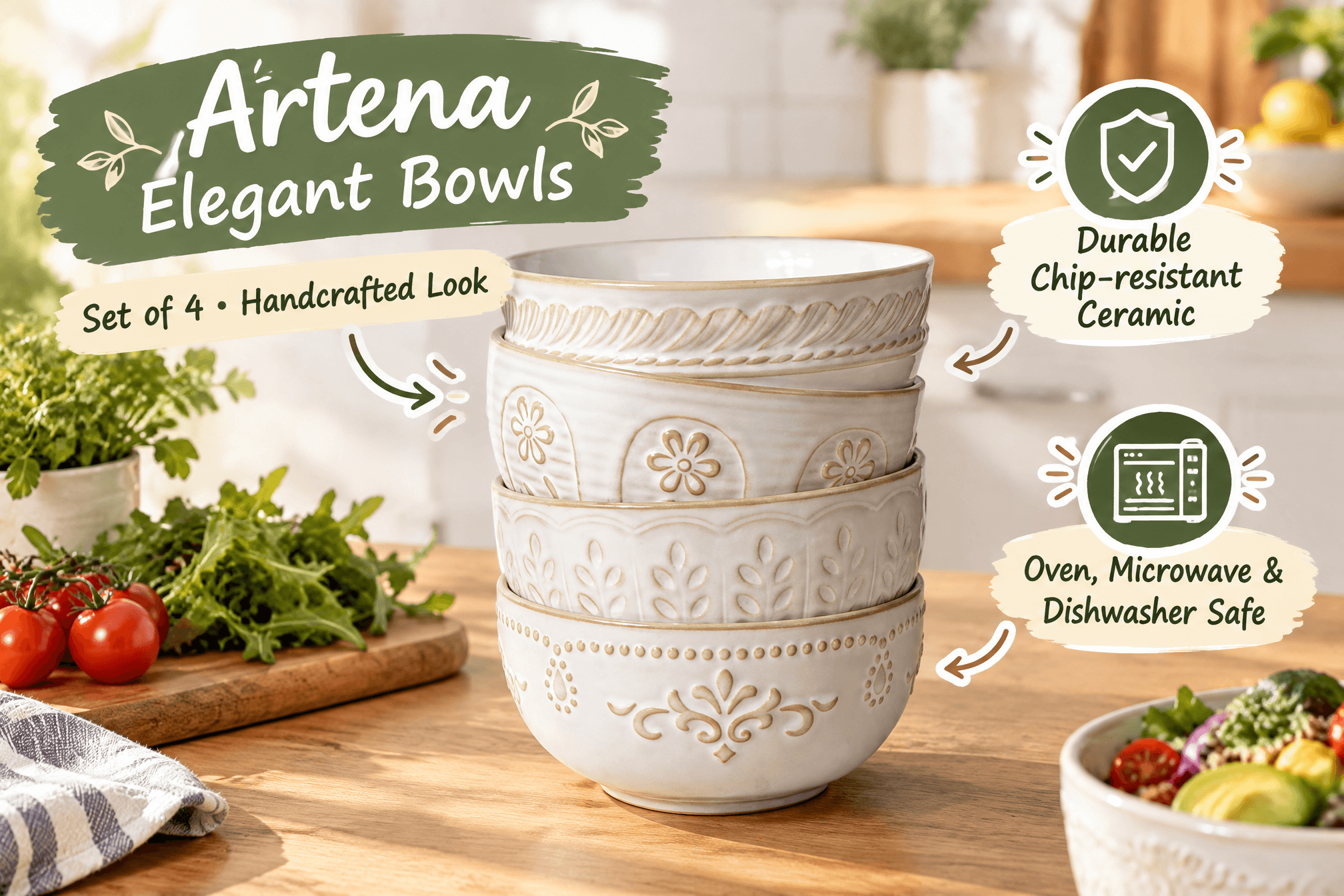
- Artena Baking Dish (5.1 Quarts): This rectangular casserole dish is a standout piece for heavy-duty cooking. Finished in a striking blue glaze and equipped with a matching lid, it is deep enough for multi-layered lasagnas or large roasted vegetables. The integrated handles provide a secure grip, making oven-to-table service effortless and secure.
Category 3: Specialty Dining & Accessories
To complete the culinary ecosystem, Artena offers specialized items tailored to specific dining traditions and daily rituals. These pieces showcase the brand’s attention to cultural nuances and ergonomic design.
- Artena 38 oz Soup Bowls with Handles: Designed for the ultimate comfort food experience, this set of two black ceramic bowls comes complete with lids, spoons, and chopsticks. The large handle prevents burns when holding hot broth, making it perfect for pho, instant noodles, or meal-prepped lunches.
- Artena Chinese Soup Spoons (6.85 Inch): Sold in a set of four with soothing earth tones, these spoons feature a deep arc, anti-roll design. They are meticulously crafted to rest securely on the edge of a bowl, preventing them from slipping into hot broths—a common frustration with standard Asian soup spoons.
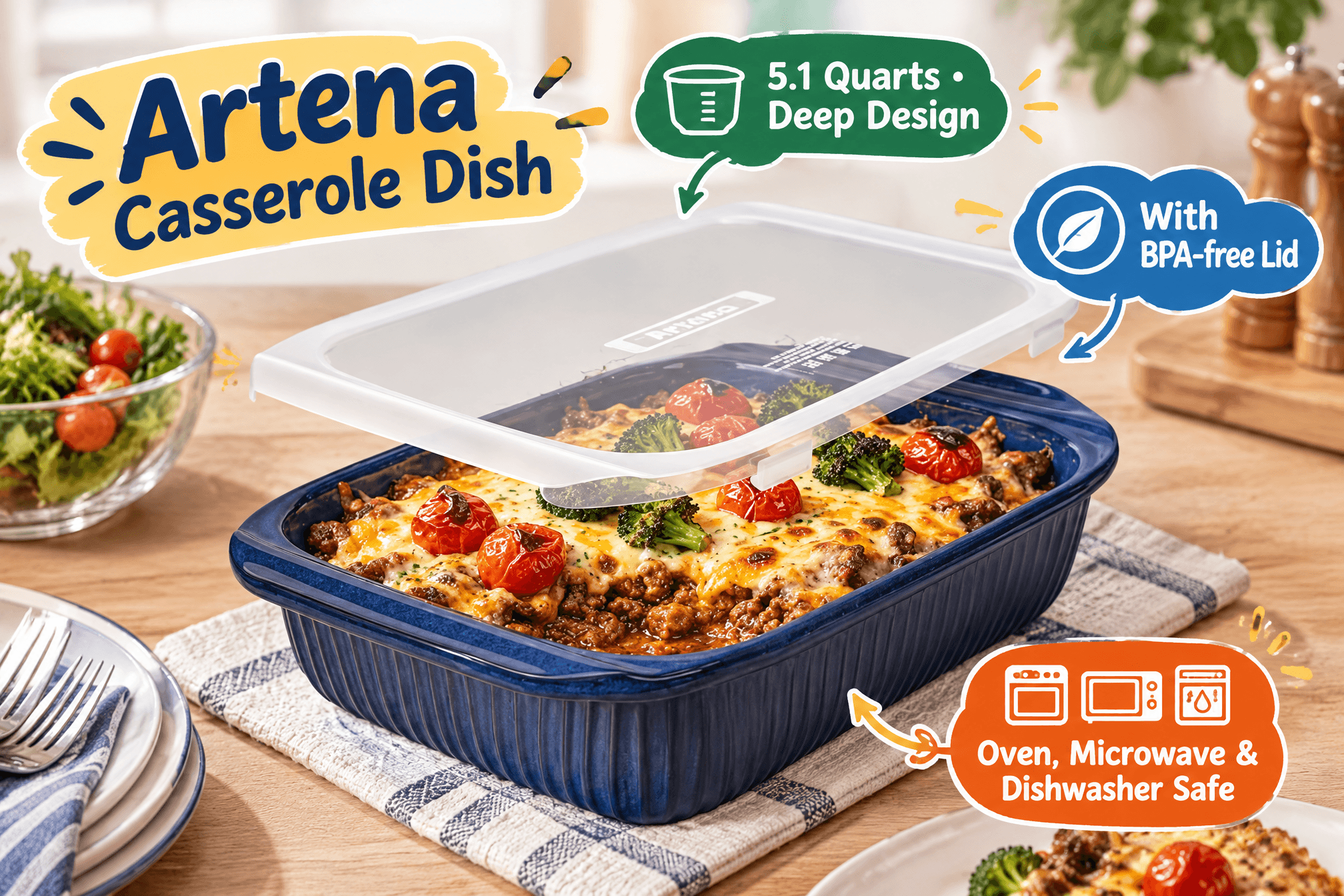
- Artena Ceramic Coffee Mugs (16oz): A set of four large latte mugs that bring coffeehouse elegance into the home. Featuring the brand’s signature white embossed patterns and a comfortable handle, these mugs are designed for heat retention, keeping tea, cocoa, and cappuccinos warm for extended periods.
Artena Product Specifications Overview
| Product Name | Capacity / Size | Material & Finish | Key Features |
| Pasta Bowls | 50 oz / 9.75″ | White Ceramic, Embossed | Shallow design, wide base, multi-use |
| Baking Dish | 5.1 Quarts | Blue Ceramic | Includes lid, side handles, deep rectangular build |
| Chinese Spoons | 6.85 Inch | Ceramic, Earth Tones | Deep arc, anti-roll hook design |
| Soup Bowls | 32 oz / 6.3″ | White Ceramic, Embossed | Deep profile, ideal for cereal/ramen |
| Coffee Mugs | 16 oz | White Ceramic, Embossed | Heat-retaining, large ergonomic handle |
| Noodle Bowls | 38 oz / 6″ | Black Ceramic | Includes lid/spoon/chopsticks, side handle |
Technical Guide: Maintaining High-End Ceramics
While Artena products are engineered for maximum durability and are fully microwave and dishwasher safe, proper care can extend the lifespan of high-quality ceramics indefinitely. Understanding the physical properties of vitrified clay allows consumers to prevent accidental damage and preserve the pristine glaze. Follow these technical, step-by-step instructions to maintain your Artena collection in showroom condition.
- Regulate Temperature Shifts: Never transfer a ceramic dish directly from the freezer to a preheated oven. While Artena ceramics are thermal-shock resistant, allowing the dish to come to room temperature first prevents micro-fissures in the glaze.
- Optimize Dishwasher Loading: Space your plates and bowls evenly in the dishwasher. Ensure that the edges of the ceramic pieces do not touch hard metal pots or pans, as the vibration during the wash cycle can cause chipping.
- Remove Metal Scuff Marks: Over time, stainless steel cutlery may leave gray scuff marks on white ceramic glazes. Create a paste using baking soda and warm water, apply it to the scuff, and gently rub with a non-abrasive sponge to lift the metal residue without scratching the plate.
- Avoid Harsh Abrasives: Do not use steel wool or heavily abrasive scouring pads on your ceramics. For baked-on food in the Artena casserole dish, soak the pan in warm, soapy water for 30 minutes to naturally loosen the debris before wiping it clean.
What the Rest of the Artena Catalog Adds
The six featured products represent only part of the merchant’s broader range. Artena’s current own-brand product catalog also includes dinner plates, additional pasta bowls, handled soup bowls, dinnerware sets, dip bowls, cups and saucers, and spoon collections. Its product listing currently shows multiple dinnerware configurations, including coordinated embossed plate-and-bowl sets.
This breadth supports an incremental purchasing strategy. A shopper does not necessarily need to replace every plate and cup in the kitchen at once. A set of pasta bowls can be the entry point. Mugs can follow later. Dinner plates, soup bowls, or serving pieces can then extend the same material and design vocabulary.
That modularity may be one of Artena’s strongest characteristics. The collection is coordinated enough to build around, yet varied enough that a home does not have to look like a showroom filled with one identical pattern.
A Practical Way to Build an Artena Kitchen
For shoppers interested in the brand but unsure where to begin, a function-first approach is more useful than simply buying the largest matching set available.
- Start with the meal you prepare most often. Frequent pasta, salad, rice, or grain-bowl cooks may benefit most from the 50-ounce pasta bowls. Soup and noodle households may find the 32-ounce or 38-ounce formats more practical.
- Add a second shape rather than another version of the first. If large bowls are already covered, mugs, dinner plates, spoons, or bakeware will expand functionality more effectively than buying another nearly identical bowl.
- Choose a visual anchor. White embossed ceramics are easier to integrate with existing dinnerware, while blue patterns or earth-tone accessories can introduce stronger contrast.
- Match capacity to routine. A 16-ounce mug makes sense for substantial hot drinks, while 38- and 50-ounce vessels make more sense for full meals than small side portions.
- Build around shared materials, not perfect matching. Artena’s recurring ceramic textures make it possible to mix shapes and patterns while maintaining a recognizable visual relationship.
This approach also reduces unnecessary duplication. The goal is not to own every item in the catalog; it is to select pieces that solve different problems while still looking intentional together.
Why Ceramic Safety and Care Deserve Attention
Design is only part of the evaluation of ceramic foodware. In the United States, the FDA maintains guidance concerning extractable lead and cadmium in ceramicware and differentiates limits according to the type of vessel. FDA materials also explain that ceramicware intended for food use is subject to safety considerations that do not apply in the same way to purely decorative pottery.
ASTM likewise maintains testing standards relevant to ceramic foodware. ASTM C738 covers testing for lead and cadmium extracted from glazed ceramic surfaces, while ASTM’s ceramic standards catalog includes C1607 for determining whether ceramicware is microwave-safe for reheating. These standards provide useful context for understanding the category, but their existence should not be interpreted as evidence that every individual Artena product has been certified under each ASTM method.
Several Artena listings state that products have passed SGS food-grade testing, and some specify lead- and cadmium-free ceramic. Those claims are useful product information, but careful shoppers should still read the instructions for the exact item purchased because materials, glazes, lids, accessories, and temperature limits can vary between products.
For long-term ceramic care, a few simple habits are sensible: follow the manufacturer’s heating limits, avoid unnecessary rapid temperature changes, inspect heavily damaged or cracked glazed pieces before continued food use, and follow the listed dishwasher or microwave instructions for each specific model.
The Broader Appeal of the Plate-Bowl Format
Artena’s emphasis on wide pasta bowls also places it within a larger shift in everyday dinnerware. Food and lifestyle publications have increasingly covered “blates” or plate-bowl hybrids because they handle dishes that are awkward on a flat plate but do not require the depth of a traditional bowl.
EatingWell specifically highlighted an Artena pasta bowl set for its ability to handle pasta, soup, salads, and other meals, while later coverage from Food & Wine and Southern Living included Artena among textured or versatile pasta-bowl options.
Third-party editorial inclusion does not automatically establish that one brand is better than another, but it does show that Artena’s central product concept fits a recognizable consumer preference: flexible dinnerware that works across multiple meal categories.
Where Artena’s Brand Strategy Feels Most Distinct
After examining the assortment, the most interesting element is not any single decorative pattern. It is the consistency between appearance and function.
The brand repeatedly combines three ideas:
- Visual texture: embossing, relief patterns, reactive-style finishes, and restrained decorative motifs.
- Generous everyday sizing: larger bowls and mugs designed around complete meals rather than formal portioning.
- Cross-purpose utility: products positioned for several foods, occasions, or preparation methods instead of a single narrowly defined task.
That combination gives Artena a relatively clear lane. It is more decorative than plain restaurant-style whiteware but more adaptable than highly ornamental dinnerware reserved for entertaining.
There is also a useful contrast between the brand’s pieces. The 50-ounce pasta bowls are open and presentation-oriented. The 32-ounce bowls are deeper and more compact. The handled 38-ounce set is routine-specific. The casserole dish addresses communal cooking. The spoons add meal-specific functionality, and the mugs extend the collection into beverages.
Taken together, they form a surprisingly complete map of everyday eating.
Who Is Most Likely to Appreciate Artena?
Artena makes particular sense for households that want visual detail without giving up practicality. Someone who serves pasta one night, curry the next, salads for lunch, and noodles on the weekend will likely get more value from multipurpose pieces than from highly specialized formal dinnerware.
The brand may also appeal to people building a kitchen gradually. Because the assortment includes individual categories as well as broader dinnerware sets, shoppers can begin with the product that solves an immediate need and expand later.
Small-space kitchens may particularly appreciate pieces capable of serving several roles. A wide pasta bowl can sometimes replace a dinner plate, salad bowl, and shallow serving dish for different meals. That does not eliminate the need for every other piece of tableware, but it can reduce the number of narrowly specialized items competing for cabinet space.
Finally, Artena can work for casual hosts who want serving pieces that look finished enough to place directly on the table. Embossing and ceramic construction give even simple meals a visual frame without requiring elaborate plating.
Final Perspective: Artena Is Building Around Everyday Flexibility
The strongest way to understand Artena is not as a collection of individual Amazon listings but as a developing ceramic design system.
The merchant’s official positioning connects design with everyday life, and the product catalog makes that philosophy tangible. Wide pasta bowls handle complete meals. Deep soup bowls cover breakfast through dinner. Mugs extend the embossed aesthetic into daily coffee. Ceramic spoons complement noodle and broth dishes. A large casserole dish moves the brand into family cooking, while handled soup-bowl sets address reheating, ramen, and individual meal routines.
There is a consistent principle underneath these variations: make practical forms feel more considered.
That is a useful direction for a contemporary tableware brand. Many households no longer reserve one set of dishes for formal dinners and another for ordinary life. They want the everyday set to look good enough for guests and the attractive set to be practical enough for Tuesday night.
Artena appears designed for that overlap.
Its embossed ceramics bring texture without demanding an elaborate table setting. Its larger capacities support the way many people actually eat today. Its range allows the same visual language to travel from coffee to noodles, pasta, baked meals, and shared dinners. And because the catalog extends across bowls, plates, mugs, spoons, and bakeware, shoppers can build a collection around their own routines rather than accepting a fixed definition of what a dinnerware set should contain.
For Artena, the opportunity is therefore bigger than selling another ceramic bowl. The brand’s more compelling proposition is a flexible kitchen in which objects can look distinctive, perform several jobs, and remain appropriate for both ordinary meals and occasions worth setting the table for.