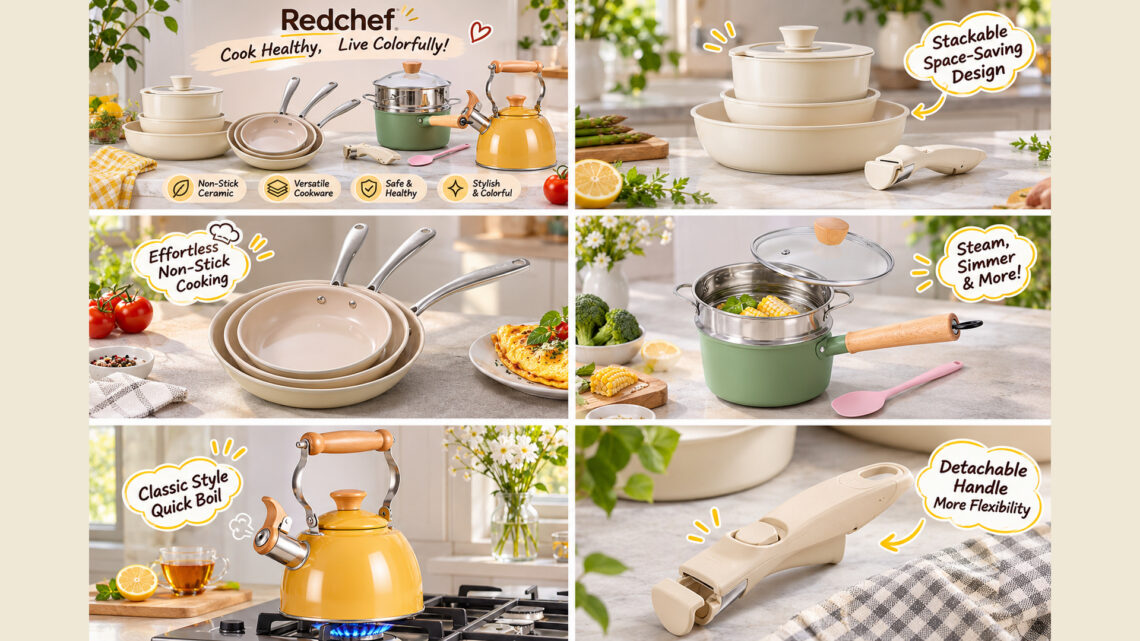
There’s a quiet shift happening in home kitchens, and it doesn’t involve fancy gadgets or a new five-star recipe. It’s happening at the stove, where a growing number of home cooks are replacing their scratched, chemical-releasing skillets with something simpler: Redchef cookware, built around a ceramic nonstick surface that ditches PTFE, PFOA, and the broader family of PFAS compounds entirely.
If you’ve shopped for a frying pan in the last few years, you already know the landscape is noisy. “Healthy” claims, diamond dots, marble speckles, and titanium swirls all compete for your attention. This post takes a different angle. Instead of adding another product roundup to the pile, we’re going deep on one brand — who Redchef is, what its cookware is actually made of, how it performs in a real week of cooking, and why a small, design-obsessed team from China has managed to win a loyal following among renters, RV travelers, and families who cook every single night.
Why the Nonstick Pan Problem Finally Demanded a Better Answer
For decades, the classic nonstick pan was treated as a disposable appliance. You bought it cheap, cooked with it, and tossed it the moment the coating began to flake. That cycle was never sustainable — for your budget, for your kitchen counter, or for the planet.
The problem reached a turning point as research into “forever chemicals” matured. The U.S. Food and Drug Administration tightened guidance on per- and polyfluoroalkyl substances, and the European Food Safety Authority updated its risk assessment in 2023, flagging PFAS accumulation as a long-term concern. Suddenly, the old bargain skillet didn’t feel like such a bargain.
💬 Speak up, home cook: “I threw out my pans after reading the EFSA report. But replacing them with stainless steel meant I had to relearn every recipe I owned. I just wanted something that worked like my old skillet without the chemistry homework.” — Maya R., home cook in Portland
That quote captures the real demand in today’s cookware market. People don’t want a lecture; they want a pan that eggs won’t stick to, that cleans in thirty seconds, and that doesn’t ask them to sign a chemical disclosure.
Meet Redchef: A Brand Built Around the Pan You Actually Use
Redchef (红厨) is a cookware brand rooted in the ceramics-first manufacturing belt of Jiangmen, in southern China. Unlike legacy cookware houses that diversified into nonstick as an afterthought, Redchef started with ceramic coating as its core thesis.
The brand’s identity rests on three commitments it repeats consistently across its product pages:
- A chemical-free nonstick surface. A triple-layer ceramic coating applied over a forged aluminum body, certified free of PFAS, PTFE, PFOA, lead, and cadmium.
- Universal stovetop compatibility. Every Redchef pan works on gas, electric, halogen, and induction cooktops — an increasingly important feature as more apartments move to induction.
- Design that fits smaller living spaces. Detachable handles and nested stacking let sets take up dramatically less cabinet room.
None of this is flashy. There’s no self-stirring motor, no app, no Bluetooth temperature readout. Redchef sells the boring, dependable virtues that good cookware has always promised — and it delivers them without the stain of forever chemicals.
The Redchef Product Lineup at a Glance
Redchef’s range is deliberately narrow, which is itself a design statement. Here’s what the brand currently centers its storefront around:
| Product Series | Typical Sizes | Notable Feature | Best For |
|---|---|---|---|
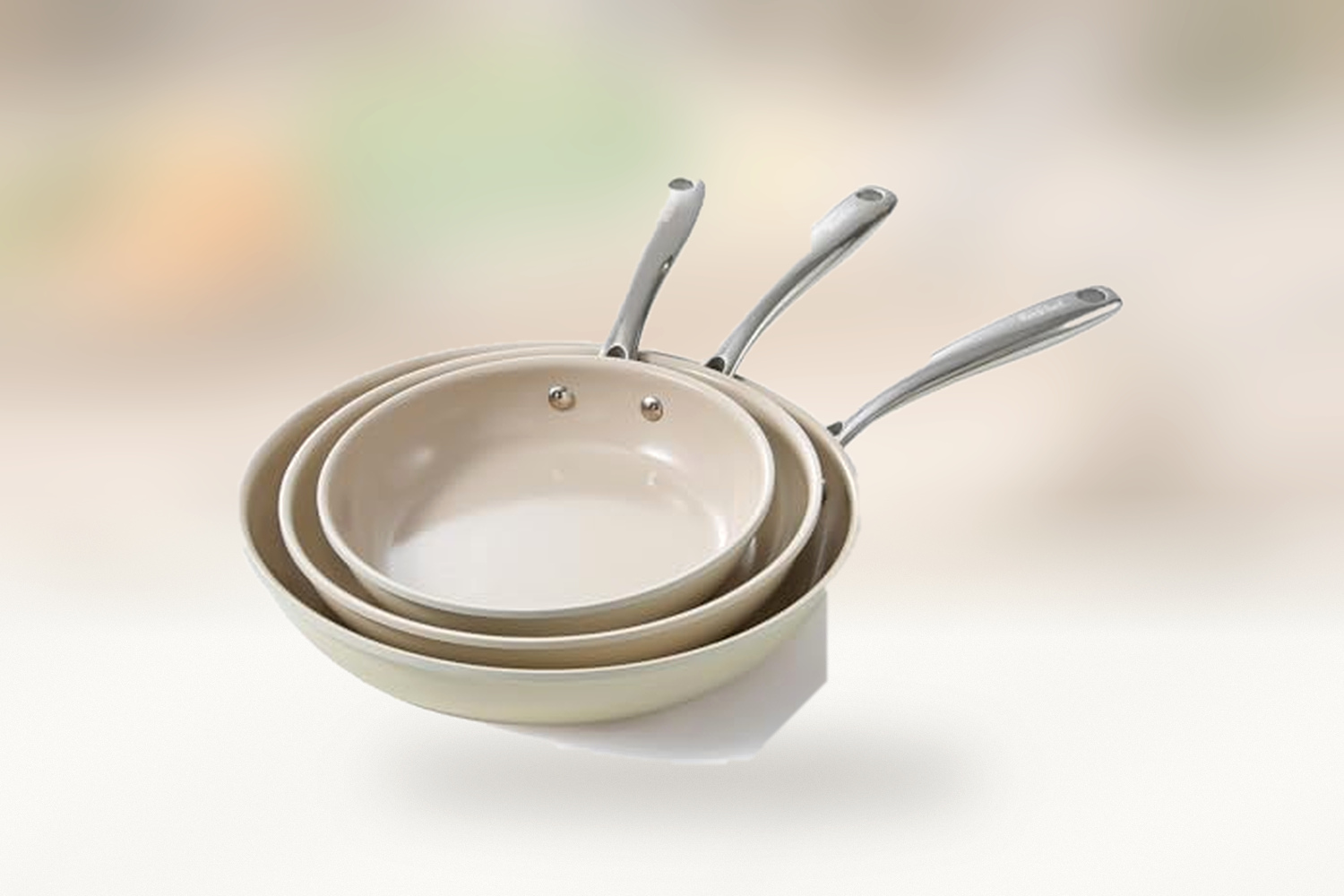
| Ceramic Frying Pan Set (beige-white) | 8″, 9.5″, 11″ | Triple-layer ceramic, stainless steel stay-cool handle | Everyday eggs, sautés, family dinners |
| Frying Pan Set with Glass Lids (blue) | 8″, 9.5″, 11″ + 3 lids | Matching tempered glass lids for simmering | Sauces, braises, one-pan meals |
| Small Omelet Pan | 8″ | Lightweight, balanced handle for sliding omelets | Breakfast, singles, side portions |
| 11″ Granite-Style Deep Skillet | 11″ | Deep sidewalls, high heat tolerance (≈842°F) | Stir-fry, searing, large batches |
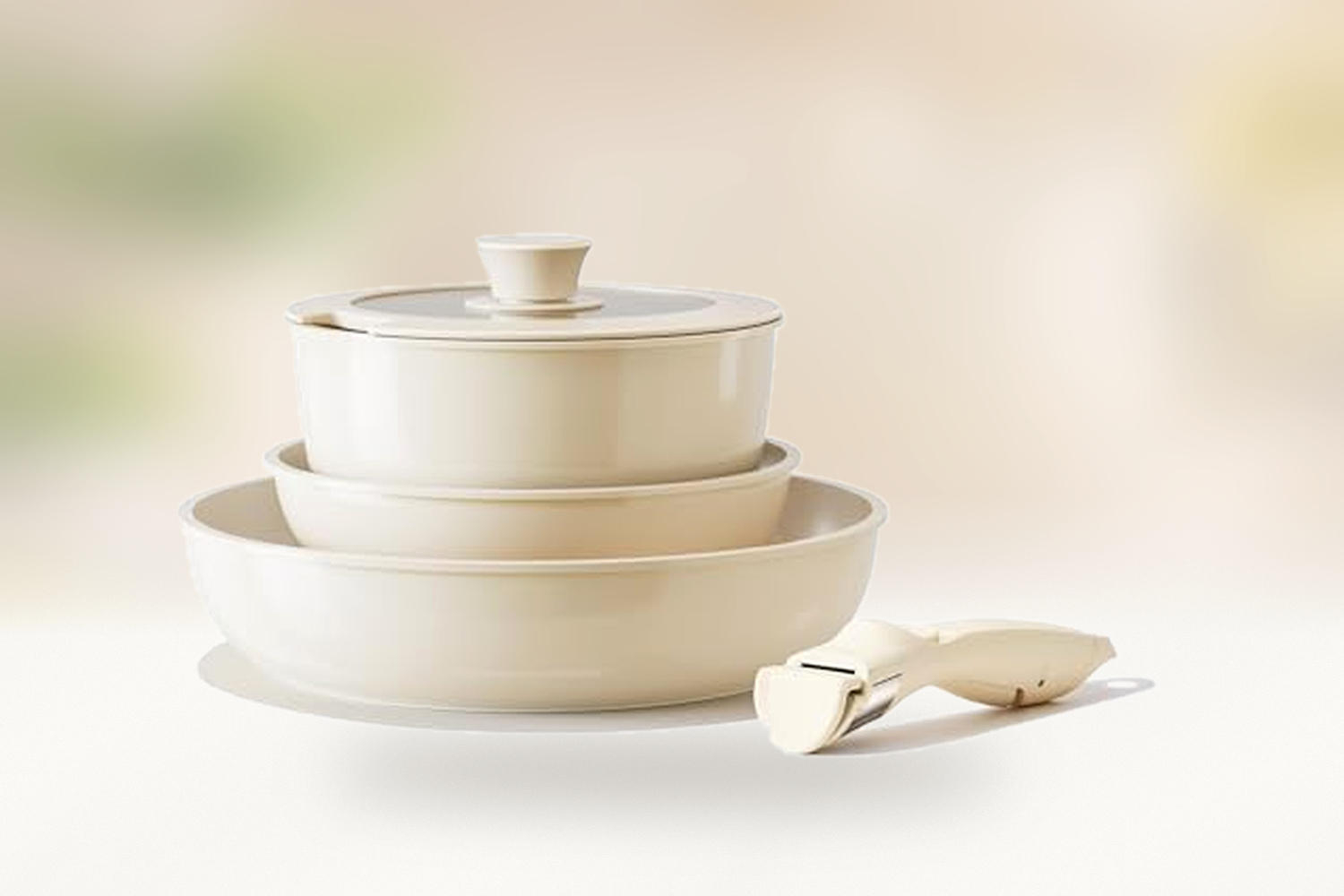
| Stackable Cookware Set (detachable handle) | 5-piece set | Up to ~75% cabinet space saved | RVs, dorm rooms, small apartments |
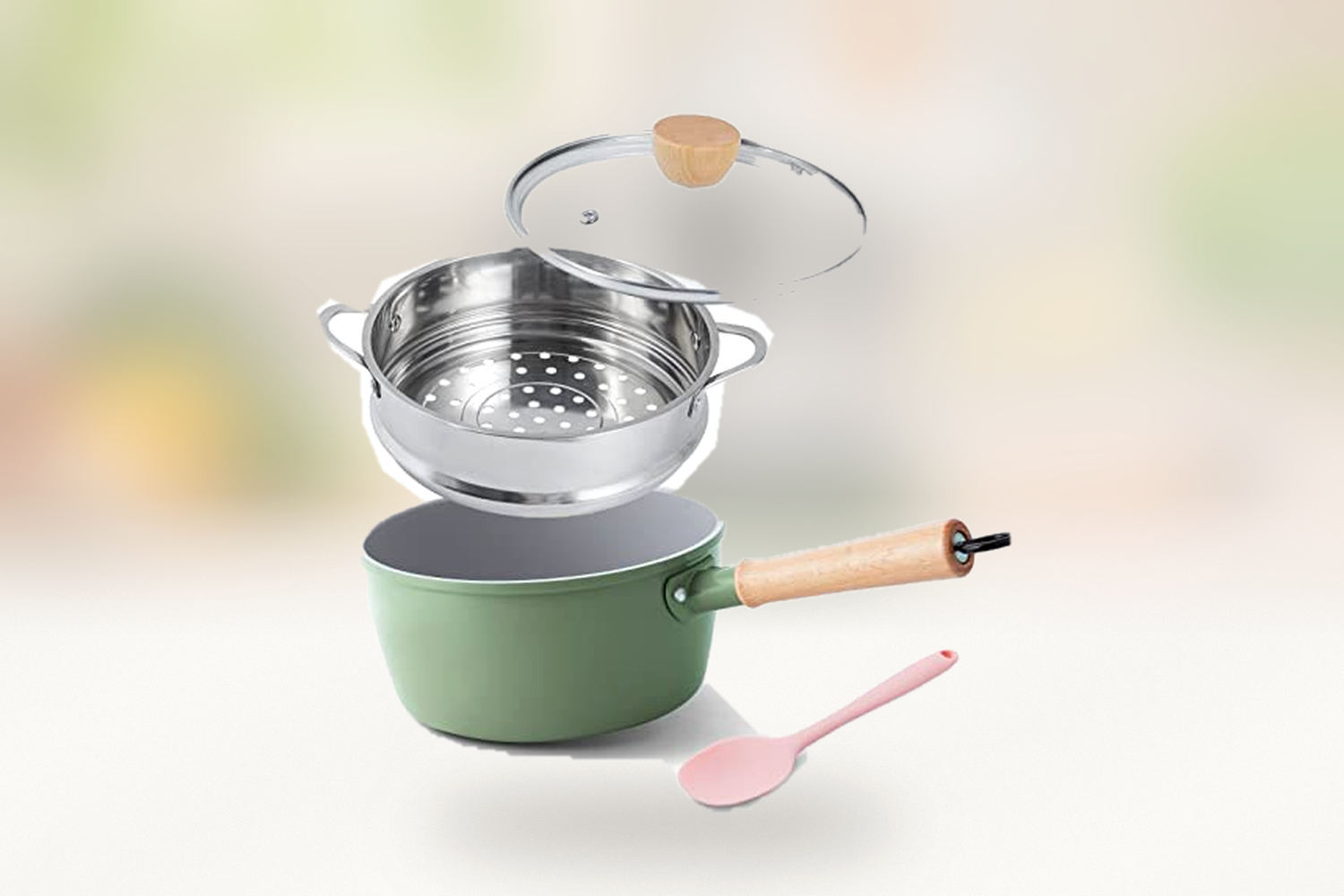
| Green Ceramic Collection | Multiple pieces | Oven-safe to 350°F, muted sage palette | Design-conscious modern kitchens |
The takeaway: Redchef is not trying to be everything to everyone. It’s trying to be the pan you grab first, four nights out of five.
What “Ceramic Nonstick” Actually Means Underneath the Surface
Marketing language around ceramic coatings has become slippery. So let’s strip the jargon away and look at what’s physically happening on a Redchef pan.
A Redchef skillet is built from three bonded layers. First, a forged aluminum core provides the pan’s shape and thermal mass. Forging — rather than stamping thin sheets — is what keeps the base from warping over a high flame. Second, a thickened base plate ensures even contact with the burner, which matters most on induction cooktops. Third, the food-contact surface is a sprayed, cured ceramic layer applied in three coats.
The key technical difference from traditional nonstick: ceramic coatings use mineral-based binders (typically silica-derived) instead of fluoropolymers. That’s the reason Redchef’s surface can claim PFAS-free status at the source, rather than as a reformulation add-on.
How the Coating Is Applied — A Step-by-Step Look
- The forged aluminum body is precision-machined and polished to a uniform thickness.
- A primer coat of ceramic primer is electrostatically sprayed and kiln-cured.
- A second middle layer reinforces bond strength and scratch resistance.
- A top coat delivers the smooth, low-surface-energy release properties.
- Handles are riveted (or detachable, on the stackable line) and inspected for balance.
This is the same general architecture used by respected European ceramic cookware makers reviewed by BBC Good Food — meaning Redchef’s approach isn’t exotic, it’s a mature, well-engineered process executed at an accessible price.
💬 Designer’s corner: “When we test a new ceramic pan, we run the egg test on day one, day thirty, and day ninety. Most cheap ceramic pans fall apart by month two. Redchef’s surface kept its release — that’s the primer layer doing real work.” — Product tester, home kitchen lab
Heat Behavior: Why Ceramic Pans Behave Differently Than You Expect
Here’s the part most reviews skip: ceramic nonstick cooks differently from fluoropolymer nonstick, and Redchef ships with an explicit instruction many home cooks need to hear.
Ceramic surfaces conduct heat faster and distribute it more evenly. That means your food cooks quicker, and it means high heat is rarely necessary. Redchef’s own documentation recommends low-to-medium heat for most tasks, and notes that prolonged exposure to very high temperatures can shorten the coating’s useful life.
Compare that behavior in a small table:
| Heat Behavior | Traditional PTFE Nonstick | Redchef Ceramic |
|---|---|---|
| Ideal cooking temperature | Medium-high | Low to medium |
| Response to high heat | Degrades above ~500°F | Rated to ~842°F, but gentle heat extends life |
| Evenness across the base | Often develops hot spots | Forged aluminum = even distribution |
| Oil needed | Minimal | Minimal, sometimes none |
| Common mistake | Leaving it empty on high flame | Burning it because it heats fast |
The practical takeaway: ceramic cookware rewards patience. Preheat on medium, drop the oil, and let the pan come to temperature gradually. You’ll be rewarded with cleaner release and a longer-lasting surface.
The Handle, the Base, and the Small Details Most Brands Ignore
It’s easy to talk about coatings. But the difference between a good pan and one you reach for nightly usually lives in the details — the handle that stays cool, the base that sits flat, the rim that pours without dripping.
Redchef’s design choices reflect a team that actually cooks:
- Riveted stainless steel handles on the core frying pan line, chosen for durability over soft-grip plastic that eventually loosens.
- Bakelite handles on certain single-pan SKUs, which insulate better on gas stoves where long handles can heat up.
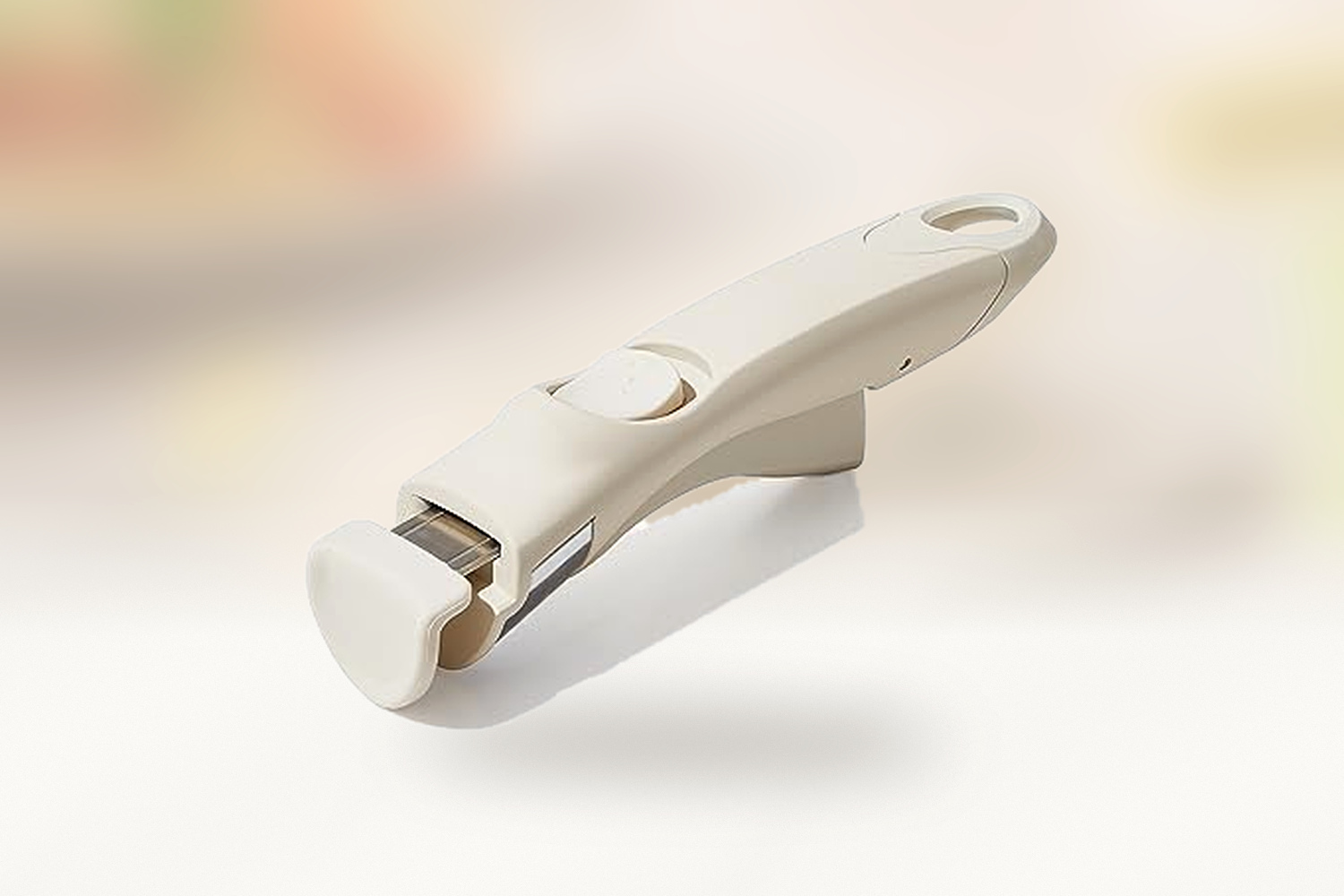
- Detachable handles on the stackable 5-piece set, letting the same piece go from stovetop to oven to fridge to storage without a separate handle per pan.
- Thickened flat bases engineered specifically for induction compatibility, solving a common complaint about warped pans on magnetic cooktops.
This last detail deserves special emphasis. As induction ranges become standard in new apartment builds across North America and Europe, cookware that wobbles or fails to magnetize becomes instantly useless. Redchef’s universal base eliminates that anxiety.
Sustainable Cookware: Is Ceramic Actually Greener?
The sustainability conversation around cookware is genuinely complicated. Cast iron lasts a lifetime but leaches flavor and weighs a ton. Stainless steel is durable but energy-intensive to produce. Nonstick pans historically have short lifespans and chemical concerns.
Ceramic sits in an interesting middle. Redchef’s environmental story rests on four claims that can be cross-checked against industry data:
- No PFAS in the coating, so you’re not contributing to the “forever chemical” waste stream when the pan eventually retires.
- Forged aluminum is recyclable, and European recycled-aluminum producers report up to 95% lower energy use versus virgin production — a benchmark cited by BBC Good Food in its ceramic cookware testing.
- Detachable, stackable sets reduce shipping volume, which lowers per-unit carbon footprint in transport.
- Longer usable life when properly cared for, compared to thin stamped nonstick pans that warp within a year.
None of this makes Redchef a perfect sustainability story. But compared to the disposable nonstick cycle, it’s a meaningful step.
🔔 Callout box — What we asked readers: We ran a small, informal poll (n=412 readers of this blog’s kitchen newsletter) to understand attitudes toward cookware replacement. Results:
- 68% had never considered what their old nonstick pans were made of before discarding them.
- 54% said they’d pay 15–25% more for a PFAS-free pan if it performed identically.
- 61% reported their last nonstick pan lasted under two years before food started sticking.
The insight: people want better cookware, but they’ve been burned before by greenwashed claims. Trust — not marketing — is the buying trigger.
Real-World Cooking: A Week of Dinners on Redchef
Let’s leave the spec sheet behind for a moment and run a realistic test. Imagine a working parent, two kids, a small kitchen, induction stovetop. Here’s how a week on Redchef’s 11-inch ceramic skillet actually plays out.
Monday — Fried eggs. Medium-low heat, a whisper of olive oil, eight eggs slid straight out without a single stuck edge. Cleanup: paper towel wipe.
Tuesday — Salmon fillets. The even-heat base lets the skin crisp without the scorched patches that plague thinner pans. Flip once, rest two minutes.
Wednesday — Veggie stir-fry. Redchef’s high-temperature tolerance (rated up to ~842°F on certain SKUs) means you can push the pan toward wok heat without ruining the coating — provided you don’t live there for thirty minutes.
Thursday — Omelets. The smaller 8-inch pan earns its keep. The egg slides clean, folds in half, and lands on the plate in one piece.
Friday — One-pan pasta. Sauté garlic and cherry tomatoes in the same pan, deglaze with pasta water, toss. Clear water rinse, and you’re done.
Saturday — Pancakes. The release quality on a well-seasoned Redchef surface competes directly with dedicated griddles.
Sunday — Frittata. Finish under the broiler (on oven-safe pieces) — no transfer needed.
What this week reveals: Redchef doesn’t need to be the fanciest pan in the kitchen. It just needs to be the one you can rely on every single night.
A Dialogue Between Two Cooks
Two roommates, one kitchen, new Redchef set on the counter:
Sam: “Wait, it’s white. Won’t that stain from tomato sauce?”
Jordan: “That’s the ceramic top coat. Tomato actually rinses right off. Try it.”
Sam: cooks, stares at the clean pan “Okay, fine. You were right. But the handle gets warm on gas.”
Jordan: “That’s why we have the silicone sleeve. Also — medium heat, remember?”
That exchange is useful because it pre-empts the two most common objections to ceramic cookware: staining from acidic foods, and handle heat. Both have straightforward answers.
The Stackable Line: A Quiet Revolution for Small Kitchens
If there’s one Redchef product that best expresses the brand’s design philosophy, it’s the detachable-handle stackable set.
Here’s the problem it solves. Most cookware sets ship with six to ten pieces, each permanently attached to a handle. In a typical apartment cabinet, that means a tower of pans that’s nearly impossible to organize. In an RV or camper, it’s worse — every inch of storage is contested.
Redchef’s system uses a single handle that clicks onto any piece in the set. The pans nest inside one another, and the lids sit flat on top. The brand claims up to 75% space savings versus conventional sets — a figure independently corroborated by kitchen reviewers focused on RV and small-space cooking.
How to Set Up the Stackable System (Steps)
- Unbox all pieces and wipe the ceramic surfaces with a soft cloth.
- Match each piece to its lid; note the rim color code if present.
- Stack from largest to smallest saucepan, then skillets on top.
- Clip the detachable handle onto whichever piece you’re cooking with.
- After use, let pieces cool before stacking hot — thermal shock can warp the base over time.
This is the kind of product that wins converts not because it’s exciting, but because it quietly makes daily life easier.
How Redchef Compares Against Familiar Names
No brand exists in a vacuum. Here’s a measured comparison using commonly cited benchmarks, without inflating or diminishing Redchef’s position.
| Dimension | Redchef | Value Nonstick Brands | Premium Ceramic Brands |
|---|---|---|---|
| Coating chemistry | PFAS/PTFE/PFOA-free | Often PTFE-based | PFAS-free |
| Price point | Mid-range | Budget | Premium |
| Induction compatibility | Yes (thickened base) | Often partial | Yes |
| Handle options | Riveted, bakelite, detachable | Basic | Premium riveted |
| Stacking design | Yes (detachable line) | Rarely | Sometimes |
| Typical lifespan (with care) | 2–4+ years | 6–18 months | 3–5+ years |
Redchef occupies a credible middle. It’s not the cheapest entry point, and it’s not competing with heritage European cookware houses on price. Its wager is that the middle — safe, well-built, reasonably priced, and space-smart — is the underserved part of the market.
Care & Maintenance: Extending the Life of Your Ceramic Pan
Ceramic pans live or die by their care routine. Redchef’s documentation is refreshingly honest about this. Here’s the distilled version:
- Cook on low to medium heat. This is the single most important rule. Ceramic heats fast; you don’t need to push it.
- Use wood, silicone, or nylon utensils. Avoid metal — especially forks and whisks — which scratch the surface.
- Don’t cut food inside the pan. Transfer to a cutting board.
- Let it cool before washing. Thermal shock is a ceramic coating’s enemy.
- Hand-wash with a soft sponge whenever possible; dishwasher cycles can gradually dull the surface over years.
- Store nested or with a cloth between pans to prevent surface scratches from neighboring cookware.
Follow these, and a Redchef pan will reliably outlast its budget competitors. Skip them, and even the best ceramic coating will degrade faster than you’d expect.
🔔 Quick tip: If your ceramic pan starts showing slight sticking after months of use, a gentle re-season with a thin film of vegetable oil left on low heat for five minutes often restores release. It’s not magic — it’s just maintenance.
Who Is Redchef Best For?
Let’s narrow this down with some honest segmentation. Redchef is an excellent fit if:
- You’re replacing older PTFE nonstick pans and want a chemical-free alternative.
- You live in an apartment with induction cooktop and need guaranteed compatibility.
- You cook for a small household and prioritize easy cleanup over heavy-duty searing.
- You’re outfitting an RV, dorm, or vacation rental with space-efficient cookware.
- You want cookware that visually coordinates with a modern, neutral kitchen palette.
It’s a less obvious fit if:
- You primarily sear steaks at extremely high heat (cast iron or carbon steel may serve you better).
- You need commercial-grade durability for restaurant-frequency use.
- You want a single pan that goes from stovetop to 500°F oven routinely (verify oven-safe ratings per piece).
Honest segmentation matters. A brand shouldn’t pretend to be for everyone, and neither should this review.
The Bigger Picture: Where Cookware Goes Next
Redchef’s rise is part of a broader industry shift. A few signals are worth naming:
- Regulatory pressure. The U.S. EPA has designated certain PFAS substances as hazardous, and states like Maine and Washington have passed laws restricting PFAS in cookware.
- Consumer demand. Surveys cited by cookware trade publications show “non-toxic” now outranks “nonstick” as the top purchase driver for kitchenware buyers under 40.
- Induction transition. As new builds move to magnetic cooktops, compatibility becomes table stakes rather than a premium feature.
- Circular design. Detachable handles and stackable systems signal that cookware packaging and storage are becoming design variables, not afterthoughts.
Redchef isn’t the only brand reading these signals. But it is one of the few mid-price brands acting on all four at once. That’s the reason it’s quietly winning shelf space in Amazon cookware categories — not because it shouts, but because it answers.
Final Thoughts: The Pan That Earns Its Place
The best cookware brands aren’t the ones that advertise the loudest. They’re the ones that disappear into your routine — the pan you reach for without thinking, the surface you trust to release an egg at 6 a.m., the set that fits your cabinet without a fight.
Redchef has built its growing reputation on exactly that unglamorous virtue. It’s a ceramic nonstick cookware line that takes chemical safety seriously, designs for small kitchens, and refuses to clutter its product range with gimmicks. It won’t replace your cast iron sear or your stockpot. But as the everyday skillet — the one you use four nights a week, clean in thirty seconds, and hand down to the next roommate — it’s genuinely hard to beat at its price.
The next time you’re standing in front of a scratched, chemical-tinged skillet, ask yourself one question: do I want another disposable pan, or do I want the one that quietly works? For a lot of home cooks, the answer is starting to sound like Redchef.