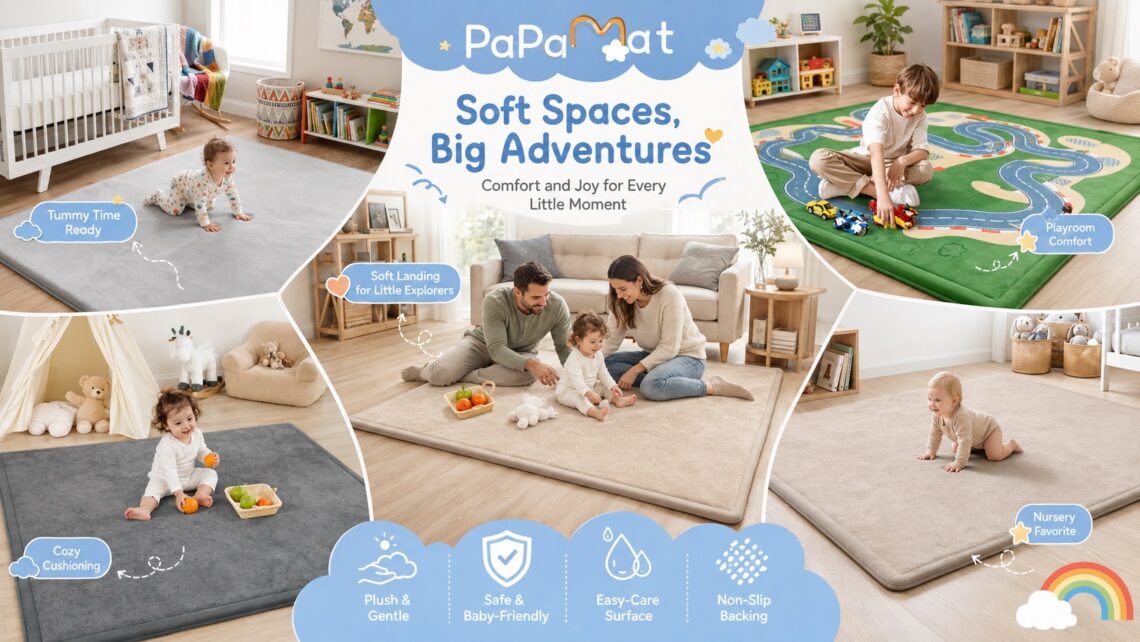
Parents rarely buy a play mat for only one purpose. A mat may begin as a soft surface for tummy time, then become a crawling zone, a place for first steps, a reading corner, a toy-building area, or simply the section of the living room where children spend most of their day. That versatility means a good play mat has to perform more like a piece of everyday home equipment than a temporary baby accessory.
This is where PaPaMat establishes a clear and appealing brand identity.
PaPaMat focuses on creating soft floor environments for babies, toddlers, and families, but its product philosophy goes beyond simply adding padding to the floor. The brand combines comfort, practical sizing, decorative variety, and family-friendly styling in a collection designed to fit naturally into nurseries, bedrooms, playrooms, and shared living spaces.
Its Amazon storefront presents a surprisingly broad play-mat ecosystem. Shoppers can explore solid-color designs, educational patterns, printed mats, jacquard styles, extra-wide formats, thicker cushioned options, and newer decorative releases. The result is a brand that does not treat every household or every stage of childhood in the same way.
Instead, PaPaMat gives parents choices.
I. THE ARCHITECTURAL BRIEF: RECLAIMING THE FORGOTTEN REAL ESTATE
When we conceptualize the design of a family home, our eyes naturally drift upward. We obsess over the color of the walls, the curvature of the lighting fixtures, the ergonomic slope of the nursing chair, and the handcrafted woodwork of the crib. Yet, in this relentless pursuit of vertical perfection, we chronically neglect the most expansive, heavily utilized, and developmentally critical plane in a child’s universe: the floor.
Before a child can conquer the world, they must first conquer gravity. The floor is their initial training ground, their primary canvas, and their first teacher. It is where the exhausting labor of tummy time takes place. It is the vast topography where the wobbly, triumphant first attempts at crawling occur. It is the unforgiving surface that meets them when they inevitably stumble while learning to walk.
For decades, the interior design industry and the baby gear market have offered parents a deeply flawed ultimatum. We were told we had to choose between our home’s aesthetic dignity and our child’s safety. We could either leave our beautiful, hard, modern flooring exposed—risking bumps, bruises, and tears—or we could cover our carefully curated living spaces with jarring, primary-colored, visually chaotic puzzle pieces that scream “daycare aesthetic.”
This aesthetic and functional dissonance is precisely the problem that PaPaMat has stepped in to solve.
Operating under the incredibly resonant mantra of “Turning Floor Spaces into Safe Playgrounds,” PaPaMat is not merely manufacturing mats; they are re-engineering the spatial dynamics of the modern home. In this comprehensive audit of the PaPaMat brand, we will dissect the philosophy, the material engineering, and the visual brilliance of a company that is fundamentally changing how families interact with their environment.
II. THE ANTHROPOLOGY OF THE LIVING ROOM FLOOR
To truly grasp the value of a PaPaMat, one must understand the anthropology of early childhood. Babies are entirely ground-dwelling creatures for the first year of their lives. From their perspective, the floor is not just something you walk on to get from point A to point B; it is the entire world.
PaPaMat understands that a play mat is not just an accessory; it is a habitat. When you review their founding ethos, which proudly centers on “prioritizing quality, innovation, design, and peace of mind for every precious moment,” you realize they are designing for two distinct demographics simultaneously: the vulnerable infant and the exhausted, vigilant parent.
A hard floor creates anxiety. It forces parents to hover, to restrict movement, and to constantly intervene. This hovering stifles a child’s natural urge to take risks, to stretch, and to explore. By introducing a PaPaMat into a living space, you are essentially installing an invisible safety net. The brand promises “Extra Coverage with Cozy Comfort,” a phrase that encapsulates their mission to provide expansive, forgiving surfaces.
When the floor becomes a soft, welcoming sanctuary, a magical shift in family dynamics occurs. Parents are no longer perched nervously on the edge of the sofa. The exceptional comfort of the PaPaMat invites adults to get down on their child’s level. It transforms a cold hardwood floor into a communal gathering space. It becomes the stage for reading books, building blocks, practicing rolls, and sharing quiet afternoon cuddles. PaPaMat doesn’t just protect the child; it physically brings the family closer together.
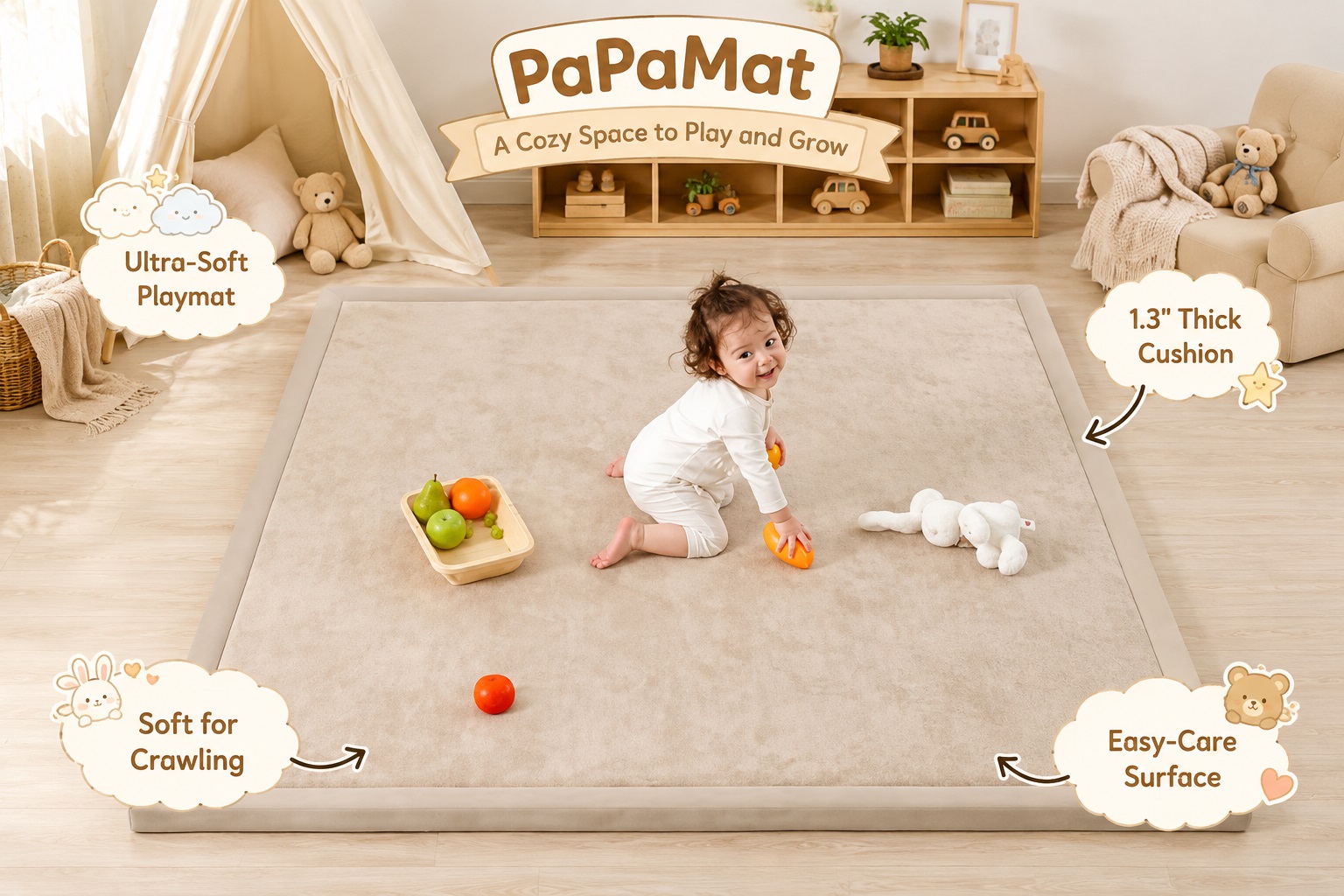
III. THE TACTILE SANCTUARY: ENGINEERING ‘COZY COMFORT’
A play mat can be visually stunning, but if it fails in its primary directive—protecting the child—it is nothing more than an expensive rug. The core of PaPaMat’s success lies in their obsessive material engineering and dedication to tactile superiority.
When you examine the cross-section of a PaPaMat (as frequently highlighted in glowing customer reviews), you immediately notice the substantial density of the material. This is not the flimsy, paper-thin fabric of yesteryear. The brand has engineered a surface that performs a complex physical balancing act.
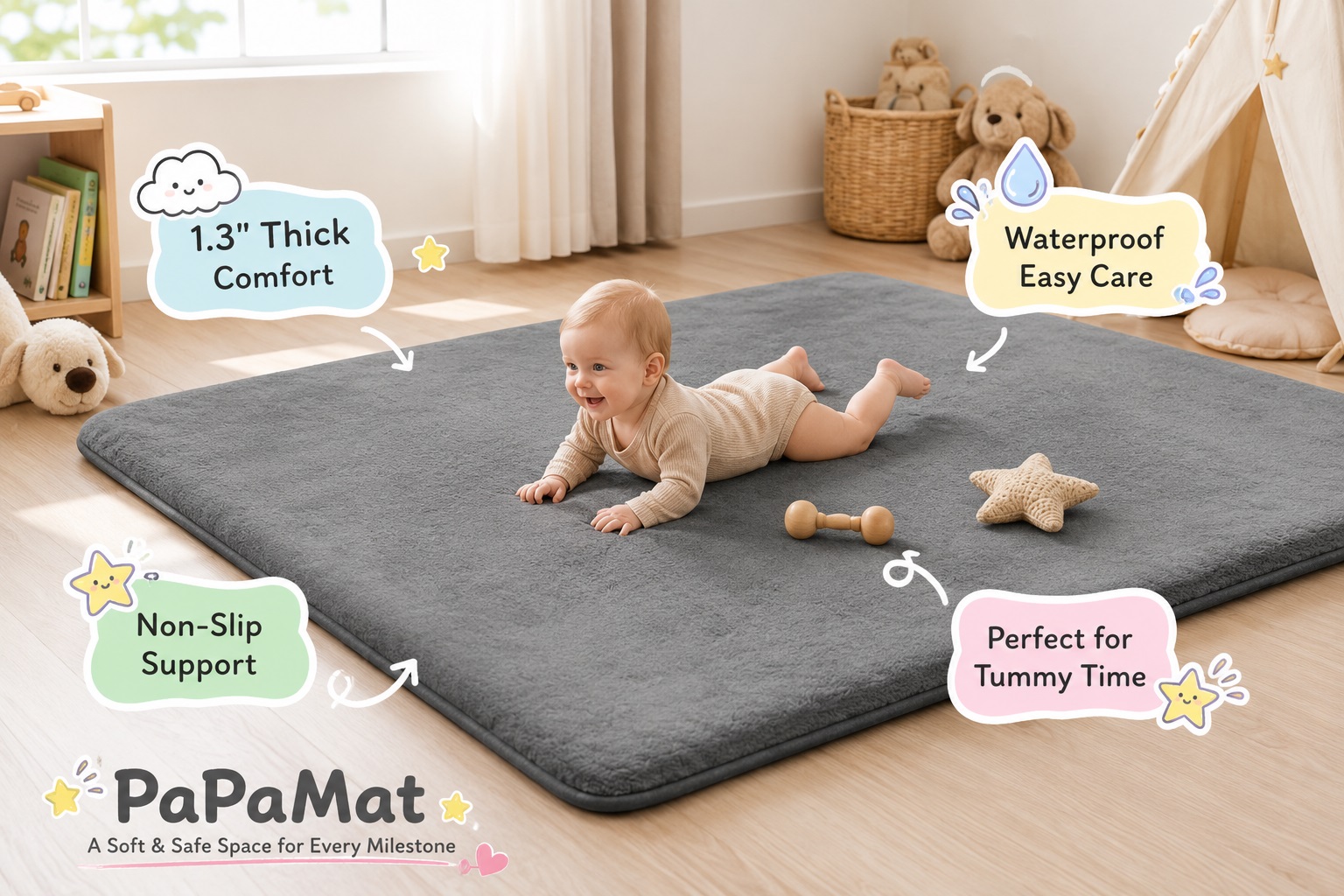
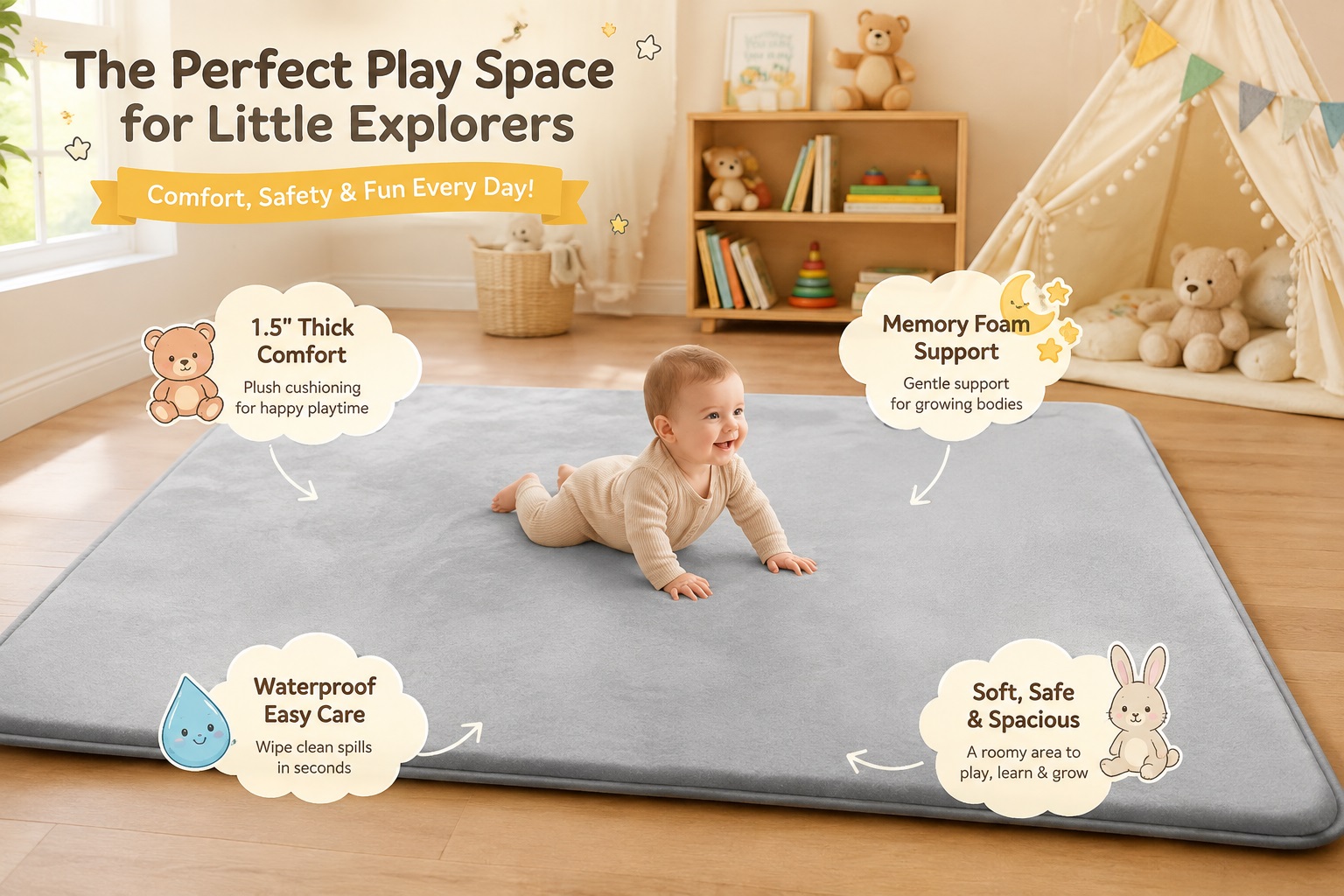
First, it must provide a “Soft Base.” When a baby is pushing up on their forearms during tummy time, the surface must have enough structural integrity to give them leverage. If a mat is too plush or marshmallow-like, the baby sinks, becomes frustrated, and abandons the exercise. PaPaMat provides the perfect amount of resistance to support developing muscles.
Second, it must act as a kinetic shock absorber. Toddlers are top-heavy and uncoordinated. When they fall—and they will fall dozens of times a day—the PaPaMat instantaneously compresses, absorbing the impact energy and transforming a potential injury into a gentle bounce. This is the “Cozy Comfort” in action. It is the peace of mind that allows a parent to turn their back for five seconds to grab a wipe without the paralyzing fear of a loud thud.
Furthermore, the brand recognizes that a baby’s environment is notoriously chaotic. Drool, spit-up, spilled milk, and the inevitable diaper leaks are the realities of the nursery. The engineering of PaPaMat extends to its surface durability and ease of maintenance, ensuring that the “Cozy Comfort” remains hygienic, fresh, and inviting day after day, without requiring hours of scrubbing.
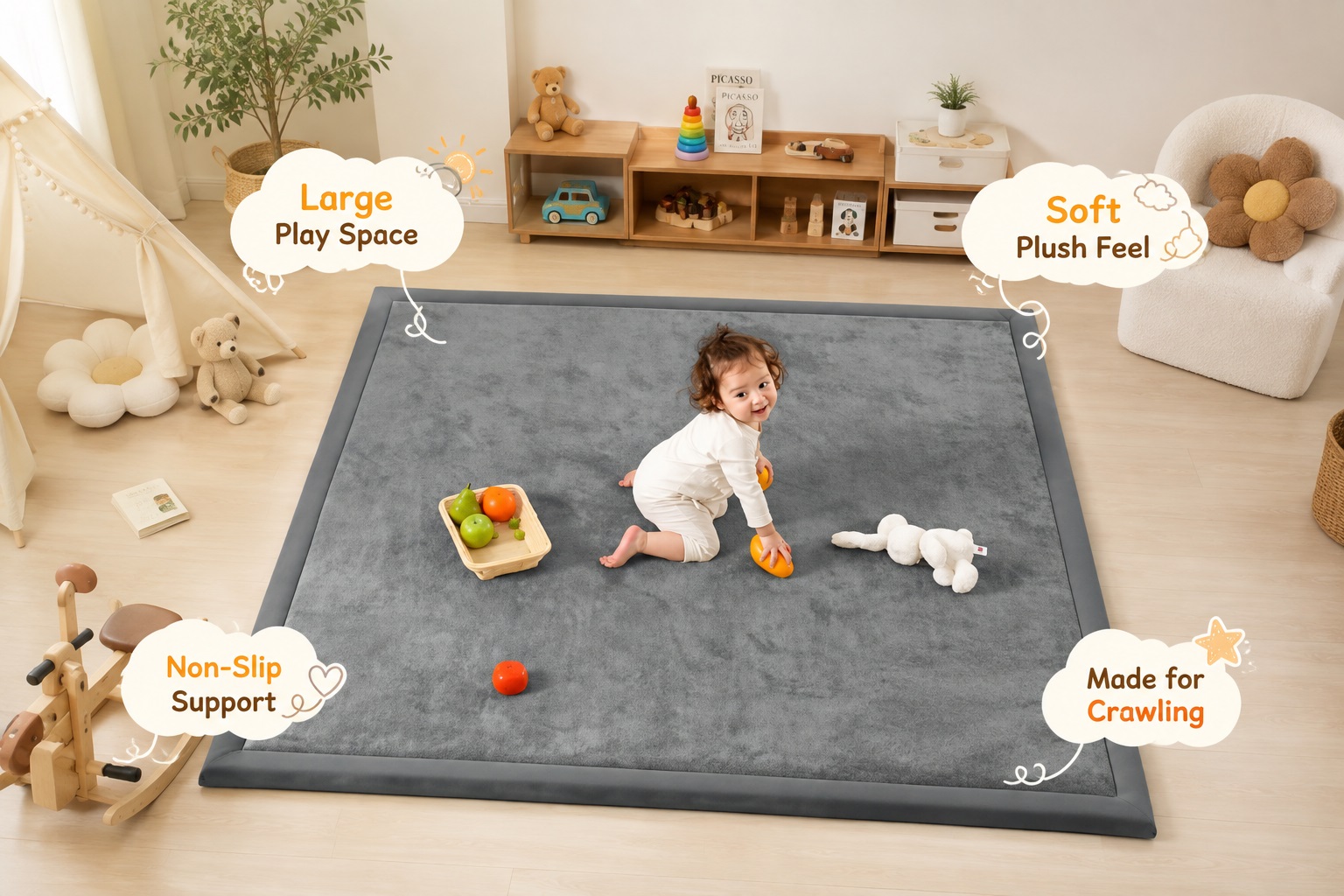
IV. THE AESTHETIC AUDIT: CURATING THE VISUAL LANDSCAPE
Perhaps the most striking differentiator of the PaPaMat brand is its profound respect for adult interior design. Becoming a parent should not require you to surrender your home to a chaotic explosion of neon colors. PaPaMat has curated a series of design collections that elevate the play mat from a temporary, necessary eyesore into a permanent, integrated piece of home decor.
Let us analyze the distinct visual pathways PaPaMat offers to the modern family:
1. The Minimalist Haven: The Solid Color Collection
For the parent who embraces Scandinavian minimalism or contemporary chic, the Solid Color collection is a revelation. These mats offer all the safety and comfort of heavy-duty baby gear while masquerading as elegant, understated area rugs. They blend seamlessly into natural wood tones, neutral furniture, and calm environments, proving that a playroom can still maintain a sense of zen-like tranquility.
2. The Cartography of Imagination: The Outer Space Collection
PaPaMat understands that while parents crave aesthetics, children crave engagement. The Outer Space collection is a masterpiece of visual storytelling. Without relying on garish or overly aggressive graphics, they have created a deep, inviting cosmic landscape. A toddler crawling across these mats isn’t just moving across a room; they are navigating between stars, exploring planets, and letting their developing imagination take flight on a canvas of deep, calming blues and vibrant celestial bodies.
3. The Organic Canvas: The Pattern Collection
Drawing inspiration from the natural world, the Pattern collection introduces gentle florals, engaging animal motifs, and whimsical terrestrial landscapes. These designs are meticulously balanced. They are complex enough to capture a baby’s developing visual tracking skills and hold their attention during tummy time, yet they are rendered in soft, harmonious color palettes that complement, rather than clash with, a modern living room’s existing color scheme.
4. The Textural Luxury: The Jacquard Collection
In a brilliant move that bridges the gap between high-end textiles and nursery necessities, PaPaMat offers the Jacquard collection. This line introduces a sophisticated, woven texture that adds profound visual depth and a luxurious tactile element to the room. It is the ultimate expression of the brand’s belief that child-safe products can—and should—be beautiful.
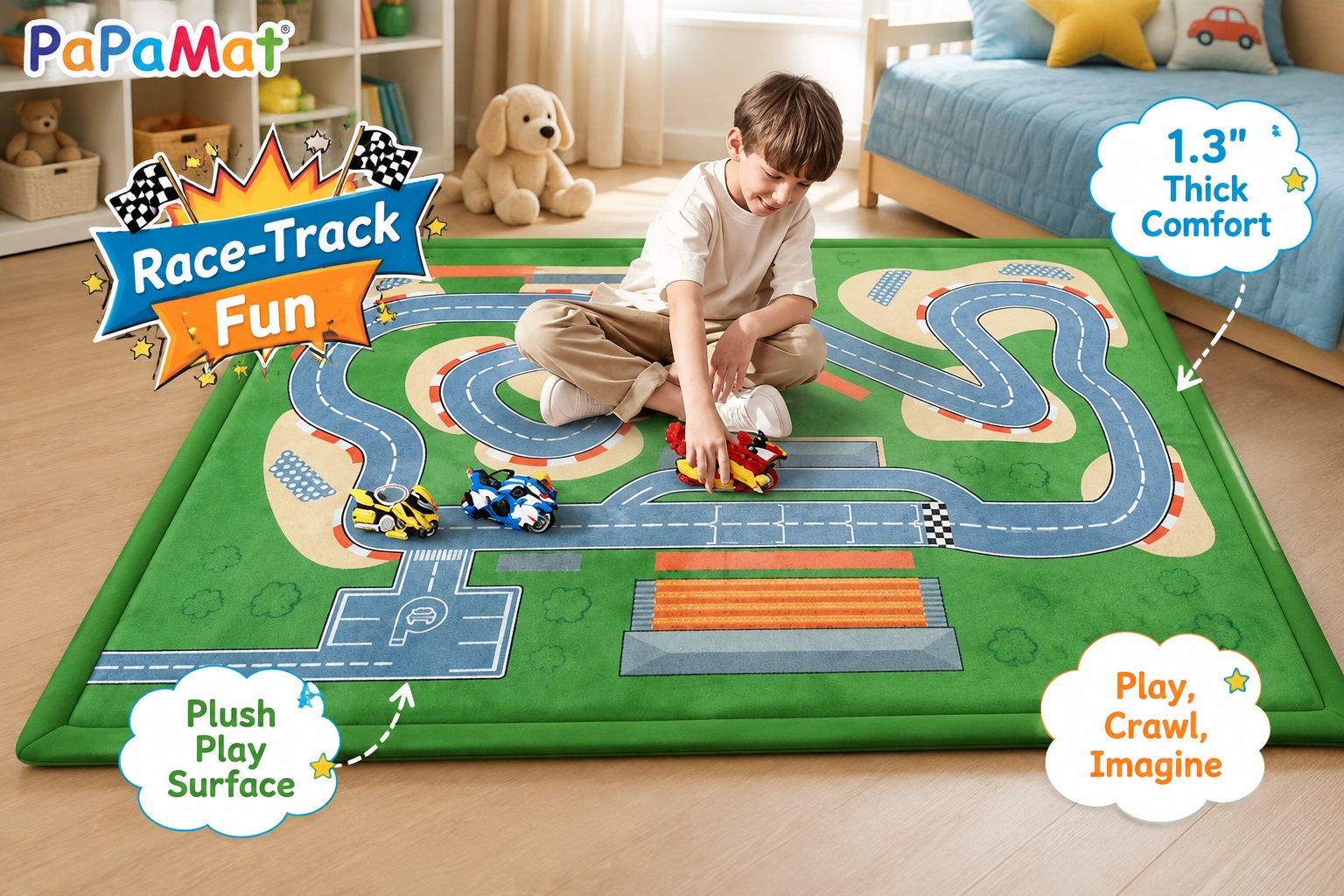
V. THE COURT OF PUBLIC OPINION: VOICES FROM THE GROUND FLOOR
A brand’s marketing copy is a promise; a customer’s review is the proof. When analyzing the ecosystem surrounding PaPaMat, the sheer volume of enthusiastic, relieved feedback from real parents is impossible to ignore.
The testimonials paint a vivid picture of the brand’s impact on daily life. Reviews consistently highlight the “Soft base,” noting that it is not just comfortable for the baby, but “Comfy” enough for adults to sit on for hours. Parents frequently praise the “Great size,” affirming PaPaMat’s commitment to providing “Extra Coverage.” They don’t just want a tiny square for their baby to sit on; they want a sweeping, expansive zone where their child can truly roam freely.
Phrases like “Good quality,” “Loved it,” and “Great buy” echo throughout the community. You read stories of mothers who finally found a mat that doesn’t trigger their design anxiety. You hear from fathers who are grateful that their early-walking toddler has a safe, padded runway to practice their newly found mobility. These are not just reviews of a product; they are endorsements of a lifestyle change. They are the voices of parents who have reclaimed their living spaces, finding a perfect harmony between the chaos of childhood and the serenity of a well-designed home.
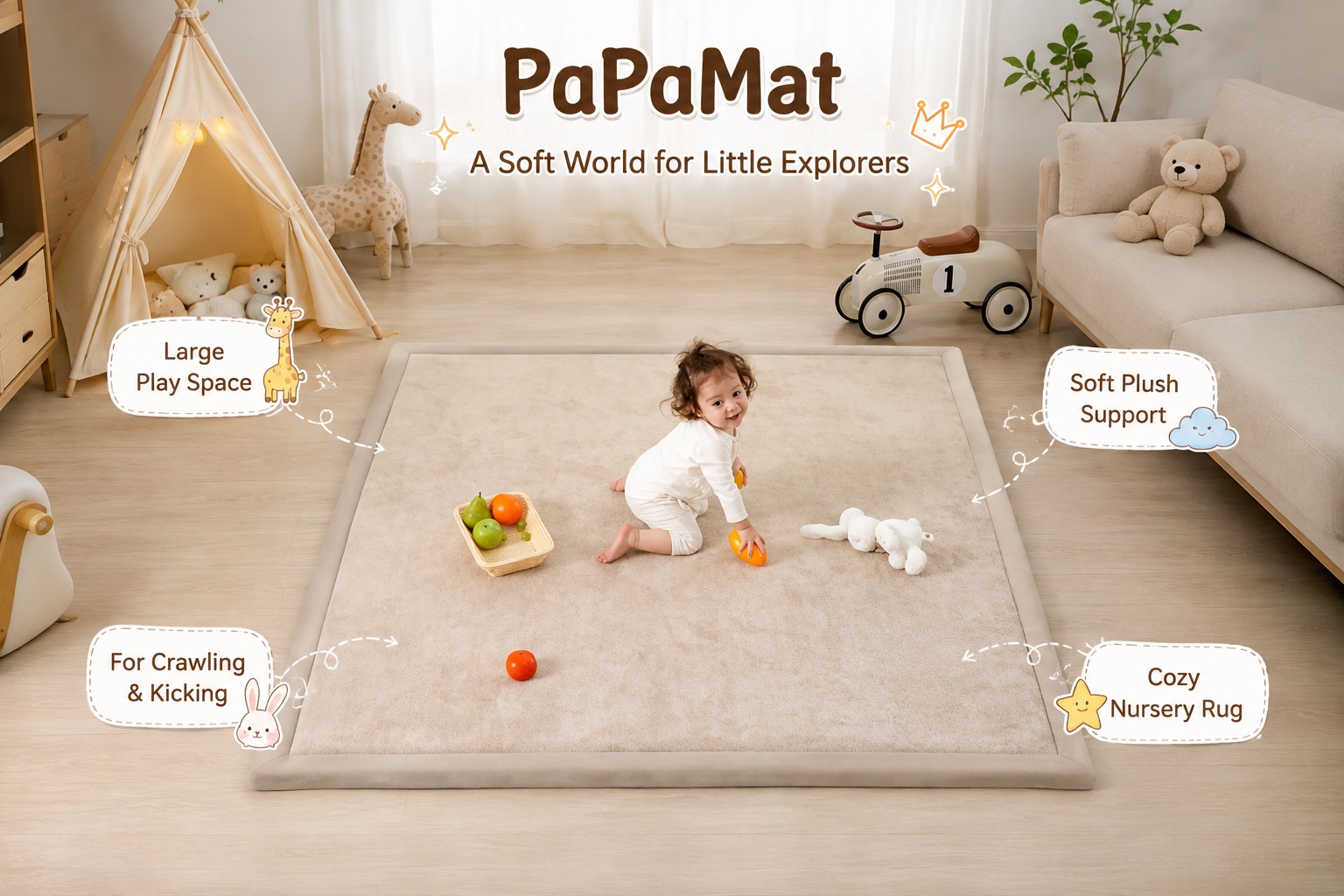
VI. THE PAPAMAT ETHOS: MORE THAN JUST A MAT
To look at PaPaMat purely as a manufacturer of physical goods is to miss the broader narrative. When you delve into the “About Us” section of their brand identity, you uncover a deep well of empathy for the parental journey.
They explicitly state their dedication to creating a safe and comfortable environment for children to explore. But the subtext of their mission is an act of service to the parents. Parenting in the modern age is fraught with an overwhelming volume of decisions, anxieties, and compromises. PaPaMat seeks to eliminate one massive area of compromise from that list.
By prioritizing quality, they ensure longevity. These mats are not disposable items meant to be discarded after six months; they are built to endure the entirety of the early childhood phase, from the first hesitant roll to the boisterous, jumping energy of toddlerhood.
By prioritizing innovation, they ensure that their materials represent the safest, most responsive, and most comfortable technologies available in the nursery space today.
By prioritizing design, they honor the identity of the adults who live in the home, acknowledging that while life changes after a baby, the desire for a beautiful, harmonious living space does not disappear.
Who Is PaPaMat Best Suited For?
PaPaMat is particularly relevant for parents who want children’s floor products to balance practical use with interior styling.
Families with babies may appreciate the cushioned surfaces and larger areas for supervised floor activity. Parents of toddlers may value the generous dimensions and playful printed options. Design-conscious households can explore the solid-color or more decorative jacquard ranges, while families creating dedicated playrooms may prefer educational or colorful designs.
The broad collection also makes the brand suitable for customers who want to compare multiple styles without moving between completely different manufacturers.
Rather than asking whether PaPaMat offers a play mat, the more useful question is which type of PaPaMat fits the room and the way the family uses it.
More Than a Mat: Creating a Defined Family Zone
The strongest reason to consider PaPaMat may ultimately be the way a large play mat changes the function of a room.
Without one, toys and activities can spread unpredictably across the floor.
With a defined mat, children gain a recognizable area for play. Storage baskets can be positioned around it. Books and toys can return to the same zone. Parents can sit nearby. The mat helps create structure without requiring permanent furniture or partitions.
This can make family spaces feel more organized even when the room remains active.
The benefit is not simply softness.
It is definition.
A PaPaMat can visually communicate, “This is the place for play,” while still allowing the room to serve adults when necessary.