There is something appealing about technology that knows when to stay out of the way. Smartphones can do almost everything, tablets offer expansive screens, and laptops are powerful enough for serious work—but sometimes, all you want is a quiet place to read.
That idea sits at the heart of Xteink, a brand focused on compact, lightweight e-readers designed to make reading easier to fit into everyday life. Instead of competing primarily through bigger displays or increasingly complex software, Xteink takes a different direction: make the reading device small enough to carry almost anywhere, keep the interface focused, and let the book remain the center of attention.
Its current lineup includes the X3, X4, and X4 Pro, with each model approaching portability from a slightly different angle. The X3 emphasizes minimal weight, the X4 adds a larger 4.3-inch display while maintaining a pocket-friendly design, and the X4 Pro introduces a front light and touchscreen alongside physical controls.
When “Portable” Actually Means Pocket-Sized
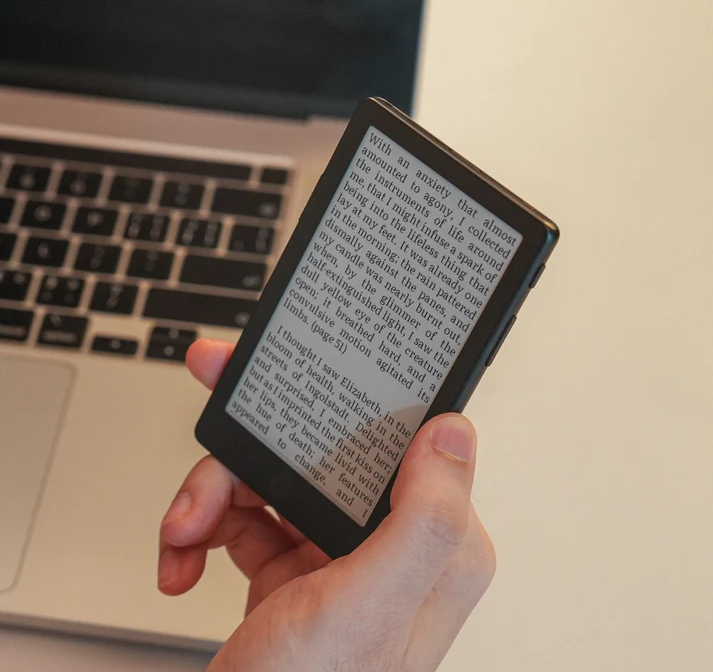
Many e-readers are technically portable, but there is a difference between something that can fit inside a backpack and something you can genuinely forget you are carrying.
Xteink builds its identity around the second idea.
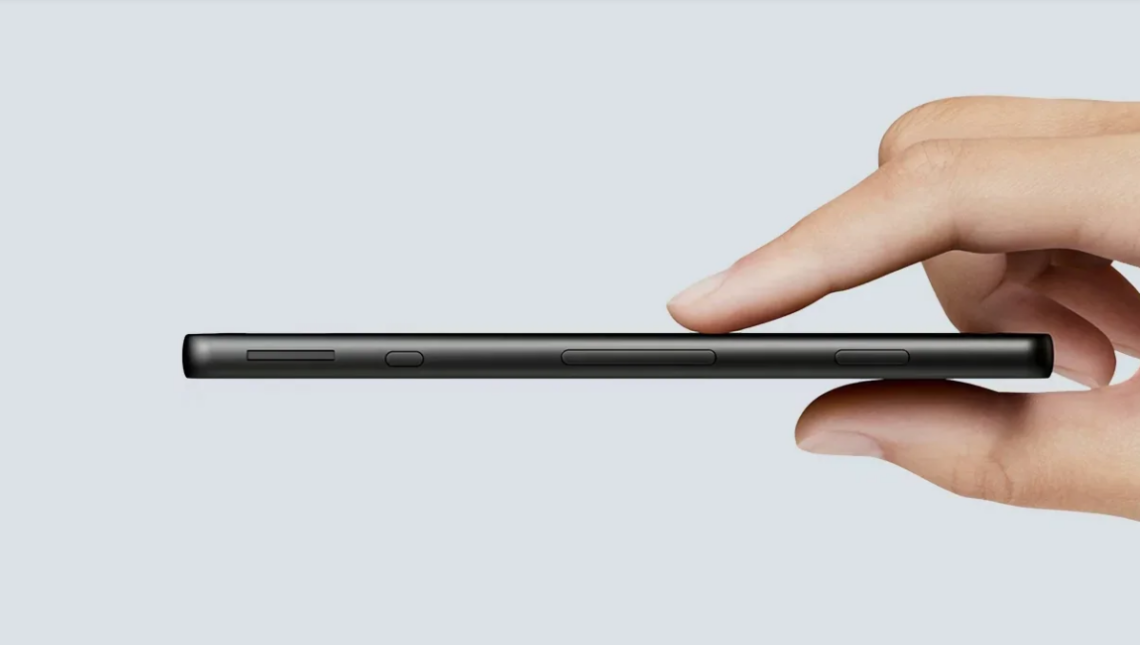
The X4, for example, measures approximately 114 × 69 × 5.9 mm and weighs just 77 grams. Its 4.3-inch E-Ink display is designed to provide a paper-like reading experience in a form factor that is closer to a small personal device than a conventional e-reader.
The X3 takes the concept even further. At around 58 grams with a 3.7-inch display, it is the lightest model in the current comparison lineup. That makes it particularly interesting for readers who want something they can slip into a pocket, small handbag, jacket, or travel pouch without adding noticeable bulk.
This compact approach changes how an e-reader can be used. Instead of planning a dedicated reading session, you can bring the device into the small gaps of the day: during a commute, while waiting for an appointment, during a coffee break, or before going to sleep.
The device becomes less like a piece of luggage and more like a reading companion.
E-Ink and the Appeal of Distraction-Free Reading
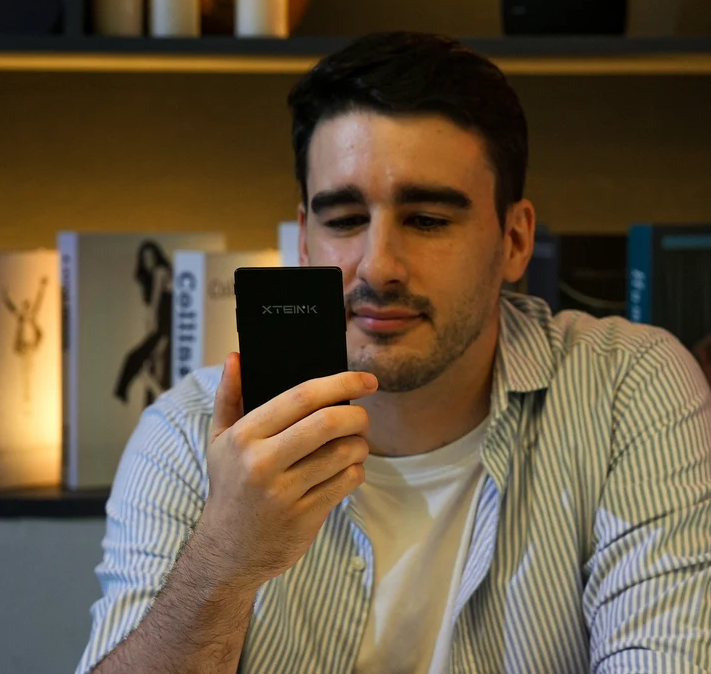
The Xteink experience is built around E-Ink rather than a conventional smartphone or tablet display. That distinction matters because the goal is not to recreate a miniature phone.
The X4’s 4.3-inch screen has a resolution of about 220 PPI, while the X3 offers a smaller display for an even more compact footprint. The paper-like visual character of E-Ink complements the brand’s minimalist philosophy: open the device, find your book, and read.
There are no social-media feeds competing for attention and no endless stream of notifications designed to pull you away from the page. For readers who find themselves checking their phones every few minutes, this simplicity can be more valuable than another high-performance feature.
The X4 also uses physical page-turn buttons, giving readers tactile control without requiring them to constantly interact with a touchscreen. That small design choice is particularly practical when reading one-handed or while walking slowly between stops.
It is a reminder that a dedicated reading device does not necessarily need more interaction. Sometimes it needs less.

Meet the Xteink X3: Smallest in Spirit and Size
The X3 is arguably the clearest expression of Xteink’s pocket-reader philosophy.
With a 3.7-inch display and a weight of roughly 58 grams, the X3 is designed for readers who prioritize portability above all else. It has 16GB of storage and supports expansion up to 256GB, giving users plenty of room for a substantial personal library despite its tiny physical dimensions.
Its 650mAh battery is rated for up to 14 days under typical reading conditions of roughly one to three hours per day. That kind of endurance makes sense for a device intended to accompany you rather than remain permanently connected to a charger.
The X3 also supports common formats including EPUB and TXT, along with image formats such as JPG and BMP. Its physical buttons reinforce the traditional page-by-page reading experience.
For someone who already has a large digital library and wants the simplest possible way to carry it, the X3 makes a compelling case for going smaller.
The X4: A Balanced Everyday Reader
If the X3 is about extreme portability, the X4 sits closer to the middle ground.
Its 4.3-inch display provides more screen space while the device remains only 77 grams and about 5.9 mm thick. The X4 includes 16GB of storage and supports expansion through a microSD card, with compatibility for capacities up to 256GB.
One of its most interesting features is the magnetic-ready design. Xteink includes magnetic stick-on rings that allow the reader to attach to compatible surfaces or accessories, adding flexibility beyond simply holding the device in your hand.
The X4 also supports Wi-Fi at 2.4GHz and Bluetooth wireless technology, uses USB-C, and offers physical power and page-turn buttons. Its 650mAh battery is advertised for up to 14 days based on typical daily reading.
The result is a device that feels deliberately restrained. It has the essentials needed for modern digital reading without turning the e-reader into another general-purpose computer.
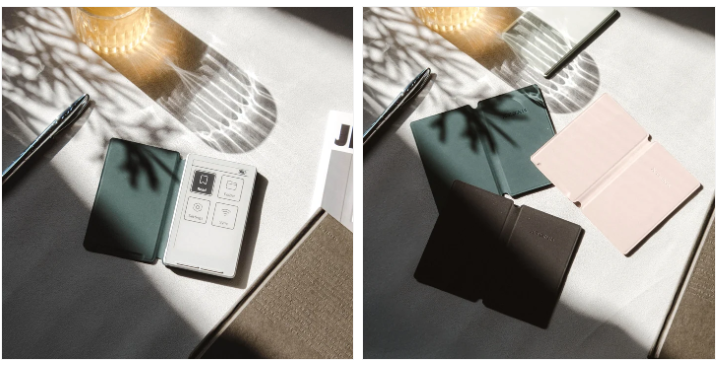
X4 Pro: The More Versatile Pocket Option
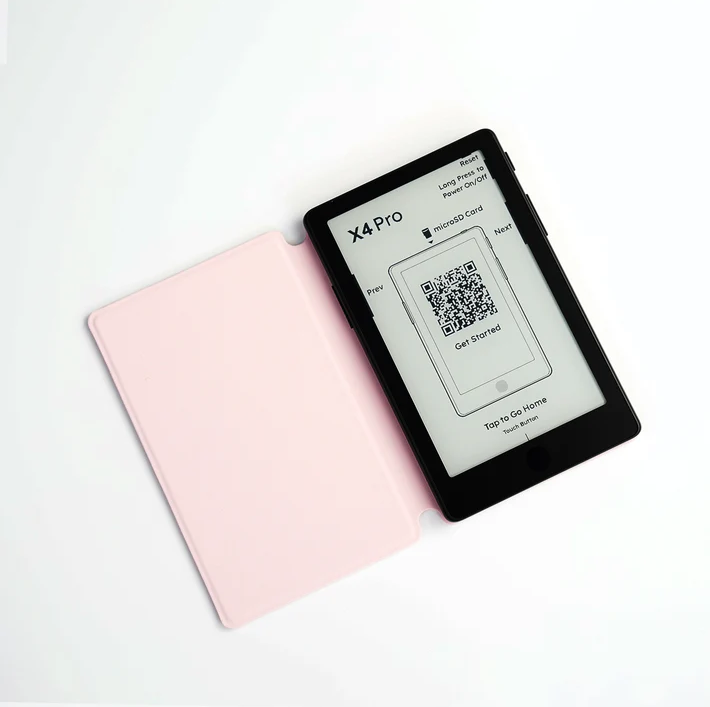
For readers who want the compact concept but do not want to give up convenience features, the X4 Pro represents the more feature-rich direction.
It retains the 4.3-inch display size but adds both a touchscreen and physical buttons. More importantly, it includes a front light, making it more adaptable to different environments, including reading when ambient lighting is limited.
The X4 Pro also increases the battery capacity to 1,100mAh and weighs about 72 grams according to Xteink’s comparison information. Like the other current models, it provides 16GB of storage with expansion up to 256GB.
This combination makes the X4 Pro particularly interesting for people who want one small e-reader capable of handling a wider range of situations. Physical buttons preserve the tactile reading experience, while the touchscreen offers another method of navigation.
It is still a pocket e-reader, but it does not feel quite as minimalist as the X3 or X4.
A Product Line Built Around Different Reading Habits
One of the more interesting aspects of Xteink is that its models are not simply arranged as basic, better, and best.
Instead, they correspond to different priorities.
The company’s own comparison describes the X3 as being aimed at ultra-light portability, the X4 at focused everyday reading, and the X4 Pro at day-and-night reading.
That makes choosing between them less about chasing specifications and more about asking a practical question: How do you actually read?
If your biggest concern is carrying as little as possible, the X3 is the natural candidate. If you want a slightly larger display without sacrificing the pocketable concept, the X4 may be the sweet spot. If you frequently read in different lighting conditions and appreciate touch controls, the X4 Pro offers the broadest feature set.
This is a useful way to think about e-readers generally. The best device is not necessarily the one with the longest specification sheet. It is the one that disappears into your routine.
Accessories That Extend the Experience
Xteink‘s ecosystem also includes accessories designed around its compact readers. Depending on the model, shoppers can find magnetic cases, screen protectors, protective cases, reading lights, adhesive metal rings, and charging accessories.
The magnetic design is particularly consistent with the brand’s overall approach. Rather than simply treating accessories as decorative extras, Xteink uses them to explore different ways of carrying and positioning a tiny e-reader.
There is, however, an important detail for prospective buyers: accessories are not universally interchangeable across the X3, X4, and X4 Pro families. Xteink specifically notes that accessories for one series may not work with another, so checking model compatibility before ordering is worthwhile.

More Freedom for Readers Who Like to Experiment
Another intriguing part of the Xteink ecosystem is its relationship with firmware and customization.
The X4 is marketed as an e-reader with “firmware freedom” and a developer-oriented angle. More recently, third-party CrossPoint Reader firmware has expanded the possibilities for X3, X4, and X4 Pro owners, including support for plug-ins that can help users access services and protected ebook content.
This development is significant because small e-readers can otherwise be limited by their software ecosystems. For technically curious users, firmware experimentation can turn a simple reading device into a more flexible personal tool.
At the same time, firmware customization is not necessary to appreciate what Xteink is trying to accomplish. The appeal of the hardware remains straightforward: compact dimensions, low weight, E-Ink readability, physical controls, and long battery life.
Who Might Enjoy Xteink?
Xteink is not trying to be everything for everyone—and that may be one of its strengths.
The brand is especially interesting for readers who:
- Want an e-reader that genuinely fits in a pocket
- Prefer E-Ink to a phone or tablet screen
- Find smartphones too distracting for reading
- Travel frequently and want to minimize baggage
- Enjoy physical page-turn buttons
- Maintain a large digital library
- Appreciate compact or unconventional technology
- Like experimenting with alternative firmware and open-ended device possibilities
It may be less suitable for someone who primarily reads large-format PDFs, wants a tablet-sized display, or expects a full app ecosystem straight out of the box.
That distinction is important. Xteink‘s appeal comes from specialization, not universality.

Why Small Devices Can Make a Big Difference
Technology often follows a predictable path: larger displays, more features, faster processors, and increasingly complicated interfaces.
Xteink goes in the opposite direction.
Its products suggest that there is still room for technology designed around a single activity. A device does not have to replace your phone or computer to be useful. It can simply make one thing—reading—more convenient.
That philosophy also explains why weight and physical dimensions matter so much here. A 58- or 77-gram reader changes the equation of carrying a personal library. You no longer need to decide whether a book is worth taking with you. You can simply take the entire library.
And perhaps that is the most interesting thing about Xteink. The company’s products are not trying to make reading more technologically impressive. They are trying to make reading easier to carry into ordinary life.

Final Thoughts
Xteink occupies an unusual corner of the e-reader market, focusing on devices that are remarkably compact without abandoning the fundamentals readers care about.
The X3 offers extreme portability, the X4 provides a balanced pocket-reading experience, and the X4 Pro adds a front light and touchscreen for greater flexibility. Across the range, the emphasis remains on lightweight hardware, E-Ink displays, physical controls, expandable storage, and long battery life.
For modern readers surrounded by increasingly distracting screens, that simplicity can feel refreshing.
Sometimes the most useful technology is not the device that can do everything. It is the one that does exactly what you want—and then gets out of the way so you can enjoy it.