Childhood is filled with little discoveries, big questions, and imaginative adventures. A simple wooden toy can become a bustling grocery store, a play kitchen can turn an ordinary afternoon into a pretend family dinner, and a cozy tent can become a secret hideaway. These moments are more than entertainment; they are opportunities for children to explore their surroundings, express themselves, and develop new skills.
This is the idea behind Tiny Land, a children’s toy and play furniture brand that focuses on combining creativity, purposeful play, and family-friendly design. Through its collection of wooden toys, pretend-play sets, indoor play tents, climbing equipment, and children’s furniture, Tiny Land aims to make everyday play more engaging while helping parents create welcoming spaces for their little ones.
Rather than treating toys as objects that simply occupy a child’s attention, Tiny Land emphasizes experiences that encourage imagination and independent exploration. Its products are designed to give children room to invent stories, imitate everyday activities, practice coordination, and enjoy the freedom of learning through play.
1. A Family-Inspired Brand with a Meaningful Beginning
Every brand has a story, but Tiny Land’s beginnings are particularly connected to the experience of family life. According to the founders, Neo and Cherie, the original inspiration came from a handmade wooden shop kit that Cherie gave Neo for his twentieth birthday. The two spent an afternoon assembling the miniature shop together, discovering how enjoyable a hands-on creative project could be.
Although they initially pursued careers in banking and law after university, the idea of building something of their own never disappeared. When Cherie became pregnant, they decided to turn their shared interest in traditional toys into a brand that could offer something memorable for their daughter and other children.
Tiny Land began in Grandpa’s garage, where the founders developed wooden toys, including a play kitchen and a teepee tent. Their goal was to introduce children to toys that could inspire creativity without relying entirely on electronic entertainment. As more families discovered the products, parents began sharing stories about their children’s imaginative adventures.
What started as a personal family project gradually developed into a broader collection of children’s play products. The original wooden shop kit also became a reminder of the simple experience that inspired the brand in the first place.
This background helps explain why Tiny Land places such importance on imaginative play, traditional materials, and products that bring families together. Its philosophy is not simply about creating attractive toys; it is about giving children their own little environments in which to discover, experiment, and create stories.
2. Wooden Play Kitchens That Turn Everyday Activities into Adventures
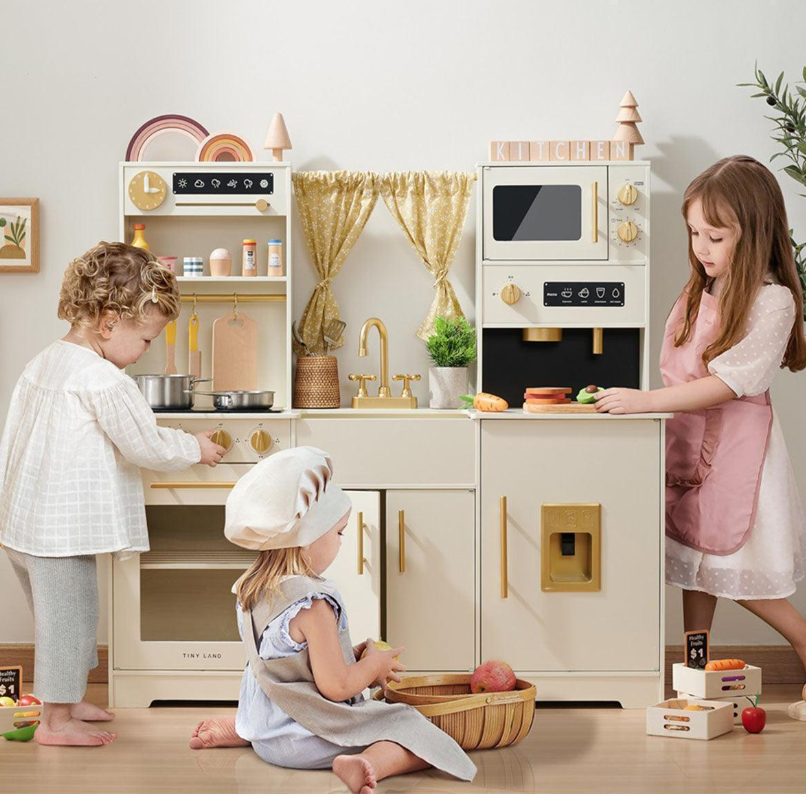
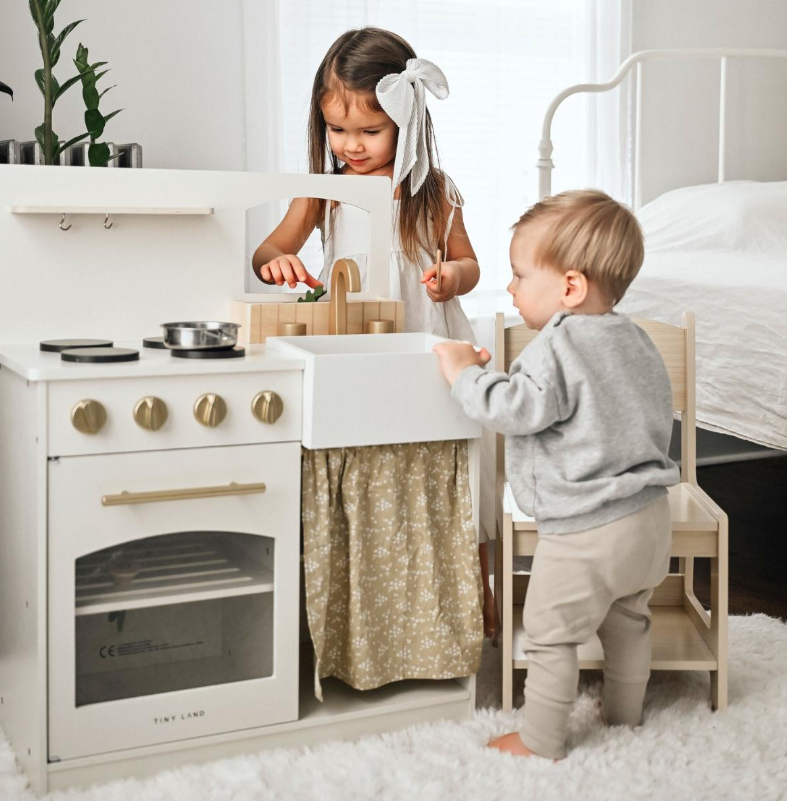
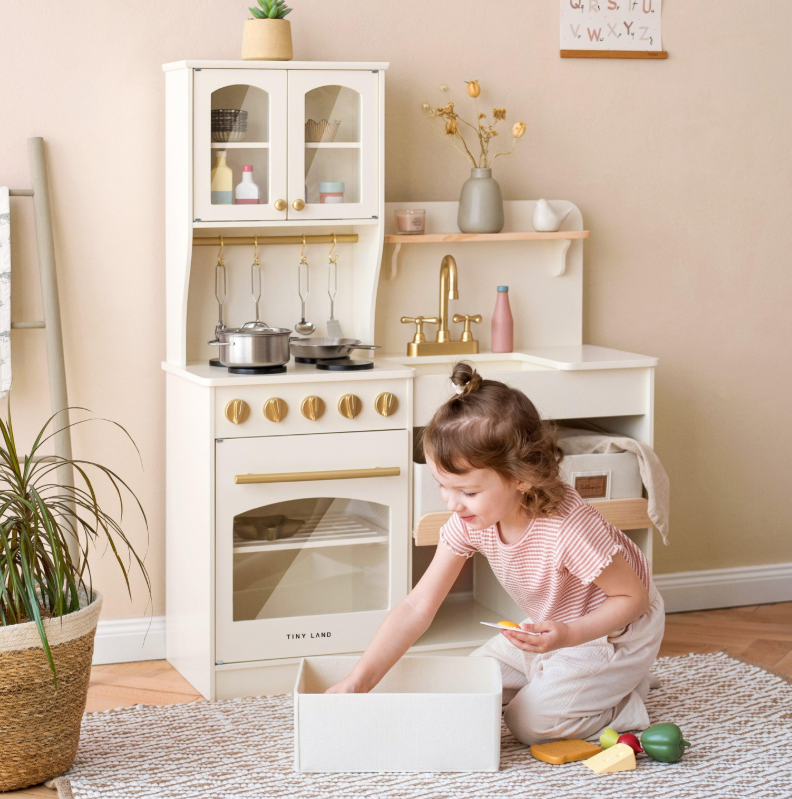
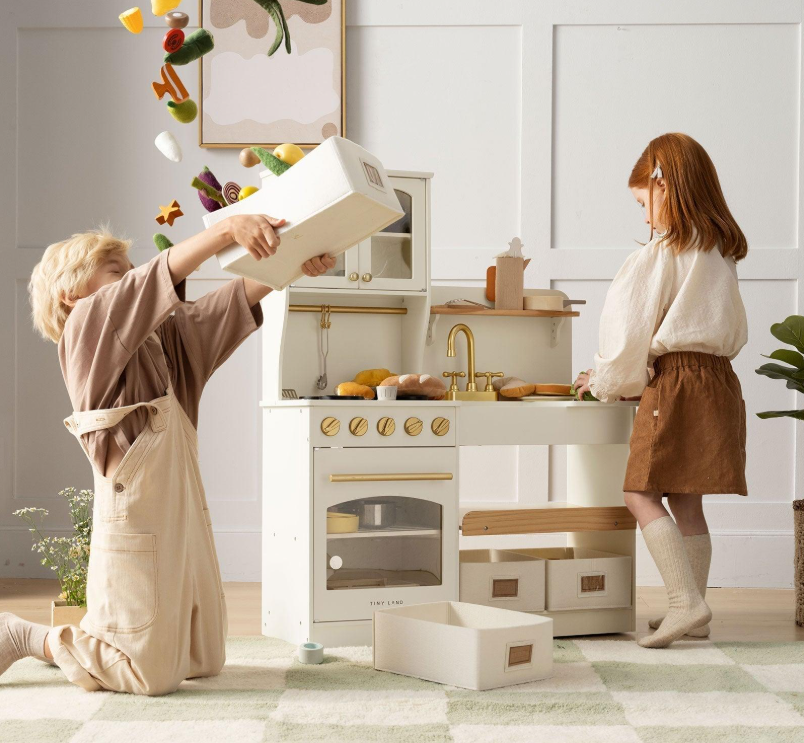
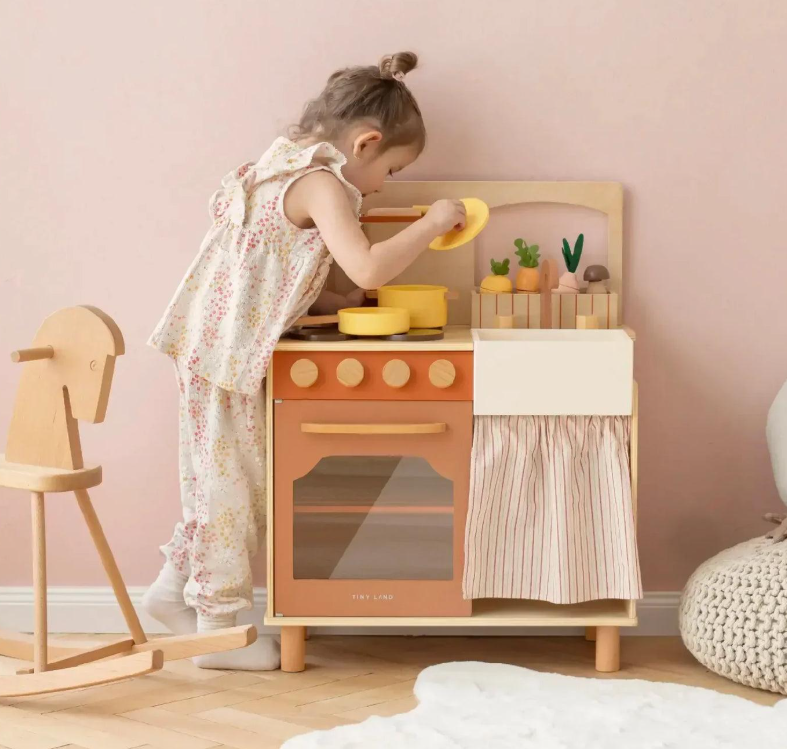
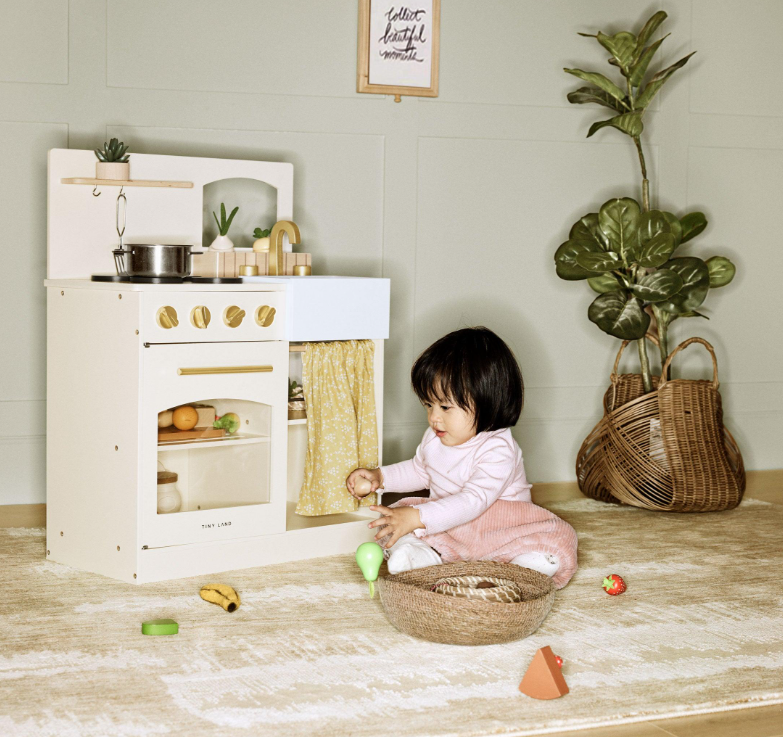
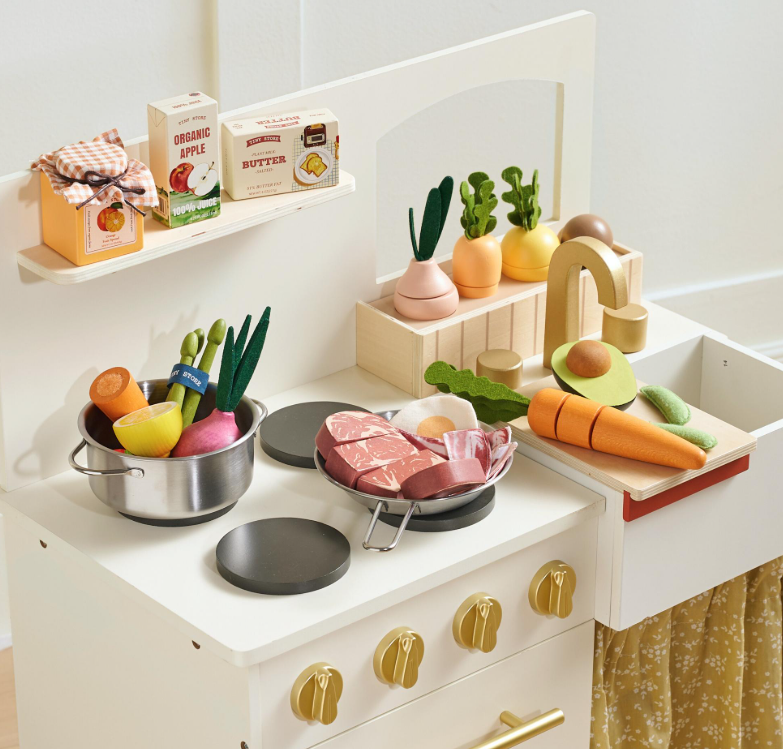
One of Tiny Land’s most recognizable product categories is its wooden play kitchen collection. These pretend cooking sets bring familiar household activities into a child-sized environment, allowing young children to imitate the routines they observe at home.
A play kitchen can become the center of countless imaginary scenarios. Children might pretend to prepare breakfast, organize a restaurant, bake a birthday cake, or cook dinner for their favorite stuffed animals. Even a simple activity such as arranging pretend ingredients can develop into an elaborate game involving different roles and stories.
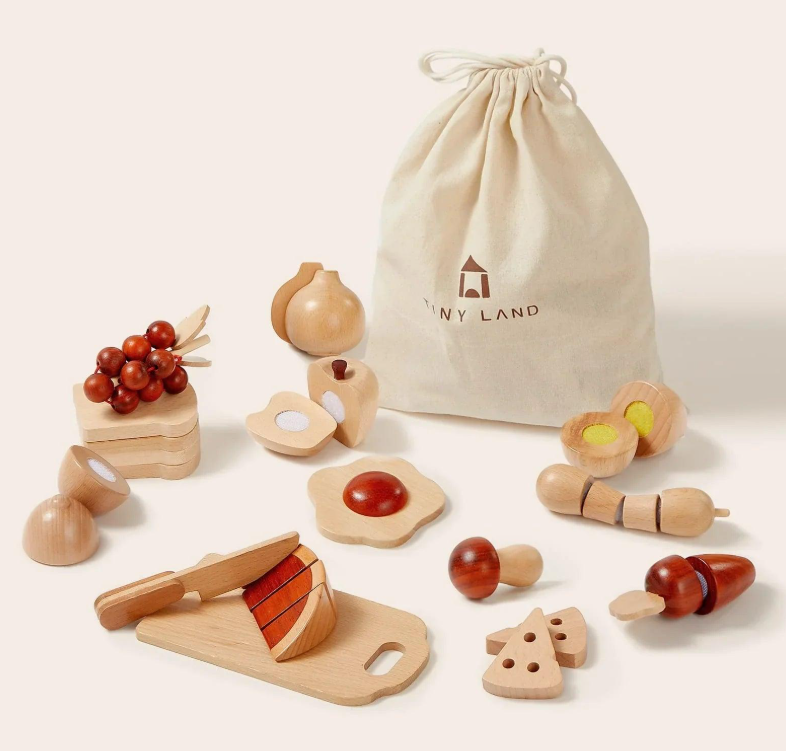
Tiny Land offers several kitchen designs, including its Iconic Wooden Play Kitchen and Wooden Play Kitchen with Storage. The collection also includes complementary accessories, such as play food and a wooden refrigerator, allowing families to build a more complete pretend-play environment.
The appeal of these products lies partly in their combination of visual design and practical play features. Wooden furniture-style toys can feel like miniature versions of real household objects, helping children connect their games with everyday experiences. Storage features are also useful because children can learn to organize their pretend cooking accessories after playtime.
Parents can make the experience even more engaging by introducing simple activities. For example, children can organize a pretend grocery list, sort food by color, or create a restaurant menu. These games encourage communication, early counting, categorization, and cooperation.
For families who want toys that encourage active participation rather than passive entertainment, a wooden play kitchen can be a rewarding addition to a playroom.

3. Dollhouses That Give Imagination a Place to Grow
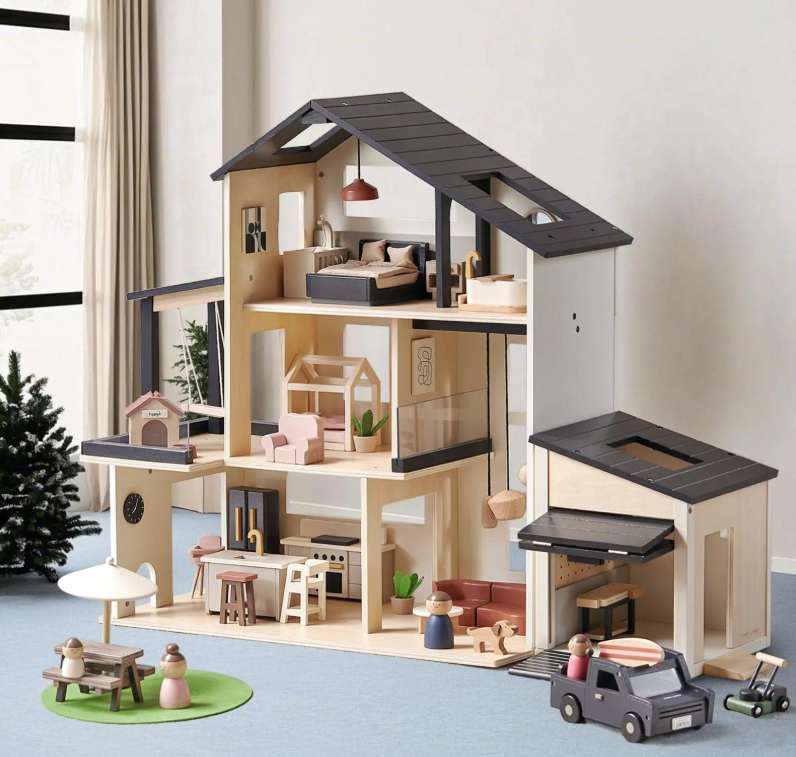
Dollhouses have remained popular across generations because they give children the freedom to create entire miniature worlds. Tiny Land brings this classic play experience into its collection through wooden dollhouses and related accessories.
Its Sweetwood Edge Dollhouse and Sweetwood Pegasus Dollhouse are examples of products designed around imaginative storytelling. With different rooms, furniture arrangements, and optional play accessories, these miniature homes provide plenty of opportunities for children to invent their own characters and scenarios.
A dollhouse can represent much more than a small building. It might become a family home, a vacation house, a busy neighborhood, or even a setting for an imaginary adventure. Children decide what happens, who lives there, and how each room should be used.
This open-ended nature makes dollhouse play particularly interesting. Children can rearrange furniture, move dolls between rooms, and develop stories that change every time they play. These activities may encourage spatial awareness, creative thinking, language development, and emotional expression.
Dollhouses can also create opportunities for social interaction. When siblings or friends play together, they can assign characters, negotiate different roles, and build stories collaboratively. Parents can join in occasionally, too, helping children develop more elaborate narratives without taking control of the game.
Tiny Land‘s wooden dollhouse collection is therefore worth exploring for families looking for toys that combine traditional play with opportunities for storytelling and creativity.
4. Montessori-Inspired Toys for Hands-On Discovery
Children learn through observation, movement, repetition, and experimentation. Montessori-inspired toys reflect these natural learning processes by encouraging children to interact with objects and discover how things work.
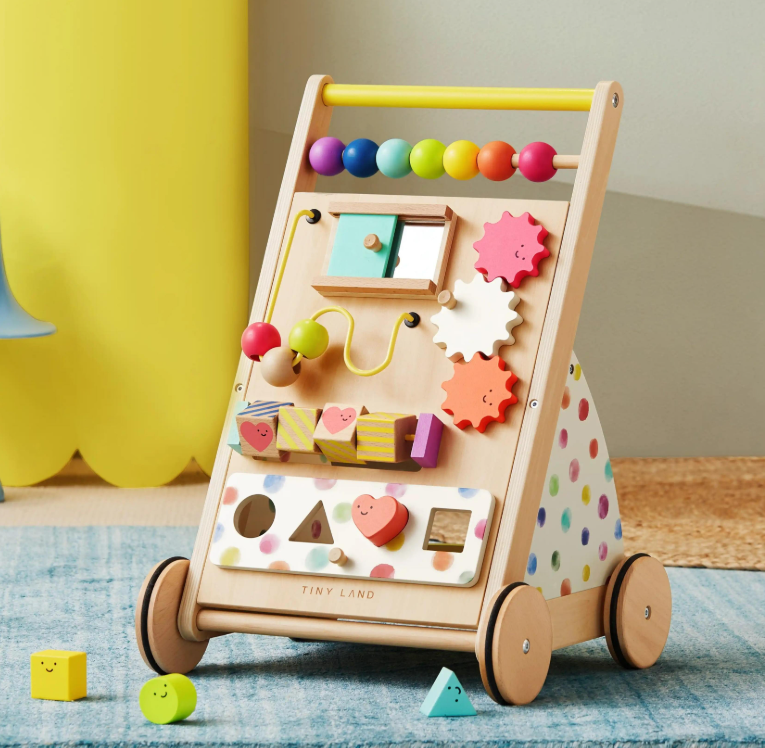
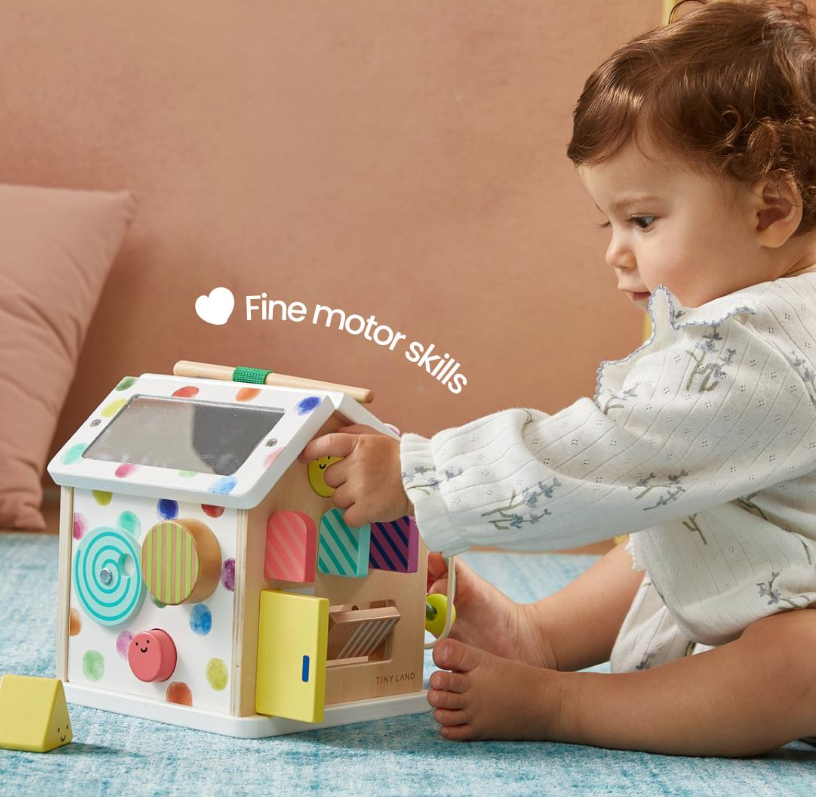
Tiny Land offers a selection of baby and toddler products in this category, including wooden activity cubes, activity walkers, and Montessori toy sets. These products are intended to support hands-on exploration during important stages of early childhood development.
An activity cube, for example, can introduce several different interactions within one compact toy. Depending on its features, a child might explore moving components, matching shapes, turning objects, or practicing simple hand movements. Repeating these activities allows children to become more familiar with cause and effect while developing coordination.
A wooden baby walker offers a different kind of experience. As babies begin exploring movement, a suitable walker can provide an opportunity to practice standing and walking with adult supervision. Parents should always follow the manufacturer’s age, weight, assembly, and safety instructions when choosing mobility-related products.
Tiny Land also organizes its shopping experience around different age groups, including babies, toddlers, preschoolers, and older children. This makes it easier for parents to consider products according to their child’s current abilities rather than choosing toys based on appearance alone.
The most valuable aspect of Montessori-inspired play is that it allows children to participate actively. Instead of simply watching a toy perform an action, they can experiment, make discoveries, and gradually develop confidence in their abilities.
5. Active Play Products for Movement and Physical Exploration
Not all childhood play happens at a table or in front of a miniature kitchen. Young children also need opportunities to move their bodies, explore physical challenges, and develop coordination through active experiences.
Tiny Land addresses this need with products such as PlayNest Climbing Blocks, climbing sets, play tunnels, and ball pit accessories. These products introduce movement into indoor play spaces and offer alternatives to more conventional toys.
Climbing blocks, for example, can be arranged in different configurations to create simple obstacle courses. Children can practice stepping, crawling, climbing, and moving around the structures. As they become more familiar with the equipment, parents can introduce new arrangements to keep the experience interesting.
Play tunnels offer another form of exploration. Crawling through a tunnel, moving toys from one side to another, or creating a pretend adventure route can encourage movement while adding an imaginative element to physical activity.
A ball pit can also become a versatile play area. Children may enjoy sorting balls, tossing them into containers, or incorporating them into pretend games.
These activities can support gross motor development, balance, coordination, and spatial awareness. However, active play products should always be selected according to the child’s developmental stage and available space. Adult supervision, appropriate flooring, and adherence to product-specific safety guidelines are essential.
For families who want to encourage more movement at home, Tiny Land’s active-play collection offers several ideas for creating an engaging indoor play environment.
6. Play Tents and Children’s Furniture for Comfortable Spaces
A child’s play environment can influence how they spend their free time. Having a dedicated corner for reading, relaxing, or imaginative activities can make everyday routines feel more enjoyable. Tiny Land recognizes this by offering play furniture and indoor tents alongside its traditional toys.
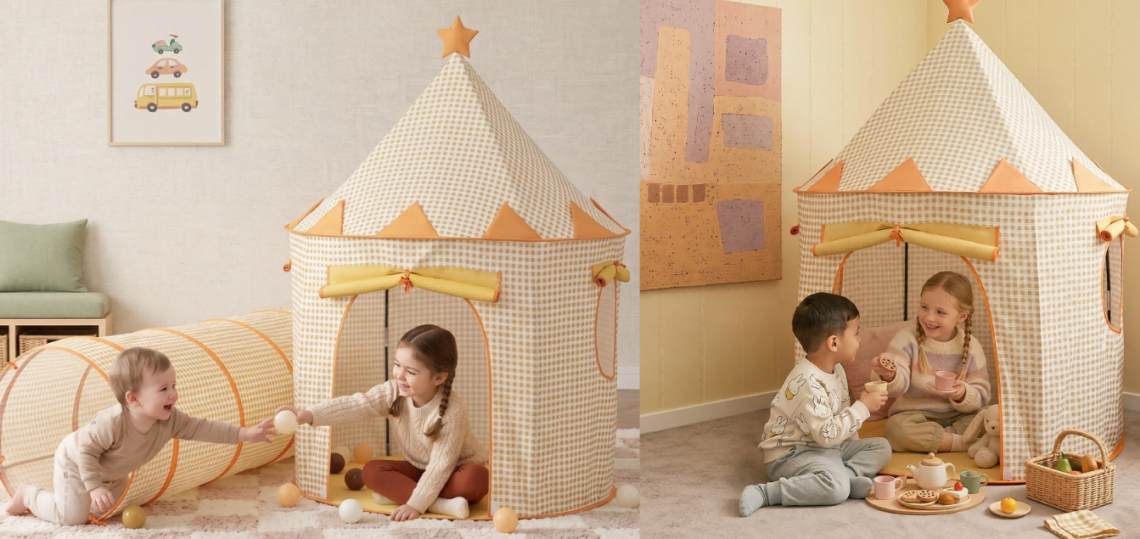
Its teepee tents are designed to give children a small space of their own. A tent can become a reading corner, a pretend campsite, a puppet theater, or a quiet place to relax with favorite stuffed animals. Adding cushions, blankets, and picture books can make the space even more inviting.
The brand also offers children’s seating options, including GentleSnug Kid Chairs and corduroy-style seating. These products help create child-friendly areas where little ones can sit comfortably while reading, drawing, or playing with smaller toys.
One appealing feature of this category is its connection to home decoration. Parents often want children’s furniture to be functional without making the entire living space feel like a traditional play center. Soft textures, natural-looking materials, and coordinated designs can help toys and furniture blend more naturally into family interiors.
When selecting a tent or chair, parents should consider available floor space, dimensions, materials, ease of cleaning, and the child’s age. A thoughtfully arranged play corner can encourage children to enjoy independent activities while giving the family home a more organized feel.
7. Art Easels and Creative Activities Beyond Pretend Play
Creative expression is another important part of childhood development. Drawing, writing, experimenting with colors, and making simple pictures allow children to communicate ideas in ways that do not always require words.
Tiny Land includes children’s easels and magnetic chalkboards in its product range. Its Double-Sided Arched Magnet Chalkboard and Magnitales easel products offer options for families who want to establish a small creative station at home.
An easel can support many different activities. Younger children might enjoy making simple marks and recognizing colors, while preschoolers can practice drawing shapes, writing letters, and creating imaginative pictures. Older children may use the same space for more detailed artwork or early writing exercises.
A magnetic surface can add another dimension to creative play. Children can arrange magnetic pieces, experiment with different combinations, and create pictures or simple stories.
Parents can also turn art time into a shared family activity. Rather than focusing on producing perfect drawings, they can encourage children to describe their pictures, explain their choices, and experiment with new materials.
A dedicated art area can make creative activities easier to access throughout the day. Keeping suitable paper, washable drawing materials, and age-appropriate accessories nearby can help children develop a habit of exploring their artistic interests.
8. How to Choose the Right Tiny Land Products
With products covering several types of play, choosing where to begin depends on a child’s interests, developmental stage, and available space. Parents do not necessarily need to purchase an entire collection. A few carefully selected items can provide plenty of opportunities for meaningful play.
Here are some practical considerations:
- Consider the child’s age: Browse the age-based categories and check the recommended age range and product-specific safety information before purchasing.
- Identify their interests: Children who enjoy copying household activities may appreciate a play kitchen, while those who love storytelling might prefer a dollhouse.
- Think about available space: Measure the intended play area before purchasing larger items such as climbing sets, play kitchens, or tents.
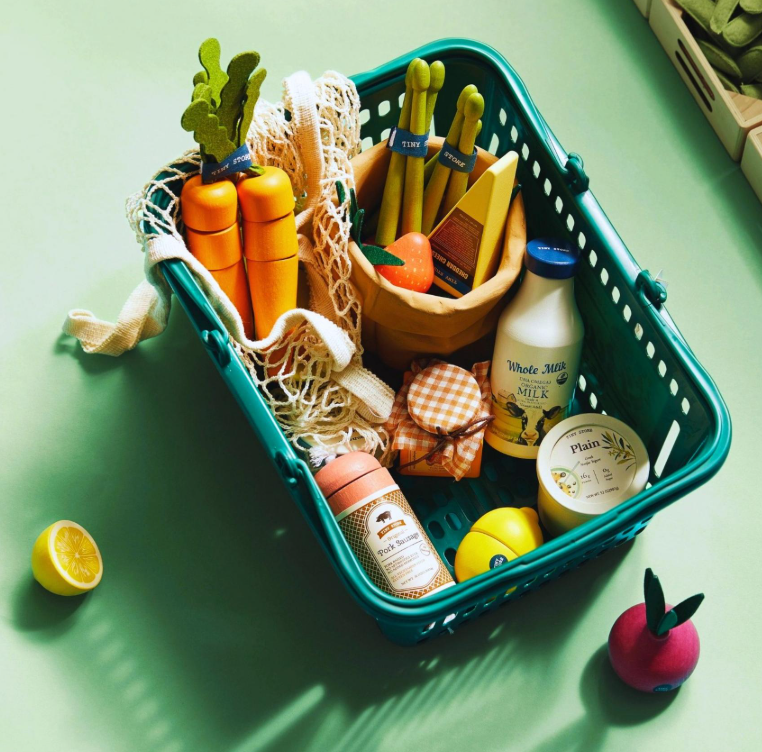
- Look for opportunities to combine play: Play food can complement a kitchen, while dolls and furniture can expand a dollhouse experience.
- Prioritize everyday usability: Consider storage, cleaning requirements, assembly instructions, and whether the product fits naturally into your family’s routine.
- Check materials and certifications: Review the individual product listing and relevant safety documentation rather than assuming every product has identical certifications.
Tiny Land’s website also organizes products by age and price, helping shoppers narrow down their choices. Its categories include baby toys, pretend play, active toys, and play furniture, making it relatively straightforward to explore different options.
9. What Makes Tiny Land Worth Exploring?
One of Tiny Land‘s main strengths is the variety of play experiences available under one brand. Instead of concentrating on a single type of toy, it brings together products that support different interests and activities.
A family might begin with a wooden activity toy for a baby, introduce a play kitchen during the toddler years, and later add a dollhouse, easel, or climbing equipment as the child’s interests develop.
The brand also highlights its commitment to carefully selected materials, including birch, pine, and cotton, across its toys, furniture, and accessories. Its family-oriented background gives the collection a consistent emphasis on creating enjoyable environments for children and practical spaces for parents.
Another useful aspect is the range of complementary products. Parents can gradually build a play area instead of purchasing unrelated toys that serve entirely separate purposes. For example, a pretend kitchen can be expanded with play food and accessories, while a reading corner can be enhanced with a tent and comfortable seating.
For shoppers who value both play opportunities and home aesthetics, this combination is worth considering.
Conclusion: Making Everyday Childhood More Imaginative
Childhood does not need complicated entertainment to be memorable. Sometimes, the most enjoyable moments come from simple activities: preparing an imaginary meal, arranging furniture in a miniature house, drawing a colorful picture, or creating a private hideaway with a play tent.
Tiny Land builds its product collection around these everyday experiences. From wooden play kitchens and dollhouses to Montessori-inspired toys, climbing equipment, art easels, and children’s furniture, the brand offers a variety of ways for families to make playtime more engaging.
Its family-inspired beginnings and focus on imaginative, hands-on activities give the brand a distinctive identity in the children’s toy market. Whether parents are preparing a nursery, refreshing a playroom, or searching for a thoughtful birthday gift, Tiny Land provides plenty of ideas to explore.
Ultimately, the value of a good toy is not measured only by its appearance or features. It is also reflected in the stories children create, the skills they practice, and the happy moments they share with the people around them. By bringing together creativity, exploration, and comfortable design, Tiny Land aims to make those little moments an enjoyable part of growing up.