Atatix Espresso Machines for Home Coffee and Milk Frothing
There is a particular kind of morning upgrade that has nothing to do with buying more coffee beans and everything to do with gaining a little more control over the cup. A home espresso machine changes the rhythm: the sound of water heating, the small pause while a shot pours, the choice between drinking it straight or turning it into something softer with milk. It is less about recreating a crowded café counter and more about making coffee feel personal again.
That is where an espresso machine such as Atatix fits naturally. The brand’s compact home models are designed around the drinks people actually make on ordinary weekdays—espresso, cappuccino, latte, macchiato, and Americano—without requiring a sprawling appliance footprint. The result is a setup that feels approachable for beginners while still giving regular coffee drinkers room to refine their routine.
A home espresso station should earn its counter space
Most kitchens do not have the luxury of an oversized coffee bar. Counter depth is limited, cabinets hang low, and every appliance has to justify the space it occupies. For that reason, the physical design of an espresso machine matters just as much as its headline specifications.
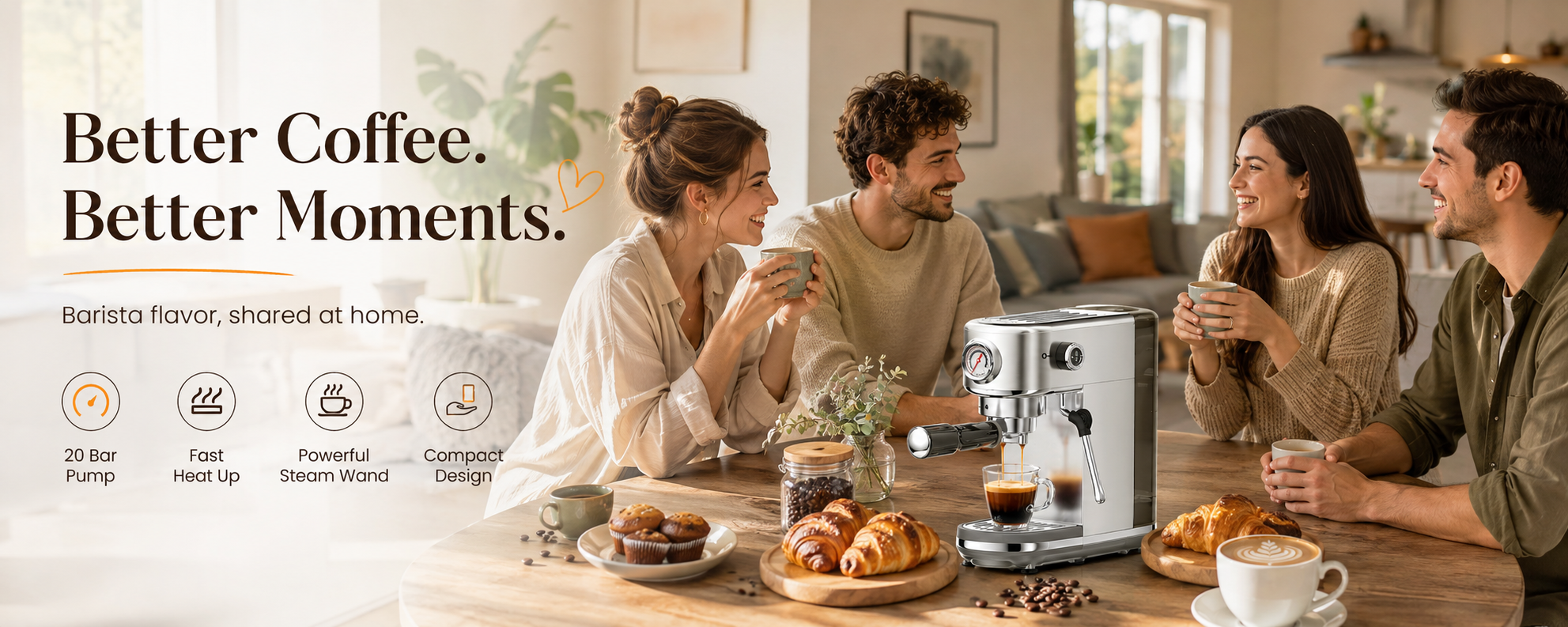
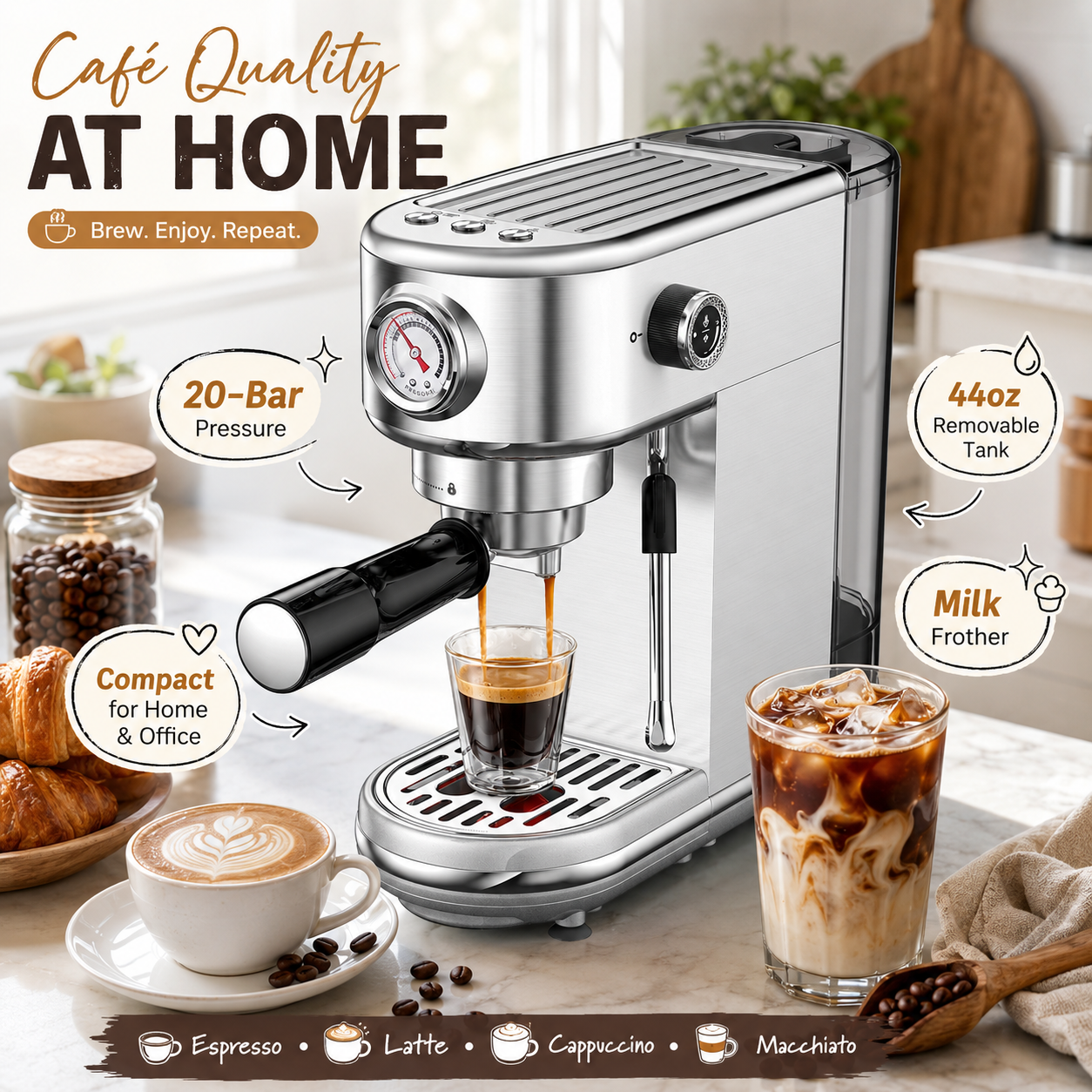
The stainless-steel Atatix espresso machine in silver is listed as a compact model with a 44-ounce removable water tank, 20-bar pressure, and a 1,350-watt system. Its listed dimensions are approximately 12 inches deep, 5 inches wide, and 11 inches high, a notably narrow profile for a machine built to handle espresso and milk-based drinks. That slim width is useful for apartments, dorm-style kitchenettes, small offices, or a tucked-away corner of a larger kitchen.
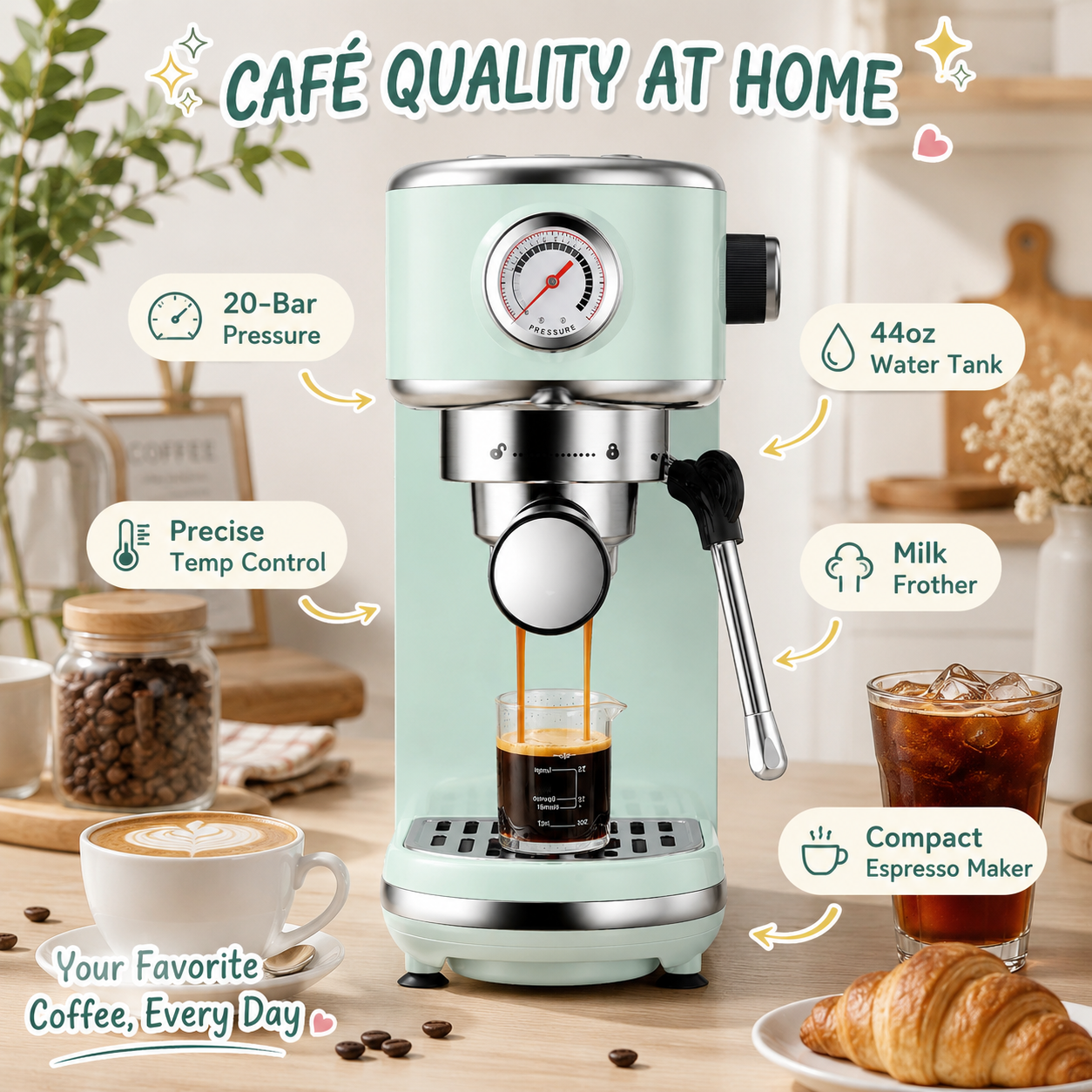
There is also a light green compact version with a 44-ounce removable tank and precise temperature control listed among its features. It measures roughly 12.24 inches deep, 7.5 inches wide, and 11.18 inches high. The color option may seem like a small detail, but it changes the role an appliance plays in a room. Rather than disappearing into a lineup of black and silver appliances, it can become part of the kitchen’s visual character.
Neither approach is inherently better. The silver finish speaks to the classic espresso-bar look: clean, durable-looking, and easy to pair with most décor. The lighter color offers something more playful without abandoning the polished feel of stainless steel. The practical takeaway is simple: a machine that looks at home on the counter is more likely to be used every day.
What 20-bar pressure means in everyday coffee terms
Pressure figures are everywhere in espresso-machine descriptions, but they can sound more technical than they need to be. Espresso relies on pressurized water moving through a compact bed of coffee. The point is to extract concentrated flavor and create the body that makes an espresso shot feel distinctly different from drip coffee.
Atatix models are listed with 20-bar pressure. That specification signals that the machine is built for the pressure-driven brewing process associated with espresso-style drinks. Of course, a good result is never produced by one number alone. Fresh coffee, a consistent grind, measured doses, tamping technique, water temperature, and cup size all influence the final shot. Still, adequate pressure is a meaningful part of the equation, and it gives home users the foundation to practice and improve.
This is also why a semi-automatic machine can be rewarding. It does not attempt to make every decision for the user. Instead, it invites a bit of participation: preparing the coffee, selecting a shot size, and deciding when to stop. That hands-on process is not a burden once it becomes familiar. For many people, it is the enjoyable part—the small ritual between “I need coffee” and “this tastes exactly how I wanted it.”
Milk frothing is where the machine becomes more versatile
A capable home espresso machine should not be limited to tiny straight shots. The milk-frothing function is what opens the door to a wider rotation of drinks. One day it might be a cappuccino with a firmer, foam-forward texture; the next, a latte with warm milk and a softer layer of foam. A macchiato, meanwhile, needs only a restrained amount of milk to change the shape of the espresso without hiding it.
The Atatix product listings identify a milk frother as part of the setup, making the machine suitable for home drinkers who want more than black coffee. That versatility matters more than it first appears. Households rarely have one coffee preference. One person may want a double espresso before work, another may prefer a latte in the afternoon, and a guest may simply want an Americano. A single machine that accommodates those different directions makes a coffee corner far more useful.
For new users, milk can be the most intimidating stage. The easiest way to begin is not to chase elaborate café-style latte art. Start with cold milk in a small pitcher, work in modest quantities, and focus on texture. For a cappuccino, aim for more air and a lighter foam. For a latte, introduce less air and prioritize smooth, heated milk. The first few attempts may be imperfect, but that is normal. Better texture often comes from repetition rather than complicated technique.
It is also worth keeping expectations practical. Milk frothing is a skill, and different dairy and plant-based milks behave differently. Whole dairy milk is often forgiving for beginners because of its fat and protein balance, while oat, almond, soy, and other alternatives can vary widely by brand and formulation. The machine provides the tool; your preferred milk and a little trial and error determine the finish in the cup.
The 44-ounce removable tank solves a small but recurring annoyance
Water-tank capacity rarely gets the excitement of pressure or frothing, yet it has a major effect on convenience. A 44-ounce removable tank means less frequent refilling than a very small reservoir, while the removable design makes the process less awkward. Instead of carrying a carafe or trying to pour water beneath cabinets, the tank can be lifted out, filled at the sink, and returned.
For a one-person espresso routine, that capacity can cover several drinks before another refill is needed. In a household with more coffee drinkers, it still keeps the morning line moving more smoothly. Just as important, a removable tank encourages better habits. Fresh water is easy to add, and the reservoir is easier to rinse as part of regular maintenance.
The same principle applies to cleanup in general. Espresso machines deliver their best results when they are treated as working kitchen equipment rather than decorative appliances. Empty the used coffee after brewing, wipe up stray grounds, clean the frothing component after milk drinks, and avoid letting residue sit until the next day. These are brief tasks, but they preserve flavor and make the next coffee feel uncomplicated.
A practical guide to getting started
The strongest reason to choose a compact semi-automatic espresso maker is not that it makes coffee instantly perfect. It is that it gives you a repeatable framework. With a few basic habits, the process becomes both efficient and satisfying.
- Warm the machine and your cup. A warm cup helps prevent a small espresso from cooling too quickly after it is poured.
- Use coffee that suits espresso brewing. Freshness matters, but so does grind consistency. If shots run too quickly or taste thin, the grind may be too coarse; if they drip very slowly and taste harsh, it may be too fine.
- Keep the dose consistent. Changing several variables at once makes troubleshooting difficult. Adjust one element at a time.
- Wipe the frothing component immediately after milk drinks. Milk residue is far easier to remove while it is fresh.
- Use the removable reservoir deliberately. Refill with fresh water and rinse it regularly rather than treating it as a set-it-and-forget-it part.
These habits are not meant to turn a weekday coffee into laboratory work. They simply make good results easier to repeat. Once the workflow becomes familiar, the process can take only a few focused minutes—and it is often more pleasant than waiting in a coffee-shop queue.
Who will appreciate an Atatix espresso machine?
An Atatix espresso machine makes sense for someone moving beyond pods or standard drip coffee but not necessarily looking for a built-in grinder, a touchscreen menu system, or a large commercial-style appliance. It is especially relevant for coffee drinkers who enjoy having a hand in the process and want the option to make milk drinks at home.
It can also be a thoughtful fit for people furnishing a first apartment, setting up a compact office coffee area, or building a more intentional kitchen routine. The compact format reduces the usual concern that espresso equipment will dominate the counter. Meanwhile, features such as a 20-bar system, removable 44-ounce water tank, milk frothing capability, stainless-steel construction, and semi-automatic operation cover the essentials without making the experience feel over-engineered.
It may be less ideal for someone who wants a fully automated bean-to-cup process with no preparation at all. Semi-automatic espresso involves participation, and that is its central appeal. If you enjoy choosing your coffee, preparing it, and adjusting your drink to your own taste, the extra involvement is a feature rather than a compromise.
The value is in the routine, not just the machine
Home espresso is often described as a way to save trips to the café, but the more lasting benefit is usually the ritual. A compact espresso machine gives you the ability to make a short, intense shot when you need focus, or to slow down with a milk-based drink when the day allows it. It makes coffee more flexible without requiring a complicated setup.
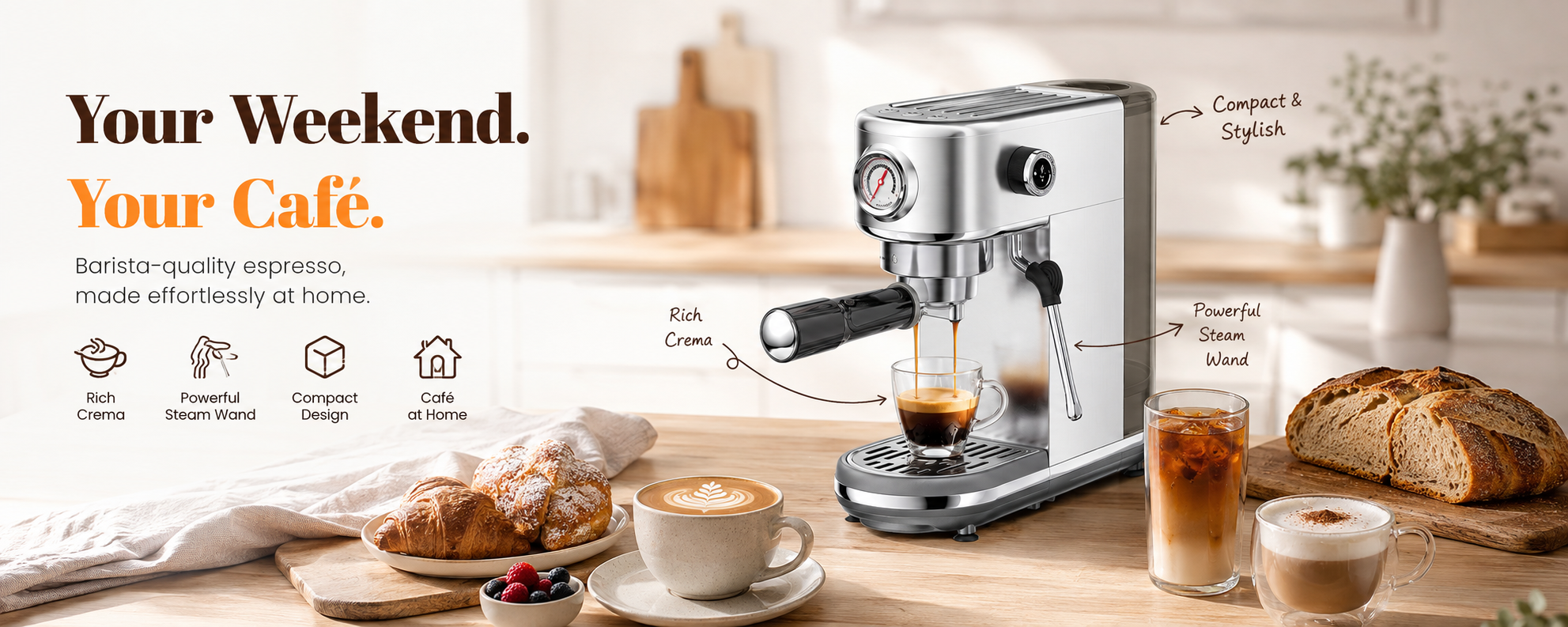
Atatix brings together the parts that matter for that routine: compact proportions, a removable water reservoir, pressure-based espresso brewing, a milk-frothing function, and finishes that can suit either a classic or more colorful kitchen. The silver model leans into a narrow stainless-steel footprint, while the light green compact version adds a distinct visual option with listed temperature-control functionality.
The best home coffee setup is not necessarily the one with the longest feature list. It is the one you look forward to using. For anyone ready to make espresso, cappuccino, latte, macchiato, or Americano part of the everyday menu, a compact Atatix machine offers a practical place to begin—and enough flexibility to keep the routine interesting.