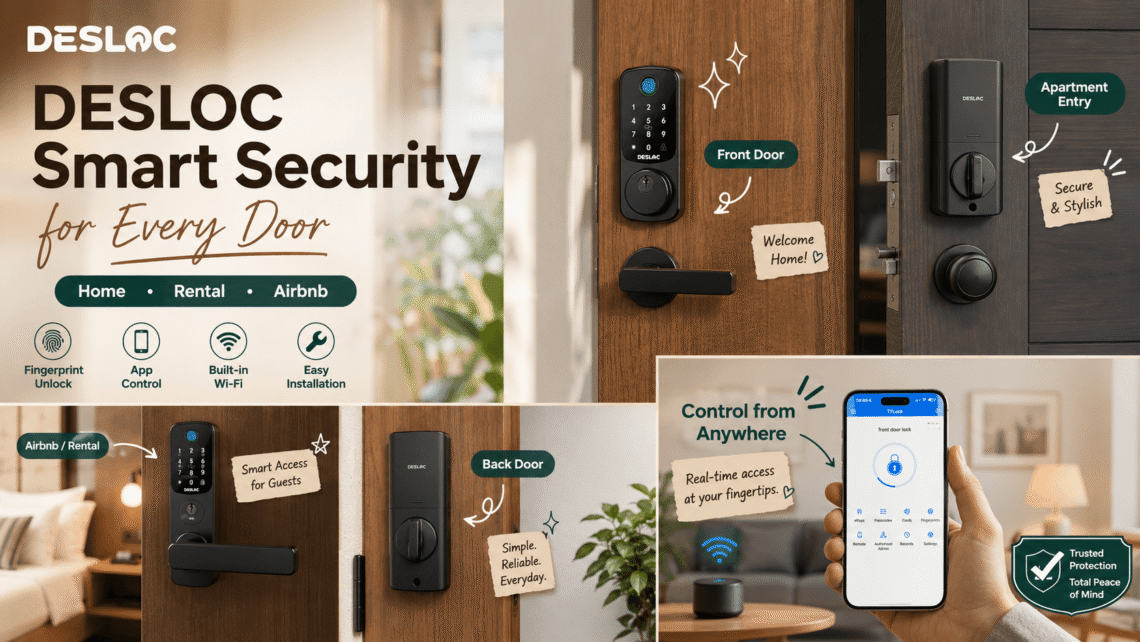
Stepping into the future of home security requires more than just replacing a key; it demands a complete reimagining of the entryway. DESLOC has positioned itself at the forefront of this evolution, engineering smart door locks that blend reliable security with intuitive, keyless entry options. The brand’s diverse catalog speaks to a deep commitment to protecting modern sanctuaries.
The Biometric Revolution at Your Fingertips
DESLOC’s approach to access is highly tactile and remarkably fast. The integration of advanced fingerprint sensors, specifically leveraging the FlashPrint algorithm, allows for biometric recognition in under a second.
- Deadbolt Precision: These modern fingerprint deadbolts offer secure, keyless entry without compromising on the architectural aesthetics of your front door.
- Integrated Lever Solutions: For interior or garage doors embeds the scanner directly into the handle, much like the B200L model which is designed to seamlessly replace an existing traditional knob or lever.
- Classic Meets Smart: Even classic hardware shapes get an upgrade, as seen in the smart knob, which is perfect for retrofitting older door profiles while adding modern intelligence.
Connectivity and Intelligent Control
A true smart lock must communicate effortlessly with its owner. DESLOC eliminates the need for cumbersome external hubs by offering distinct models with built-in Wi-Fi capabilities.
- Visual Feedback: Certain deadbolt models, like the innovative design, incorporate visible display screens to instantly communicate system settings and battery levels directly on the lock.
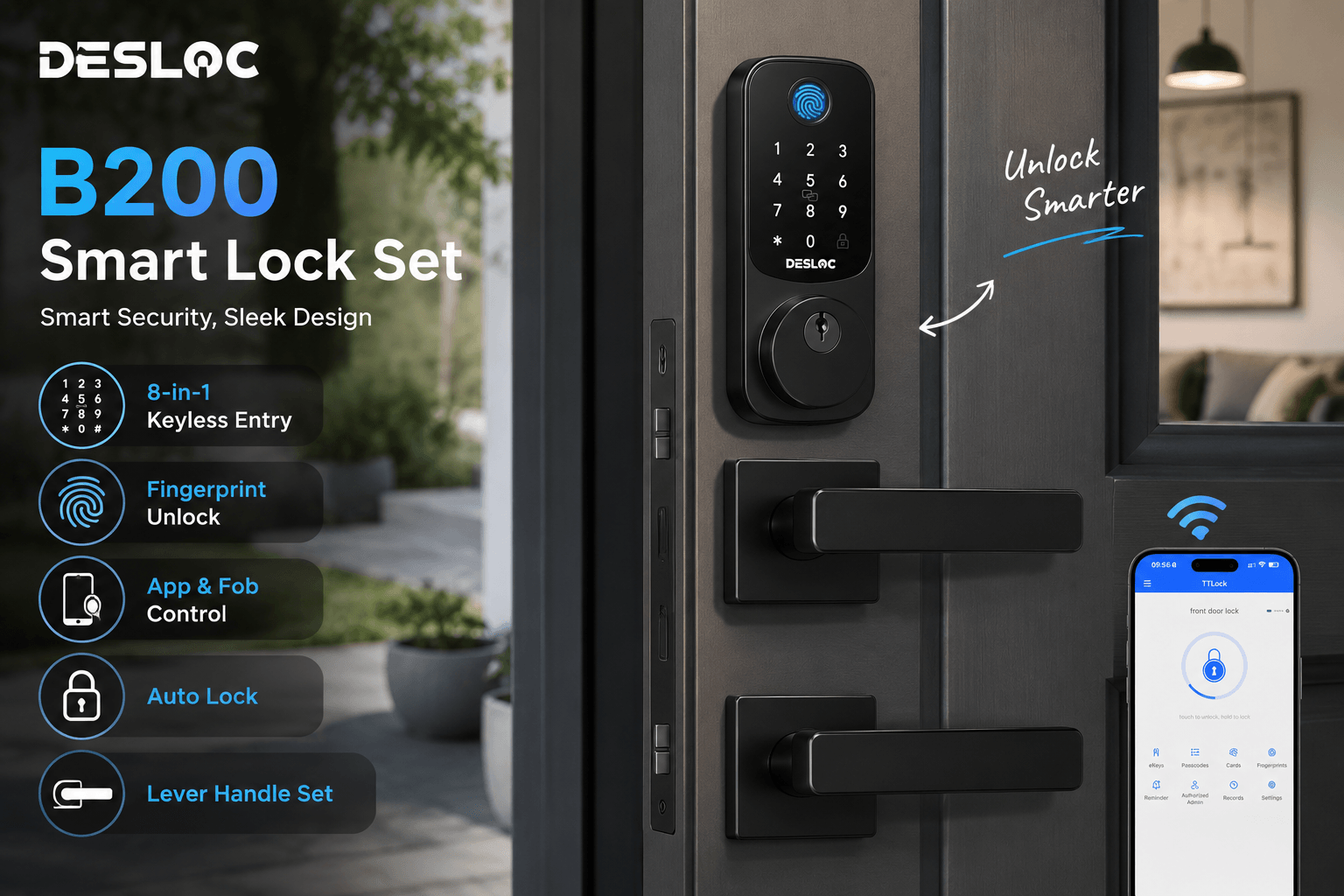
- App Ecosystem: Through intuitive mobile applications like the TTLock app, users can effortlessly manage lock features and monitor access from anywhere.
- Network Integration: The streamlined Wi-Fi model in demonstrates how effortless remote control can be, allowing you to monitor, lock, or unlock your door while you are miles away.
A Comprehensive Ecosystem for Every Entry
“Security is not a one-size-fits-all solution; it is an interconnected ecosystem built around the specific structural needs of a home.”
DESLOC provides a highly modular approach to access control. Whether you require an IP54-rated exterior deadbolt to withstand the elements or a sleek bedroom lever for internal privacy, there is a specialized device ready for a straightforward installation. By prioritizing robust hardware, rigorous testing, and sophisticated software, DESLOC transforms the traditional door into a highly intelligent gateway.
Are you looking to upgrade a specific entryway in your home, or are you considering a whole-house smart lock ecosystem?
Fingerprint Access as a Core Part of the DESLOC Experience
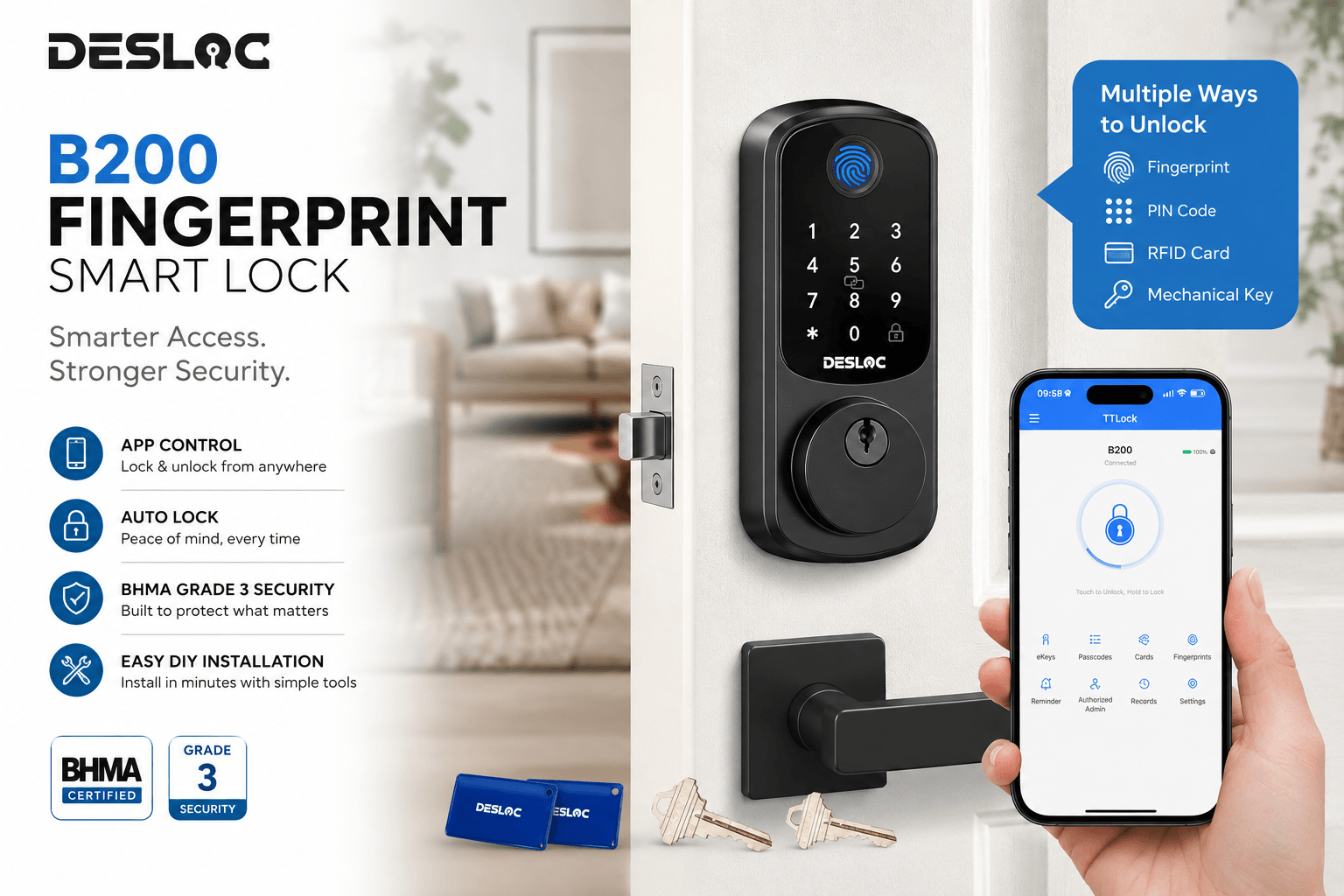
Fingerprint unlocking is one of the most recognizable features across DESLOC’s product range. Biometric entry has become increasingly attractive because it removes the need to carry an additional object or remember a code. Instead of searching for keys or reaching for a phone, users can access the door directly through their fingerprint.
The practical value of fingerprint access becomes especially clear in everyday situations. A person returning home with grocery bags may not want to search through a pocket or bag for keys. Children or family members may find biometric entry easier than carrying a key. Homeowners who frequently enter and exit the property can reduce repetitive steps by using a faster entry method. In these situations, fingerprint technology is not simply an impressive feature; it can genuinely simplify routine behavior.
DESLOC also uses fingerprint access as part of a wider multi-access system. Many products combine biometrics with keypads, app control, mechanical keys, or other entry methods. This is a sensible design direction because even users who strongly prefer fingerprint unlocking may occasionally need another option. A guest may use a PIN, a property manager may use the app, and a physical key can provide additional flexibility. The result is a system that adapts to different people rather than requiring everyone to use the same method.
Keypad Entry Makes Shared Access Easier
Keypad access remains one of the most useful smart-lock features because it is familiar, simple, and easy to share. DESLOC integrates numeric keypads into many of its smart locks, giving users the ability to unlock a door without carrying either a key or a phone.
For households, keypad access can be particularly useful when several people need reliable entry. Family members can use codes rather than duplicating physical keys. Trusted visitors can receive access without requiring an in-person key exchange. In rental environments, codes can simplify check-in procedures and reduce the need for lockboxes or hidden spare keys.
The value of keypad access is not limited to convenience. It can also improve access management. When combined with app control, smart-lock codes can often become part of a more organized system in which access can be created, changed, or removed more efficiently than with physical keys. This is especially useful when access needs change frequently.
DESLOC’s continued use of keypads across different lock designs shows that the brand recognizes the importance of maintaining simple interaction methods. Not every smart feature needs to depend on a smartphone. A well-designed keypad remains one of the most practical ways to make a lock accessible to different types of users.
Built-In Wi-Fi Expands What a Smart Lock Can Do
Connectivity is another important part of the DESLOC lineup. Some models include built-in Wi-Fi, allowing the lock to become more useful beyond the immediate area around the door. This is significant because Bluetooth-only smart locks may be convenient when the user is nearby, while Wi-Fi connectivity can support broader remote-management functions.
For homeowners, remote access can help reduce uncertainty. If someone leaves home and later wonders whether the door was locked, a connected system may provide a way to check or manage the lock without physically returning home. For rental hosts or property managers, the benefits can be even greater because they may need to manage a door while being located elsewhere.
Built-in connectivity also supports the growing expectation that home security products should work as part of a larger smart-home environment. Consumers increasingly want devices to provide information and control through centralized mobile interfaces. DESLOC’s Wi-Fi-enabled models respond to this expectation by extending the role of the lock beyond purely mechanical operation.
The brand’s approach is particularly relevant because connectivity is most useful when it reduces inconvenience rather than adding complexity. A smart lock should not require users to become technical experts. The strongest connected products are those that allow people to perform useful actions without forcing them to constantly think about the underlying technology.
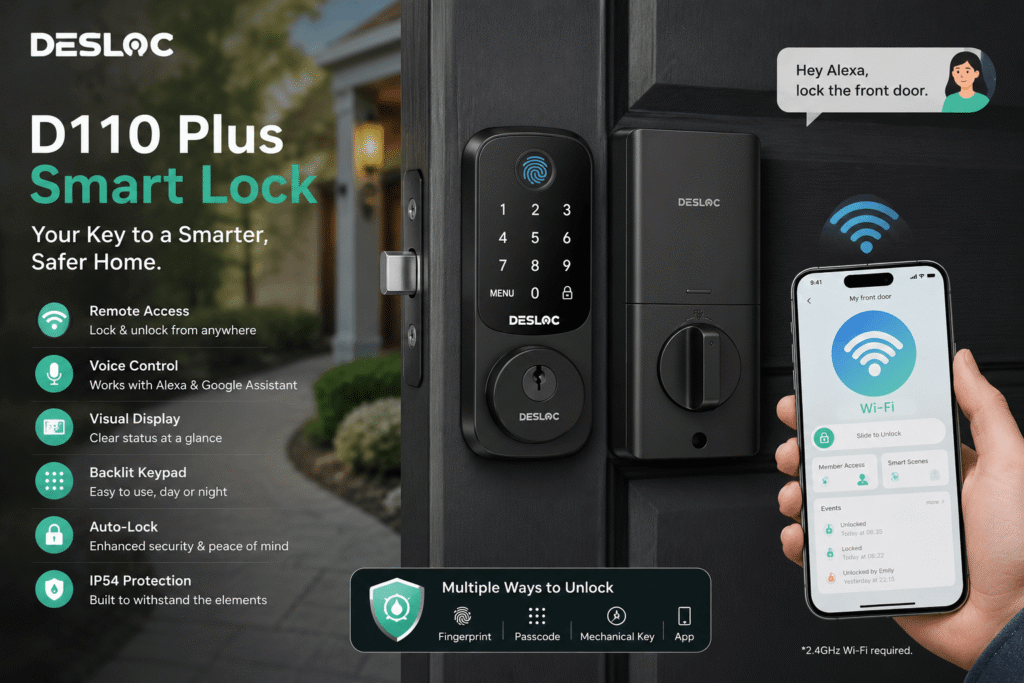
Mobile App Control Adds a Management Layer
App control is another major feature across DESLOC’s smart-lock portfolio. While fingerprint sensors and keypads are mainly focused on the moment of entry, mobile control expands the experience into access management.
This distinction is important. A person standing outside a door needs a fast and reliable way to unlock it. A homeowner managing that door may also want to review settings, adjust permissions, manage codes, or control access from another location. The mobile app becomes useful because it provides a centralized interface for tasks that would be more difficult to complete directly on the lock itself.
For families, this can make access more flexible. For rental properties, it can simplify administration. For users managing more than one door, an app-based interface can help create a more organized system. The practical benefit is not simply that the lock connects to a phone, but that the phone can become a convenient control center for the access system.
DESLOC’s use of app functionality also helps position the brand beyond traditional mechanical hardware. The company is not only producing locks that happen to include digital features. It is developing access products that combine physical hardware with software-based management.
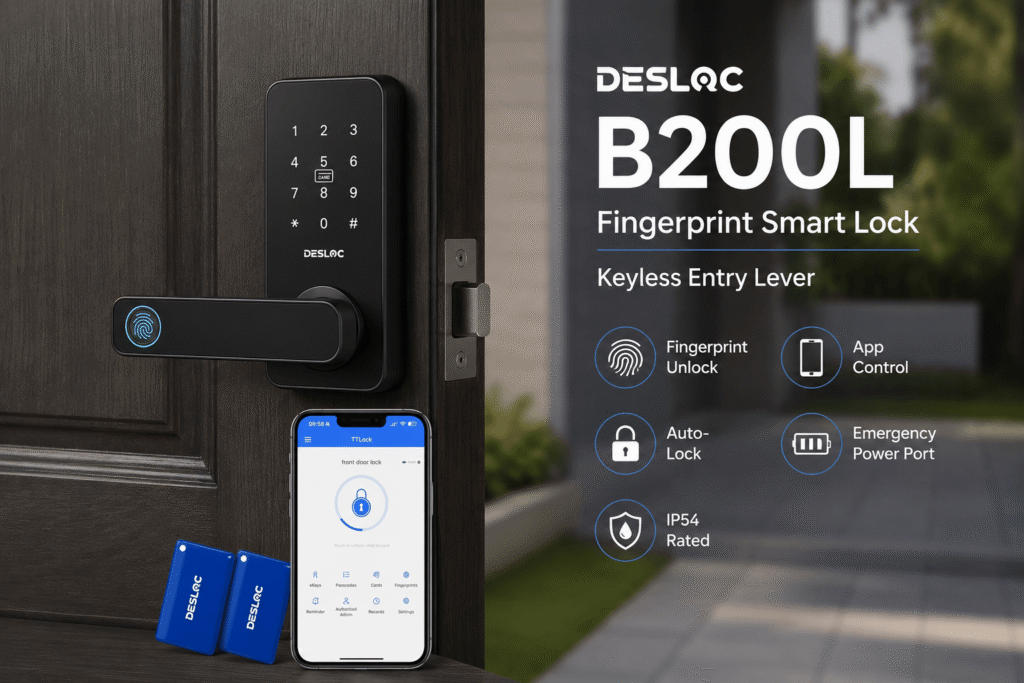
DESLOC and the Growing Rental Market
Short-term rentals and property management are particularly suitable environments for smart locks. Traditional key exchange can become inconvenient when guests change frequently, especially when the owner or manager is not physically present.
DESLOC’s combination of keypad access, app control, remote functions, and multi-user entry methods fits naturally into this market. A rental host can potentially provide guests with an easier check-in experience while maintaining more control over the property’s access system.
The main benefit is operational efficiency. Physical keys require storage, duplication, handoff, retrieval, and replacement when lost. Digital access can reduce some of these logistical tasks. This does not eliminate the need for thoughtful security management, but it can make routine access administration more flexible.
DESLOC’s storefront repeatedly shows products in home, rental, and guest-access scenarios, suggesting that the brand understands this broader market. This positioning is valuable because smart locks are increasingly being purchased not only for personal convenience but also as practical property-management tools.
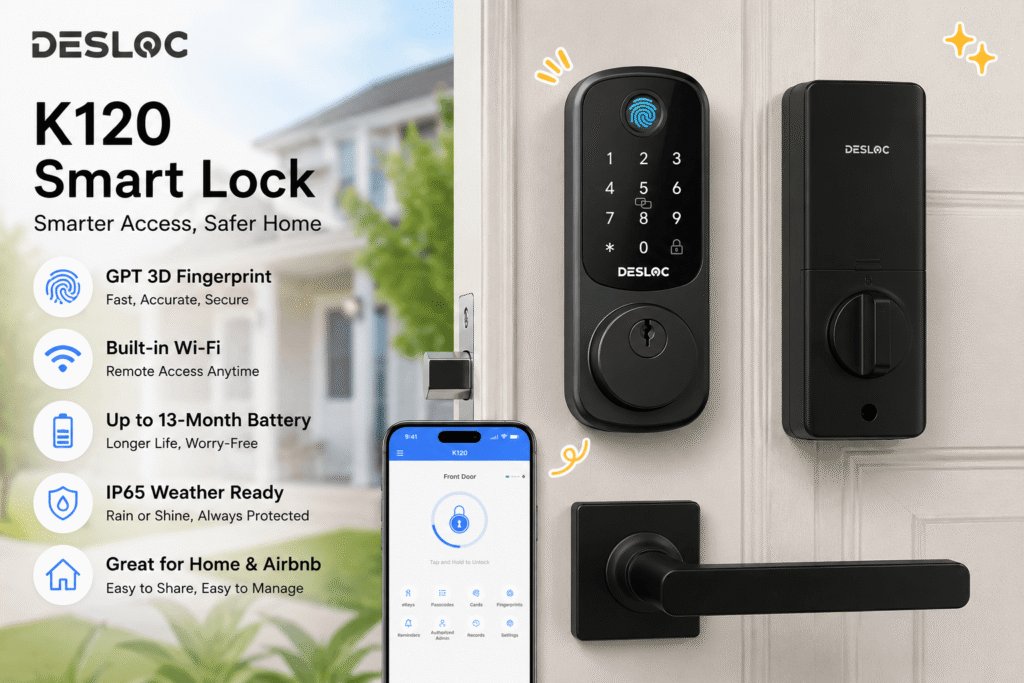
Security Standards and Physical Hardware Still Matter
Smart features are important, but a lock remains a physical security product. This is why DESLOC’s attention to security ratings, physical construction, and durability is an important part of the brand’s presentation.
Consumers evaluating a smart lock should not focus only on app features or fingerprint speed. The lock must also perform reliably as door hardware. Weather resistance, mechanical durability, battery management, installation quality, and compatibility with common residential doors all influence the long-term experience.
DESLOC’s brand communication includes references to security certifications, product testing, and recognized standards across parts of its lineup. This helps reinforce the idea that the company is not treating smart locks as simple electronic gadgets.
The strongest smart-lock brands are those that successfully combine consumer electronics with traditional hardware engineering. DESLOC’s product range reflects this dual requirement. The lock needs to feel modern in use while remaining dependable as a physical component of the home.
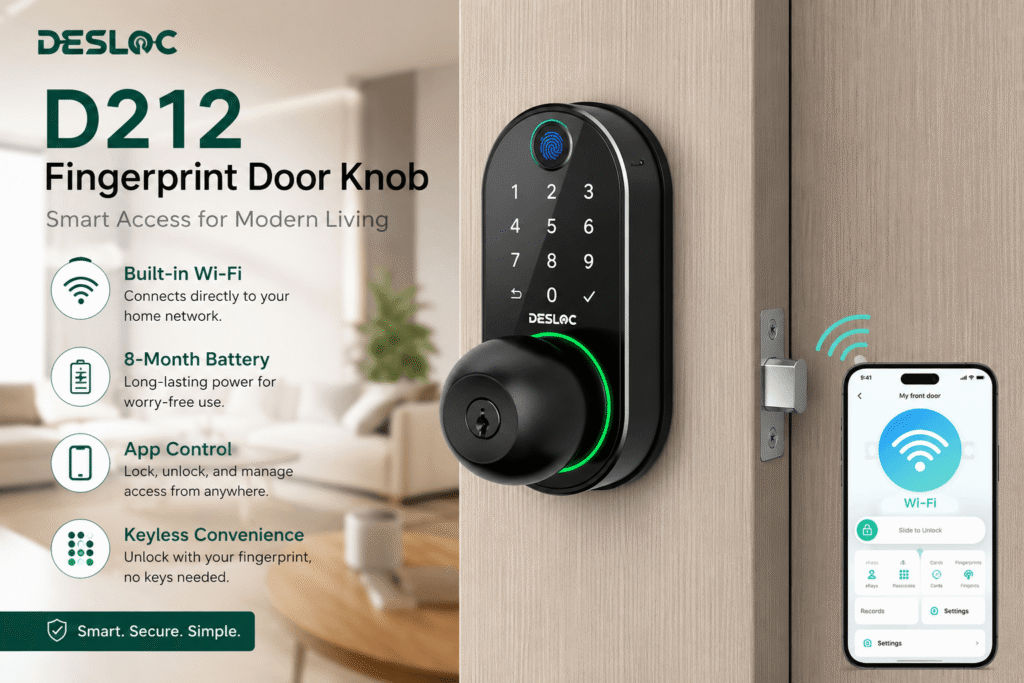
Installation Is an Important Part of the Customer Experience
Installation is often overlooked in smart-home marketing, but it can significantly influence customer satisfaction. A feature-rich lock is less appealing if the installation process feels unnecessarily complicated.
DESLOC frequently emphasizes straightforward installation and compatibility with common door setups. This approach can make the products more approachable for buyers who want to upgrade their existing door without committing to a major renovation or professional installation project.
Ease of installation is also important because many smart-lock customers may not consider themselves technology enthusiasts. They simply want better control over home access. Clear instructions, logical hardware design, and manageable setup can help the product feel more like a practical household improvement and less like a complex electronic system.
A positive installation experience can also improve trust in the brand. For a security product, the first interaction should create confidence rather than uncertainty. DESLOC benefits from presenting its products as accessible upgrades rather than highly specialized devices.
A Consistent Modern Design Language
DESLOC maintains a relatively consistent visual identity across its product families. Black and dark finishes appear frequently, while illuminated fingerprint sensors and clean keypad layouts provide recognizable digital accents.
This design language helps the products fit into contemporary residential environments without making the door look excessively technological. Smart locks occupy a unique position because they must function as both electronics and architectural hardware. The product needs to look modern while still appearing appropriate on a front door.
DESLOC generally avoids overly complex exterior designs. The brand’s products tend to feature straightforward shapes, integrated interfaces, and clearly defined interaction points. This visual restraint contributes to a more professional appearance and can make the products easier to understand at first glance.
Consistency also strengthens the overall brand. Even though DESLOC offers several product formats, many models still share enough visual characteristics to feel like members of the same family.
Brand Trust, Recognition, and Long-Term Positioning
DESLOC’s Amazon storefront also includes sections focused on awards, recognition, testing, environmental initiatives, and broader company information. These elements are important because consumers often evaluate security brands differently from ordinary household-product brands.
A customer buying a smart lock is not only asking whether the product has useful features. They may also want to know whether the company appears established, whether its products are tested, whether the technology is supported, and whether the brand is likely to remain active in the category.
DESLOC’s broader company presentation helps address these concerns by showing that the brand is developing a complete product range rather than relying on one temporary trend. Its emphasis on multiple product families, different access technologies, and a wider smart-lock ecosystem suggests a longer-term commitment to the category.
This is important because smart locks require more than physical hardware. Software, firmware, connectivity, customer support, and compatibility can all influence the ownership experience over time. A brand that intends to remain active in the category has a stronger incentive to continue improving these areas.
Battery Life and Everyday Reliability
Power management is another practical consideration for smart locks. Unlike wired smart-home devices, many door locks depend on batteries, which means battery life directly affects convenience.
DESLOC highlights extended battery performance on several products. This is useful because consumers generally want smart locks to require as little maintenance as possible. A lock that needs frequent attention can reduce the convenience gained from its digital features.
Longer battery life also contributes to the broader goal of making smart access feel normal. Ideally, users should not be thinking about the lock every day. They should simply use it and trust that it will continue functioning.
The same principle applies to weather resistance and long-term durability. A front-door lock is exposed to environmental conditions and repeated physical interaction, so reliability matters more than novelty. DESLOC’s emphasis on these practical areas helps balance the more attention-grabbing features such as fingerprint recognition and mobile control.
DESLOC’s Most Important Advantage Is Choice
Perhaps the clearest strength of DESLOC as a brand is the amount of choice it offers within one smart-lock ecosystem. The company does not define intelligent access through a single product or one entry method.
Instead, consumers can select from different lock bodies, handle types, connectivity options, biometric features, and control methods. This allows the purchasing decision to begin with the customer’s actual door and lifestyle rather than with the brand’s preferred hardware format.
A homeowner may choose a fingerprint deadbolt for the main entrance. A rental host may prioritize connected code management. An office may benefit from a smart lever lock. Another room may need a smart knob rather than a traditional deadbolt.
This flexibility makes DESLOC more useful as a brand because it can potentially serve several access needs within the same property.