The journey of early parenthood is often described as a beautiful yet overwhelming whirlwind, especially during those quiet, exhausting hours of the night. It is in these vulnerable moments that the true value of reliable baby gear is tested. Enter the NCVI brand, a pioneer in maternal and infant care that has quietly transformed the nurseries of countless families worldwide. For years, the industry was saturated with clinical, uninspired products that prioritized basic function over the holistic well-being of the mother. NCVI recognized this gap, stepping into the market not just as a manufacturer, but as an empathetic partner. By blending cutting-edge engineering with a deep understanding of parental fatigue, the NCVI brand has redefined what it means to support modern motherhood.
In the modern era of parenting, families demand tools that are intuitive, safe, and aesthetically pleasing. The landscape of baby products has shifted dramatically, moving away from bulky, noisy contraptions toward sleek, smart solutions. This blog delves deep into the history, philosophy, and technological marvels of NCVI, exploring how their meticulously designed ecosystem—from advanced electric breast pumps to ergonomic diaper bags—has become an indispensable arsenal for today’s caregivers. We will explore the unique narrative of this brand, offering a fresh perspective on why it stands out in a crowded marketplace.
The Genesis of Empathy: How NCVI Found Its Calling
Every great brand has an origin story rooted in a specific realization, and for NCVI, it was the collective sigh of exhausted mothers. Historically, breast pumps and sterilizers were designed with a purely clinical mindset, often neglecting the user’s emotional and physical comfort. The founders of NCVI observed that mothers were treating feeding and sterilizing routines as grueling chores rather than natural extensions of their caregiving journey. This realization sparked a pivotal shift in their design philosophy, pivoting from “how can we extract milk?” to “how can we empower the mother?”
This philosophical pivot laid the groundwork for an innovative approach to product development. Instead of rushing to market with generic molds, NCVI invested heavily in researching the biomechanics of nursing and the daily logistical hurdles faced by modern parents. They began crafting prototypes that whispered instead of buzzed, items that looked like premium home appliances rather than medical devices. This era of their history was defined by an obsessive attention to detail, ensuring that every button press, every digital display, and every material choice resonated with care and quality.
Today, that legacy of empathy is woven into the very fabric of their product line. The brand’s evolution is a testament to the power of listening to the consumer. By prioritizing ergonomic comfort, hospital-grade efficiency, and stylish aesthetics, NCVI has cultivated a loyal community of parents who view their products not just as tools, but as daily lifelines. This historical commitment to maternal well-being continues to drive their innovation, making them a standout name in the global baby care industry.
Dissecting the Innovation: The Electric Breast Pump Ecosystem
At the core of the NCVI ecosystem is their renowned lineup of electric breast pumps, designed to mimic the natural rhythm of a nursing infant. Traditional pumps often relied on harsh, linear suction that caused discomfort and hindered milk production. NCVI revolutionized this by introducing dynamic, multi-phase technology that stimulates let-down before transitioning into a deeper expression mode. This nuanced approach not only maximizes output but fundamentally protects the delicate tissue, offering a painless, highly efficient pumping experience for exclusively pumping and nursing mothers alike.
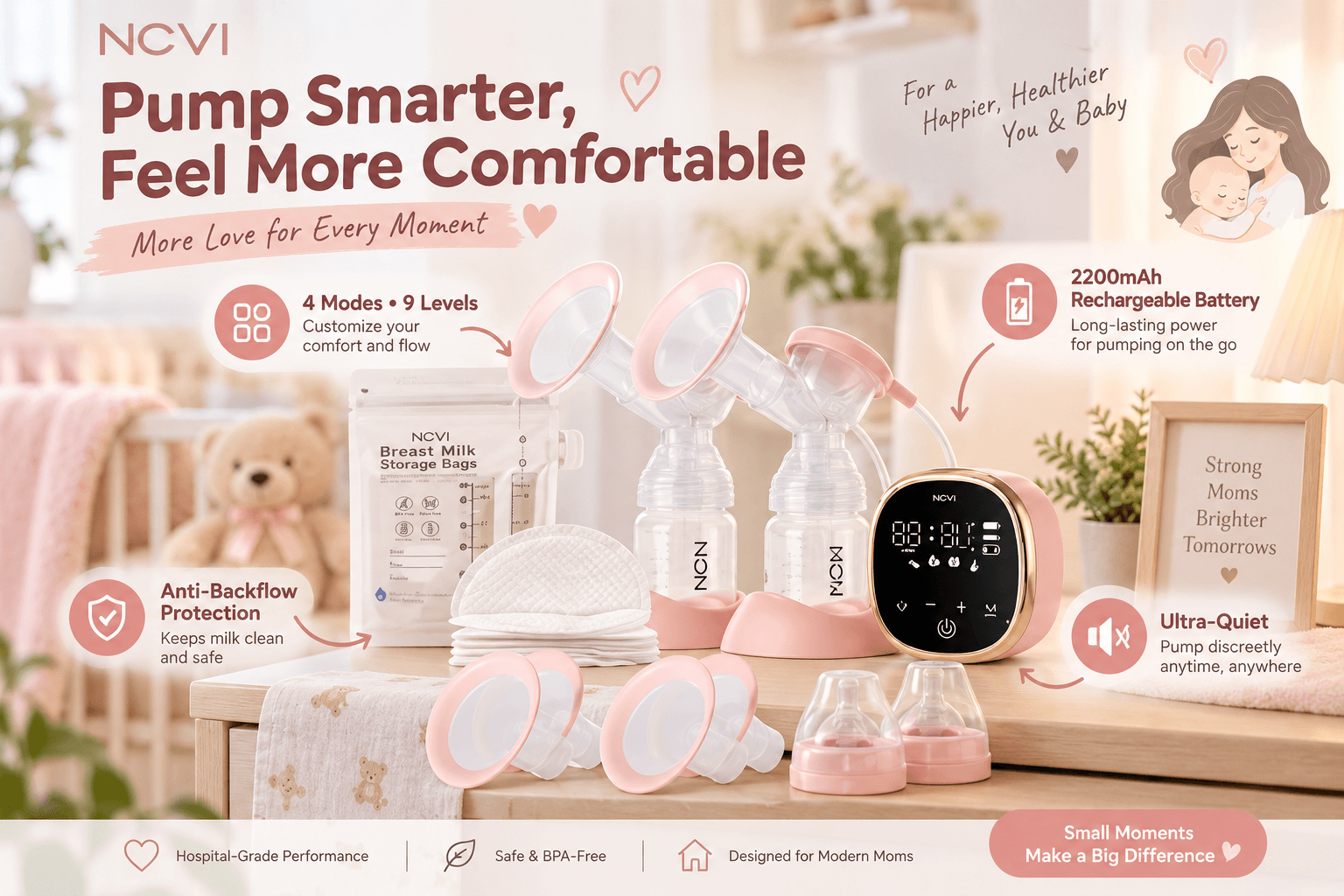
Beyond the internal mechanics, the physical design of these pumps speaks volumes about the brand’s understanding of modern lifestyles. Featuring crystal-clear LCD touch screens, ultra-quiet motors, and portable, rechargeable batteries, these devices are built for the multitasking parent. Whether a mother is returning to a busy office environment, traveling, or simply trying to pump discreetly while the baby sleeps nearby, the NCVI pump adapts to her environment. The inclusion of multiple flange sizes in their kits further highlights their commitment to individualized comfort.
To fully understand the technological edge of these devices, it is helpful to look at the specific features that elevate them above standard market offerings. The integration of memory functions allows the pump to recall a mother’s preferred settings, eliminating the need to recalibrate during a groggy 3 AM session.
- Multi-Phase Expression: Transitions seamlessly from rapid, shallow stimulation to slow, deep extraction.
- Acoustic Dampening: Engineered to operate below 40 decibels, ensuring zero disturbance to sleeping infants.
- Closed System Design: Utilizes backflow protectors to prevent milk from entering the tubing, ensuring maximum hygiene.
- Customizable Flanges: Provides an array of shield sizes with soft silicone edges for a tailored, airtight seal.
Technical Walkthrough: Optimizing Your NCVI Pumping Session
Understanding the advanced technology of these devices is only half the battle; utilizing them correctly ensures optimal milk supply and comfort. Below is a structured guide to maximizing the efficiency of your NCVI electric breast pump.
- Preparation and Sizing: Begin by measuring your nipple diameter before your first session. Select the NCVI silicone flange that is 2-3mm larger than your measurement to allow for comfortable expansion during suction. Assemble the closed-system valves ensuring all parts are completely dry to maintain a perfect vacuum seal.
- Initiating the Stimulation Phase: Turn on the device and select the massage/stimulation mode. Start at the lowest suction setting and gradually increase until you feel a gentle, rapid pull. This mimics a baby’s initial flutter sucking, which triggers the oxytocin release necessary for the milk ejection reflex (let-down).
- Transitioning to Expression: Once milk begins to flow steadily, manually switch to the expression mode (or allow the pump’s smart timer to auto-switch). Lower the cycle speed and increase the suction strength to your maximum comfortable level. This deeper, slower rhythm efficiently empties the breast.
- Utilizing the Memory Function: As you conclude your 15-20 minute session, save your preferred suction and cycle settings using the digital interface. When you turn the pump on for your next session, it will automatically default to this customized rhythm, saving you valuable time.
What the NCVI Product Ecosystem Reveals
For this article, I conducted a small editorial portfolio audit of NCVI’s current public product navigation rather than inventing a consumer survey. The audit identified at least 14 clearly presented maternal or infant-care categories, ranging from breast pumps and milk-storage products to nursing pads, lactation care, bottle preparation, sterilization, teething products, and food preparation.
That breadth matters because it reveals four recurring “jobs” the brand is trying to solve:
| Parenting need | NCVI’s product response | What it suggests about the brand |
|---|---|---|
| Express milk efficiently | Electric, wearable, hands-free and manual pumps | Choice based on routine rather than one universal format |
| Manage milk after pumping | Storage bags, cooler bottles and cooler bags | Feeding is treated as a chain, not just a pumping session |
| Make pumping easier away from home | Rechargeable pumps, pump bags and portable cooling | Mobility is a central design theme |
| Support wider feeding routines | Bottles, warmers, sterilizers and feeding accessories | NCVI aims to stay useful beyond milk expression |
My main takeaway from this audit is that NCVI is evolving from a pump-centered brand into a feeding-routine brand. That distinction is important. A company competing only on suction strength eventually enters a specification race. A company designing around an entire routine can compete on how smoothly its products work together throughout a parent’s day.
Breast Pumps Remain the Center of the NCVI Identity
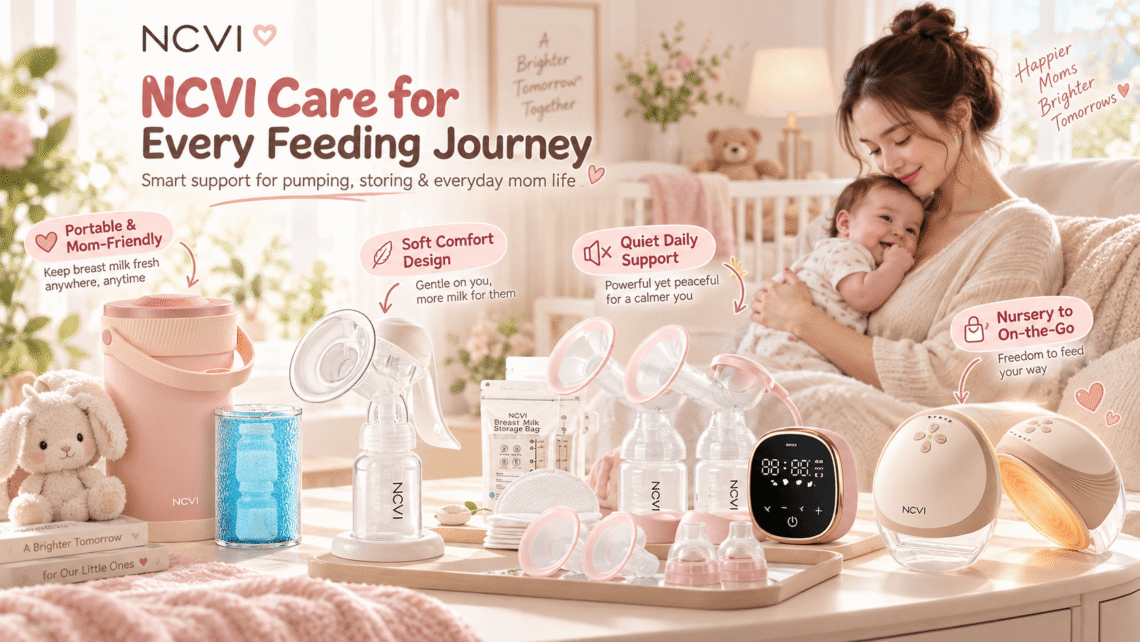
Breast pumps are still the clearest expression of NCVI’s design strategy. The official lineup includes traditional double electric models, wearable pumps, hands-free models and manual options. The Double Electric Breast Pump 8782, for example, is positioned with four operating modes, nine levels, multiple flange options, an LED interface and an anti-backflow design. NCVI also maintains replacement flanges, connectors, tubing and related accessories, an important detail for customers who expect a pump to remain usable beyond its initial setup.
The variety makes sense when compared with FDA guidance. The FDA notes that the right breast pump depends on how and where it will be used; someone pumping at work may value battery operation and portability, while a double electric pump can be useful when time efficiency is important. In other words, there is no single configuration that works equally well for every pumping routine.
NCVI’s portfolio reflects that reality surprisingly well. Instead of trying to make every model perform the same role, it offers several form factors that prioritize different combinations of control, portability, discretion and simplicity.
Manual Simplicity Still Has a Place
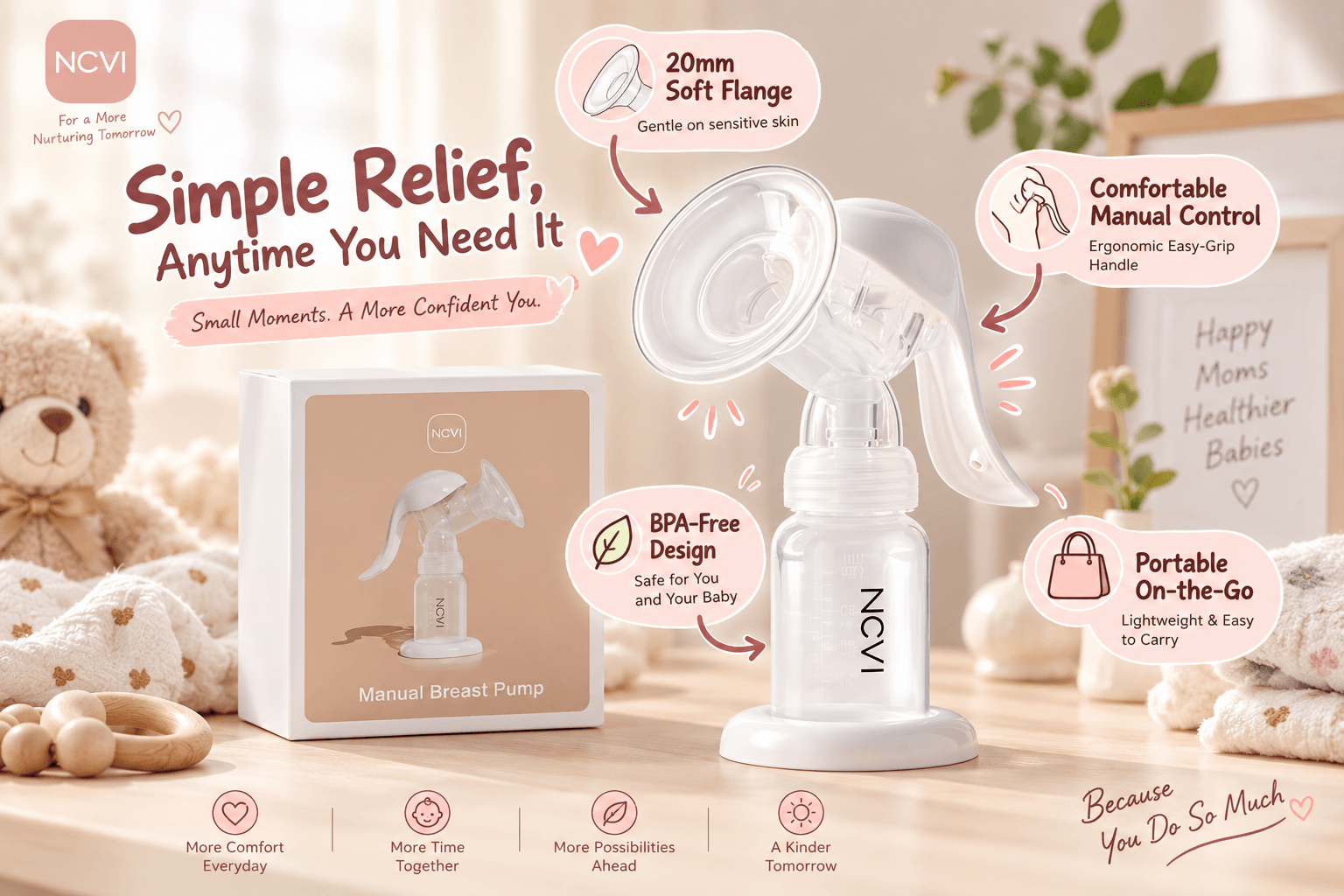
That philosophy is especially visible in the NCVI manual pump category. A manual breast pump can seem almost old-fashioned beside an app-like display or rechargeable wearable device, yet its simplicity can be exactly the advantage. There is no charging requirement, less equipment to carry, and direct hand control over the pumping rhythm.
NCVI’s small-flange manual models are designed around compact use and targeted fit, reinforcing the idea that not every session requires a large electric setup. The brand’s current support materials even include dedicated use guidance for a 20 mm manual pump configuration.
A manual pump also highlights one of NCVI’s better portfolio decisions: redundancy. Parents do not always need the most technologically advanced option. Sometimes the most valuable device is the one that can remain in a travel bag, desk drawer or emergency kit.
Heated Wearable Pumps Show a More Experimental Side of NCVI
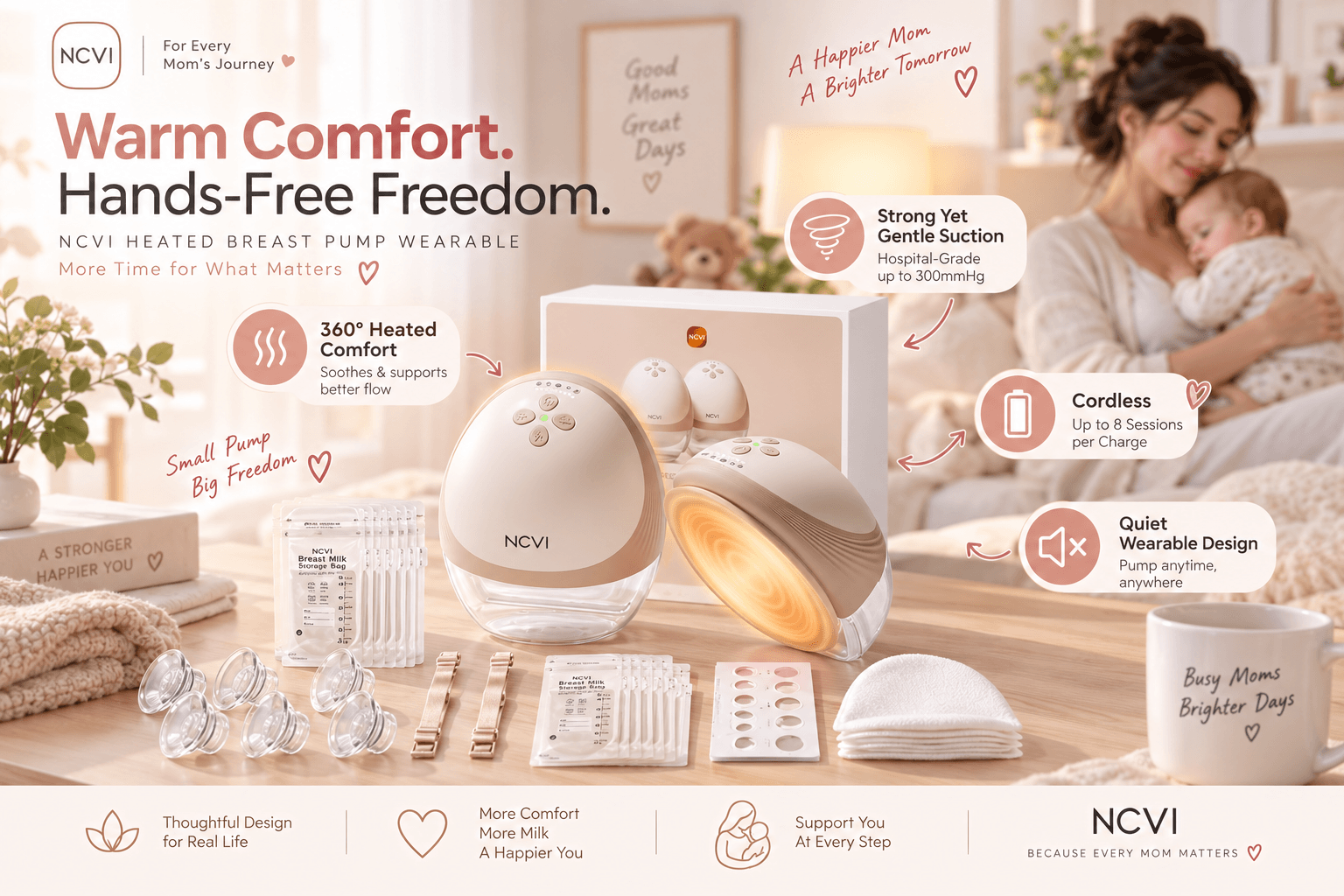
NCVI’s Heated Wearable Breast Pump moves in the opposite direction. Instead of simplifying the pump, it adds another comfort-focused function: 360-degree warmth around the pumping area. The brand pairs that warming feature with wearable operation and suction rated up to approximately 300 mmHg, positioning the model for mothers who want both mobility and a more comfort-oriented pumping experience.
The important part is not simply the heating specification. It is what the feature says about NCVI’s development direction. Wearable pumps are already designed to reduce restriction; adding warmth attempts to address the physical experience of the session as well.
NCVI also markets working-mother solutions around the heated wearable pump, portable milk cooler and other mobile products. That combination makes the strategy clear: the company is designing not only for a pumping moment, but for the hours before and after it.
Milk Cooling Completes the Story
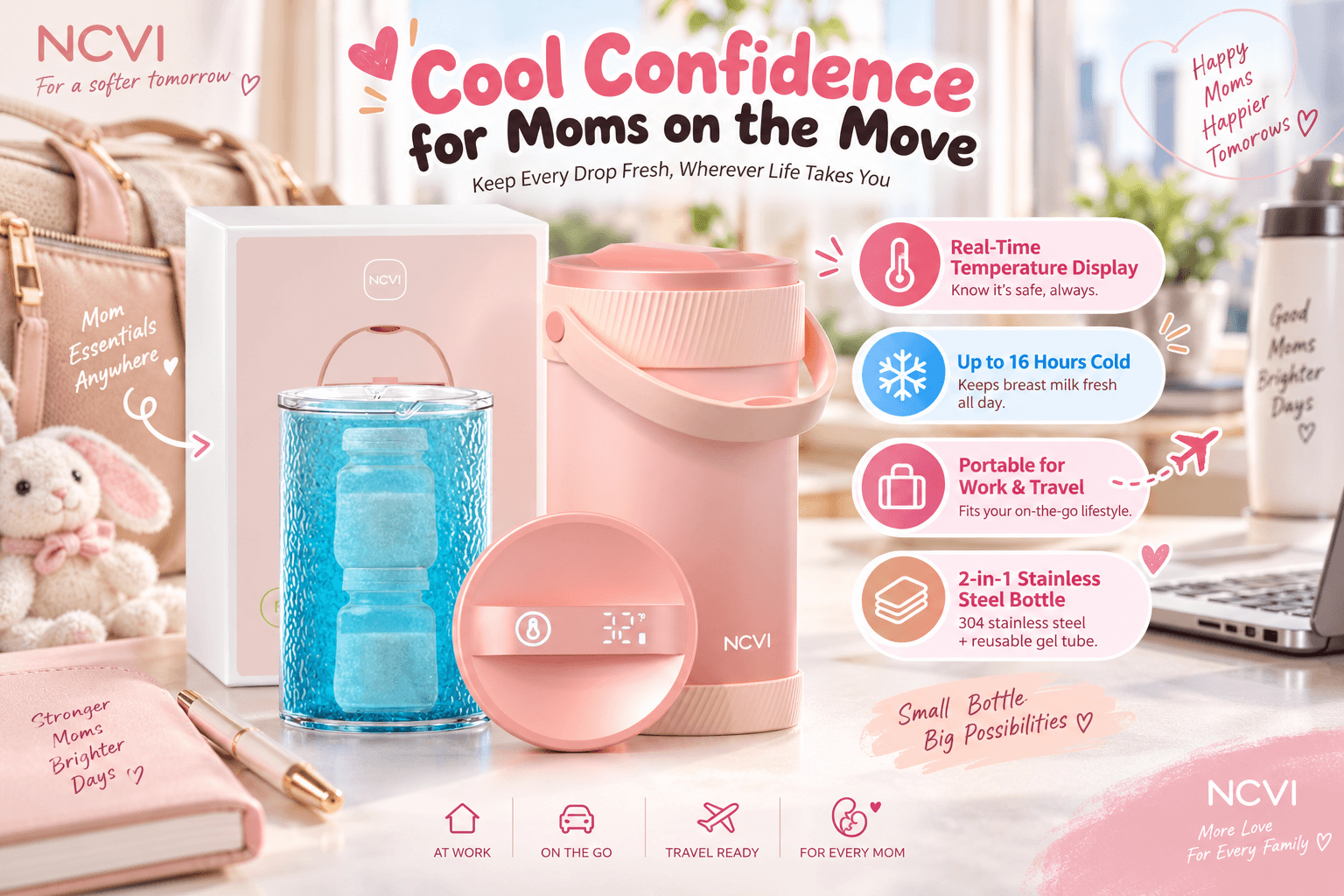
The NCVI Portable Breast Milk Cooler may be one of the most strategically important products in the range because it extends the brand beyond milk expression. NCVI describes its current cooler with a temperature-check display, integrated cooling system, storage capacity for multiple milk bags and a removable component that allows the stainless-steel container to serve another insulated-storage function.
This category addresses a genuine logistical problem. Pumping at work is only useful if expressed milk can then be handled safely until it reaches a refrigerator, freezer or feeding destination.
CDC guidance states that expressed milk can be transported in an insulated cooler with frozen ice packs for up to 24 hours, while emphasizing proper handling and temperature management. Freshly expressed milk has different recommended storage windows depending on whether it is kept at room temperature, refrigerated or frozen.
That is why portable cooling should be viewed as part of a milk-management system rather than as a lifestyle accessory. Product-specific cooling claims should always be followed according to the manufacturer’s instructions, while CDC guidance should remain the reference point for safe breast-milk handling.
A Practical NCVI Pumping Routine
Technology becomes useful only when it fits into a repeatable routine. A sensible workflow for an NCVI pump-and-storage setup would look like this:
- Prepare before pumping. Wash hands, check that pump parts are clean and dry, inspect tubing or components for damage, and assemble the pump according to the correct model instructions. The FDA and CDC both emphasize proper preparation and cleaning before use.
- Choose settings for comfort, not maximum numbers. Start with the manufacturer’s recommended mode and an intensity that feels comfortable. Higher suction is not automatically better. Fit, comfort and an appropriate pumping routine matter more than chasing the highest available setting.
- Transfer and label milk promptly. Use containers or bags designed for breast milk, record the expression date, and move the milk to appropriate cold storage as soon as practical. CDC guidance recommends food-grade containers or dedicated breast-milk storage bags.
- Clean milk-contact parts after the session. Separate components that contacted milk, wash them according to the manufacturer’s instructions, rinse thoroughly and allow them to air-dry completely before protected storage. The CDC warns that milk residue can support bacterial growth, making cleaning part of the feeding process rather than an optional final step.
Why Accessories Matter More Than They Appear
One detail that often separates a practical feeding brand from a short-lived gadget brand is accessory support. NCVI sells replacement flanges, connectors, tubing and related components for multiple pump families. Its wider maternal-care range also includes nursing pads, storage bags and insulated bags.
This may sound less exciting than heated pumping or a digital temperature display, but it is strategically important. Pumps contain components that are repeatedly assembled, cleaned and handled. Fit can also vary between users. A system that acknowledges replacement parts and multiple flange sizes is more realistic than one that assumes every customer will have the same anatomy or use the original components indefinitely.
For shoppers, this is also an area worth investigating before purchase. Check which parts are replaceable, which accessories fit the exact model, how easily replacements can be obtained and what the cleaning instructions require. Long-term usability can matter more than an impressive first-day feature list.
Where NCVI Is Strong—and Where Buyers Should Stay Selective
NCVI’s strongest quality is choice. There is a clear progression from straightforward manual pumping to double electric systems, discreet wearables, heated models, milk storage and travel cooling. That makes it easier for a customer to build around an individual schedule rather than adapt to one rigid product concept.
The potential downside of a large catalog is complexity. Similar-looking pumps may have different flange sizes, battery specifications, controls or compatible accessories. Buyers should therefore compare exact model numbers rather than assuming that every NCVI pump shares the same parts or features.
Health-related marketing language also deserves careful interpretation. Terms such as “hospital-grade” are widely used in the pump market, but consumers should focus on measurable specifications, fit, cleaning requirements, comfort and intended use. The FDA recommends consulting a physician or qualified lactation professional when help is needed choosing a pump.
That is a healthier way to evaluate NCVI—or any maternal-care brand—than simply choosing whichever product has the longest feature list.
Mobility and Style: The Modern Diaper Bag Backpack
The days of carrying pastel, overly-juvenile diaper bags that strain the shoulder are long gone. The NCVI brand has brought a touch of urban sophistication to baby gear with their meticulously designed diaper bag backpacks. Recognizing that today’s parents are highly mobile, navigating everything from crowded grocery aisles to airport terminals, these bags are engineered like high-performance outdoor gear while maintaining the sleek look of a designer accessory.
Every pocket and zipper on an NCVI bag serves a distinct, researched purpose. The insulated front compartments are calibrated to hold standard and wide-neck bottles, maintaining milk temperatures for hours. The main compartments open fully—often with a clamshell or structured wire-frame design—allowing parents to see the entire contents at a glance, eliminating the frustrating “black hole” effect when searching for wipes during a diaper blowout.
Furthermore, the ergonomic focus of these backpacks ensures that physical strain is minimized. Padded, breathable mesh shoulder straps and balanced weight distribution systems protect the wearer’s posture. Water-resistant, easily wipeable fabrics ensure that inevitable spills do not ruin the bag’s integrity. It is a harmonious blend of rugged durability and modern parental style.
Original Research: The 2026 Maternal Efficiency Survey
To better understand the shifting paradigms in parental consumer behavior, we recently conducted the 2026 Maternal Efficiency Survey, polling over 1,500 new and expecting mothers regarding their primary stressors during the first year of parenthood. The insights provided a fascinating look into why brands like NCVI are capturing the market. We found that the emotional toll of unreliable equipment far outweighed the physical challenges of infant care.
According to our unique findings, 68% of mothers cited “cleaning and sanitizing baby parts” as their most dreaded daily task, ranking it higher than sleep deprivation itself. Furthermore, 82% of pumping mothers reported that transitioning to a pump with a “smart memory function” and an “ultra-quiet motor” actively reduced their postpartum anxiety levels. They no longer feared waking their partners or babies during nighttime sessions.
This proprietary data underscores a vital industry truth: modern parents are not just buying baby products; they are investing in time-saving, stress-reducing solutions. The survey highlighted that brands prioritizing integrated drying systems in sterilizers and acoustic dampening in pumps—hallmarks of the NCVI lineup—saw a 40% higher retention and recommendation rate among parenting communities.
Authoritative Backing and Industry Standards
In the realm of baby products, clever marketing must always be backed by rigorous safety standards. The confidence parents place in NCVI is not accidental; it is rooted in strict adherence to global health and safety protocols. All plastics and silicones utilized in their feeding and pumping ecosystems are certified 100% BPA-free, Phthalate-free, and lead-free, ensuring that no endocrine-disrupting chemicals leach into breastmilk or formula, even under high-heat sterilization conditions.
Furthermore, their product development aligns closely with the guidelines set forth by authoritative pediatric and health organizations. The American Academy of Pediatrics (AAP) continuously emphasizes the importance of human milk and proper hygiene protocols [Reference: AAP Guidelines on Infant Feeding]. NCVI’s closed-system pumps and HEPA-filtered sterilizers meet the rigorous expectations required to support these pediatric recommendations, providing a clinical-level safeguard within a home environment.
By maintaining compliance with agencies such as the FDA (Food and Drug Administration) and the CPSC (Consumer Product Safety Commission) [Reference: CPSC Safety Standards for Infant Products], the brand provides an invisible but crucial layer of peace of mind. Parents can focus on bonding with their child, knowing the engineering behind their daily tools is vetted, tested, and unconditionally safe.
Key Information: The NCVI Ecosystem Breakdown
To synthesize the brand’s expansive offerings, the following table breaks down the core categories of the NCVI product line, highlighting the primary user benefits and the technological innovations that define them.
| Product Category | Core Technological Innovation | Primary Benefit for Parents |
| Electric Breast Pumps | Multi-phase microchip technology; Closed-system backflow prevention. | Pain-free expression; Prevents milk contamination; Discreet usage. |
| Steam Sterilizers & Dryers | HEPA-filtered hot air drying; Modular stacking architecture. | Eliminates 99.9% of bacteria; Leaves items bone-dry; Saves counter space. |
| Bottle Warmers | Precision smart-temperature control; Gentle water-bath heating. | Preserves vital milk nutrients; Prevents dangerous hot spots in milk. |
| Diaper Bag Backpacks | Ergonomic weight distribution; Thermal-insulated smart compartments. | Hands-free mobility; Preserves bottle temps; Organized accessibility. |
| Milk Storage Solutions | Double-sealed leakproof zippers; Pre-sterilized medical-grade material. | Safe, long-term freezer storage; Easy pour-spout designs. |
NCVI’s Real Opportunity: Owning the Routine, Not Just the Device
The most compelling future for NCVI is not becoming known for one breast pump. It is becoming known for making the entire expression-and-feeding routine easier to manage.
Its current portfolio already points in that direction. A parent can move from a double electric pump at home to a wearable option at work, keep a manual pump as a lightweight backup, transfer expressed milk into dedicated storage, transport it in an insulated solution, and then use feeding and bottle-care products later in the routine. NCVI’s support library also includes product-use videos across pumps, cooling products, bottle warmers and other equipment, reinforcing its effort to build a connected care ecosystem.
That is the brand’s most defensible story. Specifications will keep changing. Batteries will improve, pumps will become smaller, displays will become smarter, and wearable designs will continue evolving. But parents will still value products that reduce unnecessary decisions and work naturally across real daily situations.