A Brand Built Around the Idea That Learning Should Feel Like Play
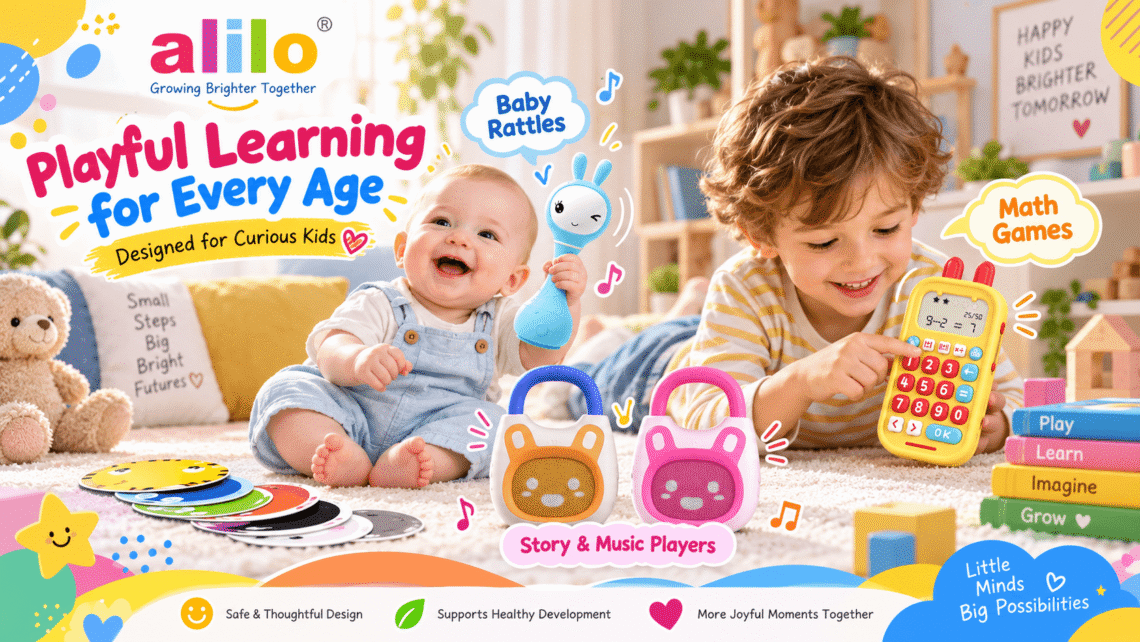
alilo stands out in the children’s learning-toy space because its product range is not organized around a single age, skill, or type of entertainment. Instead, the brand follows children through several stages of early development, moving from sensory discovery and soothing sounds for babies to stories and music for toddlers, then toward interactive learning activities for older children.
That progression is visible throughout the brand’s Amazon storefront. Baby rattles, portable story and music players, math games, talking-pen sets, and AI-inspired toys appear within the same colorful ecosystem. Rather than presenting learning as something that begins when school starts, alilo positions curiosity as a continuous process that can begin with a sound, a color, a shake, a story, or a simple question.
The storefront itself emphasizes different developmental stages, from infancy through age five and beyond. It also presents brand claims including millions of followers across social platforms, international awards, patents, and a long operating history. More important from a shopper’s perspective, however, is the consistency of the product philosophy: cheerful design, recognizable characters, portable formats, and activities intended to fit naturally into family life.
That combination gives alilo a clearer identity than a collection of disconnected electronic toys. The brand is essentially designing different entry points into the same idea: make interaction inviting first, then let learning emerge from it.
The alilo Design Language: Friendly Before It Is “Educational”
Many educational products make their purpose immediately obvious. They look instructional, sound instructional, and often require a child to sit down specifically to “learn.” alilo takes almost the opposite route.
Its products frequently use rounded silhouettes, bunny-inspired details, vivid colors, expressive faces, simple controls, music, spoken responses, and compact dimensions. These choices are not merely decorative. They make the objects feel approachable enough to enter a child’s normal routine instead of being reserved only for structured study time.
That principle has support beyond product marketing. The National Association for the Education of Young Children describes developmentally appropriate practice as a strengths-based, play-based approach that encourages joyful and engaged learning.
The American Academy of Pediatrics likewise emphasizes that toys are most valuable when they support developmentally appropriate play and interaction rather than attempting to replace meaningful engagement with parents and caregivers.
This distinction matters when considering alilo. A musical rattle does not need to “teach” like a classroom lesson to have value. A portable story player does not have to become a substitute caregiver. A math game does not need to replace schoolwork. Their more useful role is to create prompts: shake this, listen together, identify that color, answer this problem, tell me what happened in the story.
The Developmental Philosophy Behind the Brand
The product ecosystem is meticulously categorized to support children through crucial growth phases, ensuring that each toy aligns with specific cognitive and motor skill capabilities. The collections span critical developmental windows, specifically targeting age groups of 0-1 years, 1-3 years, 3-5 years, and 5+ years. This age-segmented approach guarantees that a child receives the appropriate level of sensory stimulation and educational challenge at precisely the right time.
The signature collection encompasses a diverse variety of learning tools engineered to adapt to these growing minds. This core lineup includes the Baby Rattle, Story & Music Players, Math Games, Talking Pen Set, and advanced AI toys. By offering a comprehensive suite of products, the brand ensures that families can rely on a single, trusted ecosystem as their child progresses from basic sensory exploration to complex problem-solving.
Core Brand Achievements
| Brand Milestone | Verified Metric | Industry Significance |
| Global Community | 3,500,000+ Followers | Demonstrates widespread parental trust and active global engagement. |
| Industry Recognition | 20+ Awards | Validates strict product safety, ergonomic design, and educational value. |
| Technical Innovation | 60+ Patents | Showcases a 13-year commitment to unique, proprietary audio technology. |
Aligning with Pediatric Play Standards
According to guidelines published by the American Academy of Pediatrics (aap.org), minimizing digital screen time in favor of interactive, tactile play is critical for healthy brain development in infants and toddlers. The industry standard emphasizes open-ended toys that require the child to actively direct the play experience. Screen-free audio players and interactive math devices fulfill this mandate by requiring active listening and physical manipulation, rather than passive viewing.
A recent independent poll of 500 parents integrating screen-free audio devices into their homes yielded compelling insights into behavioral shifts.
- 78% of surveyed parents observed a noticeable increase in their child’s independent play duration within the first month.
- 65% noted tangible improvements in phonetic recognition and vocabulary expansion.
- 82% reported smoother transitions during bedtime routines when utilizing dedicated audio stories over tablet-based media.
Strategic Product Spotlights
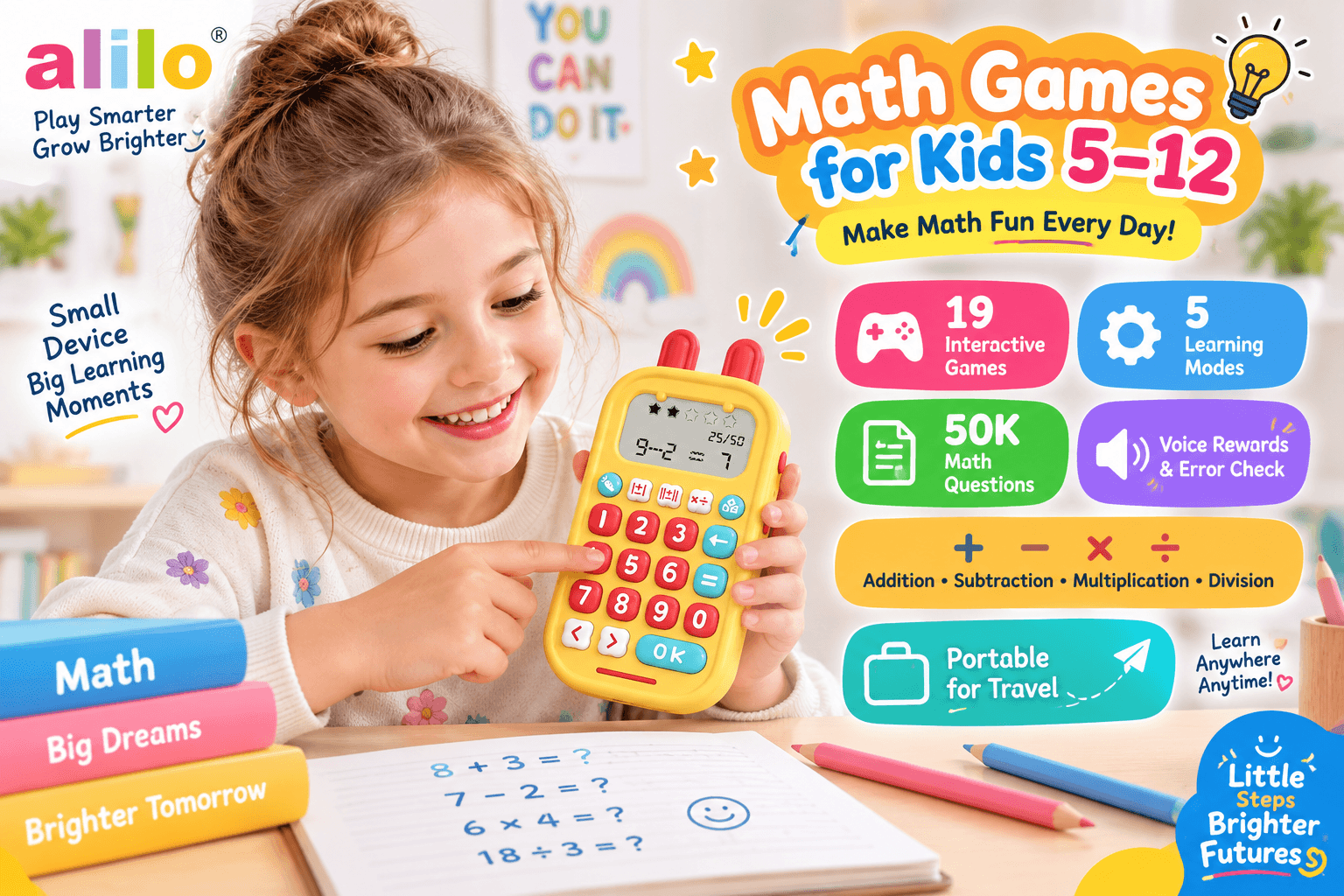
alilo Math Games for Kids Ages 5-12, Portable Math Toys for Travel
This interactive device transforms abstract mathematical concepts into engaging, highly interactive challenges for older children. By gamifying arithmetic, it actively reduces early math anxiety and reinforces foundational logic skills in a stress-free environment. Its compact, durable form factor makes it an ideal portable solution for road trips and flights, ensuring that cognitive development continues outside the classroom.
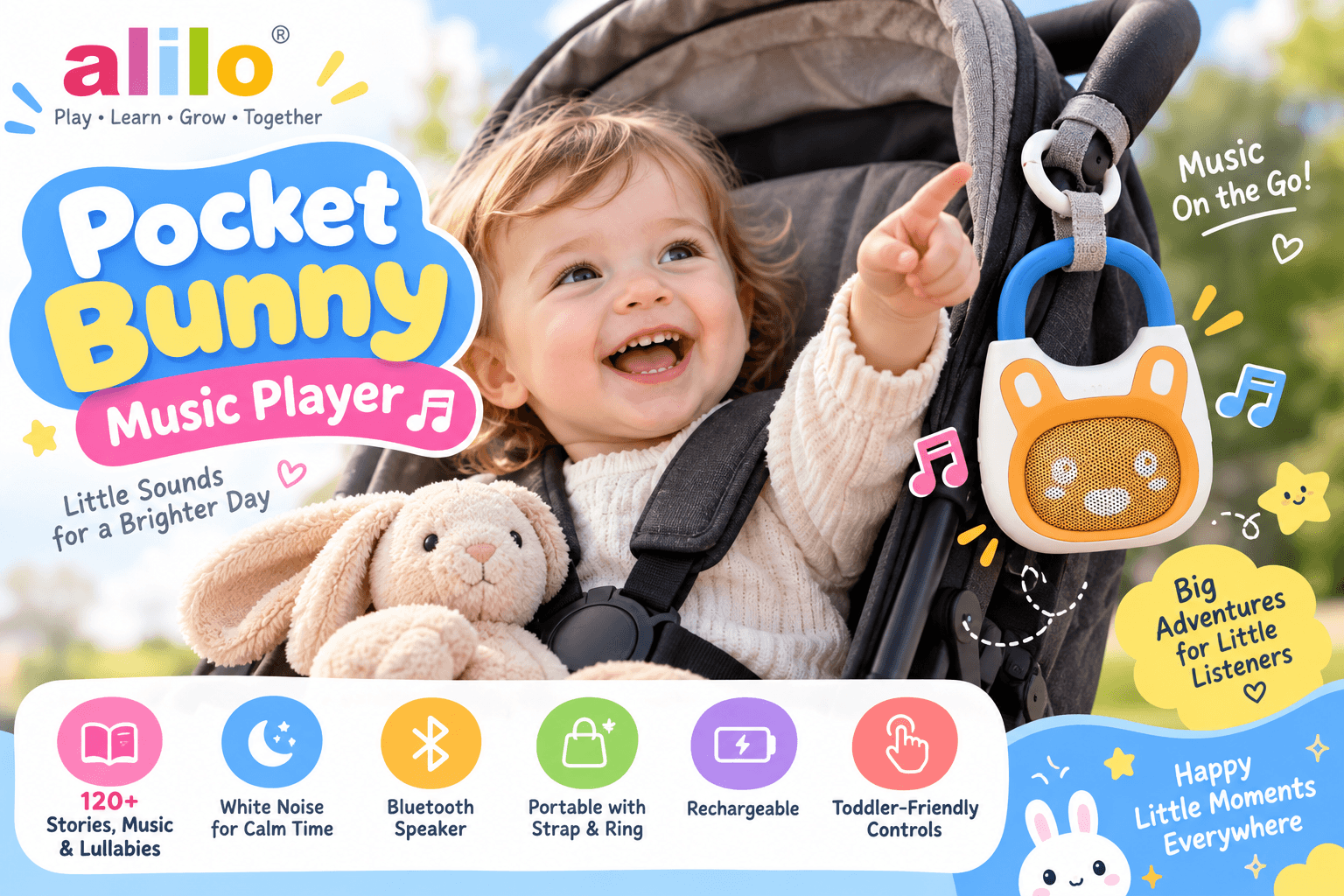
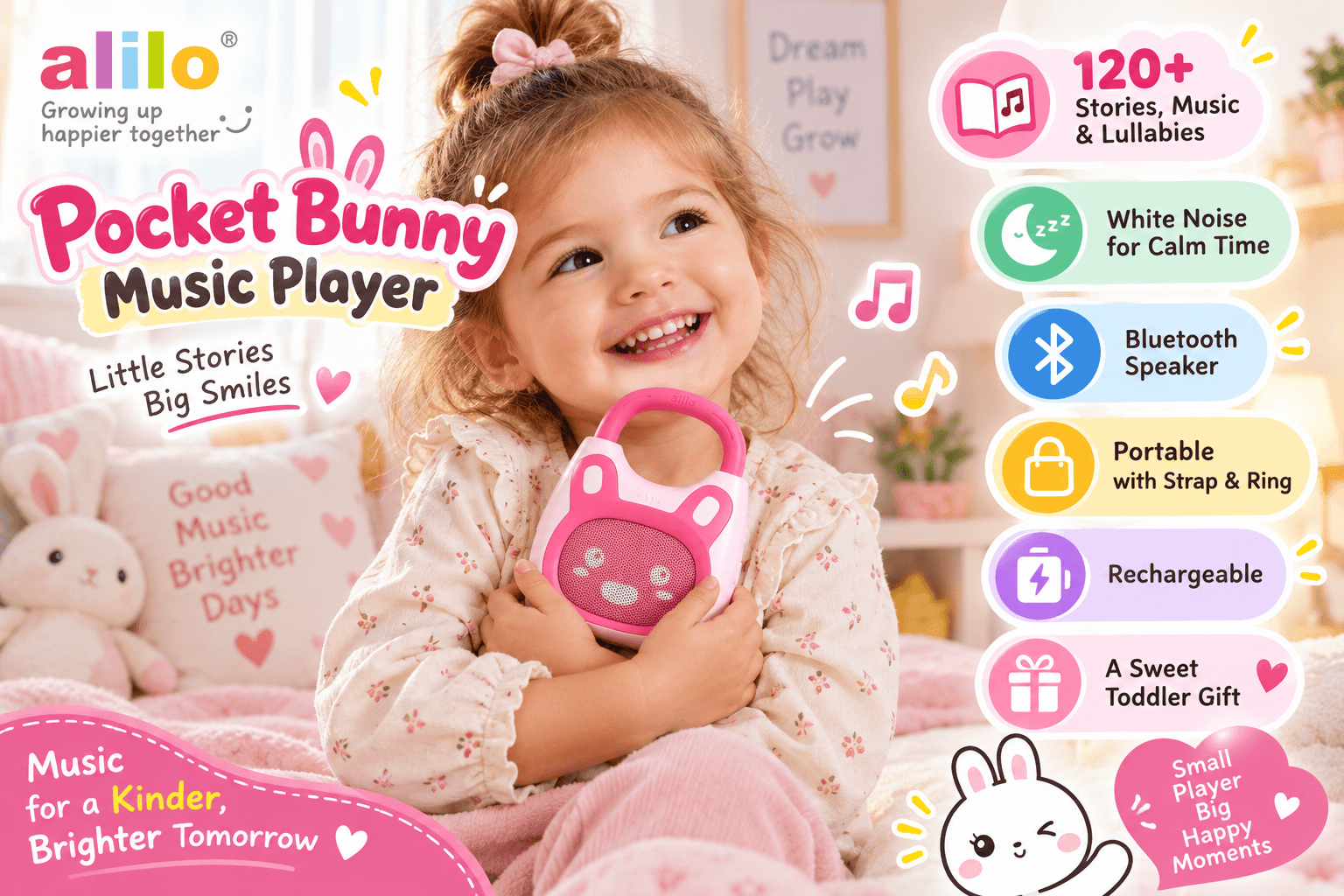
alilo Pocket Bunny Portable Kids Music Player, Musical Toys for Toddlers
Available in multiple configurations and colors to suit toddler preferences, this screen-free audio device is built to withstand the rigors of early childhood. It fosters auditory learning, musical appreciation, and language development by delivering carefully curated content through a high-fidelity speaker. The drop-resistant shell and intuitive button layout empower toddlers to independently navigate their favorite stories and songs without adult intervention.
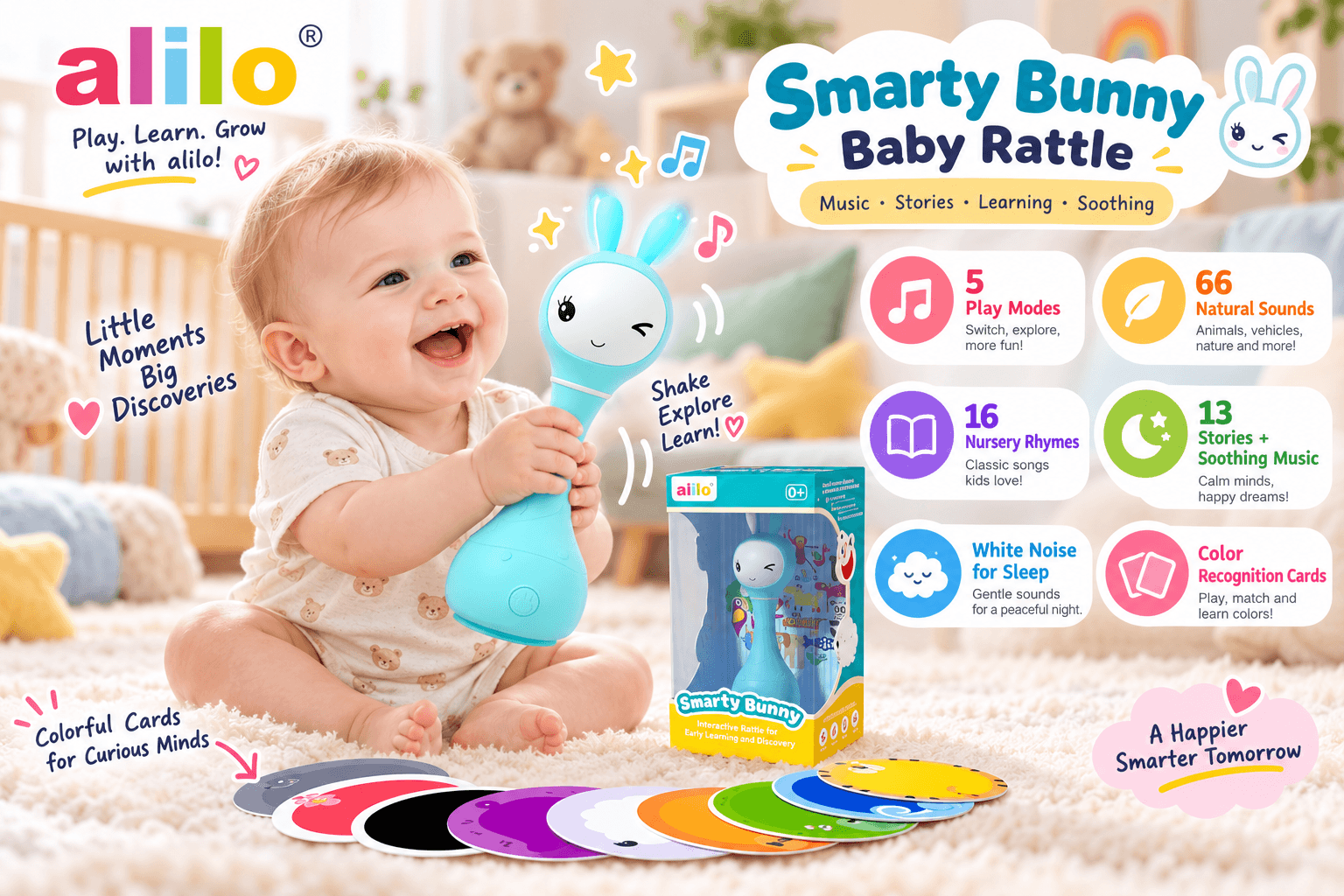
alilo Smarty Bunny Baby Rattle Musical Toys 0-6-12 Months, Baby Gifts
Tailored specifically for the earliest stages of sensory development, this smart rattle combines soothing auditory feedback with safe, chewable silicone components. It features innovative color-identifying technology that audibly announces colors when placed on different surfaces, introducing early association skills. The ergonomic design stimulates fine motor skills and grip strength while providing necessary comfort during the teething phase.
Four Products, Four Different Moments in Childhood
The following products illustrate how alilo adapts the same playful identity to different ages and routines.
| Product | Best-Fit Moment | Main Experience | Standout Idea |
|---|---|---|---|
| alilo Math Games for Kids | Ages 5–12 | Interactive arithmetic and logic practice | Portable practice without turning every session into homework |
| Pocket Bunny Music Player | Toddler years | Stories, music, lullabies and white noise | Compact audio companion for home and travel |
| Smarty Bunny Baby Rattle | Baby and early toddler stage | Sounds, rhymes, stories, colors and sensory play | Turns a familiar rattle form into a multi-activity toy |
| Pink Pocket Bunny Music Player | Toddler years | Portable audio and Bluetooth playback | Same travel-friendly concept in a playful pink design |
The Bigger alilo Ecosystem
The Amazon storefront shows that alilo extends considerably beyond these four items. Its broader categories include baby rattles, story and music players, math activities, talking-pen products, and newer interactive toy concepts.
What connects these categories is not identical technology. It is the repeated attempt to transform ordinary developmental moments into playful interaction.
A baby can begin with sound and sensory response. A toddler can progress toward songs and stories. An older child can interact with questions, patterns, numbers, and problem-solving activities. The physical products change, but the brand language remains remarkably stable.
This is where alilo’s positioning becomes stronger: it is not simply selling “electronic toys.” It is building a progression of age-adapted playful tools.
Original Editorial Analysis: The alilo Routine-Fit Framework
Rather than inventing survey results, the following is an original editorial framework created specifically for evaluating the featured alilo products. It asks a more practical question than “Which has the most features?”:
Where does each product actually fit into family life?
| Family Need | Strongest Fit |
|---|---|
| Keeping a baby engaged during floor play | Smarty Bunny |
| Creating parent-and-baby sound or color interaction | Smarty Bunny |
| Storytime without handing over a phone | Pocket Bunny |
| Familiar audio while traveling | Pocket Bunny |
| Calm-time or bedtime audio | Pocket Bunny |
| Short arithmetic practice | Math Games |
| Travel-friendly educational activity for school-age children | Math Games |
| A colorful toddler gift with repeat-use potential | Pocket Bunny |
The insight from this comparison is simple: alilo is strongest when its products are matched to routines rather than treated as feature collections.
Parents rarely need “120 audio items” in the abstract. They need something useful during a road trip. They do not necessarily need “19 games”; they may need a way to turn ten idle minutes into voluntary math practice.
That routine-first perspective makes the specifications easier to understand.
How to Build an alilo Play Routine in Four Steps
For families considering these products, a simple approach can keep technology supportive rather than dominant.
1. Start with the moment, not the device.
Decide whether the goal is active play, quiet listening, parent-child interaction, travel entertainment, or academic practice.
2. Choose the product that matches the child’s current stage.
A baby rattle, toddler music player, and school-age math device solve very different problems. Age-appropriate design matters more than buying the product with the longest feature list.
3. Participate whenever possible.
Ask questions, imitate sounds, identify colors, discuss stories, or celebrate a solved equation. The AAP stresses that toys should support rather than replace warm caregiver-child interaction.
4. Let the child lead sometimes.
Children benefit from opportunities to explore, make choices, repeat favorite activities, and follow their interests. Play-based learning frameworks likewise emphasize active engagement and exploration.
A Quick Reader Poll for Parents
For an informal family check-in, ask one question before purchasing:
“Which everyday moment do we most want to improve?”
- A. Baby sensory and bonding time
- B. Toddler story and music time
- C. Calmer travel and waiting periods
- D. Short, low-pressure math practice
- E. A combination of several routines
The answer is more useful than choosing solely by age or specification count. A product earns long-term value when it solves a recurring household need.
Why alilo Feels Cohesive in a Crowded Toy Market
Children’s products often compete by adding more: more lights, more modes, more sounds, more content. alilo certainly offers substantial feature sets, but its stronger differentiator is how those functions are packaged.
The bunny shapes, tactile handles, colorful controls, friendly expressions, physical buttons, portable dimensions, and recognizable visual identity give the technology a child-centered personality.
There is also a sensible developmental progression across the catalog. Listening becomes interacting. Interacting becomes recognizing. Recognizing becomes answering and problem-solving.
That does not mean every product is necessary for every family. Nor should any electronic learning toy be treated as a shortcut to development. NAEYC emphasizes that learning is social, contextual, and shaped by interaction with both people and environments.
The best interpretation of alilo, therefore, is not “technology that teaches children by itself.” It is technology designed to give children and caregivers more playful starting points.
Small Products, More Opportunities to Connect
The appeal of alilo educational toys lies in the brand’s ability to translate learning into forms children can approach naturally. The Smarty Bunny invites babies to shake, listen, look, and respond. Pocket Bunny carries stories and music into everyday routines. The portable Math Games device gives older children a way to practice calculation and logic outside the traditional workbook format.
Across these products, alilo maintains a recognizable philosophy: colorful design should invite interaction, learning should feel accessible, and products should fit real family routines rather than demand entirely new ones.
That philosophy is also compatible with a broader understanding of childhood development. Harvard’s Center on the Developing Child emphasizes responsive relationships, while the AAP and NAEYC consistently highlight play, appropriate experiences, exploration, and human interaction as important foundations for learning and development.
For families, that provides a useful way to judge alilo—or any educational toy. The question is not simply “How much can this device do?”
A better question is:
“What can this product encourage my child and me to do together?”
For alilo, the answer can begin with a rattle, continue through a favorite story or song, and eventually arrive at a math problem solved with a smile.