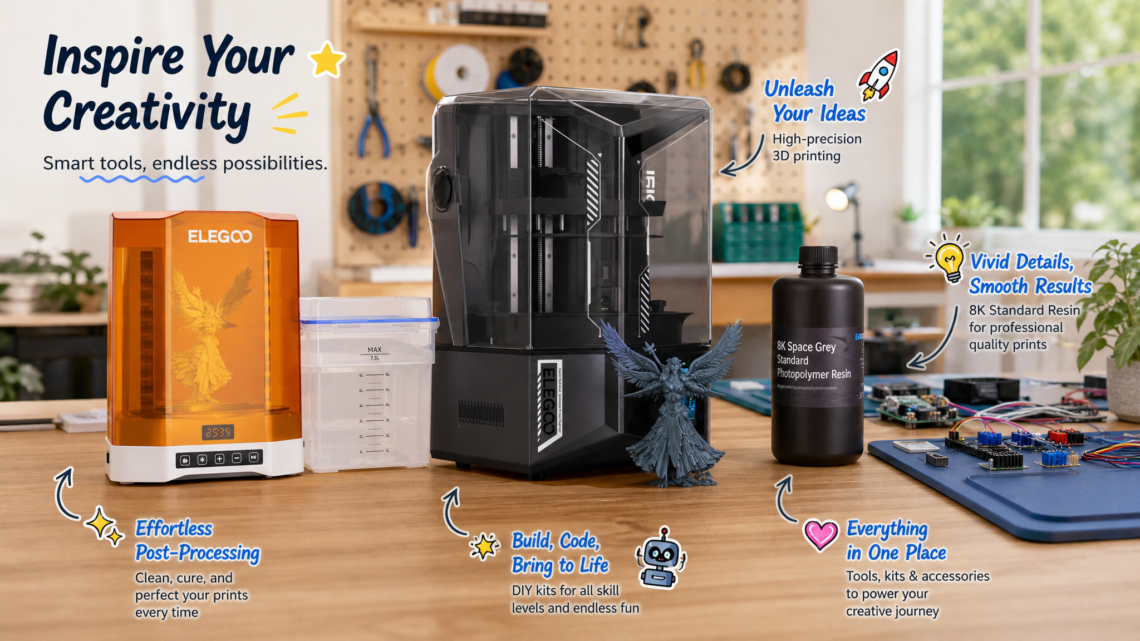
The modern renaissance of DIY engineering and desktop manufacturing has fundamentally transformed how we bring ideas to life. In a world where digital concepts can be materialized in a matter of hours, having access to reliable, high-precision, and user-friendly tools is no longer a luxury—it is a necessity for creators, educators, and innovators. Navigating the vast landscape of tech hardware and 3D printing equipment can often feel overwhelming, with countless brands vying for attention. However, one brand has consistently distinguished itself by building a comprehensive, accessible, and deeply integrated ecosystem: ELEGOO. Through a relentless commitment to quality and community, ELEGOO has evolved from a component supplier into a global powerhouse, providing an indispensable toolkit for anyone looking to explore the frontiers of technology, robotics, and advanced prototyping.
The ELEGOO brand is fundamentally built upon the philosophy of democratizing technology. A careful examination of their digital storefront reveals a company that deeply understands the multifaceted nature of the maker journey. Rather than offering a fragmented catalog, ELEGOO presents a highly organized, professional ecosystem categorized into distinct tiers that cater to varying levels of expertise and specific creative needs. From advanced MSLA and FDM 3D printer series to comprehensive STEM education kits and proprietary printing materials, their portfolio is designed to guide a user from their very first line of code to the production of high-fidelity, professional-grade prototypes.
The brand’s pedigree is visually reinforced by a legacy of rapid, global expansion and technical authority. Established as a cornerstone in the maker community, ELEGOO proudly highlights its foundational year of 2015, marking nearly a decade of continuous innovation. Since its inception, the company has scaled aggressively, now boasting a robust presence in over 100 countries worldwide. This global footprint is backed by serious proprietary technology, evidenced by an impressive portfolio of 161 company patents. Furthermore, with a staggering community of over 40 million users, ELEGOO has solidified its reputation not just as a manufacturer, but as a central hub for a thriving global community of creators. Their storefront also proudly displays numerous industry awards and certifications, underscoring their commitment to safety, quality, and industry-leading design standards.
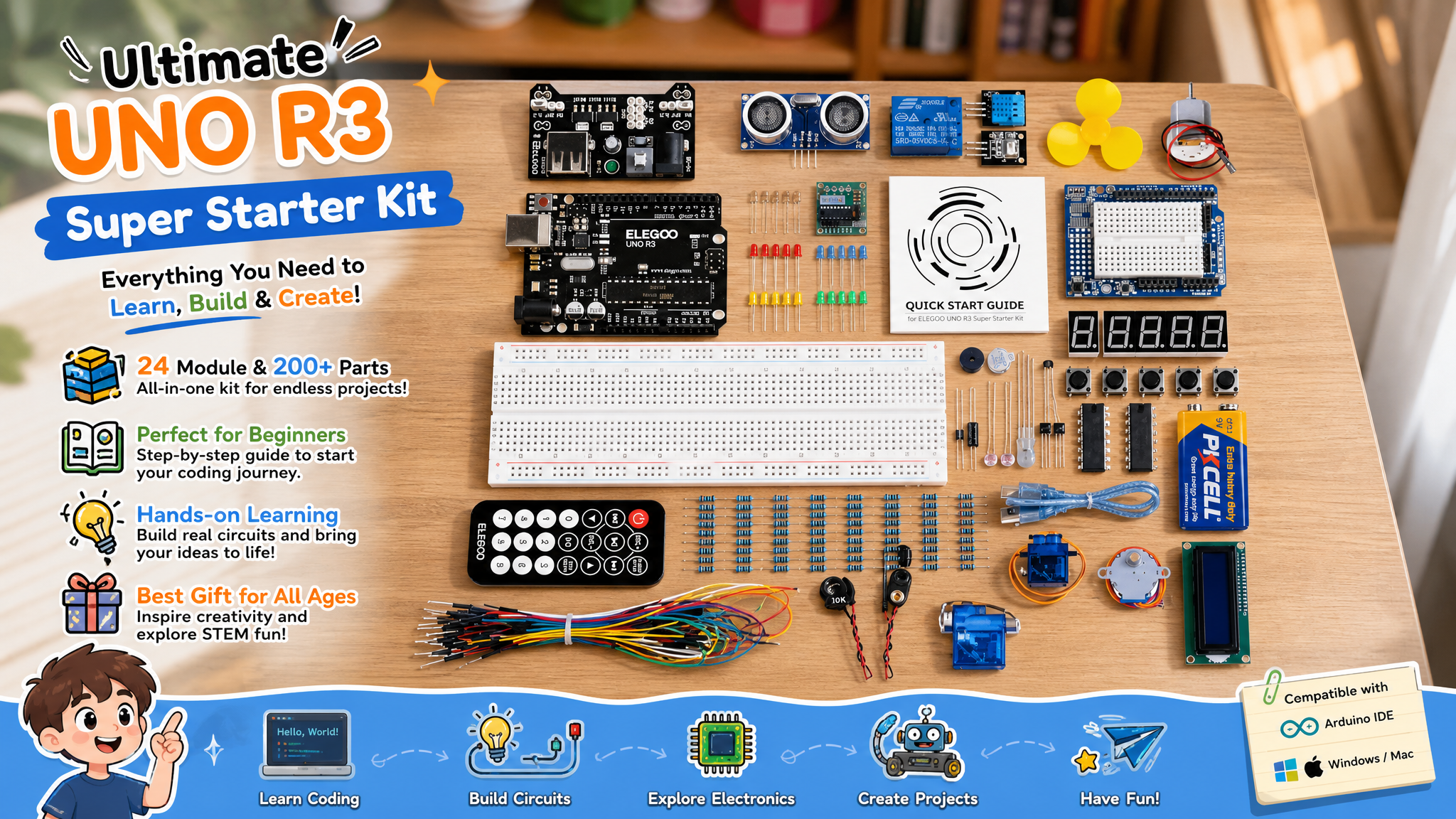
At the heart of ELEGOO’s mission is a profound dedication to STEM education. The barriers to entry for electronics and programming have historically been high, characterized by dense manuals and unforgiving hardware. ELEGOO dismantles these barriers with precision through products like the ELEGOO UNO R3 Project Super Starter Kit. This kit is a masterclass in pedagogical design, offering an expansive array of electronic components that invite immediate, tactile experimentation. The package is thoroughly equipped with a foundational UNO R3 controller board, a versatile breadboard, diverse environmental sensors, reliable motors, and a vibrant spectrum of LEDs. Accompanying these physical components is a meticulously structured PDF tutorial designed specifically for absolute beginners. This documentation transforms a potentially intimidating box of wires and chips into a logical, step-by-step curriculum. Users are guided through fundamental concepts of circuitry and C++ programming, culminating in complex, interactive projects. By providing all necessary resistors, jumper wires, and power supply modules in one cohesive package, ELEGOO ensures that the learning process remains entirely focused on discovery rather than troubleshooting missing parts.
From First Circuit to Finished Model
One interesting way to understand ELEGOO is to view its product range as a creative ladder.
At the first level are electronics and STEM products. These introduce concepts such as circuits, sensors, inputs, outputs, motors, displays, and basic programming.
The next level combines these skills into functioning systems such as programmable robot vehicles. Instead of simply lighting an LED or reading a sensor value, users begin connecting multiple technologies to produce behavior.
3D printing expands the possibilities again. Ideas are no longer limited to electronic experiments; users can create housings, models, prototypes, miniatures, replacement parts, decorative objects, and custom components.
ELEGOO then supports the surrounding workflow with resin, washing and curing equipment, filament, and workspace accessories.
That progression explains why the storefront feels broader than a conventional electronics shop or 3D printer catalog. The underlying theme is not one specific technology. It is experimentation.
Product Spotlight 1: ELEGOO UNO R3 Project Super Starter Kit
For people entering electronics for the first time, the ELEGOO UNO R3 Project Super Starter Kit with PDF Tutorial for Beginners represents one of the clearest examples of the brand’s educational approach.
The kit brings together an UNO R3-compatible development board with a wide variety of components commonly used in introductory electronics projects. The product presentation shows breadboards, LEDs, resistors, jumper wires, displays, switches, sensors, motors, an infrared remote, and additional modules organized as one learning package.
Its value is not simply the quantity of parts.
The more important advantage is having different components available within one environment, allowing beginners to move from simple experiments toward projects that combine multiple functions. Instead of purchasing individual components before understanding how they work together, users can explore electronics through a more structured collection.
For students, hobbyists, and anyone curious about microcontroller-based projects, it provides a practical starting point for learning through construction rather than theory alone.
Learning Becomes More Interesting When the Project Moves
Electronic experimentation becomes noticeably more engaging when code produces a visible physical reaction.
That is where robotics becomes an important part of the ELEGOO ecosystem.
A programmable robot transforms concepts such as motors, distance sensing, camera input, wireless communication, and navigation into something users can immediately observe. Code is no longer an abstract sequence displayed on a monitor. It determines how an actual machine responds to its surroundings.
This relationship between software and physical behavior is especially useful for STEM learning because mistakes are easier to understand. If a robot turns incorrectly, fails to detect an obstacle, or reacts differently from the expected behavior, users can investigate the relationship between programming, sensors, wiring, and mechanical movement.
ELEGOO uses this category to create a natural bridge between introductory electronics and more integrated engineering projects.
Product Spotlight 2: ELEGOO UNO R3 Smart Robot Car Kit V4
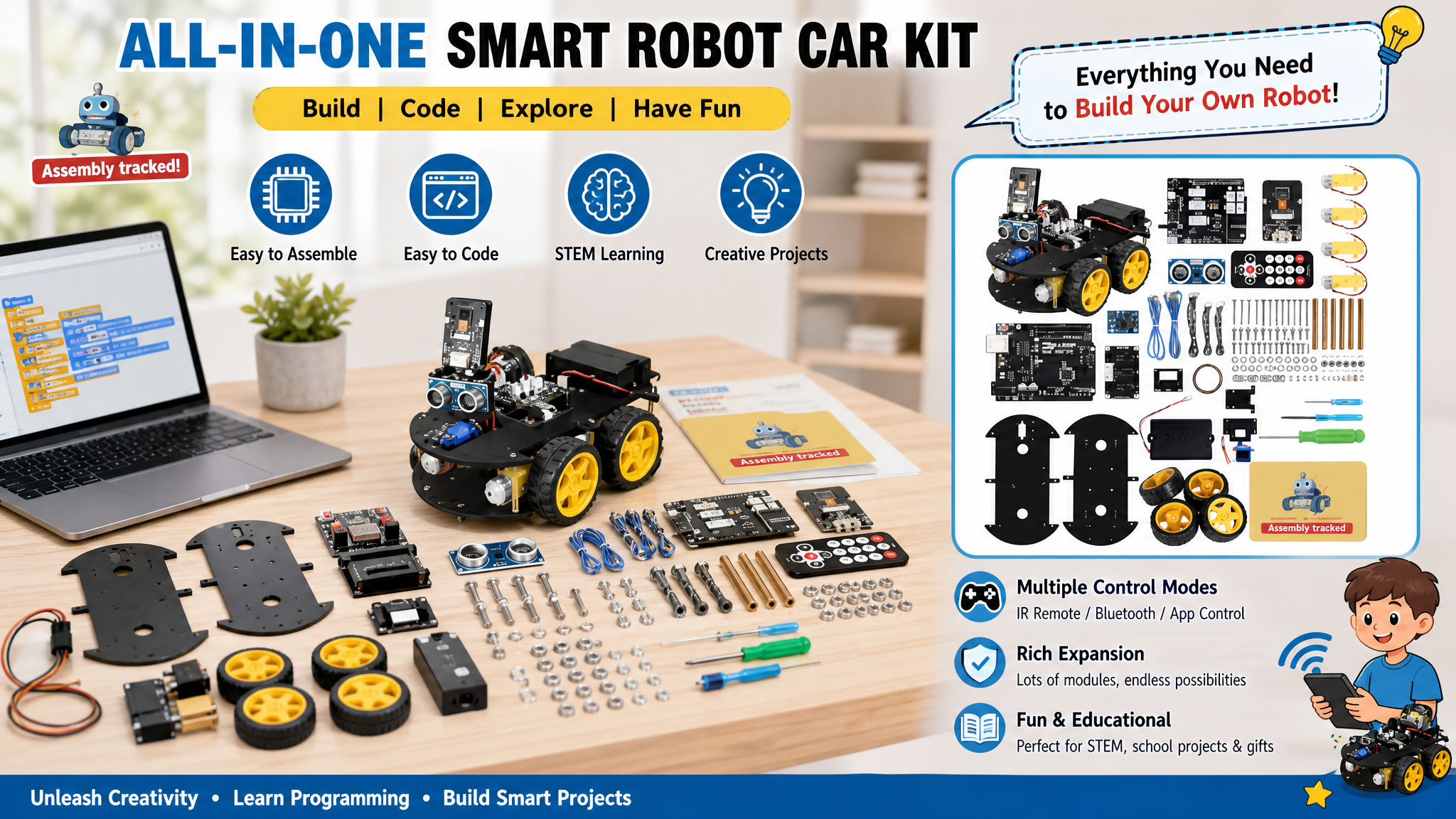
The ELEGOO UNO R3 Smart Robot Car Kit V4 with Camera, Compatible with Arduino builds on those principles by turning electronics into a mobile learning platform.
Rather than presenting components separately, the kit combines a wheeled chassis, controller, sensors, motors, camera-related functionality, and supporting electronic parts into a unified robot project.
Its appeal comes from interaction.
Users are not simply assembling a model for display. The finished platform can become an environment for experimenting with movement, obstacle detection, control logic, and other programmable behaviors. The camera also introduces another layer of exploration beyond traditional sensor-only robot kits.
For younger learners, families, students, and adult beginners, the robot car can make technical concepts feel more immediate because every programming decision has a physical outcome.
ELEGOO and the Expansion of Desktop 3D Printing
While electronics remain an important part of the company’s identity, 3D printing has become one of the most visible areas of the ELEGOO catalog.
The storefront presents multiple printer families rather than treating 3D printing as a single category. Resin systems and FDM machines serve different creative requirements, allowing users to choose according to the type of objects they want to produce.
FDM printing is often attractive for functional objects, larger prototypes, organizers, mechanical parts, props, and general-purpose projects. Resin printing becomes especially compelling when surface detail and fine geometry matter, including miniatures, display models, intricate decorative pieces, and other high-resolution creations.
ELEGOO’s portfolio reflects both approaches.
Its Saturn and Mars families address resin printing, while Neptune systems expand the brand into filament-based fabrication. Supporting categories include printing resin, filament, replacement or enhancement accessories, and washing and curing equipment.
This gives the company an advantage that extends beyond printer hardware. Buyers can remain within one recognizable ecosystem while assembling more of the workflow around the machine itself.
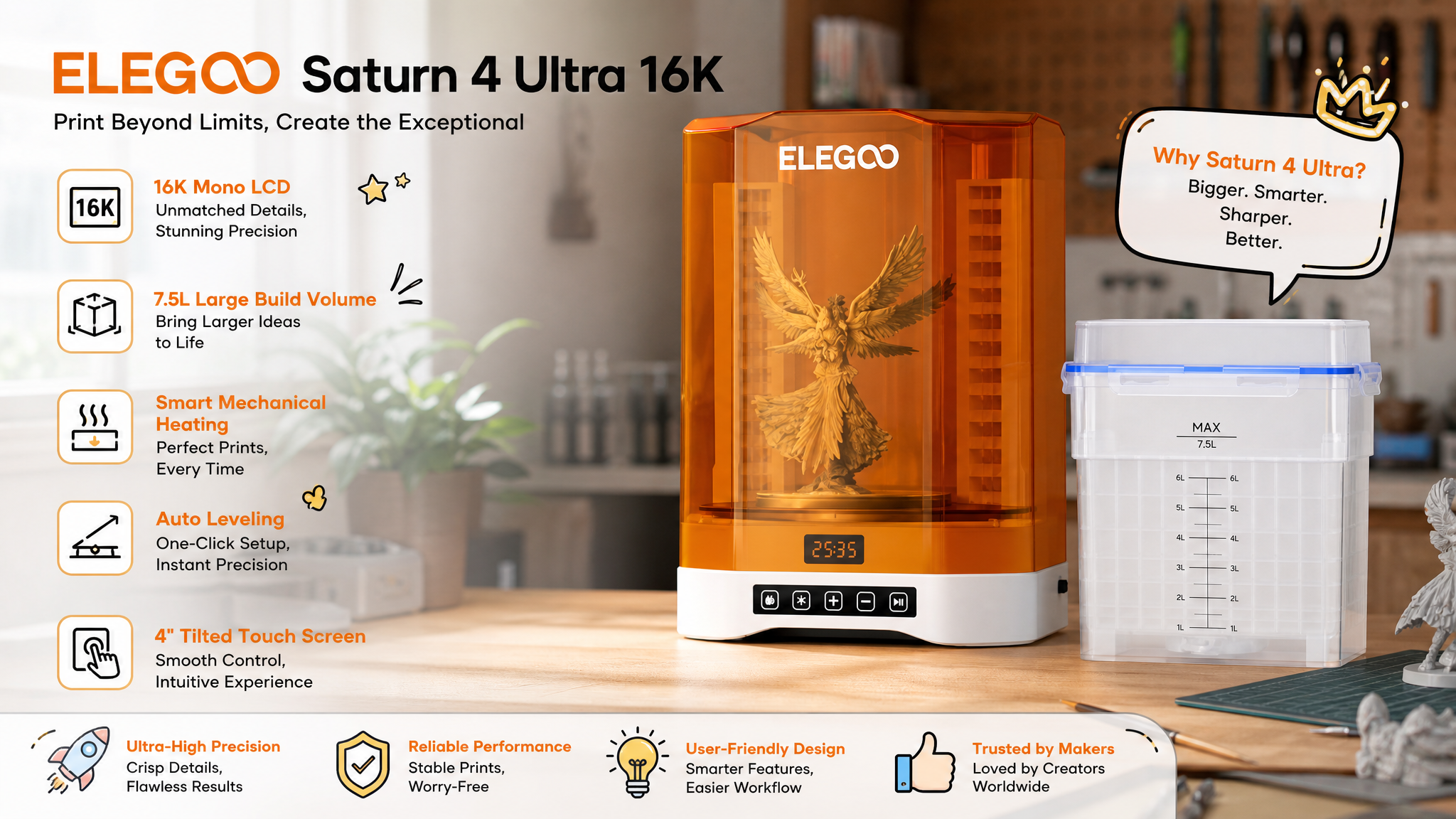
Product Spotlight 3: ELEGOO Saturn 4 Ultra 16K Resin 3D Printer
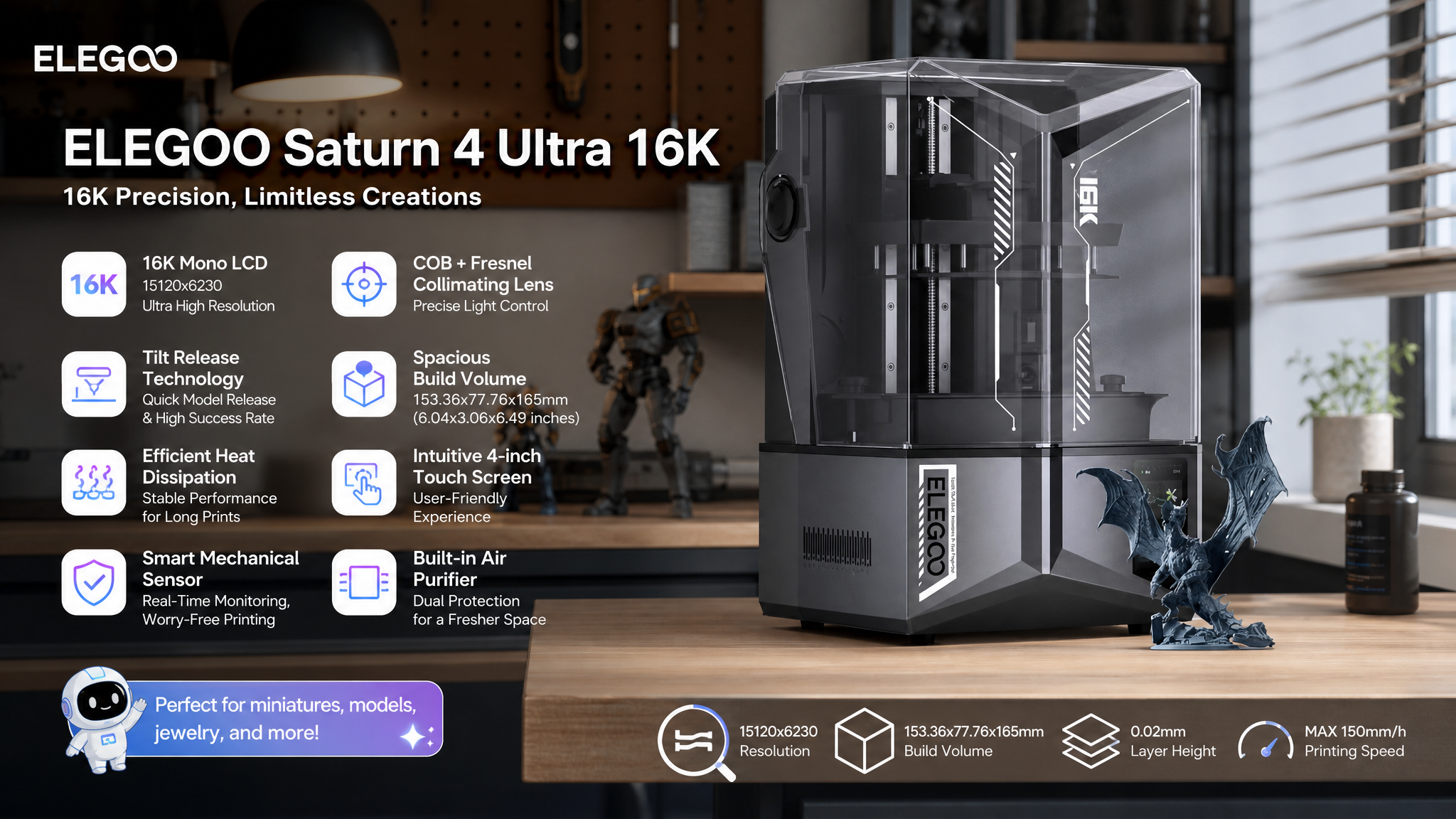
The ELEGOO Saturn 4 Ultra 16K Resin 3D Printer represents the more advanced side of the brand’s desktop resin printing range.
Its positioning centers on users who place considerable value on detail. High-resolution resin printing is particularly attractive for objects containing complex textures, small structural elements, character models, collectibles, miniatures, and display pieces where subtle surface features contribute significantly to the final result.
The printer’s enclosed, modern industrial design also reflects how desktop fabrication equipment has evolved. These machines are increasingly designed not only as technical tools but as permanent parts of creative studios and dedicated workspaces.
For experienced makers upgrading from earlier equipment as well as ambitious enthusiasts building a more capable printing station, the Saturn 4 Ultra 16K represents ELEGOO’s emphasis on pushing consumer-accessible resin printing toward increasingly refined output.
A Printer Is Only One Part of Resin Printing
Buying a resin printer is not the end of the process.
After printing, models normally require cleaning and curing before they are ready for final handling, painting, assembly, or display. This is where ecosystem thinking becomes particularly important.
A brand selling only a printer leaves users to construct the rest of the workflow independently. ELEGOO instead offers equipment designed around the stages surrounding printing.
The practical benefit is organization.
A more structured workflow can separate printing, washing, curing, surface preparation, and cleanup into clearer stages. This becomes increasingly valuable for users producing models regularly rather than experimenting only occasionally.
It also illustrates an important characteristic of ELEGOO’s broader strategy: the company pays attention to what happens before and after the headline product performs its primary function.
Product Spotlight 4: ELEGOO Mercury Plus V3.0 Wash and Cure Station
The ELEGOO Mercury Plus V3.0 Wash and Cure Station is designed to support the post-processing stage of resin printing.
Instead of manually creating separate cleaning and curing arrangements, users can incorporate these tasks into a more purpose-built station. The product presentation pairs an enclosed curing chamber with a dedicated washing container, creating a more organized setup for preparing freshly printed resin objects.
Its importance is easy to underestimate when comparing exciting printer specifications, yet post-processing has a major influence on the overall resin printing experience.
For users who print frequently, a dedicated wash-and-cure solution can make the workspace feel more systematic and help transform a collection of individual steps into a repeatable production routine.
Materials Matter as Much as Machines
3D printers receive most of the attention, but printing materials ultimately become the physical object.
ELEGOO’s material range therefore plays a central role in the larger ecosystem. Resin options support different visual and functional goals, while filament products serve the company’s FDM printer audience.
Offering materials also gives the brand another connection with existing customers. A printer may be purchased once, but resin and filament become recurring parts of continued experimentation.
This recurring relationship is important because makers rarely stop after producing one successful object. Improved skills tend to generate more ideas, and more ideas require more material.
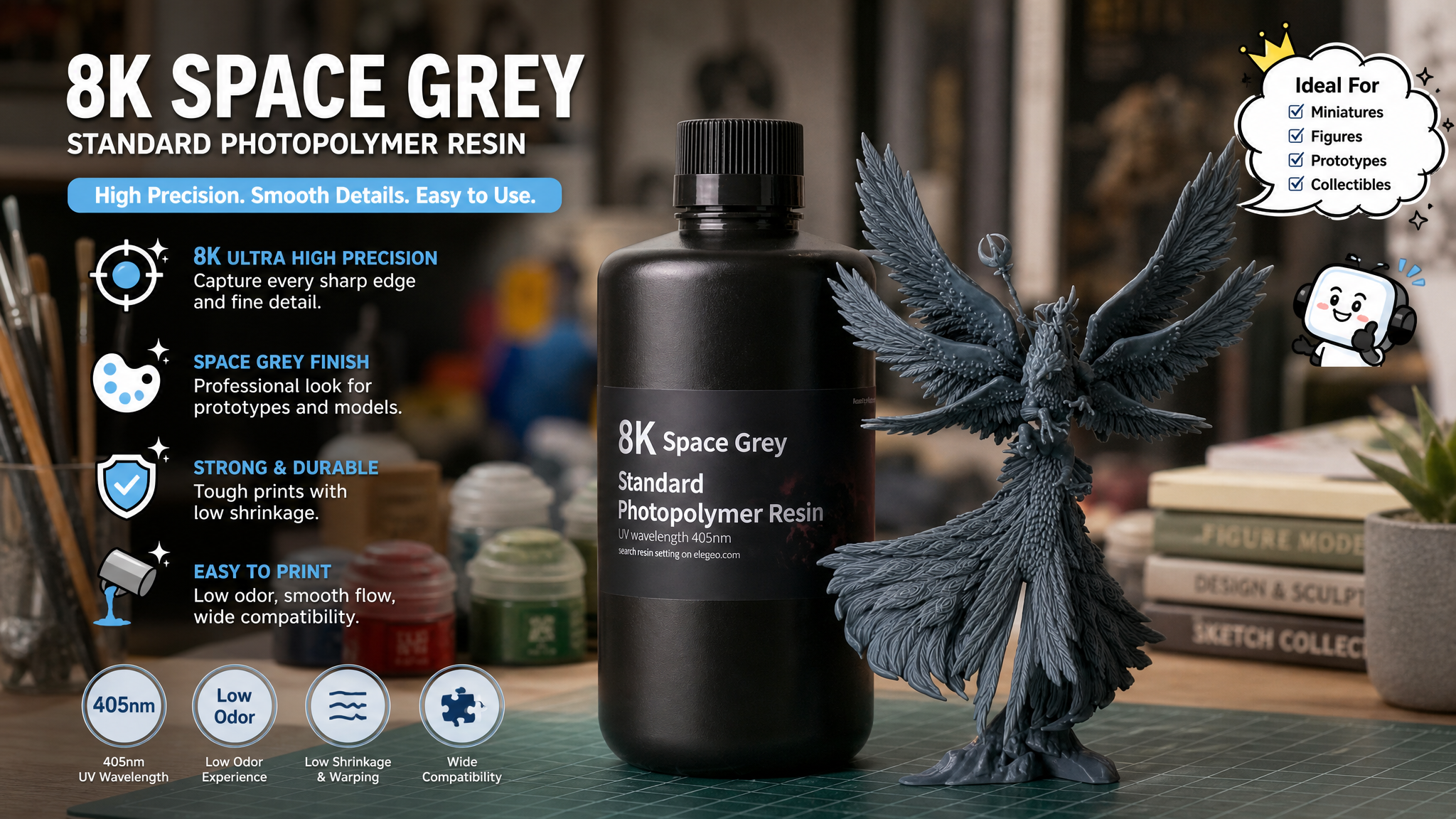
Product Spotlight 5: ELEGOO Upgraded 8K Standard 3D Printer Resin
The ELEGOO Upgraded 8K Standard 3D Printer Resin in Space Grey, 1000g is positioned for resin printing projects where crisp visual detail is a priority.
The Space Grey color is especially suitable for showcasing geometry and surface texture, making it visually effective for character models, miniatures, statues, prototypes, and display objects.
Combined with higher-resolution resin printers, material such as this becomes part of the effort to preserve fine features from digital model to physical print.
It also demonstrates why ELEGOO’s approach extends beyond hardware. A capable printer is most useful when users can conveniently obtain compatible materials for continuing their projects.
Product Spotlight 6: ELEGOO Silicone Mat 400 x 300 mm
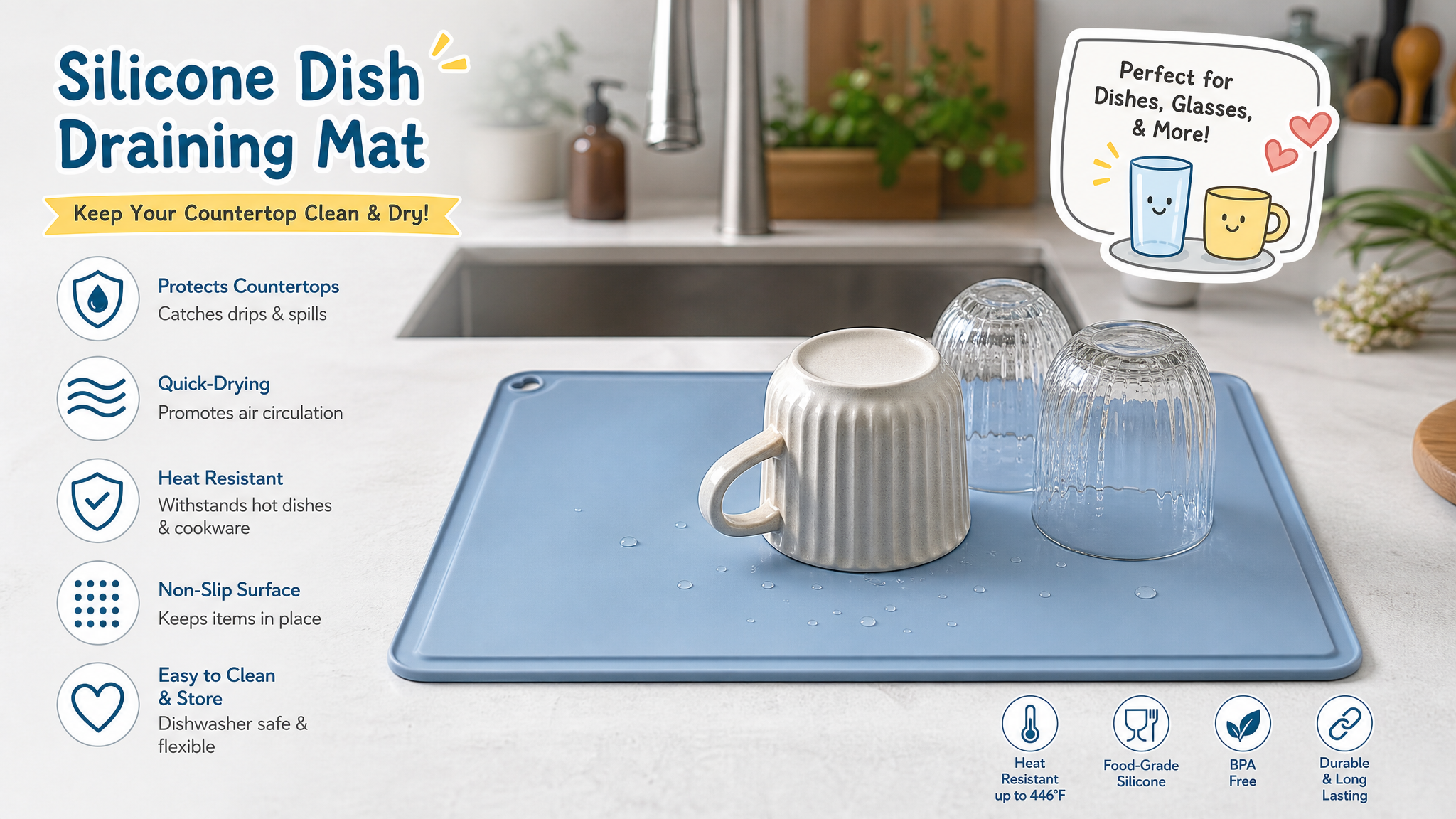
The ELEGOO Silicone Mat 400 x 300 mm is considerably simpler than a printer or robotics kit, but it represents an equally practical side of the brand.
3D printing involves tools, liquid materials, removed supports, cleaning steps, components, and general workspace maintenance. A silicone work mat creates a defined surface for these activities while helping keep the surrounding desk or workstation more manageable.
Its understated design makes it the kind of accessory that becomes useful precisely because it does not complicate the workflow.
This product also reveals something important about ELEGOO’s catalog philosophy: not every product needs to introduce new technology. Some products simply need to make existing technology easier to live with.
More Than Six Products: The Wider ELEGOO Catalog
The six highlighted products represent only a portion of what ELEGOO currently offers.
Its 3D printing portfolio extends across the Saturn Series and Mars Series of MSLA resin printers, providing multiple entry points for different levels of printing ambition. The Neptune Series serves makers interested in FDM printing, while filament collections provide material choices for those machines.
The brand also develops additional washing and curing systems, resin printing accessories, FDM printer accessories, electronic starter kits, development boards, and robotic learning products.
This broad catalog creates multiple ways for customers to enter the ELEGOO ecosystem.
Someone interested in educational electronics may have little immediate interest in resin printing. A miniature painter might arrive specifically for a high-detail printer and resin. A designer could focus on FDM fabrication, while a parent or educator might begin with a robotics kit.
Despite these different audiences, all of them share a similar underlying motivation: they want to turn an idea into something that works, moves, or physically exists.
Why ELEGOO’s Brand Structure Works
Technology brands sometimes attempt to grow by adding categories that have little connection with one another. ELEGOO’s expansion feels more coherent because its major categories revolve around creation.
Electronics teaches how systems work.
Robotics teaches how systems interact with the physical world.
3D printing enables physical fabrication.
Materials make fabrication repeatable.
Post-processing equipment helps complete the object.
Accessories help organize the workspace around the process.
Viewed this way, ELEGOO is building around the maker journey rather than around a single hero product.
That positioning also gives the brand room to serve different skill levels. Beginners can start with guided electronics projects. More experienced users can experiment with robotics or increasingly sophisticated fabrication equipment. Advanced enthusiasts can build dedicated printing environments using printers, materials, washing and curing equipment, and supporting accessories from the same ecosystem.
The Bigger Idea Behind ELEGOO
Beyond this core lineup of specialized robotics and MSLA technology, ELEGOO’s broader ecosystem continues to expand, catering to an even wider array of manufacturing preferences. For those who prefer the structural versatility and massive build volumes of thermoplastic extrusion, ELEGOO offers a highly regarded FDM (Fused Deposition Modeling) Printer Series. These machines are complemented by a massive, continuously restocked inventory of diverse 3D Printing Filaments, encompassing everything from standard PLA to advanced engineering polymers. Whether a user is looking for specialized 3D printing materials to cast jewelry, durable filaments to print functional replacement parts, or replacement screens and vats to maintain their current fleet, the brand serves as a singular, comprehensive depot for the modern creator.
ELEGOO has successfully engineered a paradigm shift in the desktop manufacturing and DIY electronics space. By refusing to compromise on component quality, while simultaneously driving down the barriers of cost and complexity, they have created an environment where innovation is limited only by imagination. From the first blinking LED on an UNO R3 board to the final, immaculate layer of a 16K resin masterpiece, ELEGOO provides the tools, the education, and the materials necessary to turn ambitious digital dreams into tangible, physical realities. For anyone looking to step into the future of personal fabrication, ELEGOO remains the definitive, unmatched starting point.