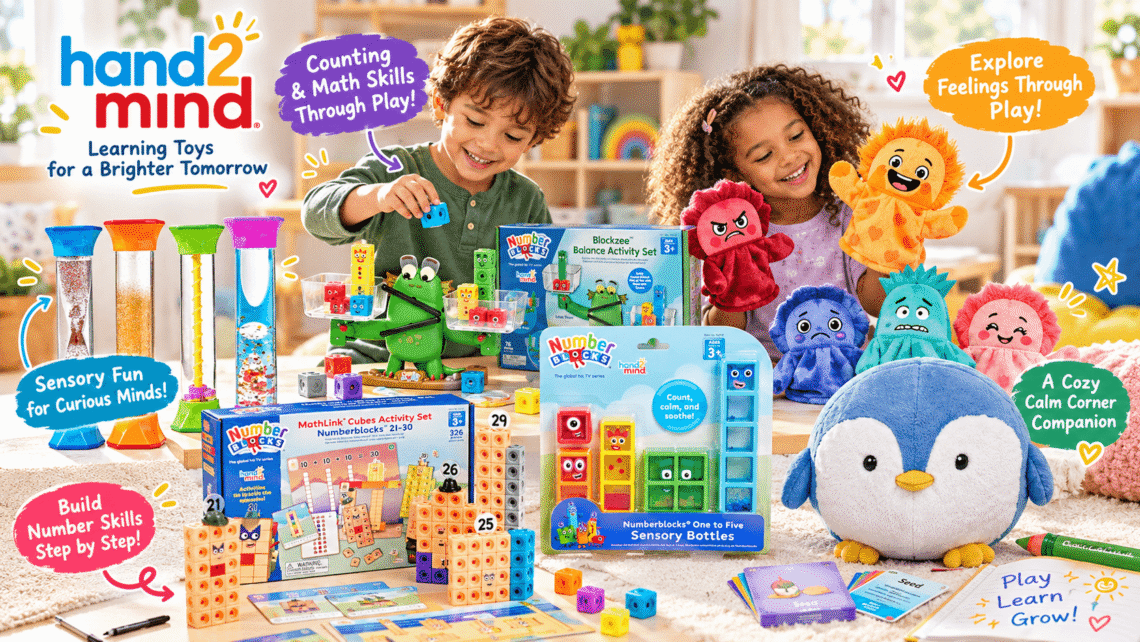
If you have ever stood in a toy store scrolling past shelves of flashing, battery-powered gadgets that blare jingles and die after three uses, you already know the quiet, unspoken frustration of modern parenting: so many “educational toys” feel like work, and so many “fun toys” feel like empty, disposable noise. For decades, parents and early childhood educators have been searching for that sweet spot: products that respect how kids actually grow, that don’t force learning onto a child, and that stay relevant, loved, and useful for months instead of hours. That is exactly the gap hand2mind was built to fill.
What most people don’t know is that hand2mind is not a flashy new DTC brand launched in the last five years to chase viral toy trends. It grew out of a 60-plus year legacy of classroom educators, child development researchers, and toy designers who started by making simple, durable math manipulatives for preschools that no one else was making. Over time, that small project grew into a full ecosystem of playware built on one single, unshakable promise: every child learns best when they can touch, move, experiment, and feel their way through new experiences, instead of just watching a screen or memorizing a flashcard. Unlike almost every other toy brand on the market right now, hand2mind does not treat play as a break from learning. It treats play as learning. Full stop.
This philosophy ripples through every single product the brand makes. It is not marketing copy: you can see it in the weight of a wooden counting block, the non-toxic fill of a sensory bottle, the tiny, intentional details that make a child stop, lean in, and stay focused for 20, 30, even 45 minutes without being prompted. For families and teachers who are tired of chasing the next viral trend, hand2mind feels like a breath of fresh air: no forced logos, no overstimulating lights, no manipulative “level up” mechanics designed to hook kids for endless hours. Just quiet, intentional, good quality play that builds real, lasting skills, one small, happy interaction at a time.
The Three Core Pillars That Make hand2mind Different From Every Other Toy Brand
To understand why hand2mind products land so differently for both kids and caregivers, you have to look at the three non-negotiable pillars the team uses to vet every new item before it ever leaves the design table. These rules explain why the six featured products we are breaking down today work so beautifully, and why they hold up even after months of daily use in classrooms, busy households, travel bags, and calm-down corners.
First pillar: Sensory and emotional safety always comes first. Before any new product even gets considered, the team asks one question: does this give the child a sense of control, comfort, and safety, instead of demanding their attention? So many modern toys are designed to overwhelm a kid’s senses to keep them engaged: loud sounds, strobing lights, constant reward beeps. hand2mind builds the opposite: products that meet the child where they are, that they can use at their own pace, that calm overstimulated nervous systems instead of overloading them. This is why almost all of their core sensory products are battery free, fully silent, and designed to invite, not demand interaction.
Second pillar: No abstract learning, ever, for young kids. The brand’s entire origins are rooted in the observation that children under 7 do not learn abstract concepts (numbers, feelings, weight, balance) from worksheets or apps. They learn them by holding a physical thing in their hand, moving it, testing what happens when they drop it, stack it, or turn it over. A child can memorize that “2 + 3 = 5” from a cartoon, but they will not actually understand what that means until they hold two blocks in one hand, three blocks in the other, and push them together to make a pile of five. hand2mind never asks a kid to take a teacher or parent’s word for it. It gives them the tools to prove it to themselves.
Third pillar: Play is for every kid, no exceptions. hand2mind products are not built for one “type” of child. They work for neurotypical 3 year olds, for neurodivergent kids who need extra sensory support, for kids who are excited about math, for kids who avoid numbers at all costs, for quiet kids who like to sit and observe, for wiggly kids who need to move every five minutes, for homeschool co-ops, for special ed classrooms, for grandma’s house, for long car rides. There is no “wrong” way to play with a hand2mind product. A child can use it exactly how their brain needs to, and it still delivers value.
These three rules are not afterthoughts. They are baked into every single item the brand makes, and you can feel that immediately when you pick up any of the six products below.
hand2mind Sensory Fidget Tubes — The Quiet, Calming “No Hype” Fidget Tool That Grows With Your Kid
If you have ever stepped foot in a preschool calm-down corner, scrolled for travel toys for a 2 hour flight, or tried to find a fidget that does not make loud clicking noises that drive every adult in the room slightly crazy, you already know how hard it is to find a fidget toy that actually works. Most fidgets you find online are designed for older kids and adults: they spin, pop, click, and make just enough noise to get taken away by a teacher within 10 minutes. Most of the toddler fidgets out there are cheap, break within days, and end up with little parts scattered all over the carpet.
The hand2mind Sensory Fidget Tubes solve every single one of these problems, and they do it so gently you will wonder how you ever got by without them. The set comes with four sealed, extra-thick, shatterproof plastic tubes, each completely silent, each filled with a different slow-moving, mesmerizing material that targets a different sensory need. There is no battery, no button, no sound at all. You pick it up, tip it over, and watch the contents slowly drift back down to the bottom. That’s it. And that simplicity is exactly why it is so powerful.
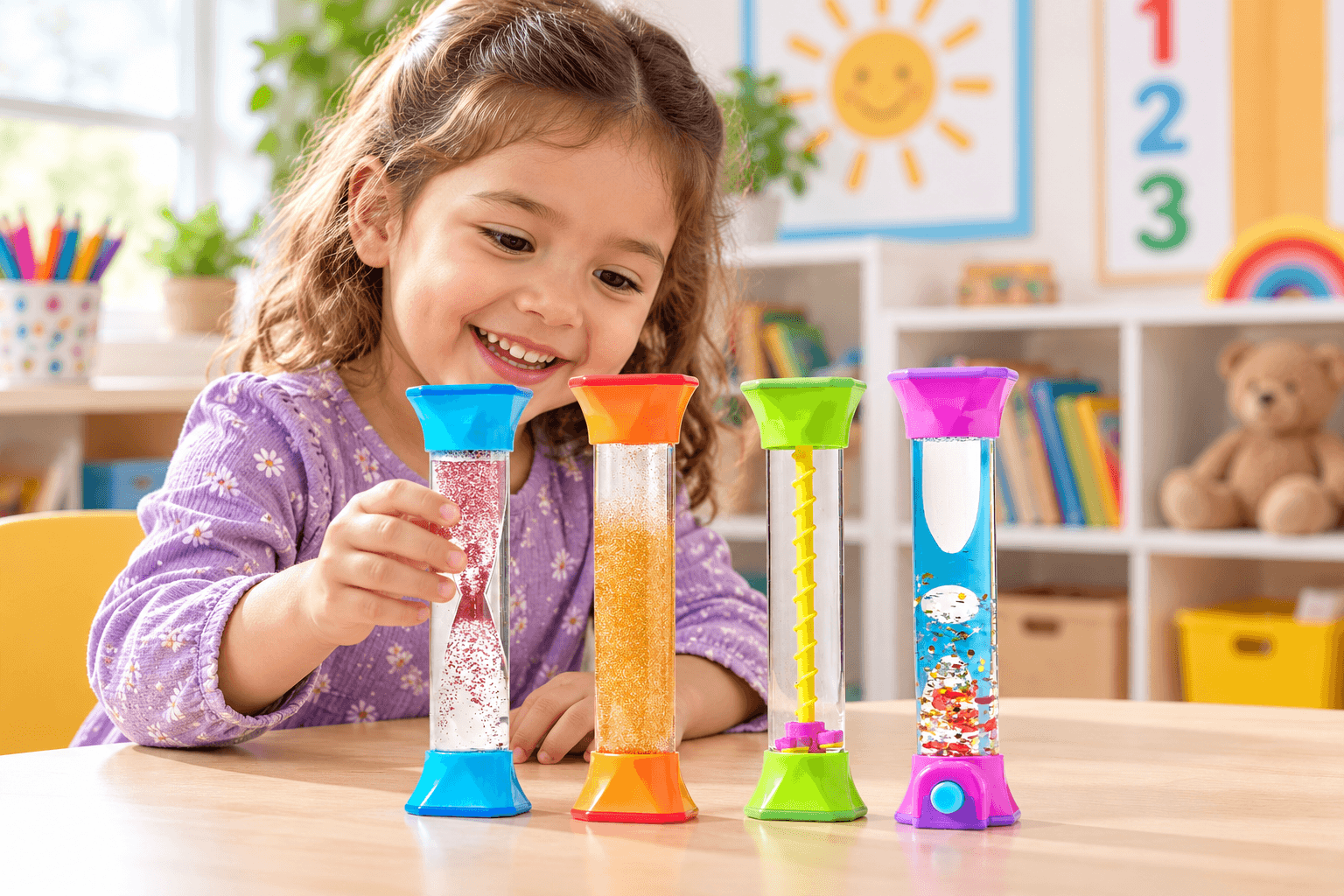
For kids who struggle with anxiety, overstimulation, or big unnameable feelings, these tubes are not a “distraction” — they are a regulated co-regulator that fits in the palm of their hand. A 4 year old who is mid-meltdown can grab one, sit on the calm-down corner bean bag, and watch the glitter or colored liquid drift slowly down, and within 60 seconds their breathing slows down, their shoulders drop, and they can reset without anyone saying a word. Unlike a screen, which overstimulates the nervous system even when it is supposed to be calming, these fidget tubes activate the parasympathetic nervous system exactly the way a deep breath does. They give the kid something small, predictable, and entirely under their control to focus on, when everything else around them feels big and overwhelming.
For classroom use, these are the ultimate quiet fidgets. Kids can hold one under their desk during circle time, turn it over slowly, and stay focused without distracting a single classmate. No clicking, no popping, no parts flying off. For travel, they slip right into a diaper bag, backpack, or even a coat pocket, and they work for car rides, plane flights, waiting rooms, long restaurant meals, any situation where a kid has to sit still and wait. They are also perfect as low-fuss stocking stuffers for toddlers and kids that do not add more clutter to the playroom: every parent who has ever gotten a 12 pack of cheap plastic party favors that break by bedtime knows how valuable a small, durable, actually useful stocking stuffer feels.
And even the “educational” bits are hidden so well the kid will never notice they are learning. While they are watching the liquid flow, they are building visual tracking skills, practicing patience, learning cause and effect (tip the tube fast, the bubbles move fast; tip it slow, they move slow), and even early science concepts about viscosity and density. This is classic hand2mind: the child thinks they are just playing with a cool tube, but they are actually regulating their nervous system and building foundational cognitive skills at the same time.
hand2mind Numberblocks Blockzee Balance Activity Set — The First Math Toy That Makes “Adding Up” Feel Like A Game, Not A Lesson
If you have ever tried to teach a 3 or 4 year old basic addition, you have probably run into this wall: you hold up two flashcards that say “2” and “3”, ask what 2 plus 3 is, and the kid stares at you like you just asked them to solve rocket science. Abstract numbers on a piece of paper mean absolutely nothing to a young child’s brain. They do not care about symbols. They care about things they can pick up, drop, stack, and test.
This is why hand2mind partnered with Numberblocks — the wildly popular, beloved preschool series that turns each number into a friendly, colorful character — to build the Blockzee Balance Activity Set. It is not a “math worksheet with plastic toys attached”. It is a full, playful balance game that turns number sense into a physical, hands-on experiment that 3 year olds will beg to play over and over again.
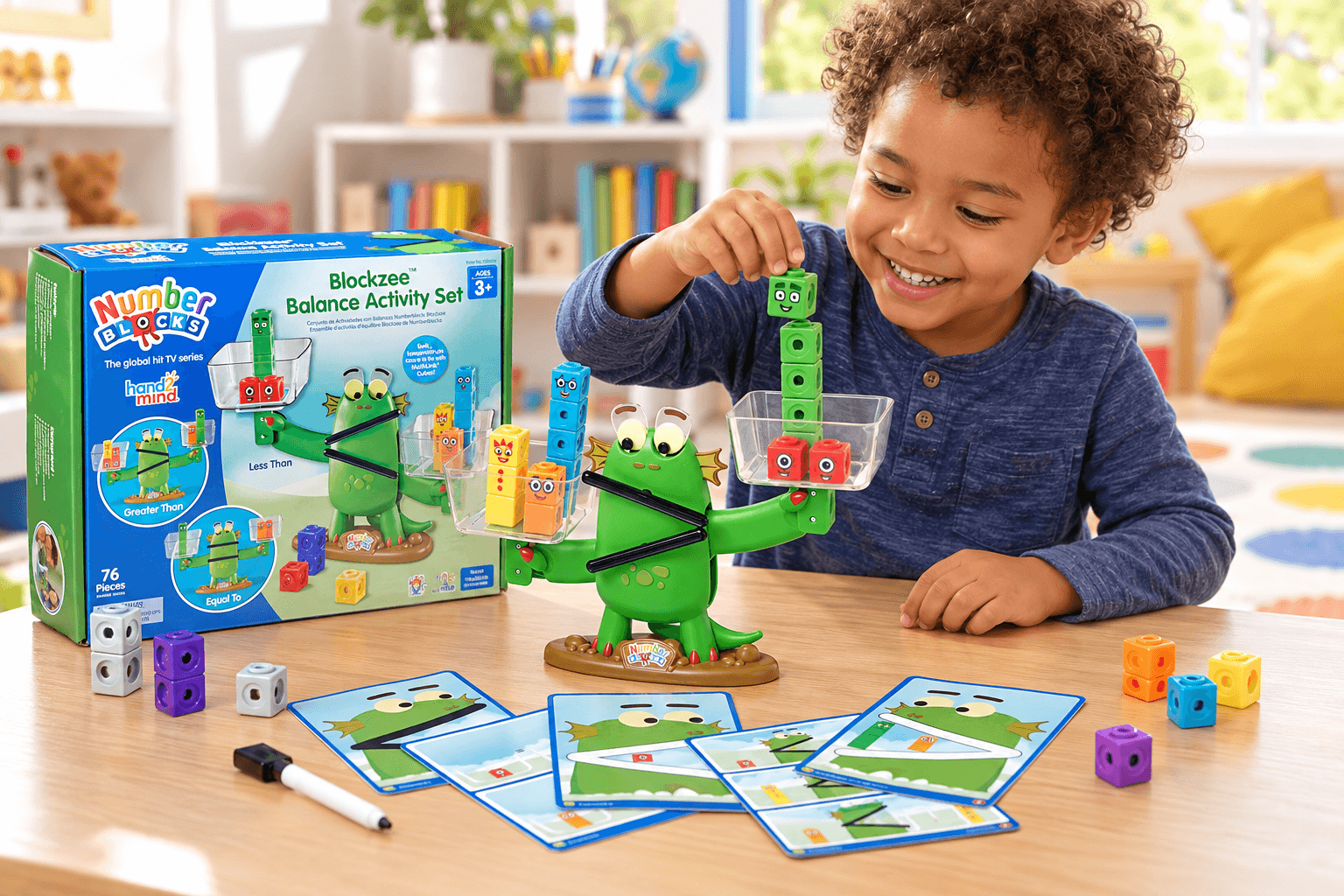
The set comes with a bright, kid-safe wooden balance scale, a full set of chunky, character-matched Numberblocks weights, and a stack of activity cards that walk kids through games from the very easiest (find Numberblock 1 and Numberblock 2, put them on the scale and see if they balance) up to simple addition, number comparison, and even early algebra. Every single Numberblock character weight is perfectly calibrated: Numberblock 3 is exactly three units heavy, Numberblock 5 is exactly five units heavy. So when a kid puts Numberblock 3 on one side, and Numberblock 1 plus Numberblock 2 on the other side, the scale perfectly levels out. The kid does not have to take your word for it that 1+2 equals 3. They see it happen right in front of their eyes. The scale tells them. No arguments, no corrections, no boring drills.
This is revolutionary for kids who are already nervous about numbers, or who have had bad experiences with being “quizzed” on math before. There is no wrong answer here. If they pick the wrong blocks, the scale just tilts. They giggle, adjust, try a different combination, and figure it out themselves. No one gets told they “got it wrong”. They just get feedback from the toy, and keep experimenting.
Teachers love this set for small group math centers, because three or four kids can crowd around the scale together, test different combinations, and problem solve as a team. Parents love it because it pulls the “stress” out of early math entirely. You do not have to sit down and “teach a lesson”. You can pull it out after snack time, spend 10 minutes playing, and your kid will leave that interaction intuitively understanding what “equal” means, what numbers actually weigh, and how smaller numbers add up to make bigger numbers. So many kids who use this set end up running back to it on their own later, making up their own games, trying to balance all the blocks at once, or making silly unbalanced towers just to watch the scale tip. It is not a “one and done” educational toy that gets put on a shelf after a week. It stays in rotation for years, growing with the kid as their math skills get more advanced.
hand2mind MathLink Cubes Numberblocks 21-30 Activity Set — The Perfect Sequel That Makes Big Numbers Feel Approachable (Not Scary)
Once a kid has fallen in love with Numberblocks 1 through 20, the next big leap is 21 through 30. For a lot of young kids, numbers above 20 start to feel intimidating, abstract, and like random big words you have to memorize. hand2mind’s MathLink Cubes Numberblocks 21-30 Activity Set eliminates that fear entirely, by turning every single number from 21 to 30 into a buildable, snap-together character the kid can assemble themselves.
Every Numberblock from 21 to 30 is made out of bright, soft, interlocking MathLink Cubes, exactly matching the colors, faces, and little details from the Numberblocks show. The set comes with all the cubes you need to build every one of those ten characters, plus a full set of step-by-step activity cards that walk kids through games, puzzles, and little challenges that teach place value, counting by 10s, addition over 20, and even early subtraction, all through play.
The magic here is that the kid builds the number themselves. To make Numberblock 22, they snap together two full stacks of 10 cubes, then add two more single cubes on the end. Before you even say the words “tens place” or “ones place”, they already physically feel that 22 is two tens and two ones. They don’t have to memorize that fact. They made it with their own two hands. That is the hand2mind secret at work again: abstract concepts turn into concrete, memorable experiences that stick forever.
This set works perfectly as an extension to the original Numberblocks 1-20 MathLink set, but it also works completely on its own for kids who are ready to move past counting up to 20. The cubes are soft, chunky, totally non-toxic, and they snap together easily for small 3 year old hands, no frustrating squeezing that makes the kid give up. You can take them apart, rearrange them, turn one Numberblock into another, build silly custom characters, or even use them outside of number play to build little towers, cars, or creatures. They are not locked into only one “correct” way to be used.
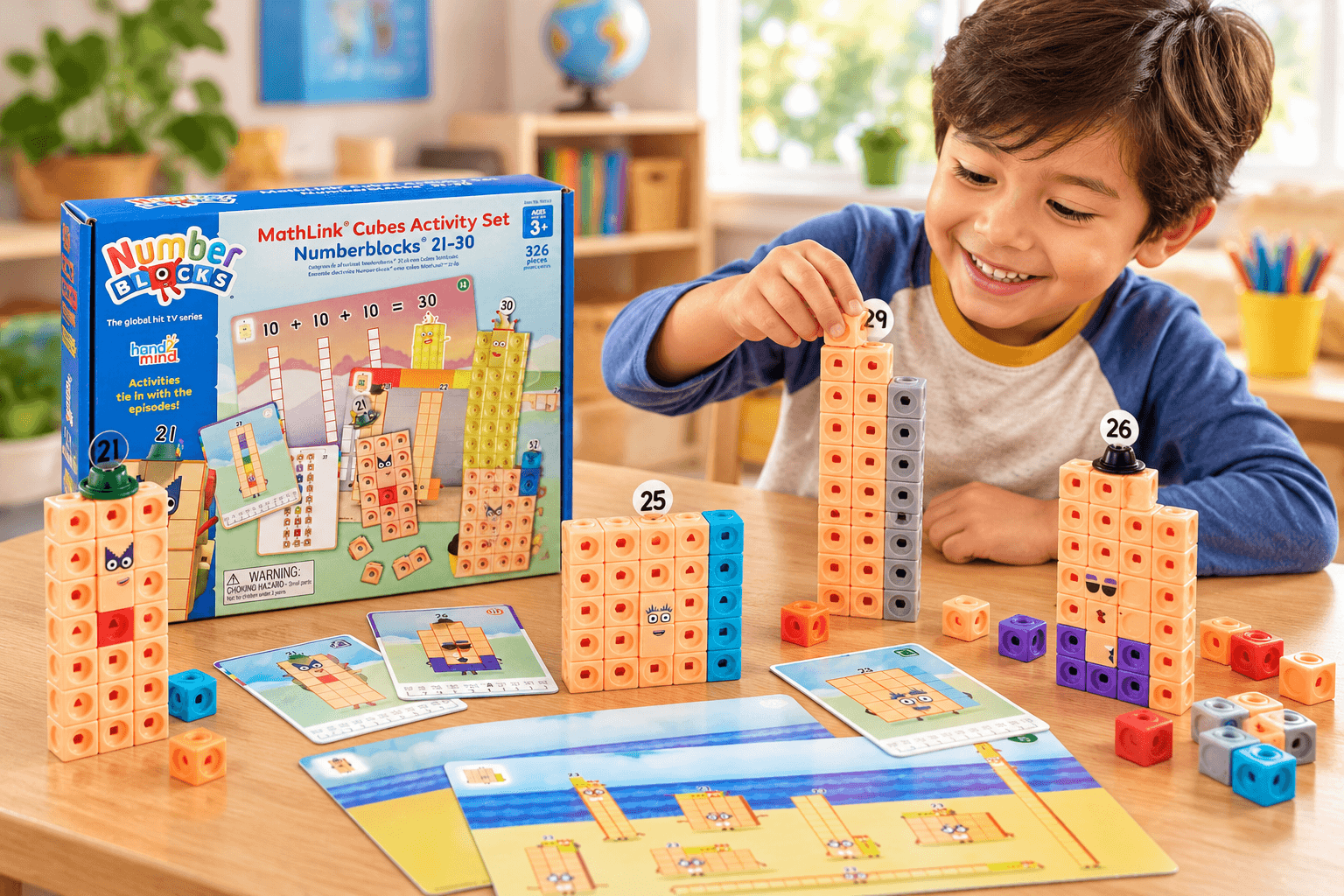
A lot of parents tell us that their kids will sit on the floor with this set for 40 minutes at a time, building every number from 21 to 30, naming them out loud, and rearranging the cubes to make new addition combinations. No screens, no prompting, no “homework”. They are just playing, and building rock solid number sense that will make every single math lesson they have for the next three years feel easy and natural. That is the value you cannot put a price on: instead of fighting your kid to practice numbers, they choose to practice all on their own, because it is fun.
hand2mind Numberblocks One to Five Sensory Bottles — The Soft, Safe First Number Introduction For The Youngest Learners
For kids who are 18 months to 3 years old, even the chunkiest building blocks can still be a little too easy to toss, or put in their mouth. That is where the hand2mind Numberblocks One to Five Sensory Bottles come in. This set takes the five most beloved, iconic Numberblocks characters (1, 2, 3, 4, and 5) and turns each one into a big, soft, fully sealed, ultra-safe sensory bottle that is made for tiny hands to hold, shake, and hug.
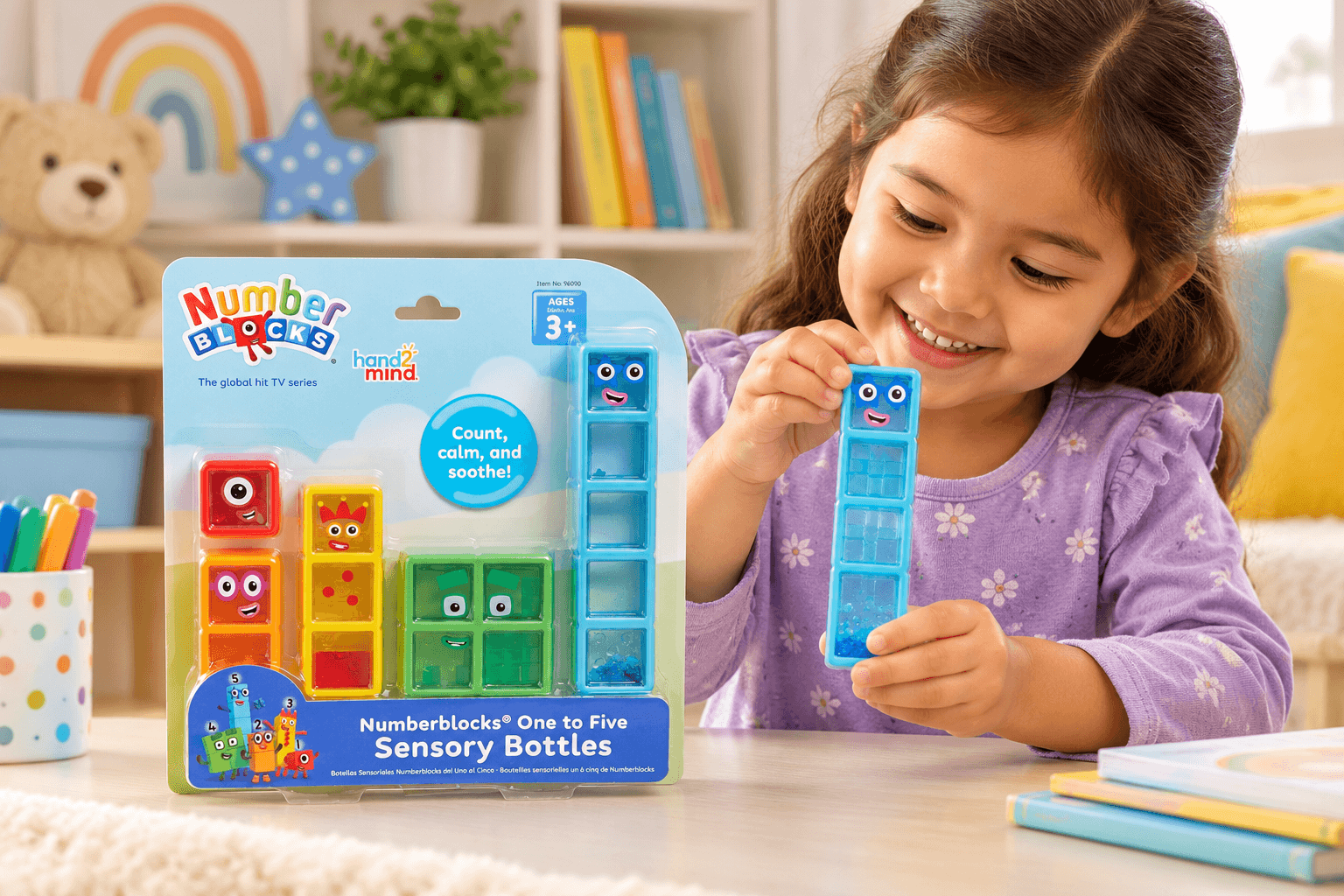
Every single bottle is perfectly color-matched to the Numberblocks character it represents, and every one has a unique, signature fill that matches that character’s personality. Numberblock 1 has tiny fast-moving color beads that zip around when you shake it, Numberblock 2 has two different layers of glitter that drift slowly past each other, Numberblock 5 is filled with star-shaped sequins that swirl and glow. Every bottle feels different, sounds different, and moves different, so the kid builds a separate, unique sensory memory for each individual number.
This is such a clever, gentle way to introduce numbers to toddlers before they can even talk, let alone count. A 2 year old will not sit down and listen to a lesson about what the number 3 is. But they will pick up the blue Numberblock 3 bottle, shake it, watch the contents move, and over time they will start to associate that specific blue bottle, that specific slow swirl of foam beads, that specific happy Numberblock 3 face on the side, with the number three. By the time they are old enough to count out loud, the number already feels like a friendly, familiar friend, not a random symbol they have to memorize.
These bottles are 100% toddler proof. No caps to twist off, no small parts, no liquid that can spill out even if you throw the bottle as hard as you can. They are soft to bump against, light enough for a 1 year old to carry around the house, and they work beautifully as calm down tools too. If your toddler is fussy in the car, or overstimulated at a restaurant, you hand them one of these bottles, and they will zone out peacefully watching the glitter drift down, no screen required.
For early childhood educators and daycare providers, these bottles are an absolute home run. They are easy to sanitize, impossible to break, zero choking hazards, and every single toddler in the room will be drawn to them. It is not just a “toy” — it is a perfect bridge between sensory play and early numeracy, that makes numbers feel warm, safe, and fun from the very first time a kid holds them. There is no better first introduction to math you could possibly give a tiny kid.
hand2mind Penguin BubblePlush Yoga Ball Buddy — The Squishy, Cuddly Playmate That Turns Wiggly Energy Into Calm, Focused Movement
Every single parent and teacher knows that one kid: the one who never stops moving, who cannot sit still for more than two minutes, who needs to bounce, wiggle, balance, and climb before they can possibly settle down to do anything else. For years, the only options for those kids were plain, slippery rubber yoga balls, which are hard, cold, roll away, and do not feel very welcoming or friendly. The hand2mind Penguin BubblePlush Yoga Ball Buddy fixes every single one of those pain points, and turns movement breaks into the most loved part of the kid’s day.
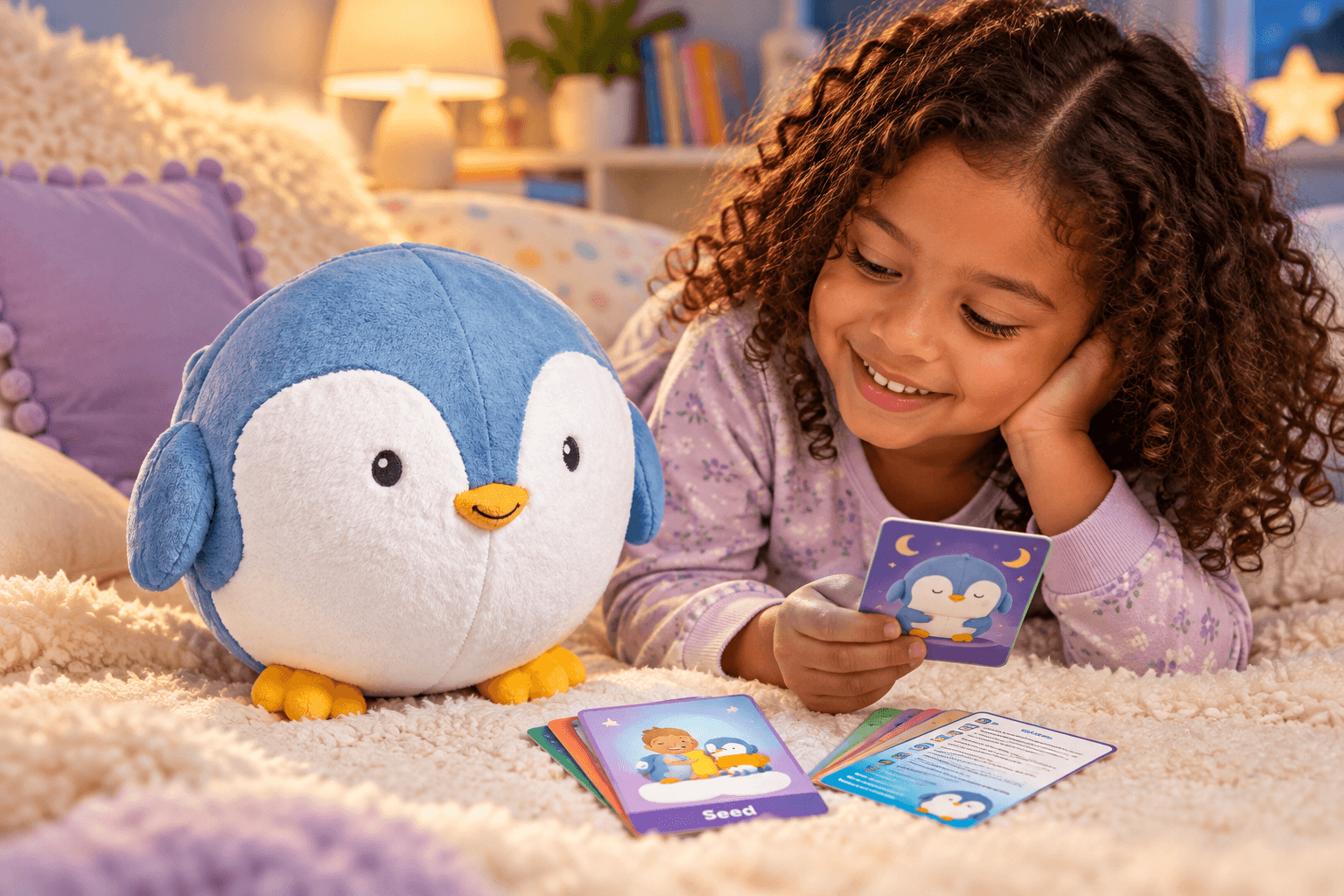
It starts with a thick, puncture-resistant, fully inflatable yoga ball, wrapped in a super soft, fuzzy, machine-washable plush penguin cover that has little stitched wings, a friendly face, and tiny little penguin feet on the bottom that stop the ball from rolling away unexpectedly. When the kid sits on it, it does not feel like a “therapy tool” or a “exercise ball”. It feels like they are sitting on their very own cuddly penguin friend.
Kids can use this so many different ways, there is no “right” way to play. They can sit on it and bounce gently while they watch a show, do homework, or listen to story time, which gives wiggly kids the subtle movement input they need to stay focused without getting up and running around. They can hold the penguin’s little wings and practice simple kid’s yoga poses, balance games, or gentle stretches. They can hug it and squish it when they are upset, lie on top of it for deep pressure input, or even use it as a soft extra seat for circle time. When they are done, it looks like a cute plush penguin decoration in the playroom, not clunky therapy equipment.
The deep pressure and gentle movement this penguin provides is incredible for overstimulated, anxious, or sensory-seeking kids. It gives them exactly the amount of proprioceptive input their nervous system is craving, so they can burn off all that extra wiggly energy in a safe, controlled, quiet way, instead of bouncing off the walls. A lot of special ed classrooms keep these around the calm-down corner, and kids will instinctively walk over to sit on the penguin for five minutes when they feel their energy getting too high, and then walk back to their activity totally reset.
It also grows with the kid. A 3 year old can use it as a soft bounce seat, a 6 year old can use it to practice basic yoga moves and balance games, and even older kids and adults can sit on it as a comfy active desk chair. And if the plush cover ever gets dirty, you just unzip it and throw it in the washing machine. No fussy spot cleaning, no ruined toy after one juice spill. This is exactly the kind of durable, multi-use product hand2mind is famous for: it solves a real, daily caregiver pain point, and it feels so fun and friendly the kid will never realize they are doing “regulatory work”.
hand2mind Feelings Family Hand Puppets — The Most Gentle, Natural Way To Teach Kids To Talk About Big Emotions
One of the biggest, most underrated parts of early childhood development is social emotional learning. Kids do not automatically know how to name their feelings. A lot of the time, a 4 year old will have a huge meltdown, and they cannot even tell you why — they just know something feels big and bad in their body. Most emotion learning tools rely on flashcards that show a face with a label under it, but those feel clinical, and a lot of kids will shut down instead of talking about their own feelings when you point a flashcard at them.
That is what makes the hand2mind Feelings Family Hand Puppets so brilliant. This set of six soft, cuddly hand puppets represents six different secondary emotions, beyond just the basic happy/sad/mad that most sets cover: proud, worried, frustrated, excited, calm, and silly. Each puppet has a unique, soft little face that perfectly shows that specific emotion, no over-the-top cartoonish expressions, no scary faces. And because it is a puppet, the kid does not have to talk about their feelings directly. They can talk through the puppet.
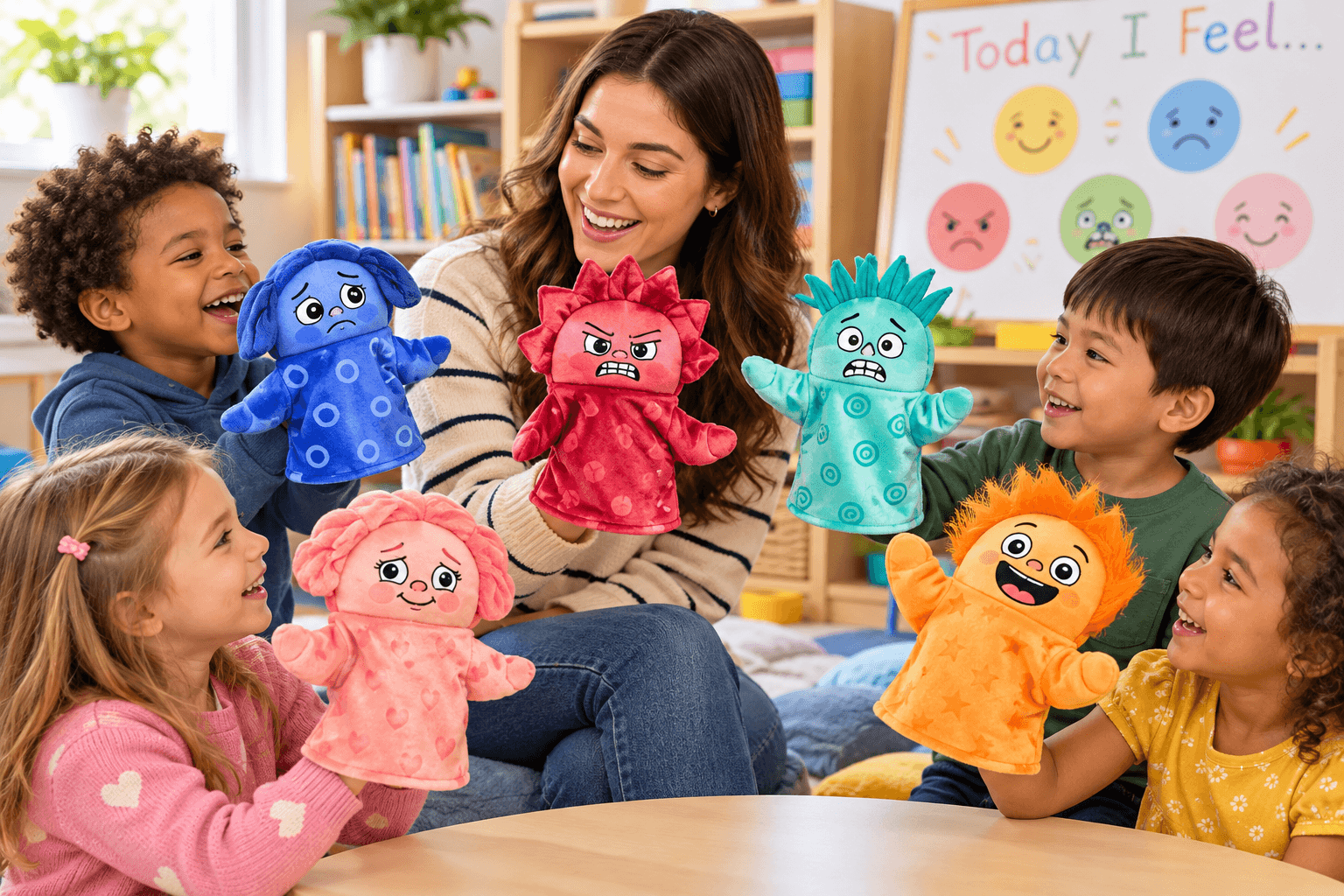
This is a game changing difference. If you sit down with a kid and say “tell me why you are frustrated”, a lot of kids will clam up, or say “I don’t know”. But if you pick up the Frustrated puppet, make its little shoulders slump, and say “Hey buddy, you look like your block tower fell over. Are you feeling all tight and squishy in your tummy right now?”, the kid will immediately lean in, take the other puppets, and start acting out exactly what happened. They will tell the puppet everything they could not tell you directly. It removes all the pressure, all the “you are being bad for crying” weight that kids pick up from adults, and lets them process their feelings through play.
Teachers use these puppets for morning circle time, where every kid can pick a puppet that matches how they are feeling that day, and share a little bit about why. Parents use them after school, to talk through hard days at preschool, or after a big meltdown, to gently unpack what happened without having a big serious “talk” that makes the kid defensive. Even speech therapists and child therapists use these exact puppets in sessions, because they lower the defenses so quickly and naturally.
These puppets are soft, durable, fit both adult and kid hands, and they wash easily too. They do not feel like a “learning tool” at all — they just feel like fun little puppet friends you can put on little shows with. Kids will make up stories for them, act out their favorite daily routines, and even use them independently to work through big feelings when no adult is around. Over time, they will start naming their own emotions out loud, without the puppet, because they already know what frustrated feels like in their body, they already know what worried feels like, and they have the words to say it. That is social emotional learning that sticks, not something they memorized off a flashcard.
Why hand2mind Still Stands Out In A Market Full Of Viral, Disposable Toys
It is so easy right now for toy brands to chase one viral trend, pump out a cheap version of that trend, sell a million units, and disappear two months later. That model makes a lot of money, but it leaves parents with piles of broken plastic toys in the bin, and it leaves kids with nothing of actual value to remember from it. hand2mind never plays that game. Every product they make, including the six we broke down today, is built to last years, to grow with the child, to work across dozens of different use cases, and to leave a positive, lasting impact on how that kid relates to learning, to their own emotions, and to the world around them.
What makes the brand so special is that it never talks down to kids. It respects them as full, curious, capable little people, who deserve play that meets them where they are, instead of play that is designed to hook them, manipulate them, or make them demand more stuff. hand2mind toys never have screens, never push ads, never ask a kid to “unlock” a reward or watch a video to keep playing. They just are. They are open-ended, they are slow, they are gentle, and they trust the kid to lead the play.
For parents and caregivers who are tired of the constant pressure to “optimize” every minute of their kid’s day, to force them to “get ahead” and learn flashcards before they can even tie their shoes, hand2mind is a breath of fresh air. It reminds you that the most important early learning moments are the slow, quiet ones: the 30 seconds a kid spends watching glitter fall through a sensory bottle, the gasp they make when the balance scale levels out perfectly, the giggle they share when the puppet tells a silly joke. Those small moments are not “wasting time”. They are building the foundation for every single thing that comes after: confidence with numbers, the ability to name their feelings, the ability to self-regulate when things get hard, the instinct to experiment and figure things out for themselves.
That is the real magic of hand2mind. It does not sell you toys. It sells you those small, perfect moments, that feel like nothing at the time, but end up being the moments your kid grows from. You will not find a more thoughtful, durable, intentionally designed collection of play tools anywhere else. For home, for the classroom, for travel, for gifting, for any kid who deserves to learn slowly, play happily, and grow at their own pace — hand2mind is not just a brand. It is the partner every caregiver wishes they had, from the very first day their tiny kid picks up their first sensory bottle.