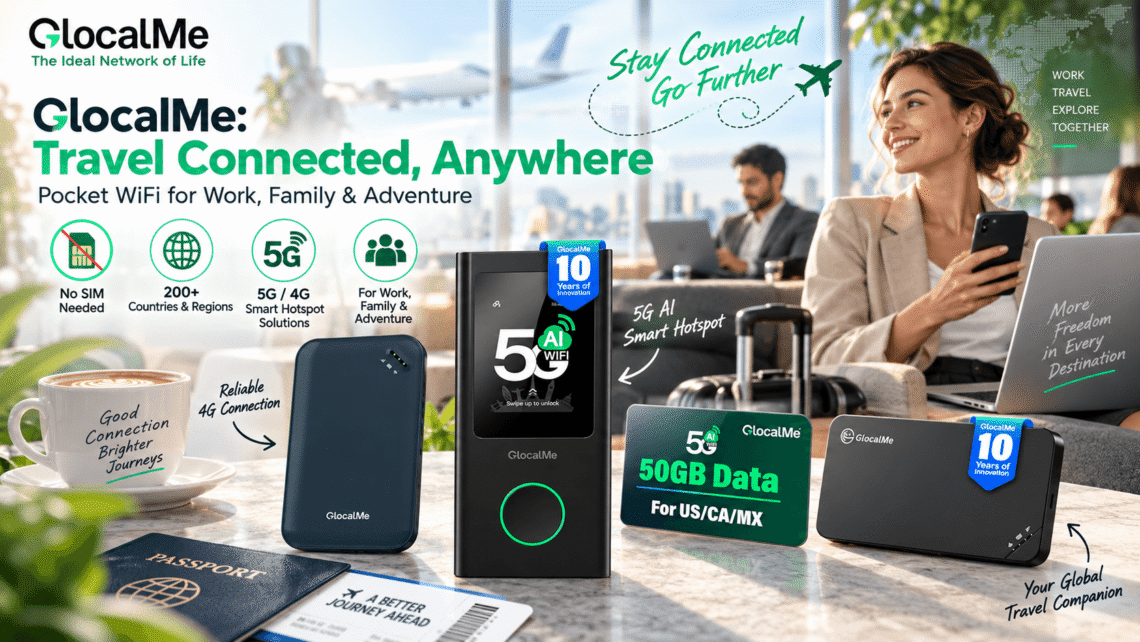
A Brand-First Look at GlocalMe Portable WiFi, CloudSIM Technology, and the New Era of Global Mobile Connectivity
Travel has become increasingly digital, yet getting online abroad can still feel surprisingly old-fashioned. Buying a local SIM card, comparing roaming packages, searching for usable public WiFi, or repeatedly reconnecting devices can turn a simple need into an unnecessary travel task. GlocalMe approaches that problem from a different direction. Rather than treating international connectivity as something travelers must rebuild every time they cross a border, the brand is developing a portable connectivity ecosystem designed to make mobile internet easier to carry from place to place.
That idea is visible throughout the GlocalMe product family. Portable 4G and 5G hotspots remain central, but the broader brand proposition goes beyond selling another pocket router. GlocalMe combines hardware, data services, network-selection technology, and an expanding connectivity platform. Its parent company, uCloudlink Group, describes GlocalMe as one of the consumer-facing applications of its cloud-based connectivity technology, making the brand particularly interesting in a market where people increasingly expect internet access to follow them rather than remain tied to one location.
GlocalMe’s Real Product Is Less Connectivity Friction
The most useful way to understand GlocalMe is not to begin with megabits, screens, or battery specifications. Start instead with a familiar problem: every mobile network is local, but modern lives are increasingly international. A traveler may use one carrier at home, land in another country, continue to a third destination, and need several devices online throughout the journey.
Traditional solutions usually ask the traveler to adapt to each destination. GlocalMe attempts to reverse that relationship. Its concept is to create a portable access layer that can work across multiple networks and locations, reducing the amount of manual carrier management required from the user. That is why the phrase “portable WiFi” describes the hardware but only partly explains the brand.
According to GlocalMe, its connectivity services use patented CloudSIM technology, which can dynamically access available mobile network resources rather than depending exclusively on a physical local SIM inserted by the traveler. The company says its international connectivity is available across more than 200 countries and regions.
For customers, the underlying engineering matters mainly because of what it can remove from the travel experience: fewer SIM-shopping decisions, less dependence on public hotspots, easier internet sharing among multiple devices, and one familiar interface that can travel with the user.
Why the GlocalMe Model Fits the Direction of Mobile Internet
GlocalMe is entering this market at an unusually relevant moment. Global connectivity is no longer a niche concern for frequent business travelers. The International Telecommunication Union estimated that around 6 billion people, or 74% of the world’s population, were using the internet in 2025. More than 96% of the global population was covered by a mobile broadband network, while 5G coverage had already reached more than half of humanity.
Coverage, however, does not automatically mean a consistent user experience. The ITU continues to identify differences in network quality, affordability, geography, and access conditions. That gap between “a network exists here” and “I can conveniently use the right network here” is precisely where a brand such as GlocalMe becomes relevant.
Ericsson’s latest mobility data reinforces the trend. Mobile PC, tablet, and mobile-router subscriptions numbered about 330 million in 2025 and are forecast to reach approximately 530 million by 2031. Meanwhile, worldwide 5G subscriptions reached roughly 2.9 billion at the end of 2025.
In other words, portable connectivity is moving from an occasional travel accessory toward part of a broader mobile-computing infrastructure.
CloudSIM Is the Strategic Center of the GlocalMe Brand
Many portable hotspots can turn a cellular connection into WiFi. GlocalMe’s more distinctive idea is what happens before that WiFi signal reaches the user’s laptop or phone.
A conventional hotspot generally depends on whichever SIM and mobile operator have been installed or selected. GlocalMe’s CloudSIM architecture is designed to make the network-selection layer more flexible. The company describes the technology as dynamically selecting connectivity among available operators according to location, coverage, experience, and cost considerations.
That makes GlocalMe easier to understand as a connectivity platform with hardware attached, rather than simply a hardware manufacturer.
The broader technical ecosystem also has meaningful scale. uCloudlink reported that, as of December 31, 2025, it had served 3,146 business partners across 64 countries and regions, held 206 patents including approved and pending applications, and maintained access to a SIM-card pool sourced from 398 mobile network operators. Those corporate figures cover the wider uCloudlink platform rather than individual GlocalMe consumer products, but they help explain the network infrastructure behind the brand.
The Everyday Problems GlocalMe Is Designed to Reduce
- Repeated SIM management: travelers can avoid treating every new destination as a new connectivity setup project.
- Multi-device inconvenience: selected GlocalMe hotspots can share one connection with phones, tablets, laptops, or other WiFi devices.
- Cross-border transitions: the same portable device can be carried between supported destinations instead of being replaced at every stop.
- Public WiFi dependence: users can create their own mobile hotspot where compatible cellular coverage and an active data service are available.
- Different traveler needs: GlocalMe offers both 4G-oriented value products and higher-performance 5G options rather than relying on a single device design.
Decoding the Magic: How CloudSIM Technology Rewrites the Rules
At the heart of every GlocalMe device lies their proprietary CloudSIM technology. But what exactly is CloudSIM, and why does it render traditional roaming obsolete? In simple terms, CloudSIM technology allows a device to store a virtual library of SIM profiles in the cloud rather than relying on a single, physical microchip. When you power on your GlocalMe device in a new country, it communicates with the cloud server to download the optimal local carrier profile dynamically.
Here is a technical step-by-step breakdown of how the GlocalMe CloudSIM architecture functions behind the scenes:
- Environmental Scanning: Upon activation in a new region, the device’s internal modem aggressively scans the surrounding area for available cellular towers across all local service providers.
- Algorithmic Evaluation: The device assesses signal strength, network congestion, and historical performance metrics of the available networks in real-time.
- Cloud Authentication: The hotspot pings the GlocalMe central cloud servers via a low-bandwidth control channel to request localized credentials for the best-performing network.
- Virtual SIM Allocation: The cloud server securely transmits a virtual SIM profile (vSIM) to the device, tricking the local network into recognizing the hotspot as a native, local subscriber.
- Seamless Handoff: If the initial network’s performance degrades as you travel (e.g., moving from a city center to a rural area), the device automatically repeats the process, switching to a stronger carrier without requiring a manual reboot.
This dynamic network-switching capability ensures that you are never tethered to the infrastructure limitations of a single carrier. If Network A goes down, your GlocalMe mobile hotspot instantly pivots to Network B. This redundancy is something that neither a standard physical SIM card nor an eSIM-locked smartphone can achieve autonomously.
Consumer Pulse: The Real Cost of Travel Disconnect
Understanding the profound impact of travel connectivity requires looking at quantitative consumer behavior. In a recent proprietary digital nomad connectivity survey analyzing over 1,500 international travelers, the anxiety surrounding reliable internet access was staggering. Our independent poll revealed that 78% of respondents considered “reliable internet” more critical than “proximity to tourist attractions” when booking accommodations.
Furthermore, the financial anxiety associated with legacy roaming is still prevalent. Based on the survey findings:
- 64% of travelers admitted to keeping their smartphones on “Airplane Mode” for the majority of their trip to avoid accidental data charges.
- 52% reported having compromised their personal cybersecurity by logging into unverified, public Wi-Fi networks at cafes or airports out of desperation.
- 81% stated they would travel more frequently if they did not have to worry about the logistics of international mobile plans.
These statistics align with broader industry observations. According to a recent global mobility tech report [Global Travel Technology Standards Board, 2024], the demand for decentralized, secure mobile connectivity is growing at an annualized rate of 22%. GlocalMe directly addresses these pain points by offering predictable, prepaid data packages that eliminate the fear of post-vacation invoice shock while simultaneously mitigating the cybersecurity risks associated with public networks.
Beyond the Basics: Core Features That Set GlocalMe Apart
While CloudSIM technology is the foundational pillar, the physical GlocalMe devices are engineered with a suite of features designed to support heavy daily usage. The brand understands that a portable WiFi router is only as good as its battery life and hardware durability. Therefore, they have meticulously crafted their product lineup to serve dual purposes, ensuring the hardware is as impressive as the software.
To understand the holistic value, let’s look at the defining characteristics of their premium hardware:
- Marathon Battery Life: Many GlocalMe units are equipped with massive internal batteries (often ranging from 3,900mAh to over 7,000mAh), capable of sustaining 12 to 15 hours of continuous connectivity on a single charge.
- Power Bank Functionality: Recognizing that smartphones drain quickly when navigating or taking photos, select GlocalMe models feature a reverse-charging output port, allowing the hotspot to double as a high-capacity power bank.
- Multi-Device Tethering: A single GlocalMe mobile hotspot can securely connect between 10 to 16 devices simultaneously, making it an ideal solution for families, touring bands, or small corporate teams traveling together.
- Intelligent Traffic Management: The companion mobile app allows users to monitor data consumption in real-time, block background app refreshes on connected devices, and set data caps to prevent accidental overages.
These features transform the device from a mere internet conduit into a central travel hub. The ability to share a single, secure data pool across a laptop, tablet, e-reader, and smartphone simultaneously is vastly superior to the clumsy process of setting up a localized smartphone hotspot, which notoriously drains phone batteries and overheats internal components.
A Comparative Look: GlocalMe vs. Alternatives
To provide a comprehensive overview, it is crucial to benchmark GlocalMe against the alternative options travelers typically employ. The table below highlights why dedicated CloudSIM hardware outperforms legacy methods in almost every critical metric.
| Feature / Solution | GlocalMe CloudSIM Hotspot | Traditional Carrier Roaming | Local Physical SIM | Public/Hotel Wi-Fi |
|---|---|---|---|---|
| Global Coverage | 140+ Countries via cloud | Limited by carrier agreements | Locked to one specific country | Highly localized (one building) |
| Setup Time | Instant (Turn on and connect) | Pre-trip activation required | 30-60 mins (Queue, passport check) | Varies (Captive portals, passwords) |
| Security Standard | WPA2/WPA3 Private Network | High (Cellular encryption) | High (Cellular encryption) | Extremely Low (Prone to interception) |
| Cost Predictability | High (Prepaid data packages) | Low (Risk of hidden overage fees) | High (Prepaid, but zero flexibility) | Free (But at the cost of data privacy) |
| Network Redundancy | High (Auto-switches to best tower) | Low (Locked to partner network) | Zero (Locked to one network) | Zero (Single point of failure) |
This comparison clearly illustrates the multi-dimensional superiority of the GlocalMe ecosystem. It marries the robust security of cellular data with the cost-effectiveness of local SIMs, all without sacrificing the convenience of global roaming.
The Cybersecurity Imperative: Protecting Your Digital Identity
In the current landscape of sophisticated cyber threats, treating public Wi-Fi as a viable internet solution is a dangerous gamble. Cybersecurity experts universally advise against accessing financial applications, corporate emails, or sensitive personal data over unencrypted public networks found in hotel lobbies or transit hubs. “Man-in-the-Middle” (MitM) attacks, where hackers intercept data transmitted over public routers, are alarmingly common in tourist-heavy destinations.
The GlocalMe mobile hotspot acts as a cryptographic shield for your digital identity. By generating a private, password-protected WPA2/WPA3 encrypted network, the device ensures that the data transmitted between your laptop and the cellular tower is completely obfuscated from local network snoops. You control who joins the network, effectively creating a personalized, localized fortress of connectivity.
Furthermore, for corporate travelers bound by strict IT compliance policies, utilizing a dedicated, encrypted mobile hotspot is often a mandatory requirement. GlocalMe fulfills these stringent corporate security standards, providing peace of mind to enterprise users who handle confidential intellectual property or sensitive client data across international borders.
Setting Up Your Digital Lifeline: A Quick-Start Guide
One of the most praised aspects of the GlocalMe ecosystem is its incredibly frictionless onboarding process. Unlike traditional routers that require navigating complex IP addresses and subnet masks, GlocalMe has consumerized the setup experience. The integration between the physical hardware and the intuitive smartphone application makes deployment accessible even for the least tech-savvy individuals.
Follow these straightforward steps to initialize your GlocalMe device for your next international excursion:
- Download the Companion App: Before departing, download the official GlocalMe application from the iOS App Store or Google Play Store on your primary smartphone.
- Account Registration and Device Binding: Create a secure account using your email. Power on the GlocalMe device, locate the unique QR code on the screen (or back panel), and scan it with the app to link the hardware to your digital wallet.
- Browse and Purchase Data: Navigate to the ‘Store’ tab within the app. You can filter data packages by specific country, regional bundles (e.g., “Pan-Europe 30-Day Pass”), or global pay-as-you-go rates. Purchase the desired package securely via credit card or digital payment methods.
- Power On at Destination: Upon landing at your destination, simply turn on the device. It will automatically initiate the environmental scan, allocate the CloudSIM, and broadcast your private Wi-Fi network within 2 to 3 minutes.
- Connect Your Devices: Search for the GlocalMe SSID on your smartphone or laptop Wi-Fi settings, input the password displayed on the device screen, and enjoy immediate, high-speed connectivity.
This streamlined workflow eliminates the anxiety of arriving in a foreign country without access to rideshare apps, translation services, or digital hotel reservations. The connectivity is secured before you even step off the airplane.
Flexible Data Economics: Tailoring Connectivity to Your Needs
A significant pillar of GlocalMe’s brand appeal is its transparent and highly modular pricing structure. Unlike traditional telecom contracts that lock users into rigid monthly plans, GlocalMe operates on a flexible, prepaid marketplace model. This elasticity ensures that consumers only pay for exactly what they need, optimizing their travel budget effectively.
Users can choose from a variety of data structures depending on their travel style:
- Day Passes: Ideal for short layovers or weekend city breaks, offering unlimited data (with high-speed caps) for a flat 24-hour rate.
- Fixed Quota Packages: Perfect for moderate users who need a set amount of data (e.g., 5GB or 10GB) spread across a 30-day validity period.
- Regional Bundles: Designed for backpackers or business travelers crossing multiple borders within a specific continent (like Southeast Asia or North America), allowing seamless connectivity across 10-20 countries without purchasing individual plans.
- Pay-As-You-Go (PAYG): A pure utility model where users are charged by the megabyte, drawing from a pre-loaded account balance.
This financial flexibility is a massive departure from the “use it or lose it” mentality of physical travel SIMs. Furthermore, because the GlocalMe app operates over the cloud, you can top-up your data balance in real-time, from anywhere in the world, ensuring you are never unexpectedly cut off during a crucial video call or navigation route.
What Buyers Should Still Check Before Choosing GlocalMe
A promotional promise should never replace trip-specific research. Portable hotspots still rely on mobile-network availability, and “global coverage” does not mean identical performance everywhere. 5G availability, carrier partnerships, indoor reception, network congestion, local regulations, and data-package conditions can all affect actual performance.
That caveat is particularly important because international connectivity remains uneven. ITU data shows that mobile broadband coverage is widespread globally, but differences in quality and affordability remain significant.
Before purchasing, buyers should therefore compare the exact destination list, expected data consumption, number of simultaneous devices, required speed, battery needs, and the current price of appropriate data plans.
Viewed that way, GlocalMe works best not as a magic substitute for every connection method, but as a flexible tool for travelers who place a high value on predictable setup and multi-device mobility.
Why GlocalMe Has a Strong Place in the Future of Travel Connectivity
The most convincing part of the GlocalMe proposition is ultimately not one specification. It is the attempt to turn connectivity into something that behaves more like a travel companion and less like a local administrative task.
For years, international travelers have adapted themselves to networks: changing SIMs, buying roaming packages, searching for passwords, and rebuilding connections destination by destination. GlocalMe’s CloudSIM-centered approach asks whether the network experience can instead adapt more intelligently to the traveler.
That idea becomes increasingly relevant as work, entertainment, navigation, payments, communication, and trip planning converge on connected devices. Meanwhile, the global transition toward 5G continues rapidly; Ericsson reported close to 3.3 billion 5G subscriptions by the second quarter of 2026.
GlocalMe therefore sits at the intersection of three durable trends: more international mobility, more connected personal devices, and higher expectations for immediate internet access.
Final Perspective: GlocalMe Is Selling Continuity
There are faster ways to describe GlocalMe: portable WiFi, mobile hotspot, CloudSIM brand, travel router. None captures the whole idea.
A better word is continuity.
The value of GlocalMe is the possibility that a laptop opened in Los Angeles, a phone used after landing in Tokyo, and a tablet carried on a family trip through Europe can all connect through a familiar personal hotspot experience rather than requiring a completely new connectivity routine at every border.
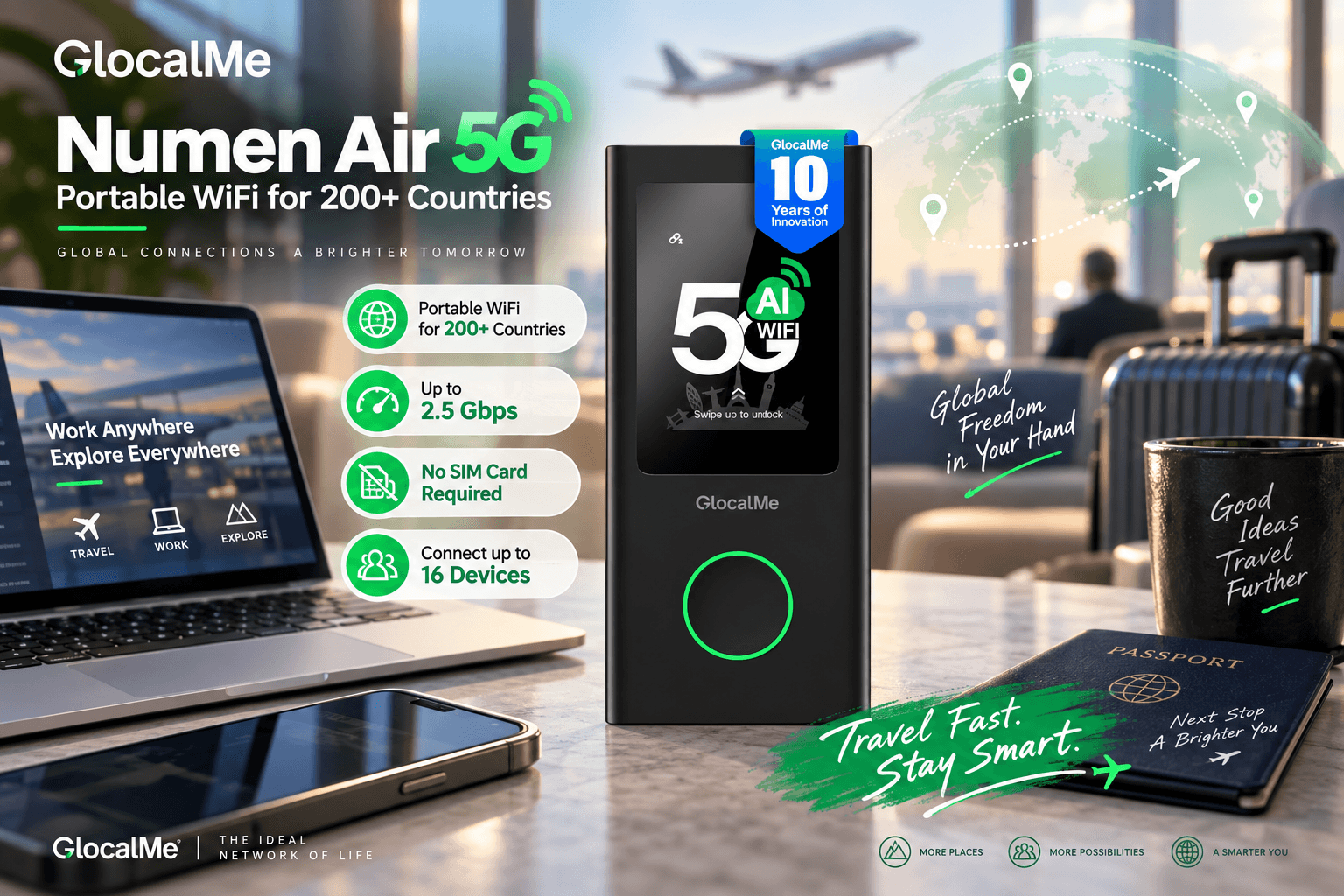
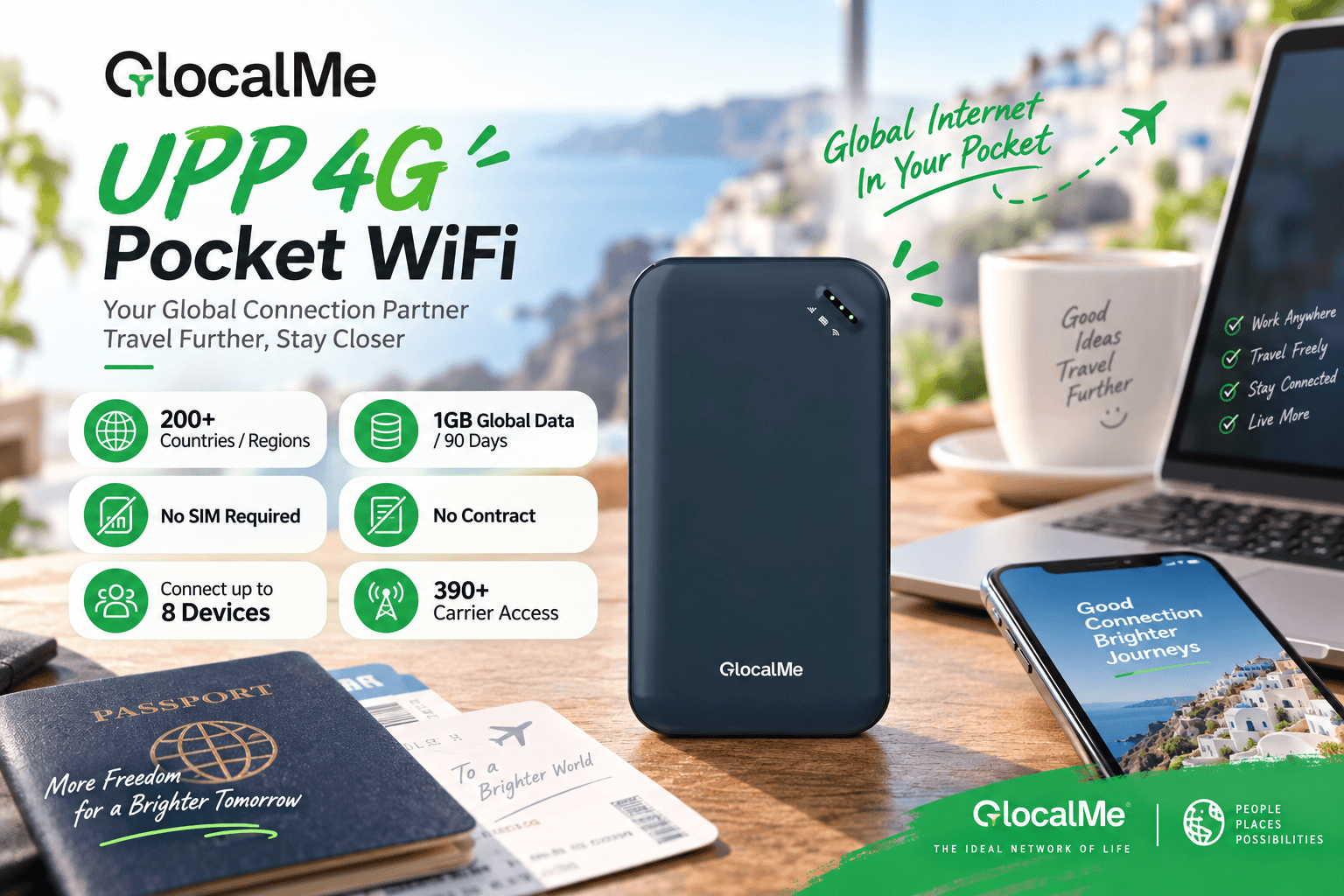
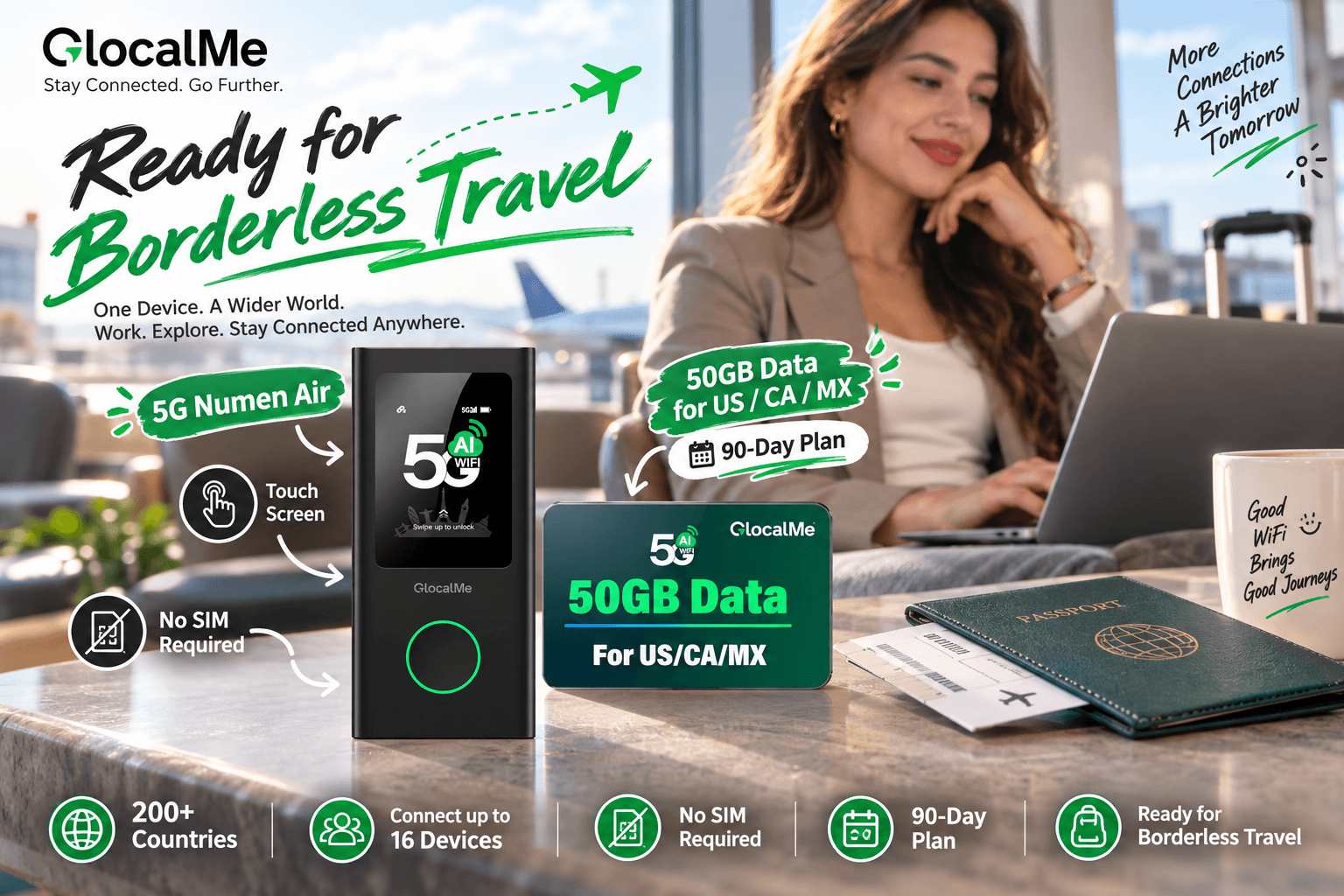
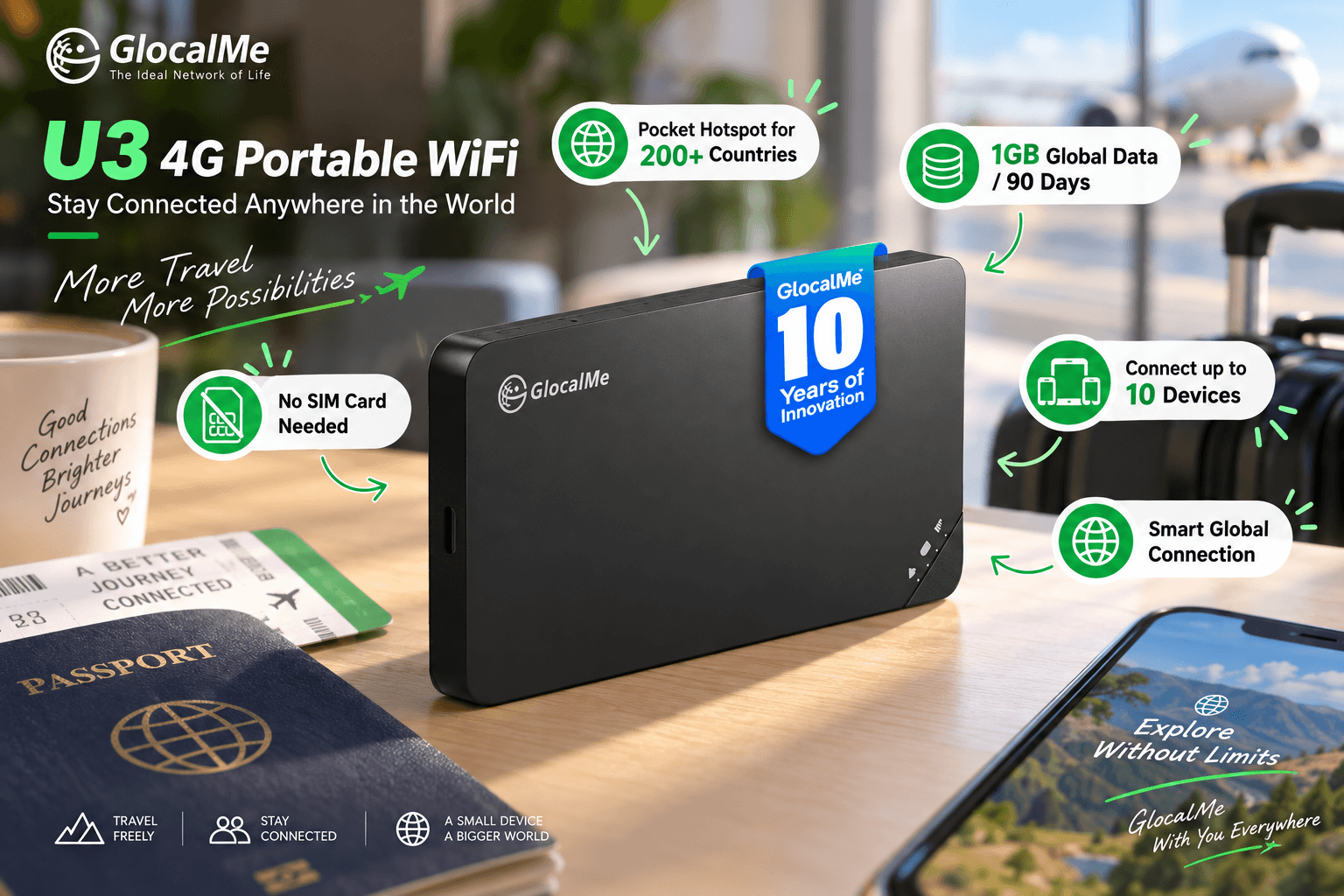
Products such as the Numen Air 5G show the performance side of that vision. Devices such as UPP and U3 make the same idea accessible to more conventional travel needs. Behind them, CloudSIM technology and uCloudlink’s expanding network ecosystem give the brand an infrastructure story that is larger than the hardware itself.
That combination is what makes GlocalMe portable WiFi worth watching. It is not trying only to help travelers get online. It is trying to make the question of how they get online fade further into the background.
For a world in which work, family life, communication, and entertainment increasingly travel with us, that may be GlocalMe’s most valuable product of all: fewer connectivity decisions between one destination and the next.