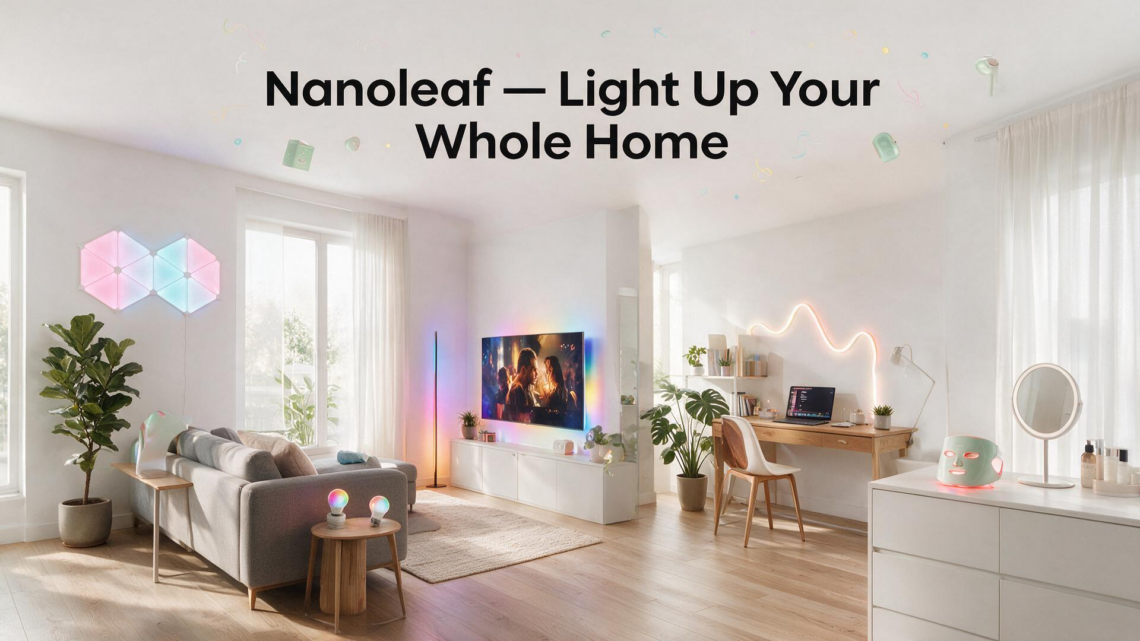
Light has always shaped how we feel, work, and connect with the spaces around us. Yet for most of history, lighting was treated as a static utility rather than a living layer of the home. Nanoleaf entered the scene with a different premise: that light should be adaptive, expressive, and intelligent enough to respond to human life in real time. What began as an ambitious project by a small group of engineers has grown into one of the most recognizable names in connected illumination, a brand that now sits at the intersection of smart home technology, immersive entertainment, and personal wellness. This article explores what makes Nanoleaf distinct, how its ecosystem has evolved, and why its approach to light continues to attract gamers, interior designers, wellness seekers, and everyday homeowners alike.
The Origins of a Light-First Brand
Nanoleaf was founded in 2012 by a team of University of Toronto graduates who believed that sustainability and personalization could coexist inside the same product. Their earliest work was rooted in green technology, and that environmental awareness still echoes through the company’s design language today. Rather than building conventional bulbs that simply consumed less energy, the founders asked a more interesting question: what if a light fixture could also be a canvas, a controller, and a companion?
That question led to the modular panel systems that would eventually define the brand. Instead of treating light as something that hangs from a ceiling or sits inside a shade, Nanoleaf reframed it as a building block. Panels could be snapped together into geometric patterns, synchronized with music, and controlled through apps or voice assistants. The result was a new category of product that blurred the line between fixture and furniture, between technology and art.
Over the following decade, Nanoleaf expanded far beyond its original concept. It added bulbs, light strips, floor lamps, outdoor string lights, and even wellness devices. Through each iteration, the brand retained its core identity: light should be playful, precise, and personally meaningful.
Rethink What’s Possible: The Brand Philosophy Today
Nanoleaf’s current tagline, “Rethink What’s Possible,” captures the breadth of its ambition. The phrase is not just marketing language. It reflects a design philosophy that treats every room as a programmable environment. A Nanoleaf setup can wake you up with a slow sunrise, shift to cool white light during a work call, pulse in time with a video game soundtrack, and then wind down into warm amber tones before bed. The same ecosystem can also support red light therapy for skin recovery or illuminate a backyard patio for an evening gathering.
This range is intentional. Nanoleaf does not see lighting as a single-use category. It sees it as a continuum that stretches from functional illumination to emotional atmosphere to physical well-being. The brand’s products are connected not only by wireless protocols but also by a shared belief: the best technology disappears into daily life while still making that life noticeably better.
Several principles hold the portfolio together:
- Modularity: Most Nanoleaf products can be arranged, extended, or reconfigured to match a user’s space and taste.
- Interoperability: The ecosystem supports major smart home platforms and increasingly emphasizes Matter, the emerging universal standard.
- Expressiveness: Color, motion, and rhythm are treated as essential features, not decorative afterthoughts.
- Wellness integration: Recent expansions into red light therapy show the brand’s interest in how light affects the body, not just the room.
These principles help explain why Nanoleaf has remained relevant in a crowded smart lighting market. It is not merely selling brightness. It is selling a relationship between people and their environments.
How Nanoleaf Fits Into the Smart Home Landscape
The modern smart home is built on connectivity standards that determine how devices talk to one another. Nanoleaf has positioned itself as an early and enthusiastic supporter of Matter, the protocol developed by Apple, Google, Amazon, Samsung, and others to simplify cross-platform control. For consumers, Matter compatibility means a Nanoleaf device can often be added to an existing smart home without worrying about whether the household uses Siri, Google Assistant, Alexa, or a combination of all three.
Nanoleaf also uses Thread, a low-power mesh networking technology that creates a more stable and responsive smart home. Thread allows compatible devices to communicate directly with one another rather than routing every command through a central hub or the cloud. This reduces latency, improves reliability, and helps the network heal itself if one device goes offline. Many Nanoleaf products can operate over Thread when paired with a compatible border router, while others rely on Wi-Fi for broader accessibility.
The company’s software layer is equally important. The Nanoleaf app serves as a creative control center where users can design scenes, set schedules, group devices by room, and access community-made light recipes. For gamers, there are deeper integrations with platforms like Razer Chroma, Corsair iCUE, and the Nanoleaf Desktop App, allowing in-game events to trigger real-time lighting reactions. A headshot in a first-person shooter might flash the wall red. A victory in a racing game might ripple green across the panels. These integrations turn lighting into a peripheral that extends the screen into the physical room.
A Closer Look at the Nanoleaf Ecosystem
Before diving into specific products, it helps to understand the broader categories Nanoleaf operates in. The brand’s catalog can be grouped into four main territories, each serving different needs but all sharing the same design DNA.
Smart Panels and Decorative Fixtures
This is the category that made Nanoleaf famous. Shapes, Lines, and Elements are modular systems that mount on walls and create illuminated mosaics. Shapes include hexagons, triangles, and mini triangles that can be combined into endless patterns. Lines are thinner, bar-like modules that emphasize angular geometry. Elements takes a more organic approach with wood-look hexagons that emit warm, natural light. These products are popular in gaming rooms, home offices, living rooms, and creative studios.
Essential Bulbs and Fixtures
The Essentials line brings Nanoleaf’s color science into more traditional form factors. Smart bulbs, light strips, and outdoor string lights in this category prioritize broad compatibility and ease of use. They are often the entry point for people who want Nanoleaf quality without committing to a wall-mounted modular installation.
Entertainment and Immersion
Products like screen mirroring light strips and TV backlights fall into this category. They analyze on-screen content and extend the color palette beyond the bezel, creating a more immersive viewing experience for movies, sports, and games.
Wellness and Personal Care
In recent years, Nanoleaf has moved into wellness technology with FDA-cleared red light therapy devices. This expansion makes sense given the brand’s long-standing interest in circadian lighting and the biological effects of illumination. Red light therapy uses specific wavelengths to support skin health, collagen production, and recovery, and Nanoleaf has packaged it in consumer-friendly formats like masks and wands.
Product Spotlights: Six Ways to Experience Nanoleaf
The following products represent a cross-section of Nanoleaf’s current lineup. Each one illustrates a different facet of the brand, from everyday smart bulbs to immersive entertainment lighting to wellness technology. Descriptions are kept concise to maintain focus on the broader Nanoleaf story.
Nanoleaf Essentials Smart Light Bulbs
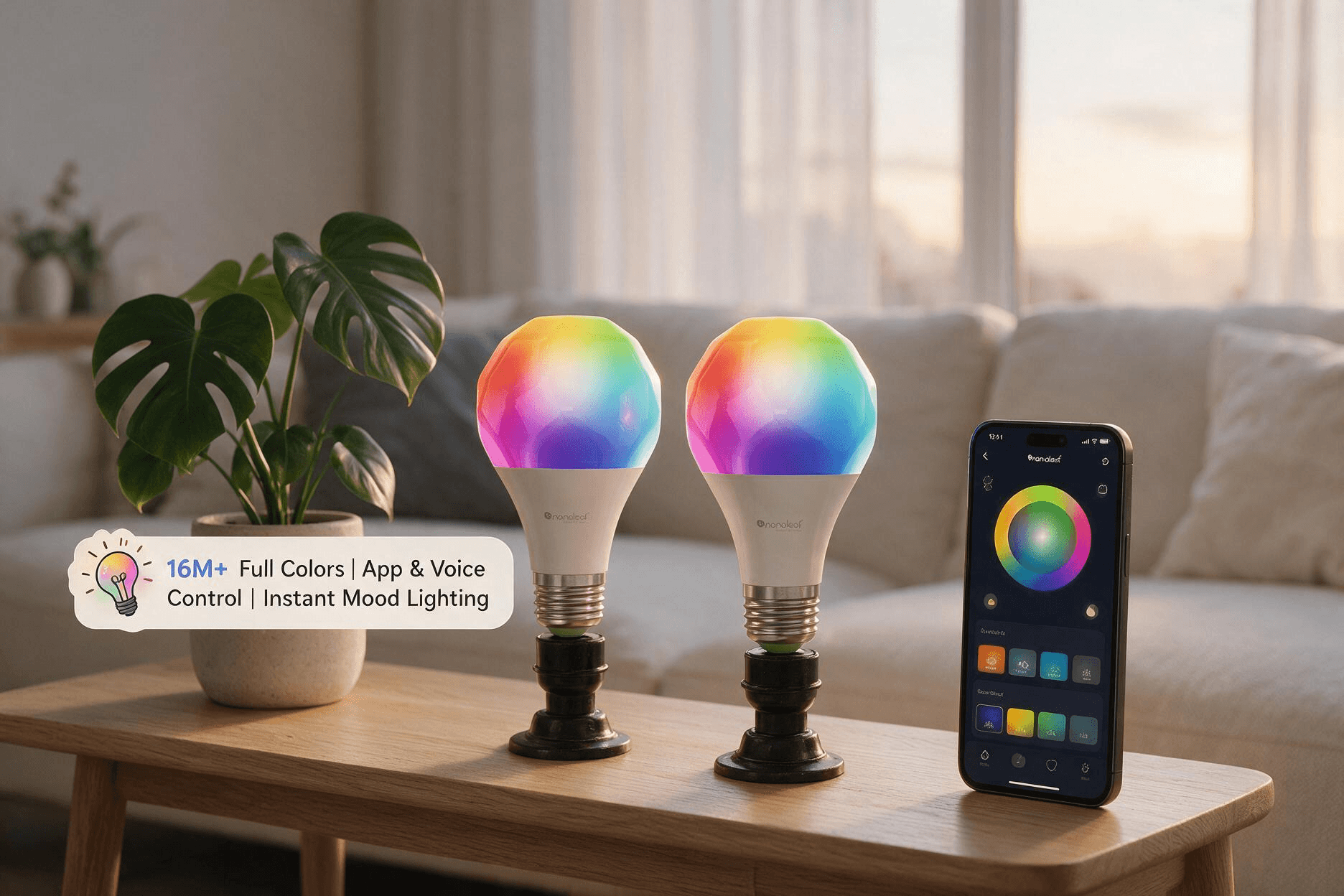
The Nanoleaf Essentials Smart Light Bulbs, available as Matter LED bulbs in the A19 E26 60W equivalent two-pack, are a practical introduction to the brand. These bulbs offer millions of colors and tunable whites, allowing users to shift from energizing daylight to relaxing evening tones. Because they support Matter, they integrate easily with major smart home ecosystems and can be controlled by voice, app, or automation. They are well suited for bedrooms, living rooms, and anywhere a standard bulb already exists but needs to become smarter.
Nanoleaf Shapes Hexagon Lights
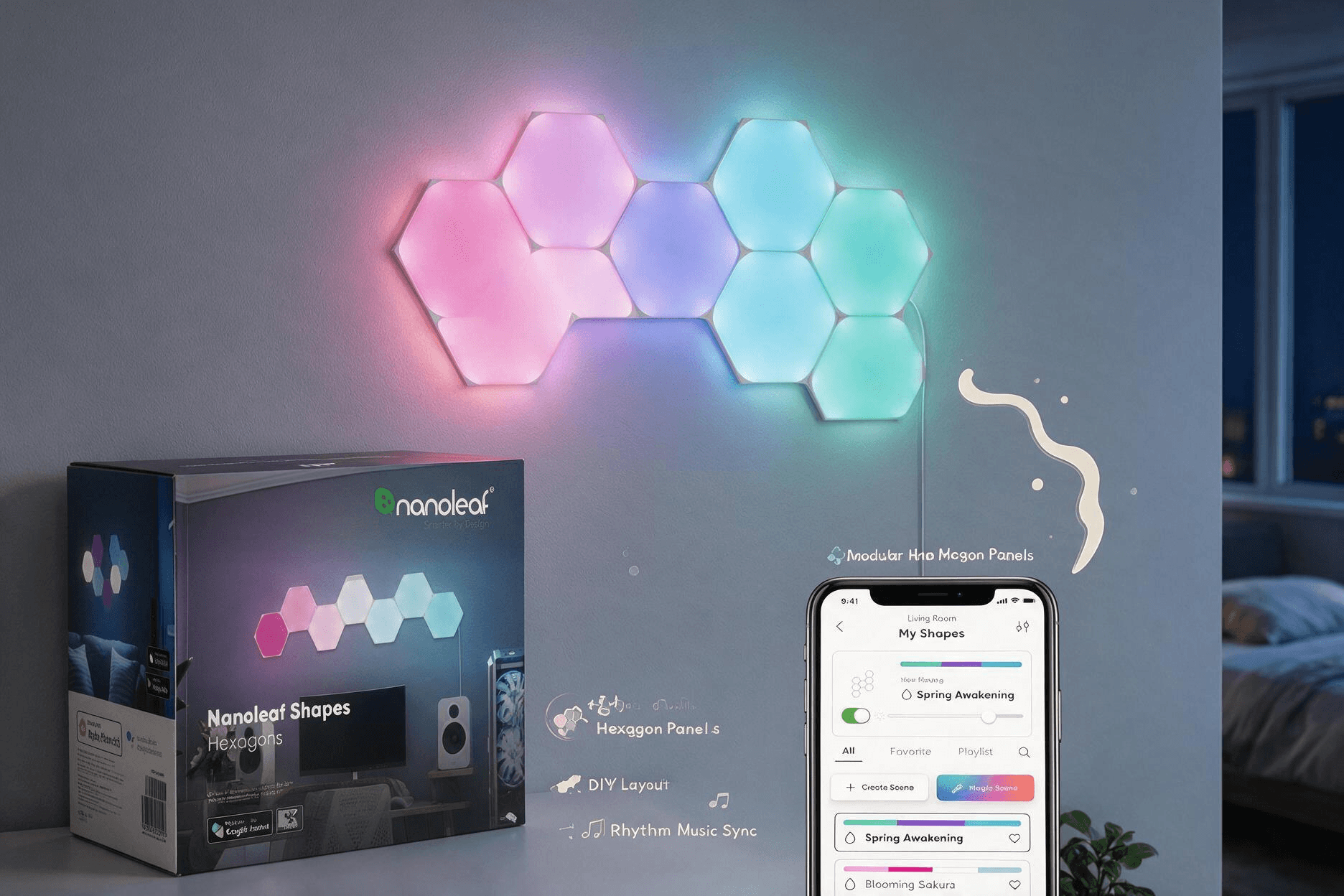
The Shapes Hexagon Lights are perhaps the purest expression of Nanoleaf’s modular identity. This seven-panel kit features RGBW LED wall light panels that connect into honeycomb-style arrangements. Users can design their own layouts, sync the panels to music, and choose from countless color scenes. The hexagons work with voice assistants and the Nanoleaf app, and they can be expanded with additional panels or combined with other Shapes like triangles and mini triangles. They remain a favorite for anyone who wants to turn a blank wall into a dynamic light installation.
Nanoleaf Matter Smart Floor Lamp
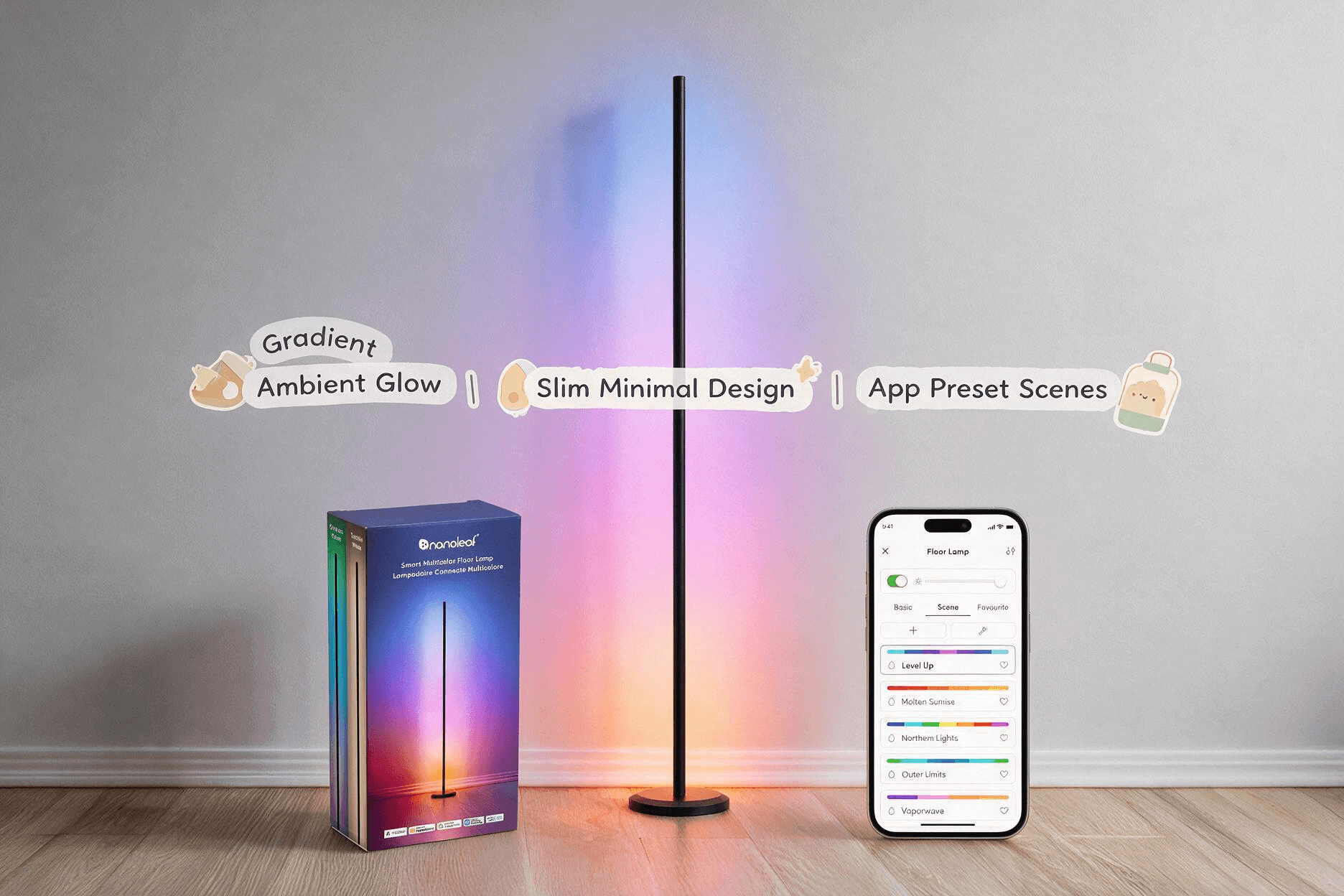
Standing lamps are usually background furniture, but the Nanoleaf Matter Smart Floor Lamp turns one into a statement piece. Delivering 1700 lumens of RGBTW LED output, this lamp provides both ambient color and functional white light for reading or task work. Matter support ensures it works across platforms, while the vertical design makes it ideal for corners, beside sofas, or behind gaming setups. It demonstrates how Nanoleaf applies its color and connectivity expertise to everyday fixtures.
Nanoleaf 4D V2 TV LED Backlight
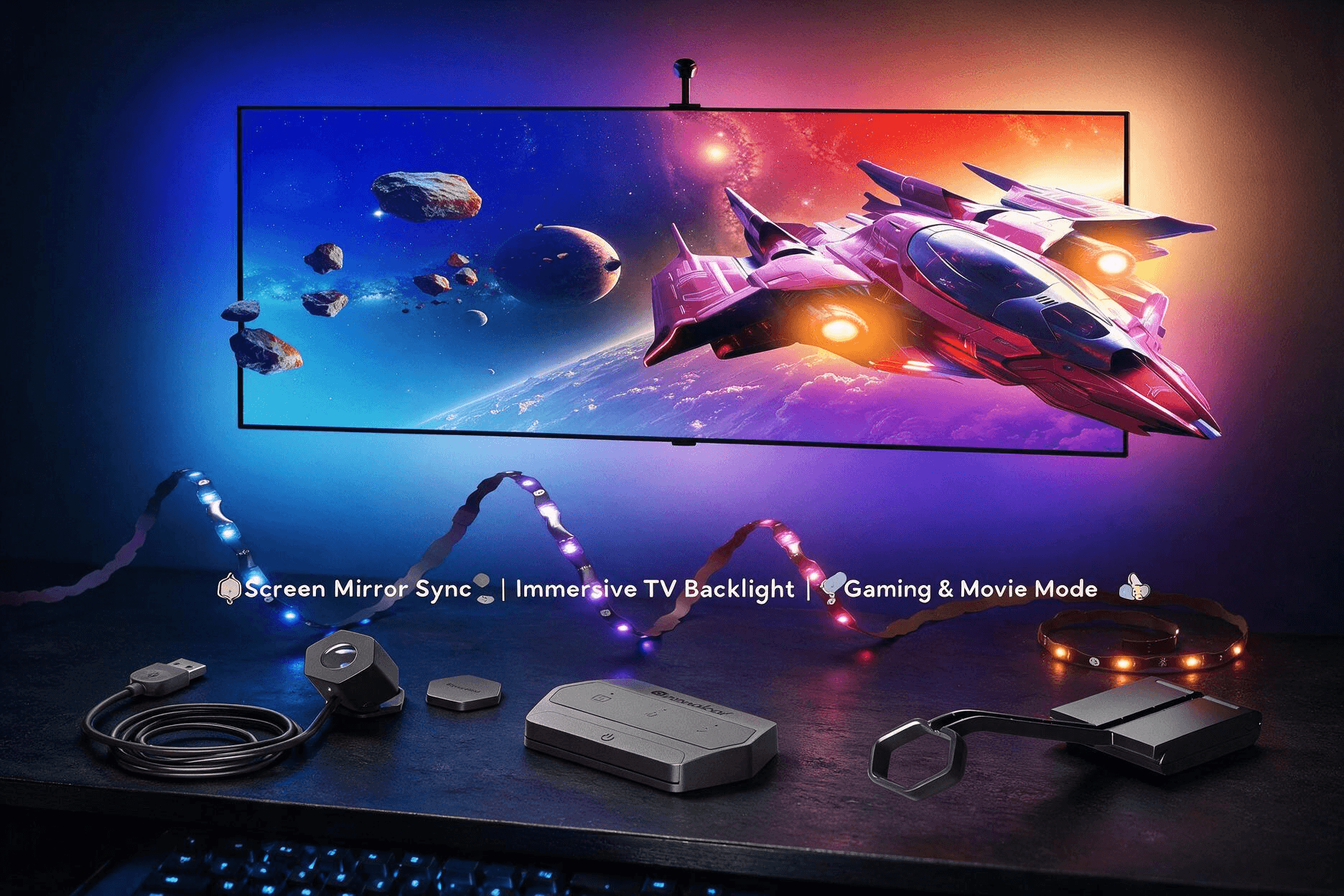
The 4D V2 TV LED Backlight is an addressable gradient light strip built to extend the viewing experience beyond the screen. Using a camera or screen analysis, the strip mirrors the colors and motion happening on the television, casting matching tones onto the wall behind it. The result is a more cinematic and immersive effect for movies, shows, and games. This product highlights Nanoleaf’s strength in entertainment lighting and its understanding of how ambient light can change the emotional impact of visual media.
Nanoleaf Smart Rope Light
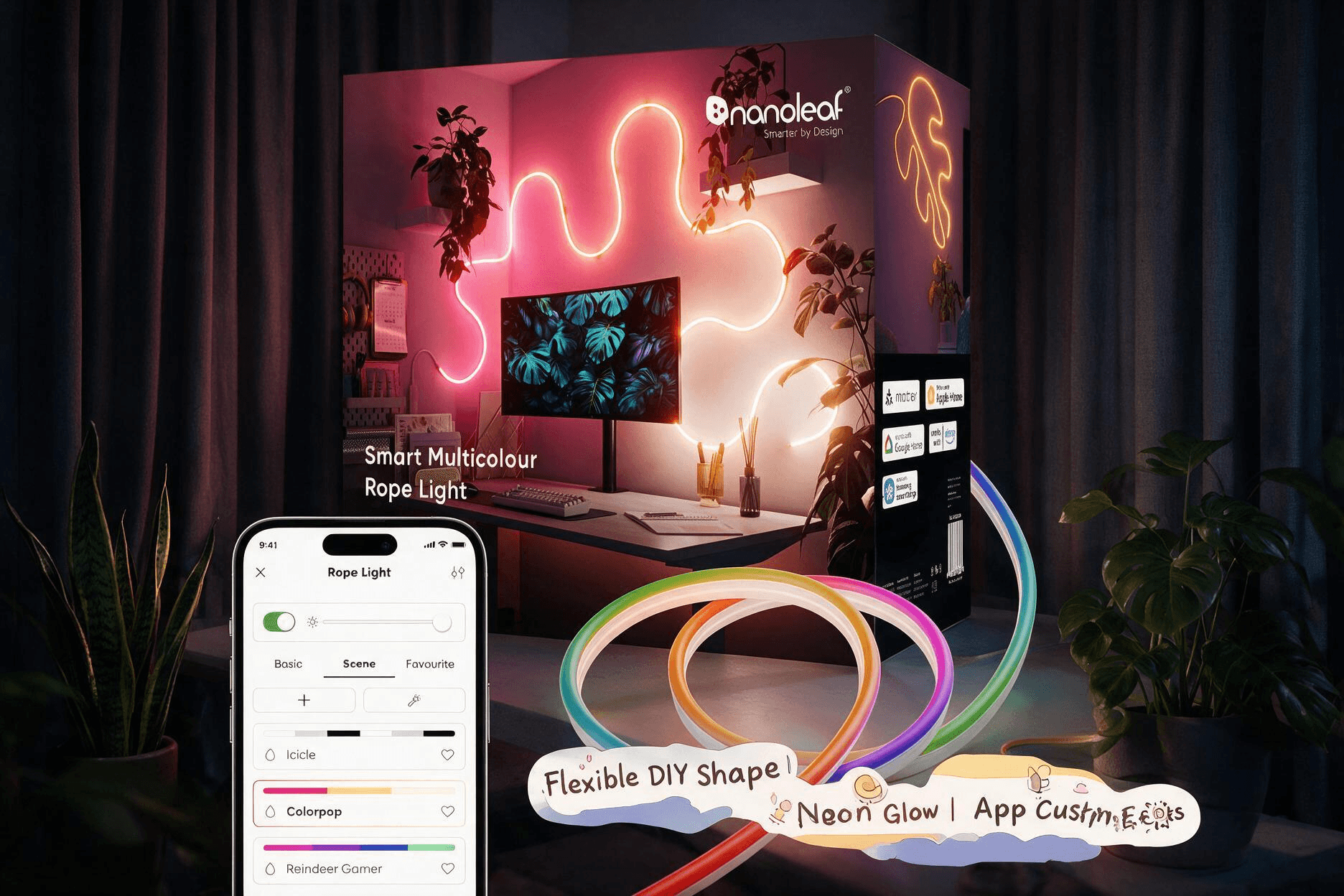
The Nanoleaf Smart Rope Light is a flexible 16.4-foot LED strip that works with Matter, Alexa, and Google Home. Its rope-style construction makes it suitable for both indoor accent lighting and covered outdoor applications. Users can bend it along shelves, headboards, cabinets, or patio edges to add continuous color wherever it is needed. Like other Nanoleaf products, it supports scheduling, scenes, and voice control, making it a versatile tool for extending a cohesive lighting design throughout a home.
Nanoleaf 6-in-1 Red Light Therapy Wand
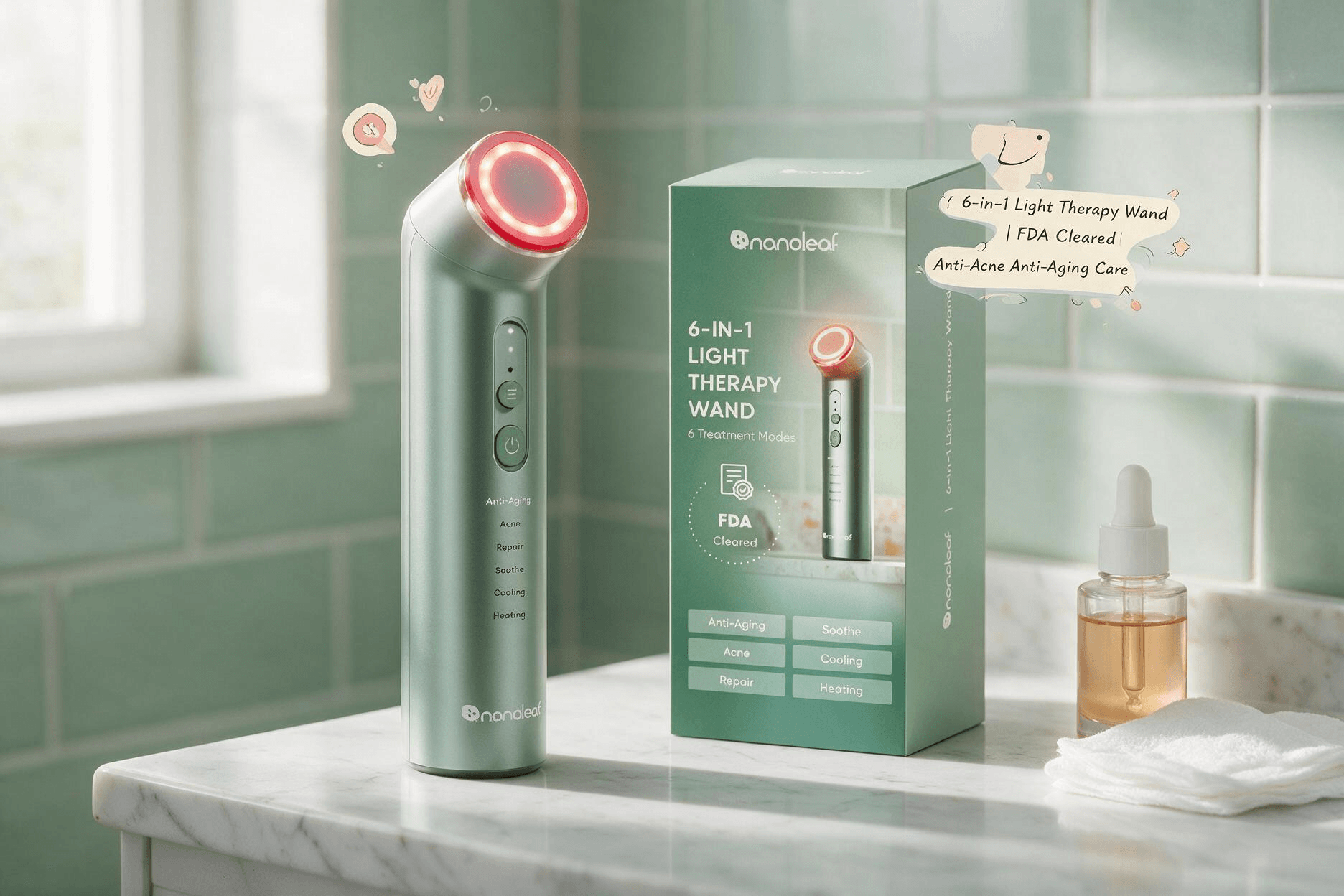
Perhaps the most unexpected product in this list, the Nanoleaf 6-in-1 Red Light Therapy Wand for Face and Neck, represents the brand’s expansion into personal wellness. FDA-cleared and designed for at-home use, the wand uses multiple light-based treatments to support skin appearance and recovery. It is portable, rechargeable, and built with the same attention to clean industrial design that characterizes Nanoleaf’s home products. This item shows that Nanoleaf’s vision of “light as lifestyle” now extends from room ambiance to personal care.
Why Nanoleaf Resonates With Different Kinds of Users
One of the brand’s most impressive achievements is its ability to serve radically different audiences without fragmenting its identity. Gamers love the reactive integrations and bold aesthetics. Interior designers appreciate the modular flexibility and color precision. Wellness customers are drawn to the red light therapy lineup and the circadian-aware white light options. Smart home enthusiasts value the Matter and Thread support. Casual users enjoy how easy it is to change the mood of a room with a tap or a voice command.
This cross-audience appeal comes from a simple insight: everyone interacts with light, but not everyone wants the same thing from it. Nanoleaf builds products that can be as simple or as sophisticated as the user desires. A single smart bulb can satisfy someone who just wants automated lighting, while a full wall of synchronized panels can satisfy someone building a content creation studio. Both customers are buying into the same ecosystem, and both can grow their setups over time.
Design, Sustainability, and Longevity
Sustainability was part of Nanoleaf’s founding story, and it continues to influence product decisions. LED technology is inherently more efficient than incandescent or halogen lighting, consuming less electricity and lasting longer before replacement. Modular systems also reduce waste because users can add to or reconfigure an installation instead of discarding an entire fixture. When a new shape or feature becomes available, it often integrates with existing hardware rather than requiring a full replacement.
The brand’s design language also supports longevity in a different way. Nanoleaf products tend to avoid overly trendy styling that might feel dated within a few years. The geometric panels, clean lines, and neutral color options give them a timeless quality. A wall installation from five years ago can still look contemporary today, especially when paired with updated software scenes.
The Role of Software and Community
Hardware is only half of the Nanoleaf experience. The companion app and the broader Nanoleaf community play a major role in how users engage with their devices. The app offers preset scenes inspired by nature, music, and mood, as well as tools for creating custom animations. Users can schedule their lights to follow the day, react to weather, or simulate a sunrise alarm.
Community sharing adds another dimension. Users upload and download scenes created by others, effectively crowdsourcing an ever-growing library of lighting designs. This means a new Nanoleaf owner does not have to be a lighting designer to enjoy a polished, dynamic setup. They can borrow inspiration from thousands of other installations around the world.
Looking Ahead: Light as a Wellness and Entertainment Platform
Nanoleaf’s recent moves suggest the brand sees its future as more than a lighting company. The expansion into red light therapy is a clear signal that it believes light can be therapeutic as well as atmospheric. At the same time, its entertainment integrations continue to deepen, with more responsive, screen-aware, and gaming-focused features appearing across the product line.
The unifying thread is control over the luminous environment. Whether that environment is a bedroom, a living room, a streaming setup, or a skincare routine, Nanoleaf wants to give users the tools to shape it. As smart homes become more common and Matter makes cross-platform control easier, Nanoleaf is well positioned to remain a defining brand in the space.
Final Thoughts: Is Nanoleaf Worth Exploring?
For anyone building or upgrading a smart home, Nanoleaf offers a rare combination of visual impact, technical depth, and ecosystem flexibility. Its products are not the cheapest on the market, but they deliver value through customization, durability, and a coherent user experience. A single bulb can introduce someone to smart lighting, while a full modular installation can transform the character of an entire room.
The brand’s strength lies in its refusal to treat light as a commodity. From the earliest modular panels to the latest wellness devices, Nanoleaf keeps asking what light can do when it is freed from the traditional constraints of fixtures and switches. The answer, increasingly, is that light can entertain, heal, focus, relax, and inspire. For a company that started with a simple idea about sustainable design, that is a bright place to be.