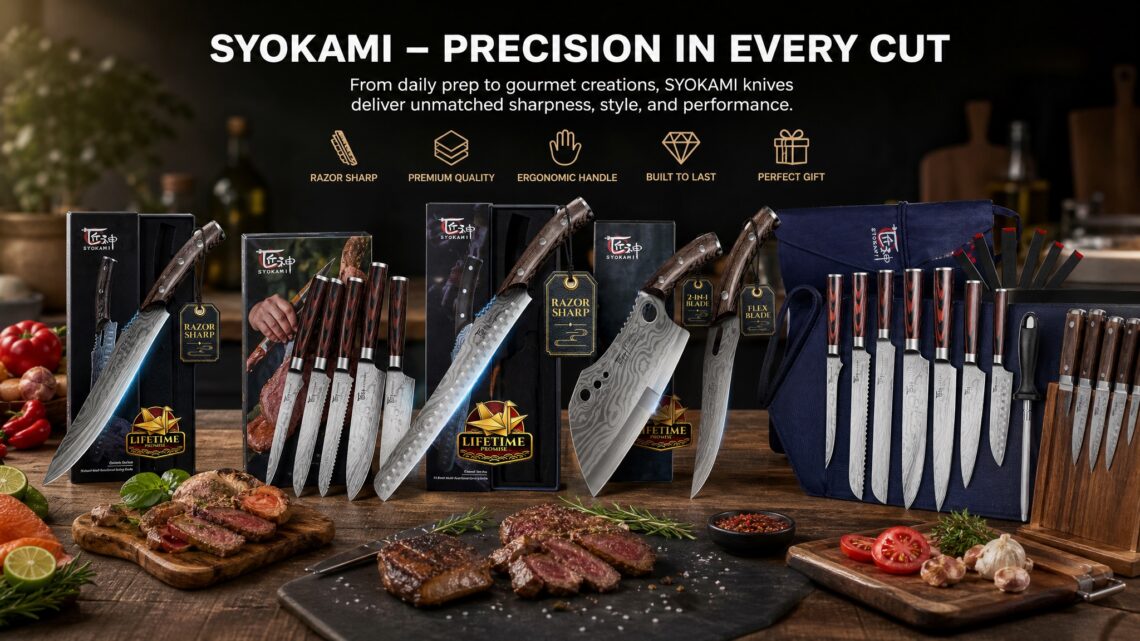
There’s a quiet moment in every kitchen—the pause just before the first slice. Whether it’s a tomato on a weekday evening or a brisket prepared for a slow weekend cook, the quality of your tools becomes instantly obvious. Over the past few years, I’ve tested more knife sets than I can count, and what stands out isn’t always flashy design or marketing claims—it’s consistency, comfort, and how naturally a knife fits into your routine. That’s where SYOKAMI enters the conversation in a refreshingly practical way.
SYOKAMI Philosophy: Built Around The Cutting Experience
To understand SYOKAMI, one must first look at the visual and thematic tapestries that inspire their creations. The brand heavily draws upon the serene, majestic imagery of historic Japan. Imagine the imposing, tranquil silhouette of Mount Fuji at dawn, or a lone samurai meditating by a still lake beneath the cherry blossoms. These are not just marketing motifs for SYOKAMI; they are the foundational pillars of the brand’s identity.
In ancient times, the forging of a blade was considered a sacred act. It required patience, an understanding of the elements, and a relentless pursuit of perfection. SYOKAMI channels this ancestral dedication into every knife they produce. The brand embodies the spirit of shokunin, the Japanese concept of the artisan who takes immense pride in their work, dedicating their life to the mastery of their craft. When you bring a SYOKAMI blade into your home, you are inviting that legacy of discipline and respect into your culinary daily routine. It is a daily reminder that cooking is not a chore to be rushed, but a ritual to be savored.
Japanese-Style Inspiration for Everyday Kitchens
The visual language of SYOKAMI draws heavily from Japanese craftsmanship, but the brand’s appeal comes from translating that inspiration into approachable tools. Instead of presenting precision as something reserved for elite culinary environments, it brings the mood of a specialist knife workshop into familiar routines: slicing fruit before breakfast, preparing vegetables for a weeknight stir-fry, portioning brisket for a gathering, or setting the table for steak night.
SYOKAMI’s designs pair expressive blades and wood-grain handles with recognizable forms, allowing the products to become focal points without feeling like display-only décor. The brand story published by SYOKAMI frames its identity as a tribute to Japanese sword-making tradition and emphasizes craftsmanship, testing, and quality materials. The company also states that its production facility is in Hong Kong’s Tuen Mun area and that its products are sold internationally, including through Amazon. This positions SYOKAMI as a modern global kitchenware brand using Japanese-inspired design language rather than as a traditional regional forge.
The Everyday Core: Chef Knives That Support Natural Movement
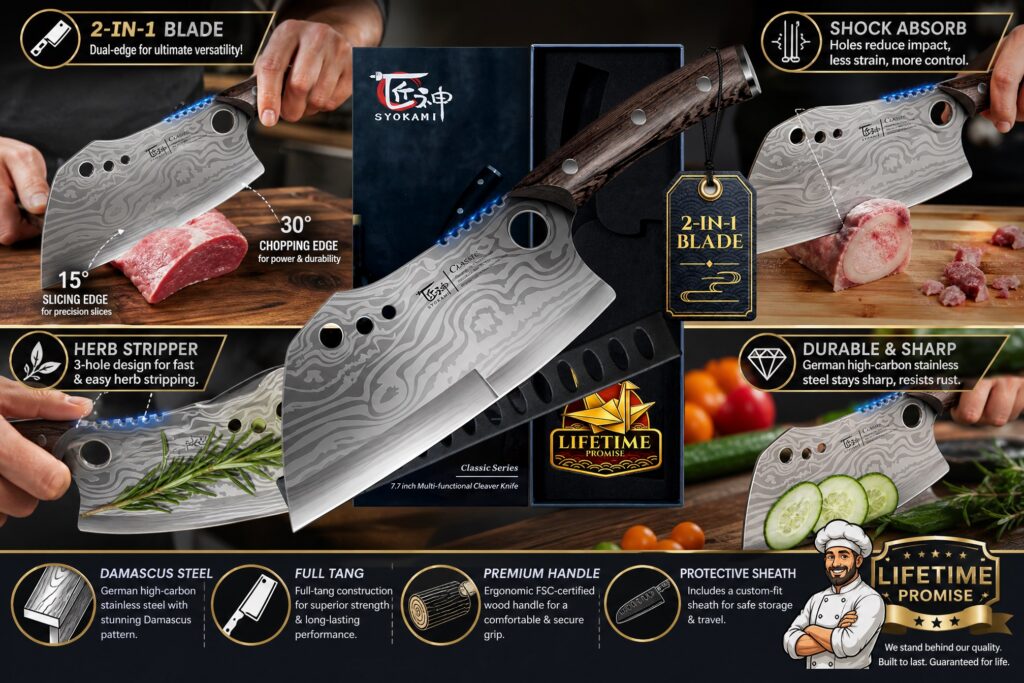
For most home cooks, the chef’s knife is the center of the kitchen. It handles the widest range of tasks and becomes the blade whose personality is most familiar over time. SYOKAMI’s chef-knife offerings lean into that relationship through ergonomic wooden handles, full-tang construction on selected models, pointed profiles for controlled tip work, and broad cutting surfaces suited to repeated preparation.
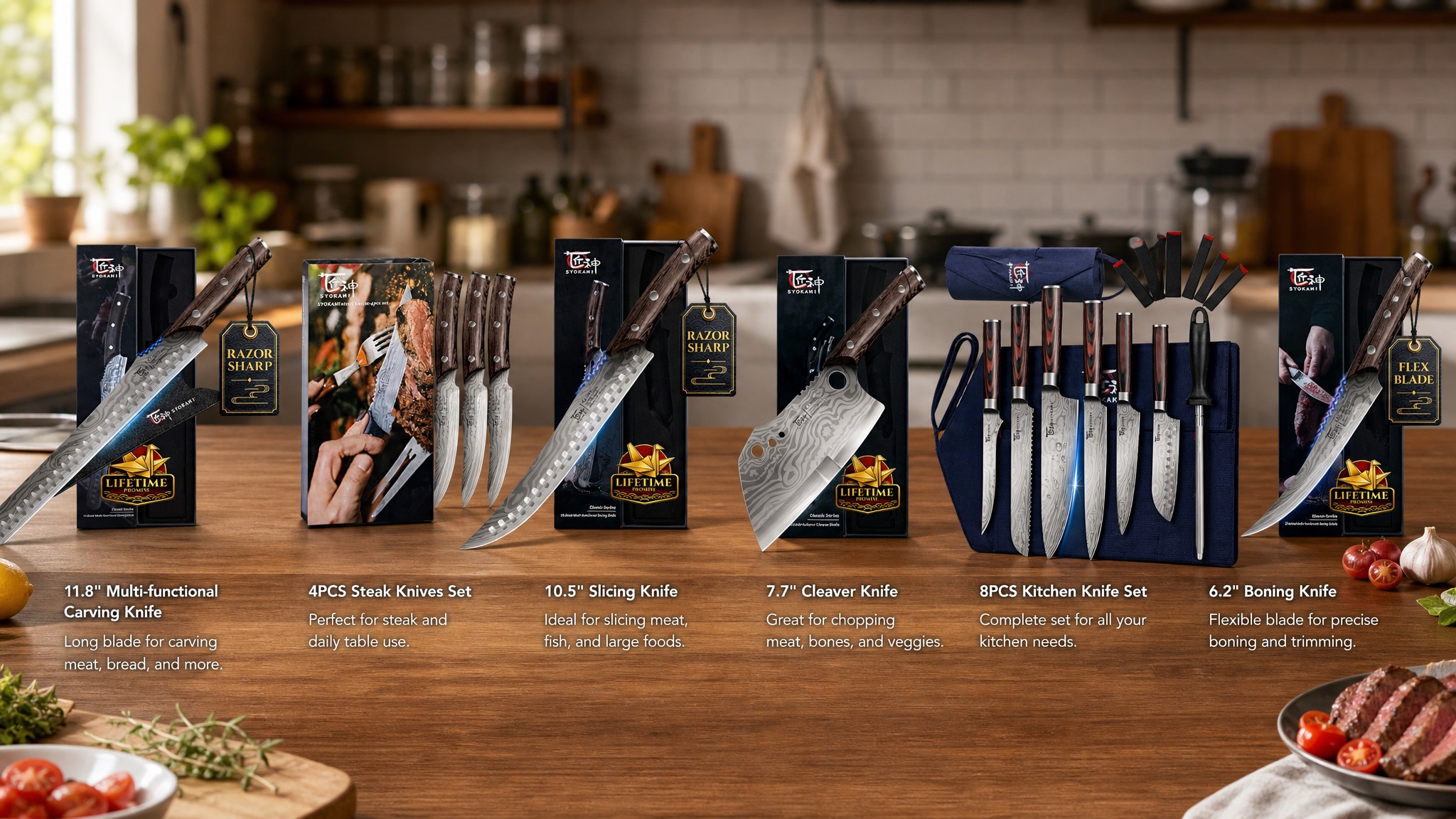
The brand’s compact three-piece set is a useful example. It combines an 8.2-inch Kiritsuke-style knife, a 7.2-inch Nakiri, and a 4-inch paring knife. Together, those profiles create a focused system: the Kiritsuke-inspired blade supports longer, accurate slices and detailed tip work; the Nakiri is shaped for fast vegetable preparation; and the paring knife handles peeling, trimming, and small precision tasks. This is a smart alternative for cooks who want capability without filling the counter with a large block.
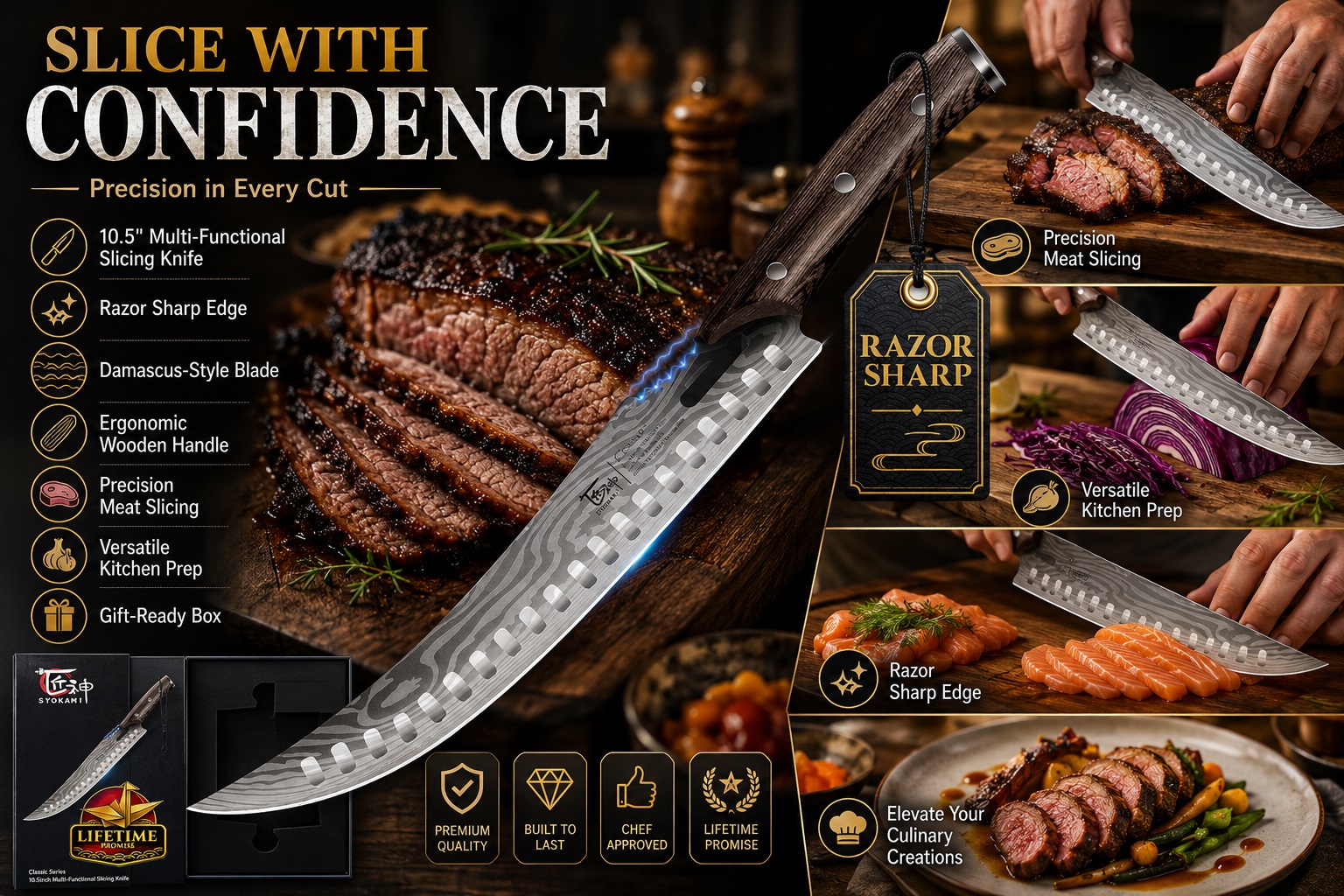
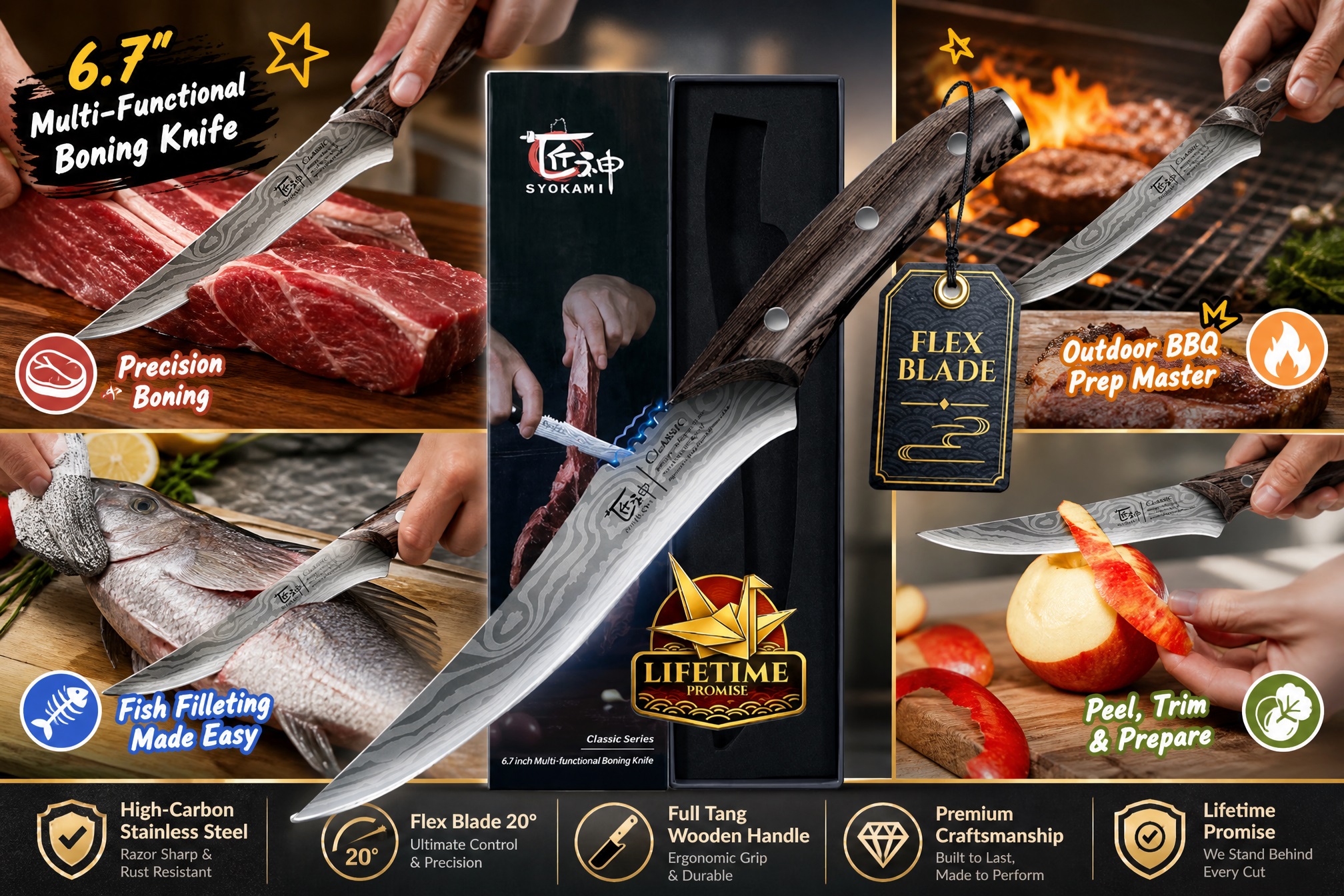
More broadly, SYOKAMI encourages cooks to match blade shape to motion. A tall vegetable knife gives the knuckles room to move. A long slicing blade reduces the need for sawing. A narrow boning knife navigates joints and contours. A paring knife brings detailed work closer to the hand. By offering distinct profiles, the brand promotes technique rather than asking one blade to do everything.
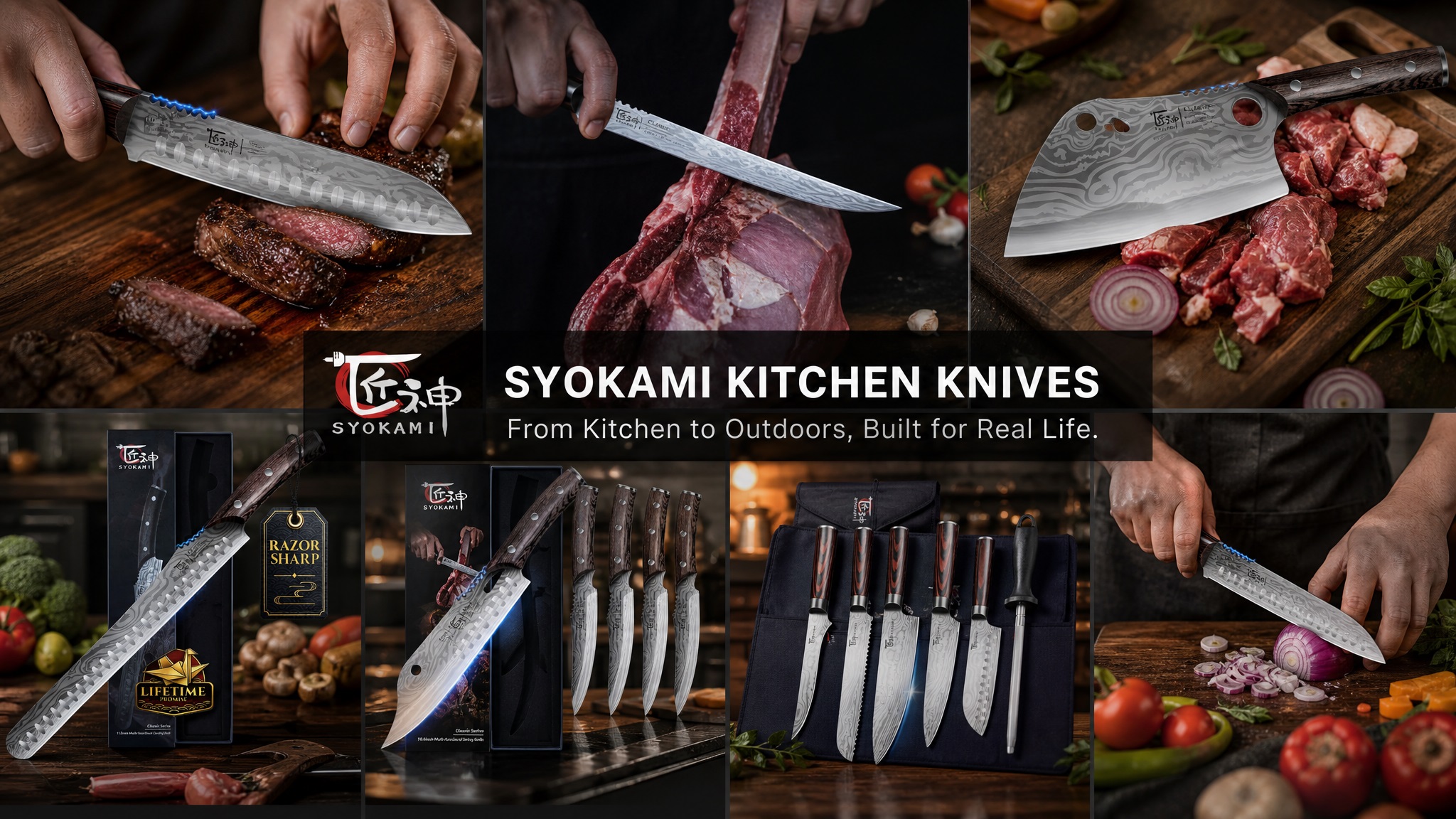
Balance, Grip, and the Feel of Control
One of the first things you notice when picking up a knife is how it feels in your hand. A poorly balanced knife can make even simple prep tasks feel like a chore. With SYOKAMI, the emphasis seems to be on control—handles are shaped to sit naturally in the palm, and the weight distribution avoids that tip-heavy or handle-heavy awkwardness that cheaper sets often suffer from.
During longer prep sessions—chopping onions, slicing proteins, or working through a pile of vegetables—that balance makes a real difference. Your wrist doesn’t tire as quickly, and your cuts stay more consistent. It’s a subtle improvement, but one that becomes hard to ignore once you’ve experienced it.
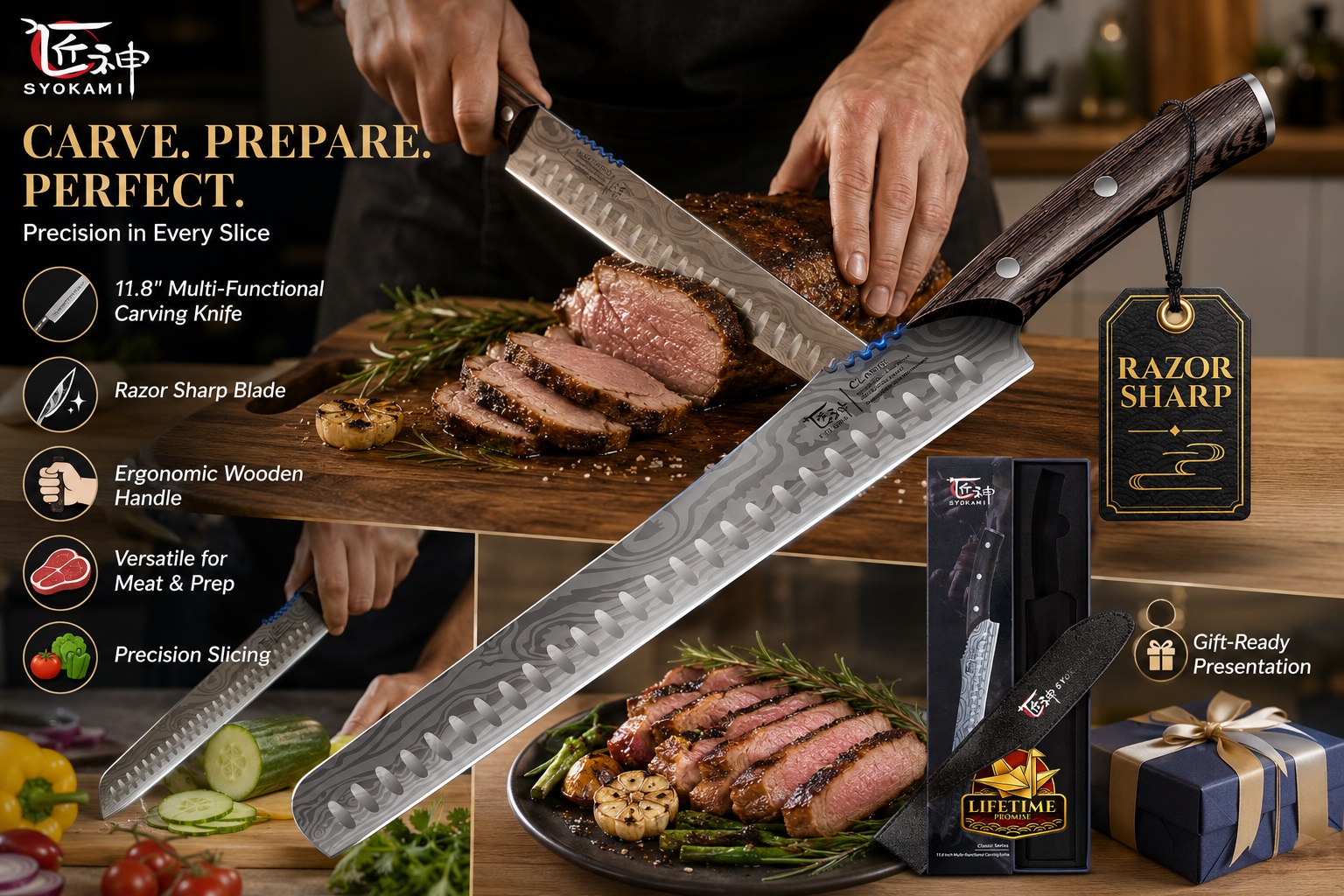
Design That Works With Your Kitchen, Not Against It
There’s an aesthetic side to kitchen tools, of course. But the best designs don’t just look good—they integrate seamlessly into your space. SYOKAMI knife sets strike a balance between clean, modern lines and practical storage solutions.
Knife blocks, for example, are often overlooked. Too bulky, and they dominate the counter. Too minimal, and they fail to protect the blades. The options available from this brand tend to land somewhere in the middle—compact enough for everyday kitchens while still offering organized access to each tool.
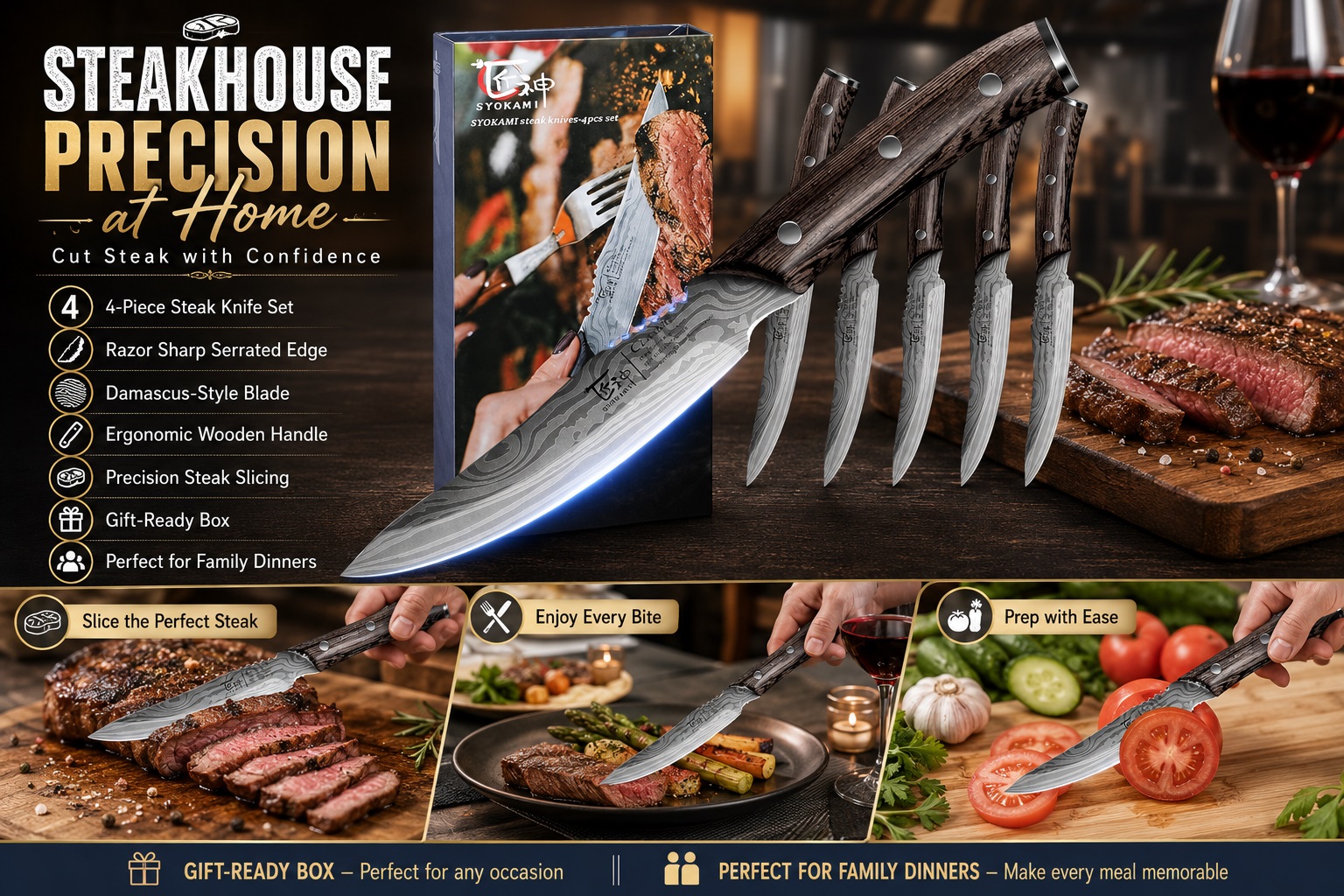
From Weeknight Meals to Weekend Projects
What really defines a good knife set is how it adapts to different cooking scenarios. A quick stir-fry on a Tuesday night demands speed and efficiency, while a weekend roast or homemade pasta project calls for precision and patience.
In testing, SYOKAMI sets handled both ends of that spectrum comfortably. The chef’s knife, in particular, proved to be a reliable workhorse—capable of handling everything from finely mincing herbs to breaking down larger cuts of meat.
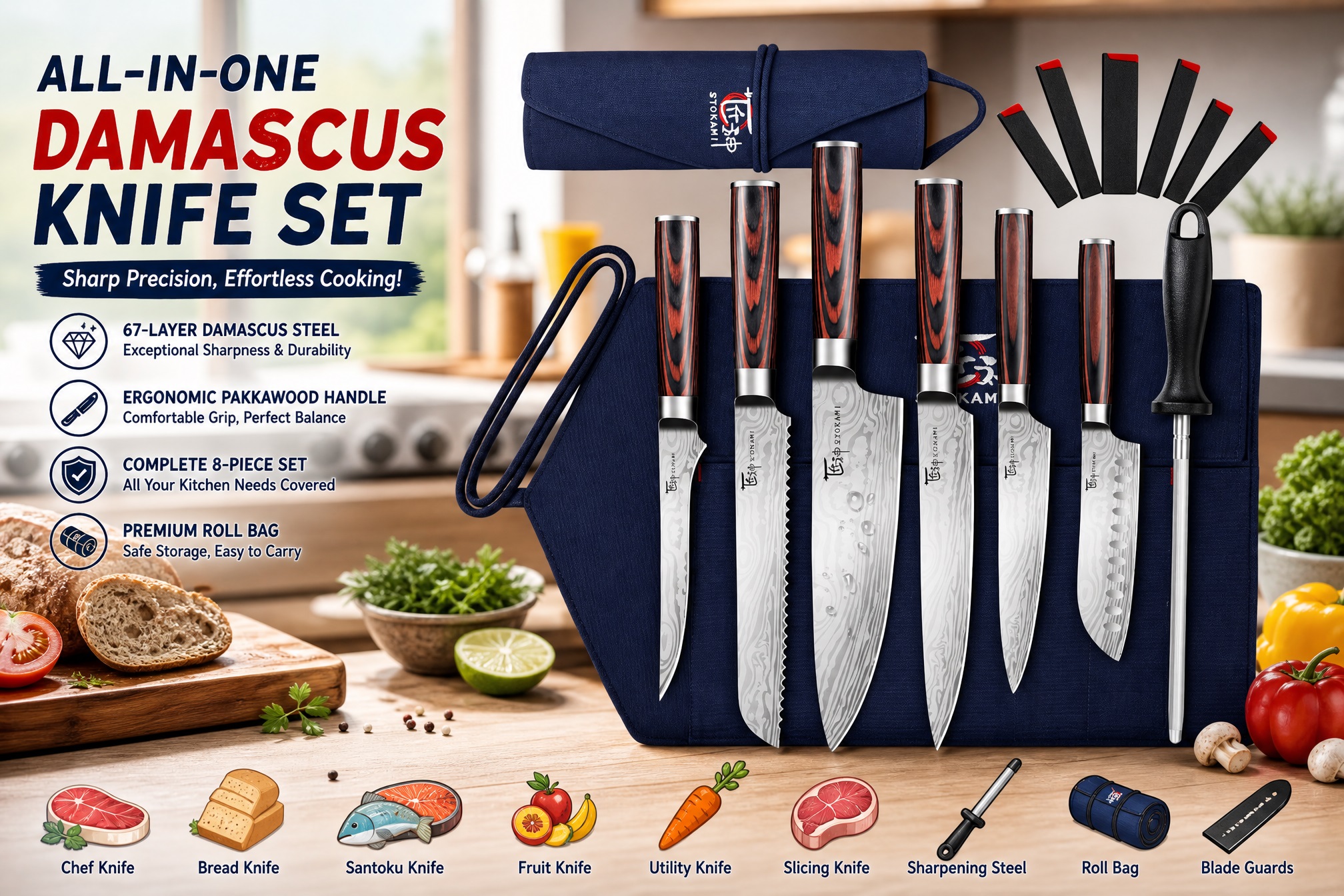
Meanwhile, the smaller knives filled in the gaps without redundancy. That’s an important distinction. Many sets include pieces that rarely get used, but here, each tool seems to have a clear purpose.
Material Choices That Prioritize Longevity
Without diving into overly technical territory, it’s worth noting that durability plays a major role in how these knives perform over time. Blades that maintain their edge and resist wear reduce the need for constant maintenance—something most home cooks appreciate.
With SYOKAMI, the materials appear chosen with everyday resilience in mind. They’re not delicate showpieces that require special treatment; instead, they’re built to handle regular use while maintaining performance.
Of course, proper care still matters. Regular honing and occasional sharpening will extend the life of any knife, and these sets respond well to that basic upkeep.
Who These Knife Sets Are Really For
It’s tempting to categorize kitchen tools into “beginner” or “professional,” but the reality is more nuanced. The appeal of SYOKAMI lies in its flexibility—it works equally well for someone just building their first kitchen and for more experienced cooks looking to streamline their setup.
If you’re starting from scratch, a cohesive set removes the guesswork of selecting individual knives. Everything you need is included, and the design language remains consistent across the board. On the other hand, if you already cook frequently, these sets offer a way to upgrade without overcomplicating your workflow.
A Closer Look at Everyday Usability
Let’s talk about the small details—the ones that don’t always make it into product descriptions but matter in daily use. Things like how easily a knife cleans, how it handles acidic ingredients, or how comfortable it feels after repeated use.
In these areas, SYOKAMI performs quietly but effectively. Surfaces clean without much effort, and the handles maintain a secure grip even when wet. These aren’t headline features, but they contribute to a smoother cooking experience overall.
Another point worth mentioning is consistency across the set. It’s one thing for a single knife to perform well; it’s another for every piece to meet the same standard. That consistency is what turns a collection of knives into a cohesive system.
Comparing the Experience to Traditional Knife Buying
Buying knives individually can be rewarding, but it often requires research, trial, and error. You might end up with mismatched handles, varying blade qualities, and gaps in functionality.
A set like those offered by SYOKAMI simplifies that process. Instead of piecing together your toolkit over time, you start with a unified foundation. For many home cooks, that convenience is worth more than the ability to customize every detail.
That said, the choice ultimately depends on your cooking style. If you enjoy curating specialized tools, individual purchases might still appeal to you. But if you prefer a streamlined, ready-to-use setup, a well-designed set can be a practical solution.
Final Thoughts: Quiet Reliability Over Flashy Promises
There’s something refreshing about kitchen tools that don’t try too hard to impress. Instead of relying on exaggerated claims or overly complex features, SYOKAMI focuses on what actually matters: comfort, balance, and dependable performance.
In a world where many products are designed to stand out on a shelf, these knife sets feel designed to blend into your daily routine—and elevate it in subtle, meaningful ways. They won’t transform you into a professional chef overnight, but they will make each slice, chop, and dice feel just a little more effortless.
And in the end, that’s what most of us are really looking for in the kitchen: tools that quietly support the way we cook, day in and day out.