Good luggage does not need to turn a trip into a design project. It simply needs to make the practical parts of travel feel easier: getting packed without sitting on the zipper, moving through a crowded terminal without fighting the wheels, and finding the charger or sweater you need before the overhead-bin rush begins.
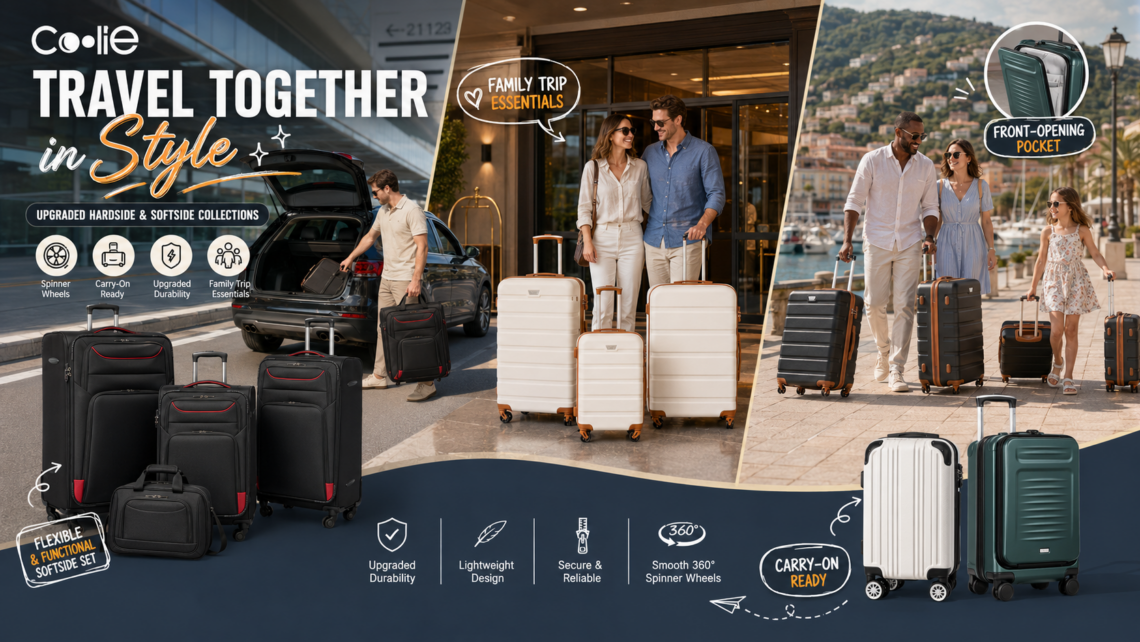
That is the appeal of the current Coolife range. Rather than offering one look for one type of traveler, the collection covers a useful mix of hardside checked sets, compact carry-ons, softshell options, and front-pocket designs made for travelers who like to keep essentials close. The common thread is straightforward: luggage should be organized, mobile, and easy to live with from the front door to the hotel room.
For someone replacing a mismatched collection of old cases—or buying luggage for a first major trip—that variety is worth paying attention to. A short weekend away, a family vacation, a work trip, and a two-week international itinerary all ask different things of a suitcase. The best choice is rarely the biggest case or the flashiest color. It is the bag that matches the way you actually travel.
Start with the trip, not the suitcase
The most sensible way to shop for luggage is to work backward from the itinerary. Think about the length of the trip, how much you normally pack, whether you will have access to laundry, and how many flights, train platforms, parking lots, or hotel lobbies are involved. A traveler who takes mostly two-night city breaks has very different needs from a parent packing for a week at the beach.
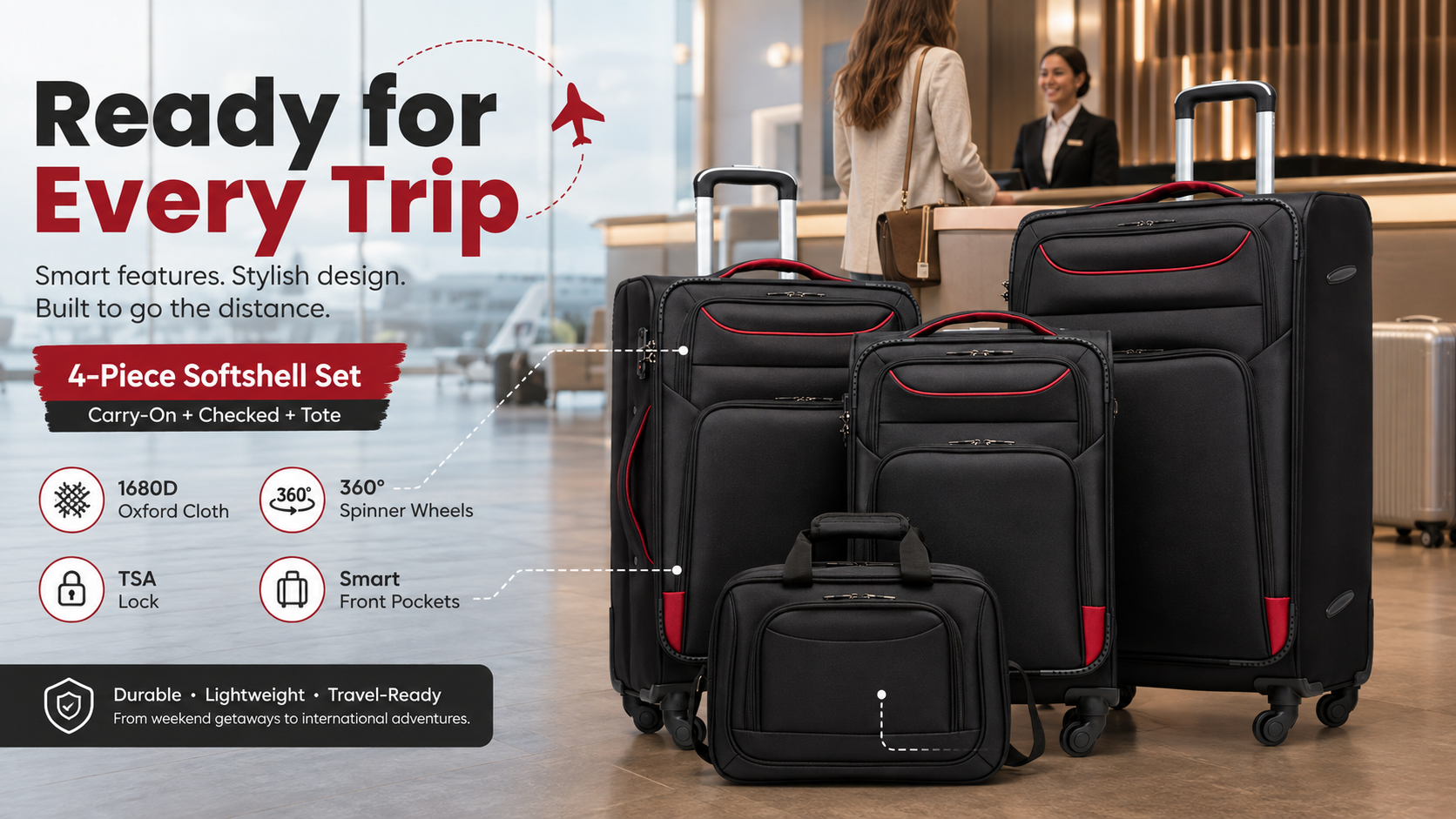
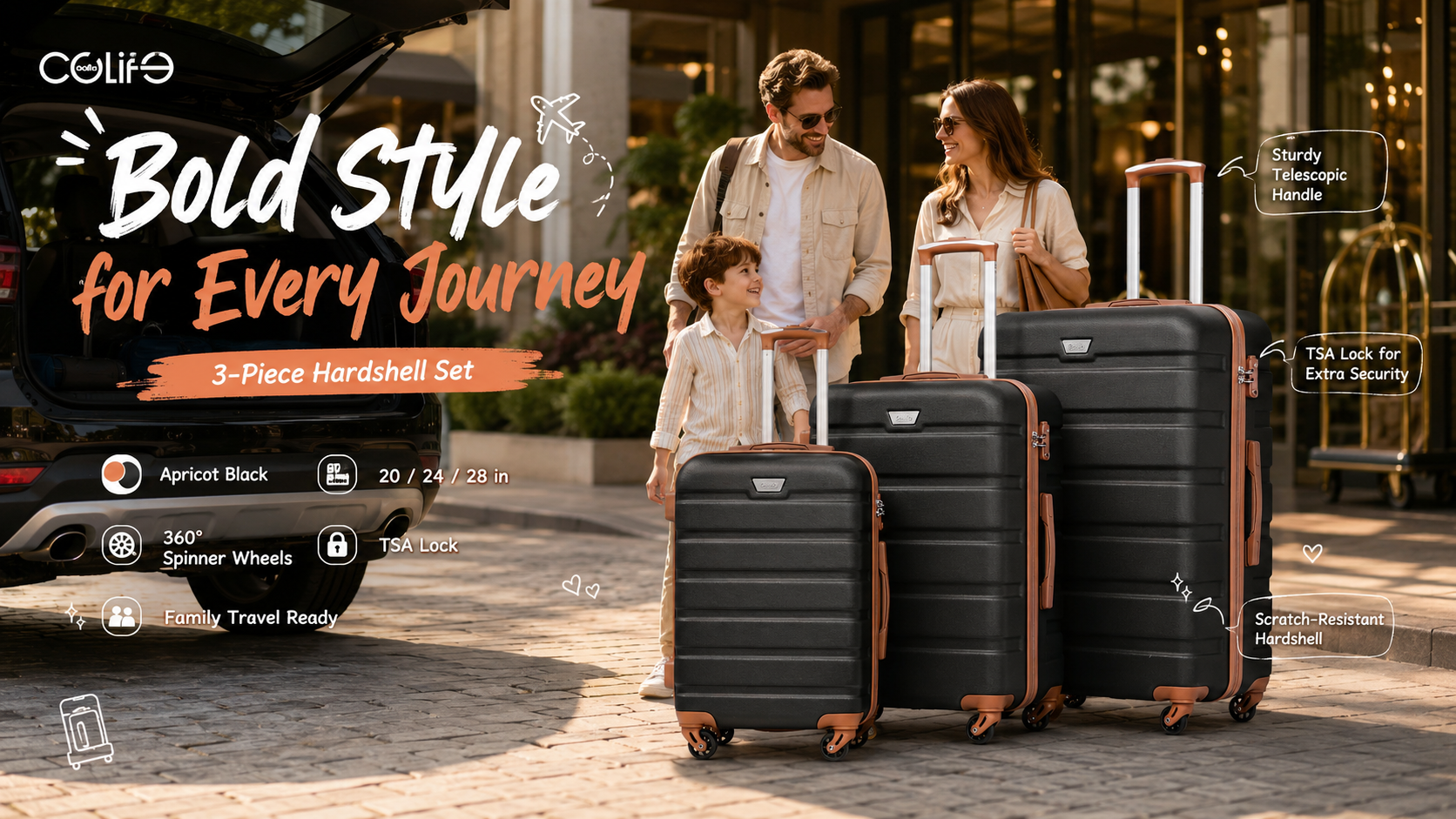
Coolife’s luggage selection reflects that distinction. There are multi-piece hardside sets with 20-inch, 24-inch, and 28-inch cases for travelers who want a coordinated size range. There are also carry-on-focused pieces for those who prefer to travel light. One softshell set includes a carry-on, two larger cases, and a tote, which may make particular sense for travelers who like having a flexible personal-item option alongside their rolling luggage.
The advantage of a set is not merely that the cases look coordinated. It gives you a simple packing system. The smallest suitcase can handle a quick flight or a child’s belongings. The medium case becomes the practical choice for a longer trip. The large case is there when bulkier clothing, gifts, shared family items, or extended stays require more capacity. You are not forced to use the largest suitcase every time just because it is the only one you own.
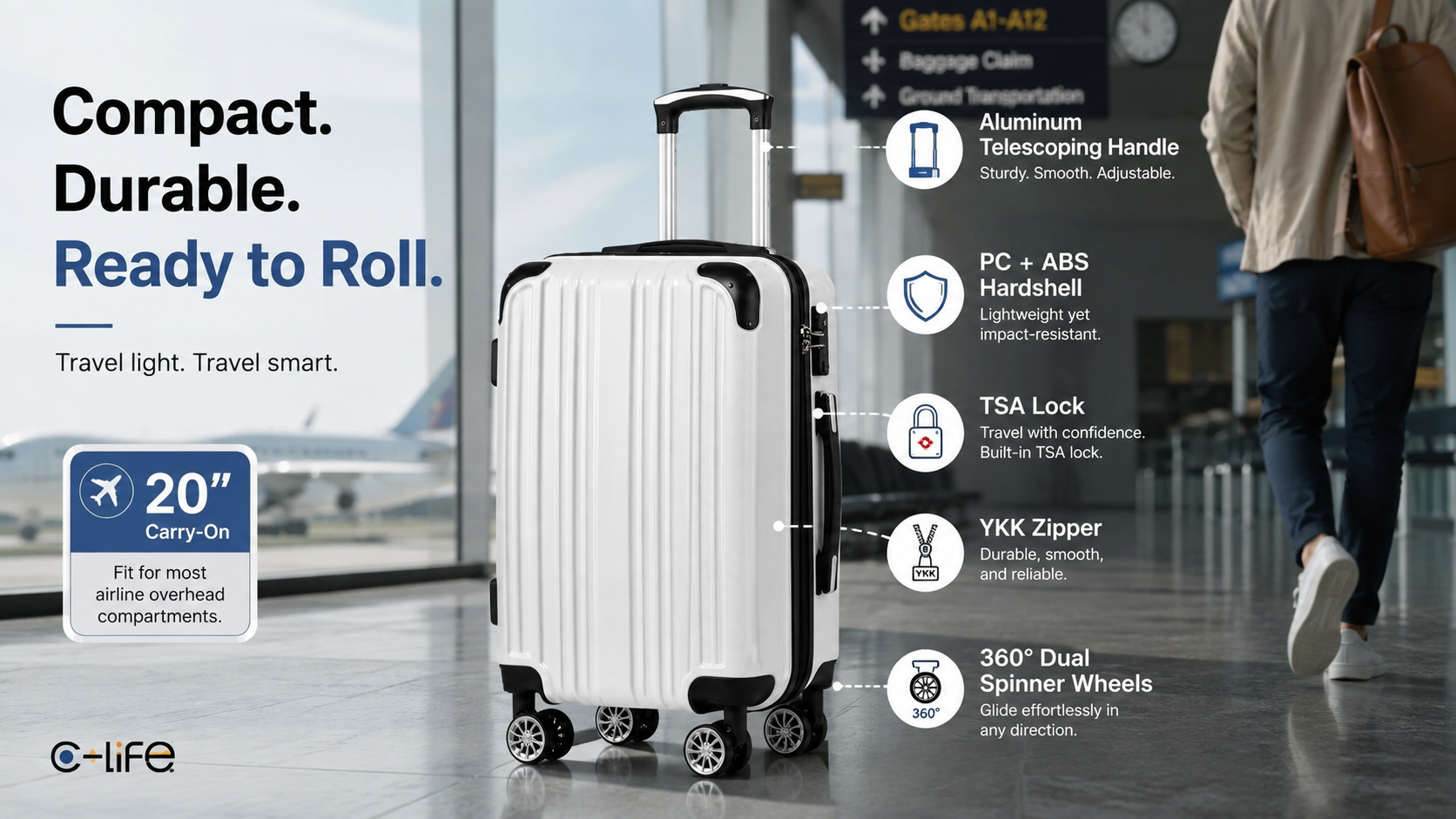
At the same time, a single carry-on can be the smarter investment for frequent flyers, minimal packers, and travelers who dislike baggage-claim uncertainty. A 20-inch hardshell carry-on is a familiar format because it is compact enough for many travel scenarios while still offering more structure than a duffel or weekender. Airline size rules vary by carrier and route, though, so it remains important to check your airline’s current cabin-bag allowance before departure.
Hardshell luggage: structure for the busy parts of travel
Hardside luggage has become a default choice for many travelers because it brings order to the messier parts of a journey. A rigid shell gives packed clothing more protection from compression, and the clean exterior is easy to wipe down after baggage handling, taxi trunks, or rain-slick sidewalks. It is particularly useful when your luggage may be checked, stacked, or moved frequently between different forms of transport.
Several Coolife hardshell options are built around lightweight shells, spinner wheels, telescoping handles, and TSA-style locking features. The specific materials and details differ by model, but the basic setup is familiar for a reason. Four wheels make it possible to guide a suitcase alongside you rather than pulling it behind at an angle. That feels like a small convenience until you are navigating a tight airport queue with a coffee in one hand and a boarding pass in the other.
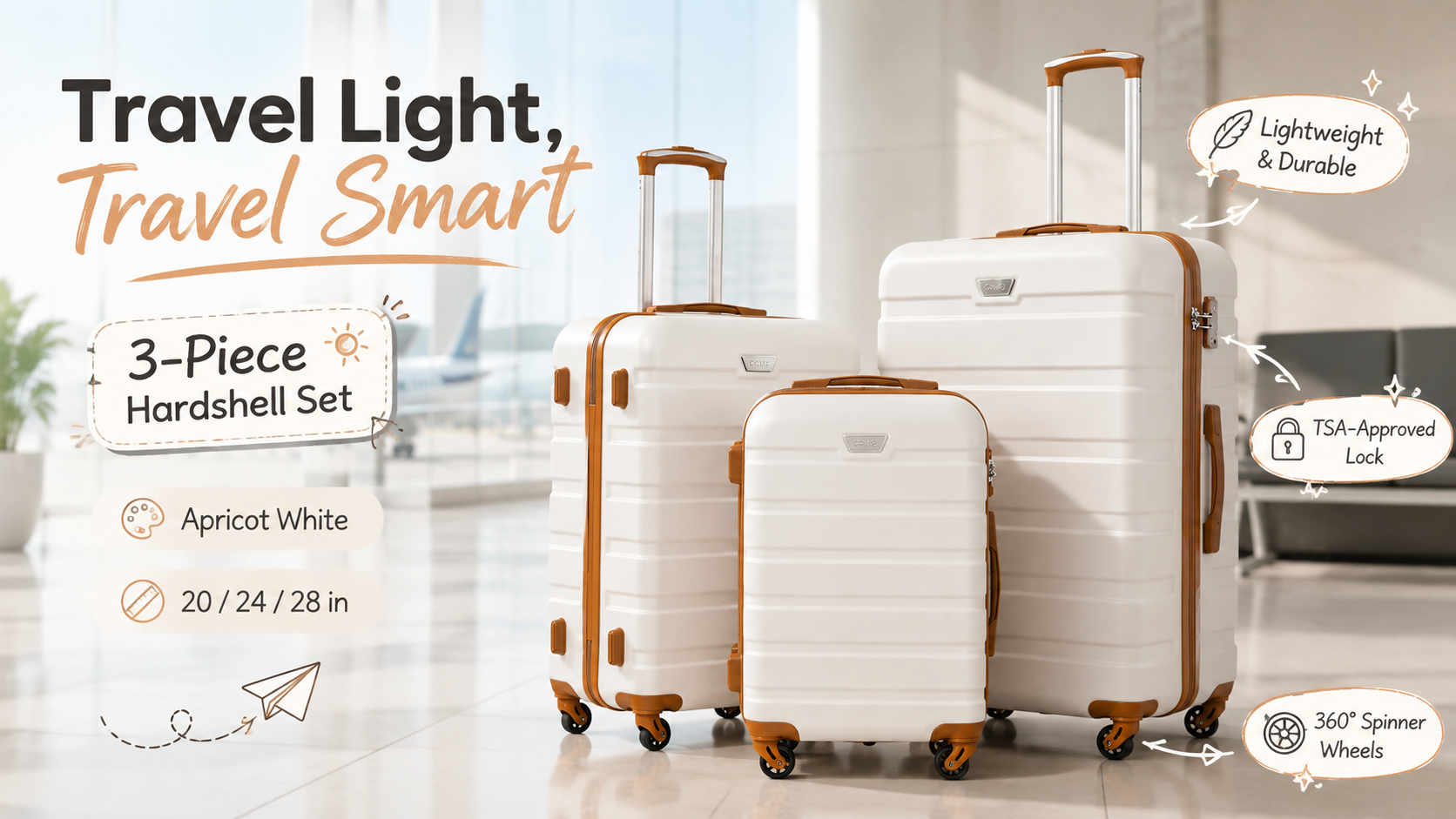
The visual side matters, too—though it should not be the only consideration. Hardshell cases in soft neutrals, bright colors, or patterned finishes are easier to recognize on a baggage carousel than a sea of black luggage. A distinctive finish can save a few anxious seconds at pickup, especially when several passengers own nearly identical cases. Still, a luggage tag and a quick photo of your bag before check-in remain sensible habits.
One practical note: hard luggage is not automatically better for every traveler. It has fixed exterior dimensions and less give when you are trying to squeeze in an extra jacket. That is why it works best for people who appreciate structure and tend to pack with some discipline. If you often return home with souvenirs, clothing layers, or last-minute purchases, look for an expandable model or plan to leave room when packing.
The carry-on with a front pocket changes the airport routine
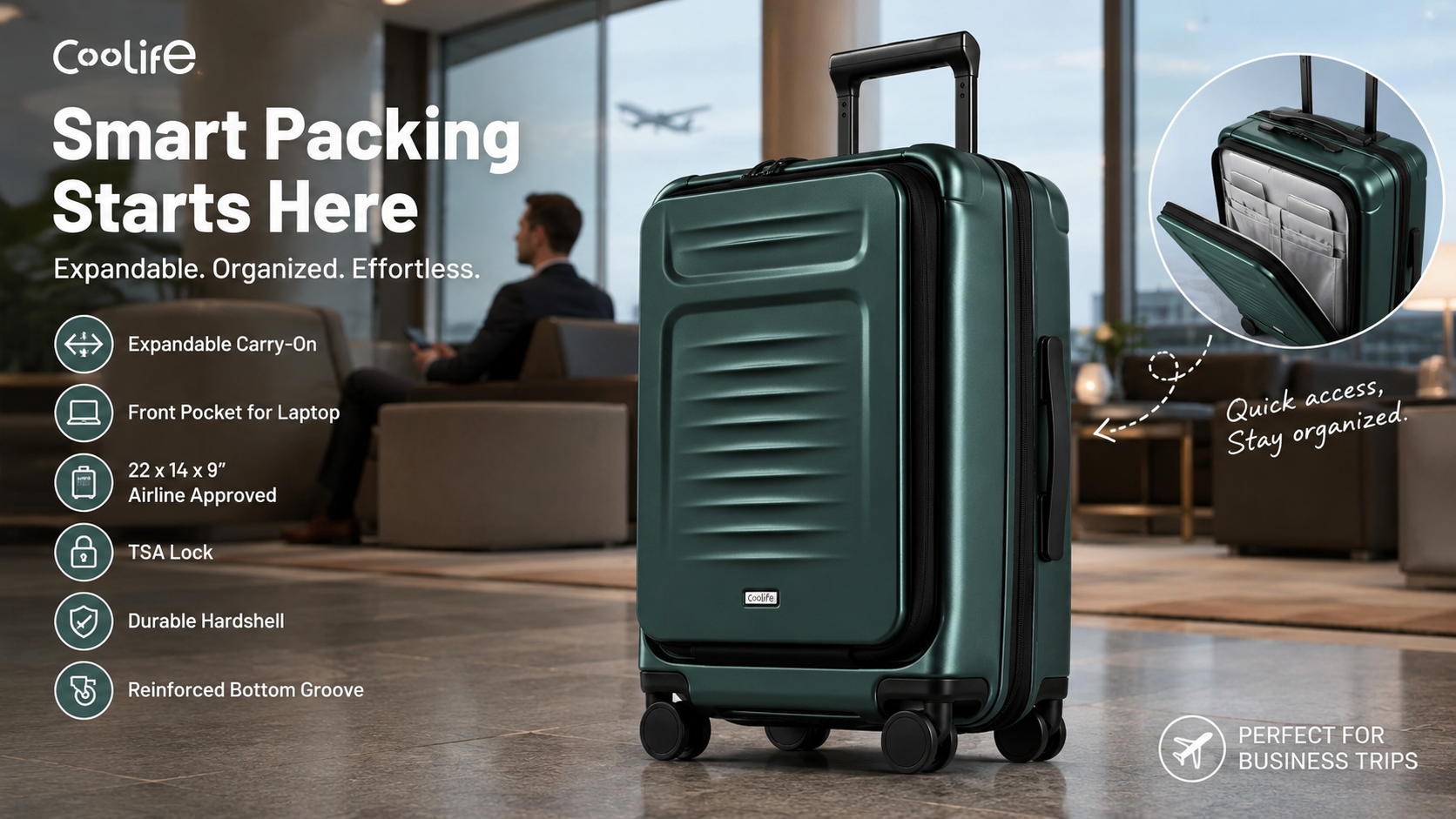
There is a category of traveler who does not need more luggage; they need better access. For that person, a front-pocket carry-on can be more useful than a traditional clamshell case. Coolife offers an expandable hardshell carry-on with a front compartment designed for a laptop and travel essentials, plus separate lockable sections. It is the kind of layout that acknowledges how people move through airports now.
Instead of opening the entire suitcase to retrieve a laptop, headphones, passport wallet, or charging cable, the front compartment creates a designated zone for the items that are used in transit. That can make security lines and gate-area work sessions considerably less awkward. It also encourages a better packing habit: keep your in-flight necessities separate from clothing, shoes, and toiletries.
There is a balance to strike. A front-pocket design is most effective when it is not treated as a junk drawer. Put the high-priority items there: electronics, a book or e-reader, medication you need on hand, a snack, travel documents, and perhaps one lightweight layer. If every small object from your home office gets tossed inside, the compartment loses its advantage quickly.
For business travel, the appeal is obvious. But it is not limited to work trips. A parent can use the accessible compartment for tablets, wipes, and entertainment for children. A student can keep a laptop and class materials separate from clothing. A weekend traveler can use it for a camera, sunglasses, and a compact toiletry pouch. Smart organization is not about carrying more; it is about avoiding the moment when you need to unpack everything in public to find one item.
Softshell luggage still has a place
Hardshell luggage gets much of the attention, but softshell cases remain a credible choice for travelers who value flexibility. A soft-sided suitcase can be easier to load into a car trunk or fit into a slightly awkward storage space at home. Exterior fabric also tends to create a less rigid visual profile, which some travelers prefer when packing changes from trip to trip.
Coolife’s softshell set uses an Oxford cloth exterior with a nylon lining and includes spinner wheels, a telescoping handle, a lock, and a tote. The important point is not that soft luggage is universally superior; it is that it solves a different set of problems. If you regularly pack irregularly shaped items, travel by car as much as by air, or like exterior pockets for quick access, a softshell case can feel more accommodating than a structured shell.
The tote in a set like this is also more than an afterthought. It can become the personal item that carries things you do not want to check: documents, a tablet, medication, a change of clothes, or valuables. For a longer trip, it is helpful to think of the tote and rolling case as a pair. The rolling suitcase holds the bulk; the tote holds the things that should remain within reach.
Softshell luggage does ask for a little more attention when packing. Use packing cubes or folders to create internal structure, and avoid placing fragile items near the outer walls without protection. A sweater can buffer a pair of shoes; a small pouch can protect cables; a simple laundry bag can keep worn clothes from touching everything else. These are not glamorous tips, but they make a suitcase much easier to manage once the trip is underway.
What makes a luggage set feel organized in real life?
Organization does not come from a long feature list. It comes from details that support a routine. Spinner wheels help when you are moving quickly. A telescoping handle helps when you are rolling longer distances. Internal divider panels make it easier to keep each half of a clamshell case purposeful. Locks can offer an added layer of reassurance, particularly on checked luggage, while still allowing appropriate inspection where TSA-compatible locks are accepted.
Just as important is the way you pack around those features. A well-designed suitcase can only do so much if it is filled randomly. Before your next trip, try dividing items into a few repeatable categories:
- Clothing: Pack by outfit type or day, rather than stuffing everything into open space.
- Footwear: Place shoes in bags and position them along the suitcase edge or near the wheels to create a stable base.
- Toiletries: Keep liquids in a removable pouch, especially when carrying on.
- Technology: Store chargers, adapters, and power banks together so they do not disappear between layers of clothing.
- Arrival essentials: Put pajamas, medication, a toothbrush, and the next day’s basics where they can be reached without emptying the case.
This approach works especially well with a three-piece set. The carry-on can hold valuables and a backup outfit. The medium case can handle the main clothing for one traveler. The larger case can take shared items, outerwear, or gear. It is not a rigid rule, but it reduces the all-too-common problem of distributing every person’s belongings across every bag.
A closer look at the “lightweight” question
“Lightweight” is one of the most common words in luggage listings, but it is worth interpreting it realistically. A lighter suitcase gives you more flexibility under airline weight limits and is easier to lift into a trunk, onto a scale, or into an overhead compartment. That said, the right suitcase should also feel stable, not flimsy, when it is full.
When comparing options, pay attention to the whole system rather than one label. Consider the shell or fabric, wheel arrangement, handle construction, interior layout, and whether the case suits your normal packing volume. A compact carry-on that is easy to roll may be a better travel companion than a larger case that encourages overpacking. Similarly, a coordinated set can make sense if you genuinely use multiple sizes, but it may not be the most efficient answer for a solo traveler who mostly takes short trips.
Think of luggage as travel equipment, not storage furniture. Its job is to move with you. A case that feels good crossing a tile floor should also remain manageable on carpet, pavement, elevator gaps, and hotel thresholds. Before a major trip, it is worthwhile to load the suitcase at home and take a short walk with it. You will learn more from that five-minute test than from staring at product photos alone.
How to choose the right Coolife option
Choosing within the Coolife lineup becomes easier when you stop looking for a universal winner. Instead, match the luggage to your habits.
- Choose a three-piece hardshell set if you travel with family members, take both short and long trips, or want a coordinated group of 20-inch, 24-inch, and 28-inch cases. This is the practical all-rounder approach: one collection, multiple trip lengths, less guesswork.
- Choose a dedicated hardshell carry-on if you mostly fly for weekends, prefer to keep luggage nearby, or like the clean structure of a clamshell design. Look closely at the wheel setup, lock feature, handle, and interior configuration, then confirm the dimensions against your airline’s rules.
- Choose a front-pocket carry-on if the journey itself includes work, devices, or frequent need for quick-access essentials. It is a thoughtful format for travelers who want to avoid opening the main compartment at the gate.
- Choose a softshell set if flexibility, an included tote, and a less rigid packing experience appeal to you. It can be an especially good fit for road trips, mixed-mode travel, or travelers who appreciate exterior-access convenience.
Color is the final decision, not the first one. Pick something you will enjoy seeing at the start of a trip, but prioritize size and format first. The suitcase that looks perfect in your hallway is not necessarily the suitcase that works best at 6 a.m. in a crowded terminal.
Small habits that help luggage last longer
Even durable luggage benefits from ordinary care. Wipe the exterior after a trip rather than letting grime sit on the surface. Remove old baggage tags. Check the wheels for thread, hair, or debris after rough ground. Store suitcases somewhere dry, and leave the interior slightly open for a while after travel if anything damp was packed inside.
It also helps to avoid treating a suitcase like a seat, step stool, or storage bin filled to the limit. Most travel damage comes not from one dramatic event but from repeated strain: overstuffed zippers, sharp objects pressing against a lining, and handles lifted at awkward angles. Packing cubes, shoe bags, and a small repair pouch can make a surprisingly large difference over time.
Finally, remember that a good trip starts before the airport. Weigh the suitcase at home, keep travel documents where you can reach them, and build a packing list you can reuse. The bag is part of the system, but the system works best when it supports calmer decisions from the beginning.
Whether the plan is a quick carry-on-only escape or a longer family trip with checked bags, Coolife luggage offers useful formats for travelers who want fewer packing headaches and more control over the journey. The ideal case is the one that rolls easily, keeps essentials where they belong, and lets you focus on the destination instead of the contents of your suitcase.