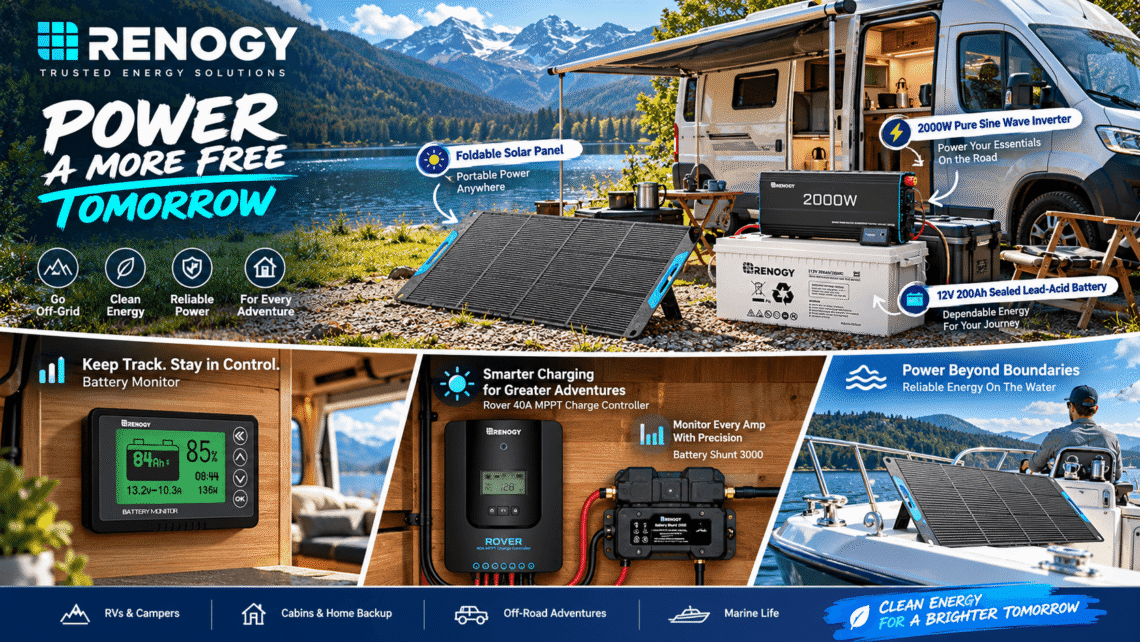
There is a particular kind of freedom that comes from not needing permission to plug in. It is the feeling of waking up in a forest clearing, brewing coffee while the campground still sleeps, running a printer from the back of a truck in a remote job site, or watching the air conditioner hum on a boat that has no shore power attached. For millions of people, that feeling now has a name attached to it, and that name is Renogy.
What began as a small team with a stubborn belief that sunlight should belong to everyone has grown into one of the most recognized names in renewable energy hardware. Renogy did not invent solar panels, and it did not invent portable batteries. What it did was connect those pieces into coherent, usable systems for people who had been told for decades that off-grid living was either impossible, too expensive, or reserved for preppers and extremists. The brand’s real contribution is quieter and more powerful than technology alone: it made energy independence feel approachable.
The Reason a Brand Like Renogy Had to Exist
For a long time, the solar industry spoke two completely different languages. On one side were the huge rooftop installations sold through contractors, designed for stationary homes and financed over twenty years. On the other side were a pile of loose parts—panels here, a charge controller there, an inverter someone bought on a forum—assembled by do-it-yourselfers who spent weekends figuring out cable gauges and voltage drop. The person caught in the middle was forgotten.
The middle person is the one who wants to live lightly, move often, or simply be prepared. They might be a full-time RVer tired of campground fees and noisy generator neighbors. They might be a small-scale farmer who needs a pump running in a pasture half a mile from the barn. They might be a homeowner who watched a winter storm knock out the power for four days and decided never to feel helpless again. They might be a sailor, a van lifer, a disaster-response volunteer, or a digital nomad whose office happens to be a beach parking lot.
Renogy‘s founding insight was that these people share one problem even when their lifestyles look nothing alike. They need reliable, clean, scalable power, and they need it packaged in a way that does not require an engineering degree to understand. The brand built its identity around answering that one problem well, across every setting where the wall outlet does not reach.
From a Handful of Panels to a Complete Ecosystem
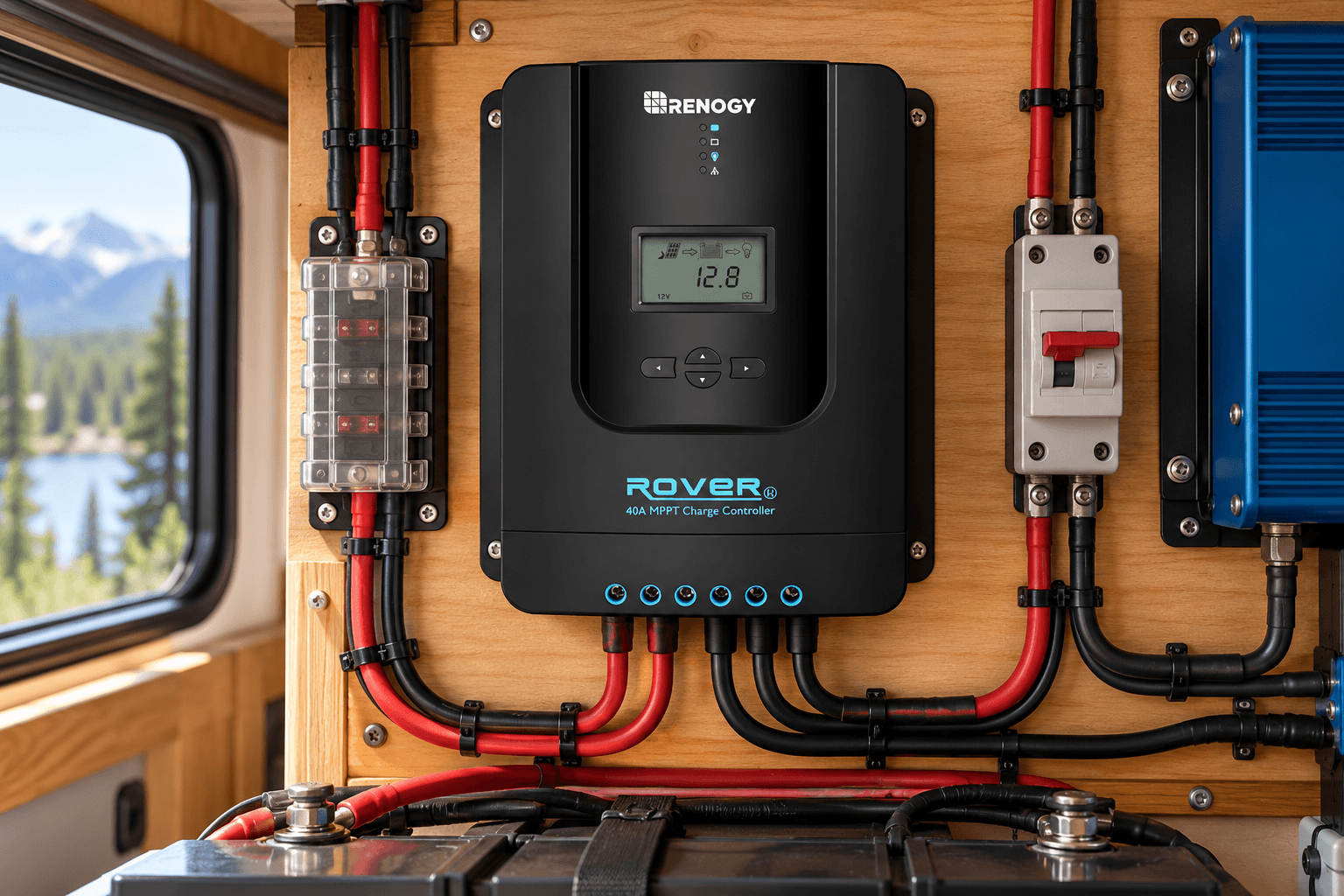
Walk through any Renogy product lineup today and the most striking thing is how little it resembles a typical catalog. Instead of selling isolated gadgets, the brand sells layers. At the bottom layer are the building blocks: monocrystalline and polycrystalline panels of every practical size, flexible panels for curved surfaces, charge controllers that intelligently manage battery input, inverters that turn direct current into the kind of alternating current a normal appliance expects. Above that layer are complete battery solutions, from lead-acid-era workhorses to modern lithium iron phosphate units with built-in monitoring. Above that are the portable power stations, the all-in-one boxes that combine a battery, an inverter, charge controllers, and a screen into something you can carry with one hand.
The genius of this stack is that it grows with the customer. A new van dweller might start with a small suitcase power station and a folding panel for weekend trips. A year later, when the trips get longer and the coffee maker gets upgraded, that same person can add more panels, a second battery, or a higher-output inverter without throwing away the first purchase. A cabin owner can start with a single panel on a wooden post and eventually scale to a multi-kilowatt rooftop array. A boat owner can add a flexible panel on the cabin roof without drilling holes through the deck.
This is the difference between a product company and a system company. Renogy behaves less like a vendor and more like a partner in a project that will evolve over years, and that philosophy shows up in small details: standardized connectors, clearly labeled wiring diagrams, app-based monitoring that works across devices, and an active community of users who swap setup photos and troubleshooting advice.
Portable Power Stations: The Entry Point Most People Know
If there is one product family that introduced Renogy to a wider audience, it is the portable power station line. These are the boxes that sit on kitchen counters during storms, on picnic tables at festivals, and in the trunks of overlanding rigs. What makes them different from generic competitors is a consistent attention to real-world use rather than marketing specs.
A typical Renogy station pairs a high-quality lithium iron phosphate battery with a pure sine wave inverter. That pairing matters. Pure sine wave output means sensitive electronics—laptops, cameras, medical devices, newer refrigerators—run without the buzzing, heat buildup, or damage that cheap modified sine wave inverters cause. The battery chemistry matters too, because lithium iron phosphate tolerates thousands of charge cycles, handles deep discharge better, and runs cooler than the alternative chemistries used in many budget boxes.
People use these stations for everything from overnight camping to home backup during heat waves. A single mid-sized unit can run a television, charge a phone stack, power a small fan, and keep a refrigerator cold for an afternoon outage. Pair it with a folding solar panel and the station becomes self-replenishing: park it in sunlight, come back to a full battery, and the cycle continues. For many first-time buyers, this experience is the moment the abstract idea of “energy independence” becomes tangible.
Solar Panels That Respect the Rest of Your Life
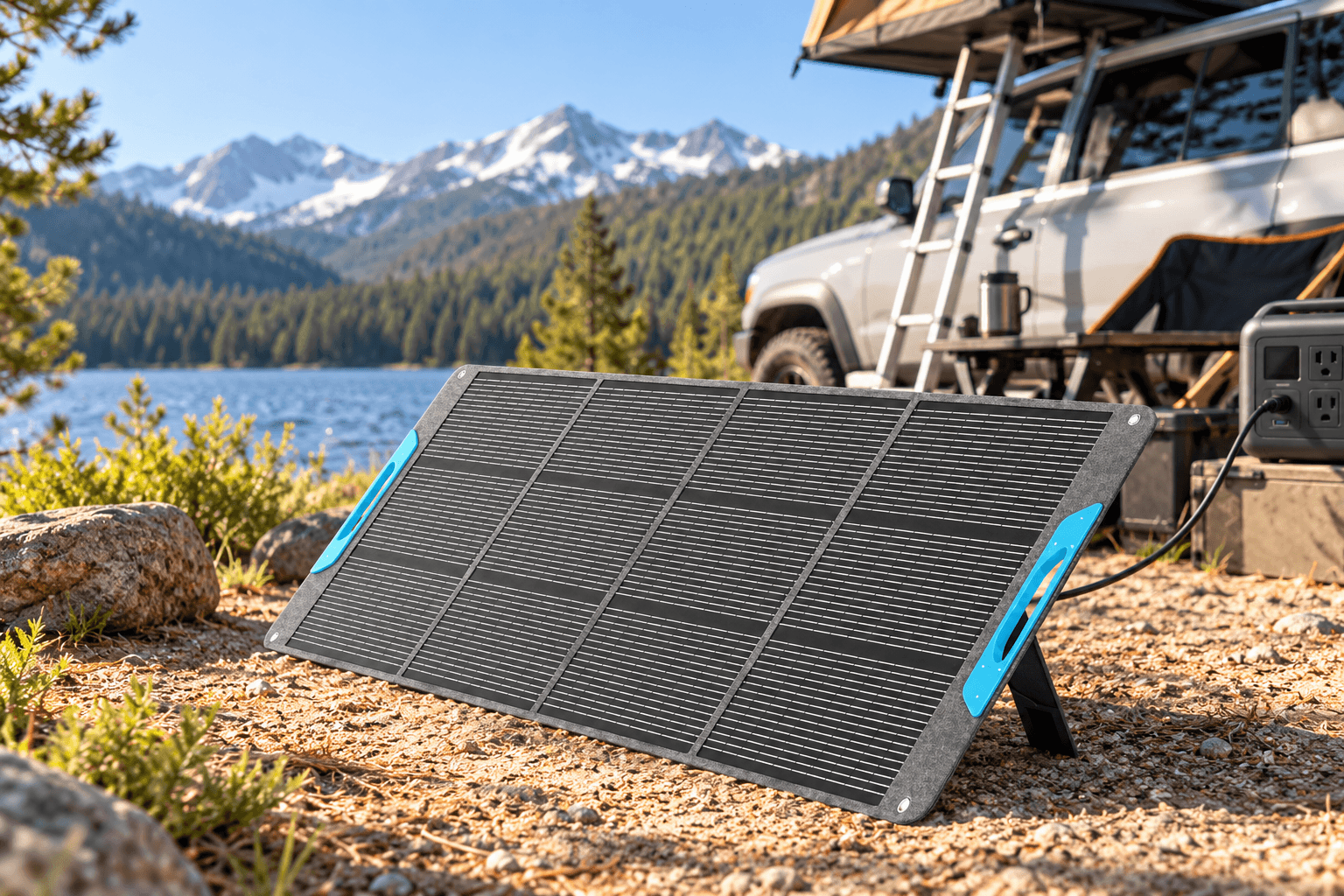
Panels are where Renogy’s engineering background is most visible. The product range covers rigid glass panels for permanent or semi-permanent mounts, semi-flexible panels that bend over curved roofs, portable folding panels that unfold in seconds, and small trickle panels for maintaining batteries in parked vehicles.
The rigid panels use high-efficiency monocrystalline cells, typically with anti-reflective coating and weatherproof junction boxes. They are built for the kind of abuse that comes from being bolted to an RV roof through heat, hail, road spray, and vibration. The flexible panels are thinner and lighter, designed to conform to arches, rounded cabin tops, and irregular surfaces where glass panels would crack or look wrong. The folding panels are the gateway drug: they carry their own handles, their own stands, and often their own charge controller, so a new user can literally open one in a parking lot and start charging.
What ties all these panels together is an attitude toward durability that comes from off-grid environments. Off-grid users do not get a service truck every month. Their equipment lives outside, unattended, through seasons. Renogy designs for that reality rather than for showroom conditions, and the product pages, manuals, and community discussions consistently reflect that practical bent.
Built for the Road: RV and Van Conversion Systems
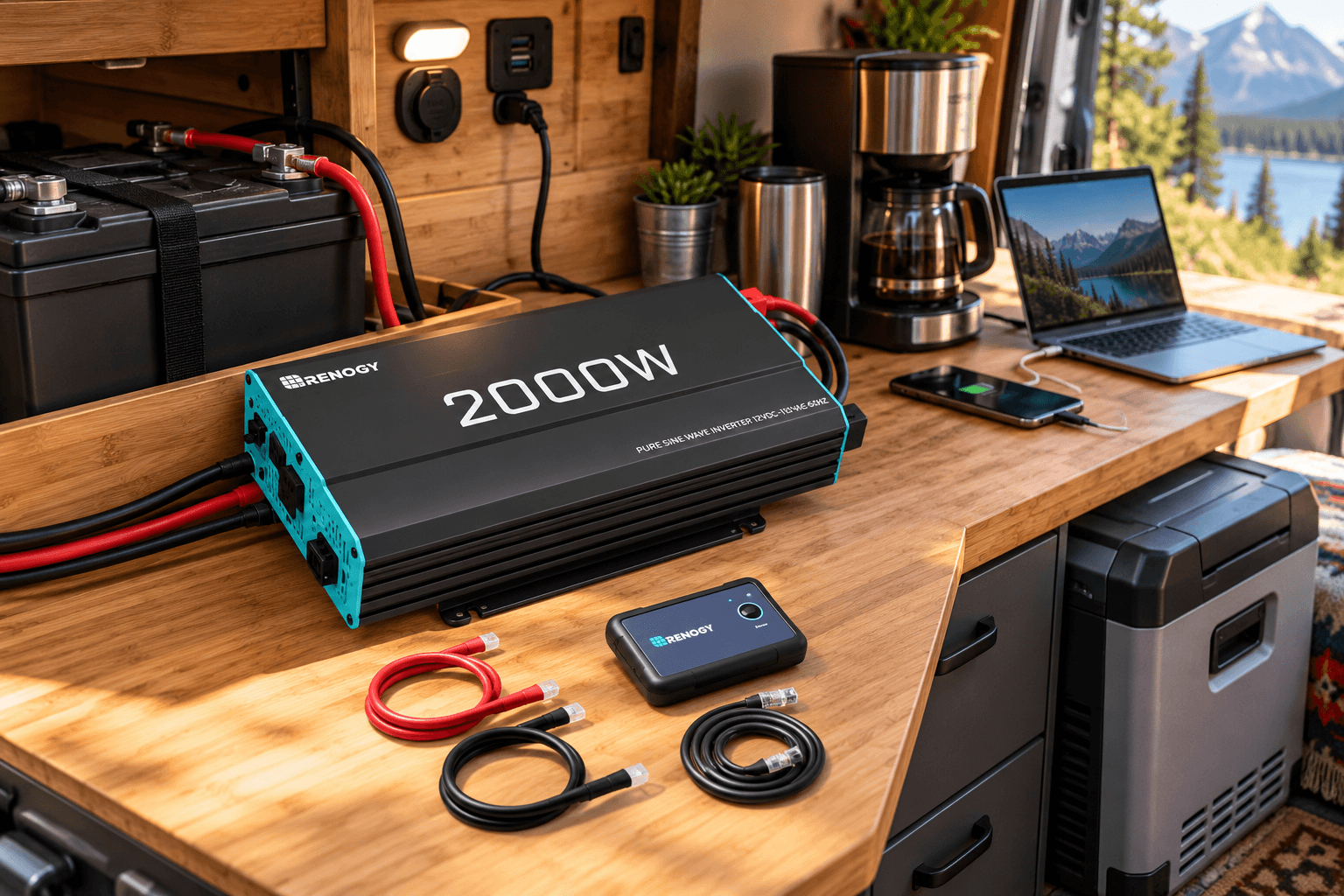
One of Renogy’s strongest communities is the RV and van life crowd. This is not accidental. A van conversion is, in many ways, the hardest case for portable power: limited roof space, limited weight capacity, limited storage, and high expectations for comfort. People living in vans want air conditioning at night, coffee in the morning, a workstation in the afternoon, and they want it all quietly without a generator.
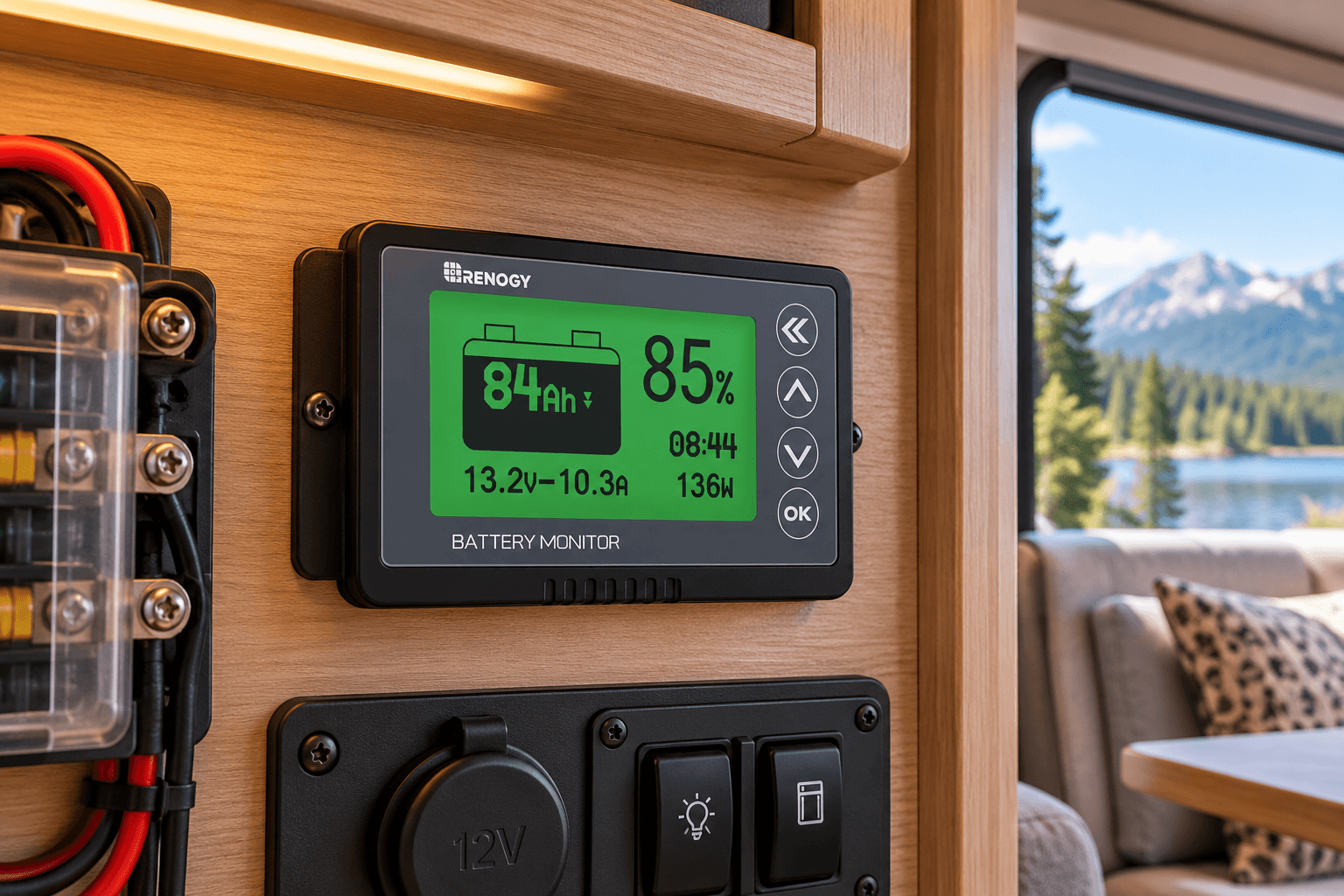
Renogy addresses this with purpose-built RV kits. These kits typically include roof-mounted panels, a lithium battery tucked under a bench seat, a DC-DC charger that draws from the vehicle’s alternator while driving, a pure sine wave inverter for household outlets, and a monitoring system accessible from a phone. The DC-DC piece is quietly important: it means the van charges its house battery while you drive, so a long travel day literally tops up your system without you doing anything.
For full-time travelers, this combination turns a vehicle into a self-sufficient home. Park for two weeks in the desert and the panels replenish the battery every sunny day. Drive into town and the alternator keeps everything topped up. The noisy, fuel-drinking generator that once defined RV travel becomes optional rather than essential.
On the Water: Marine Power Without Shore Power
Boats present their own version of the same puzzle. Marine environments are corrosive, space is tight, and every device draws from a finite bank. Renogy’s marine-focused panels and battery systems are designed to handle salt air, vibration, and intermittent use over long stretches at anchor.
Flexible panels sit on cabin tops without adding wind drag or drilling heavy mounting brackets. Lithium iron phosphate batteries replace the heavy, finicky lead-acid banks that sailors used to nurse along. Inverters and chargers let boaters run small appliances, navigation equipment, and laptops at anchor without running the engine for hours just to keep the batteries happy. For liveaboard sailors and weekend cruisers alike, this is the difference between a boat that feels like a campsite on water and one that feels like a floating home.
Off-Grid Cabins and Remote Properties
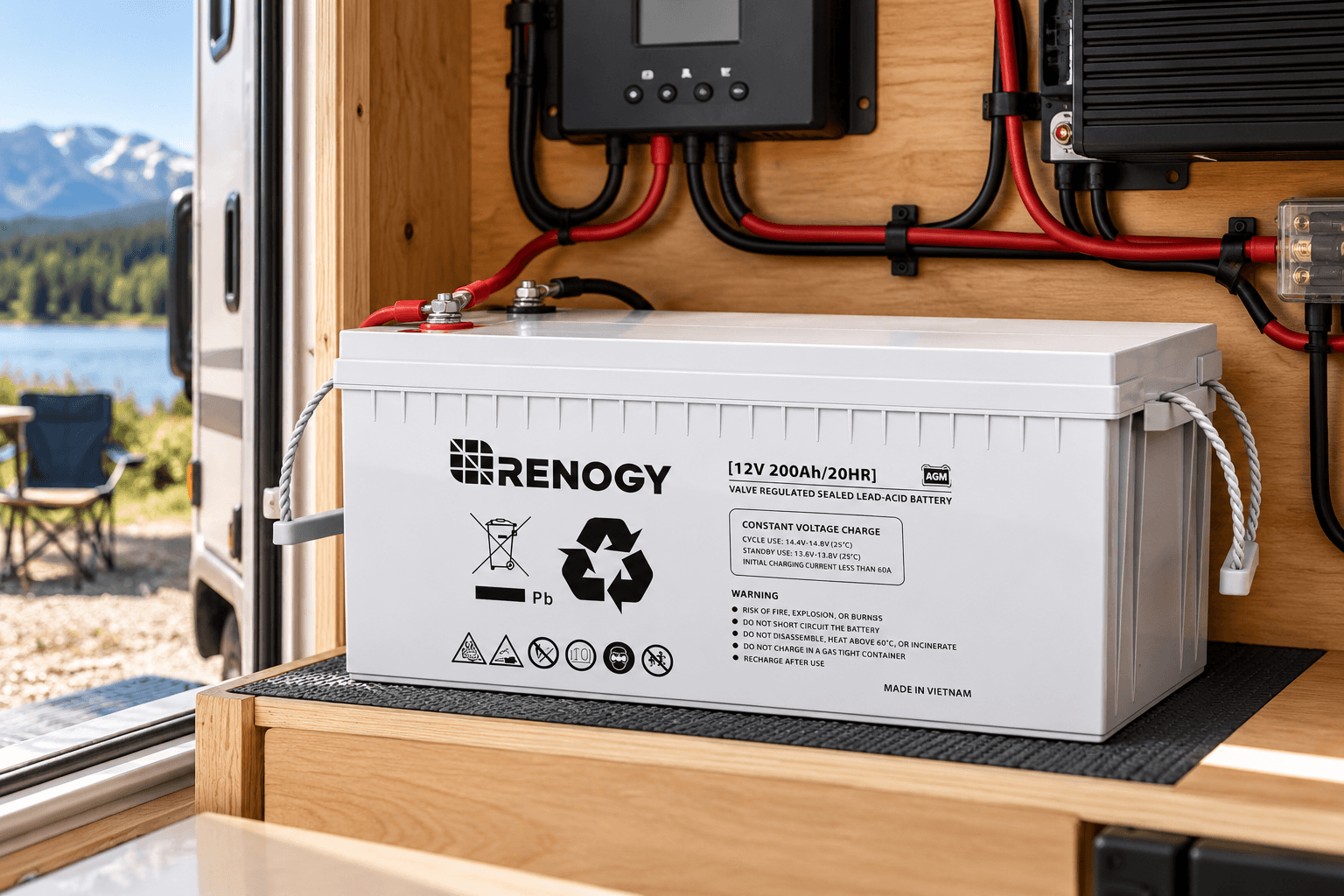
The cabin crowd is where Renogy’s DNA is most pure. A small cabin in the woods, a hunting lodge, a farm shed, a remote workshop—these are places where running utility line costs more than the building itself. For these customers, solar is not a lifestyle accessory; it is the only realistic option.
Renogy’s off-grid kits scale to these needs. A basic system might keep lights, a water pump, and a communication radio running. A larger installation might power a small fridge, a microwave, and a heating element during the shoulder months. The key is that the brand sells these as coordinated kits rather than a pile of parts, with documented sizing guidance and customer support that understands the specific math of a stand-alone property.
For landowners in rural areas, this has been quietly transformative. A plot that once felt unreachable suddenly becomes usable year-round. A pasture pump no longer requires a generator trip. A hunting camp becomes comfortable enough to visit in winter. And when the grid eventually comes nearby, the system can be expanded or repurposed rather than discarded.
Home Backup Without the Install
Even people who never go camping increasingly buy Renogy for the home. Modern life has made clear how fragile grid power can be: summer heat waves that strain transformers, winter ice storms that take down lines, hurricanes, wildfires, and rolling blackouts in growing regions. A permanently installed home generator is expensive, noisy, fuel-dependent, and often sits untouched for years.
Renogy’s home backup approach is different. A portable power station, kept in a closet, can roll out to a critical circuit during an outage. Multiple stations can be linked to power larger loads. Solar panels can be deployed on a balcony, a garage roof, or a portable frame in the yard during extended outages, recharging the stations indefinitely as long as the sun shines. This is a softer, more flexible version of home resilience: no contractor, no permits, no scheduled maintenance, no fumes in the backyard.
For renters, in particular, this model is revolutionary. Renters cannot put a generator on the property or bolt panels to the roof. But they can keep a portable station in a closet, roll it out when needed, and take it with them when they move. That mobility is the unspoken feature of the entire Renogy product philosophy.
The Engineering Behind the Marketing
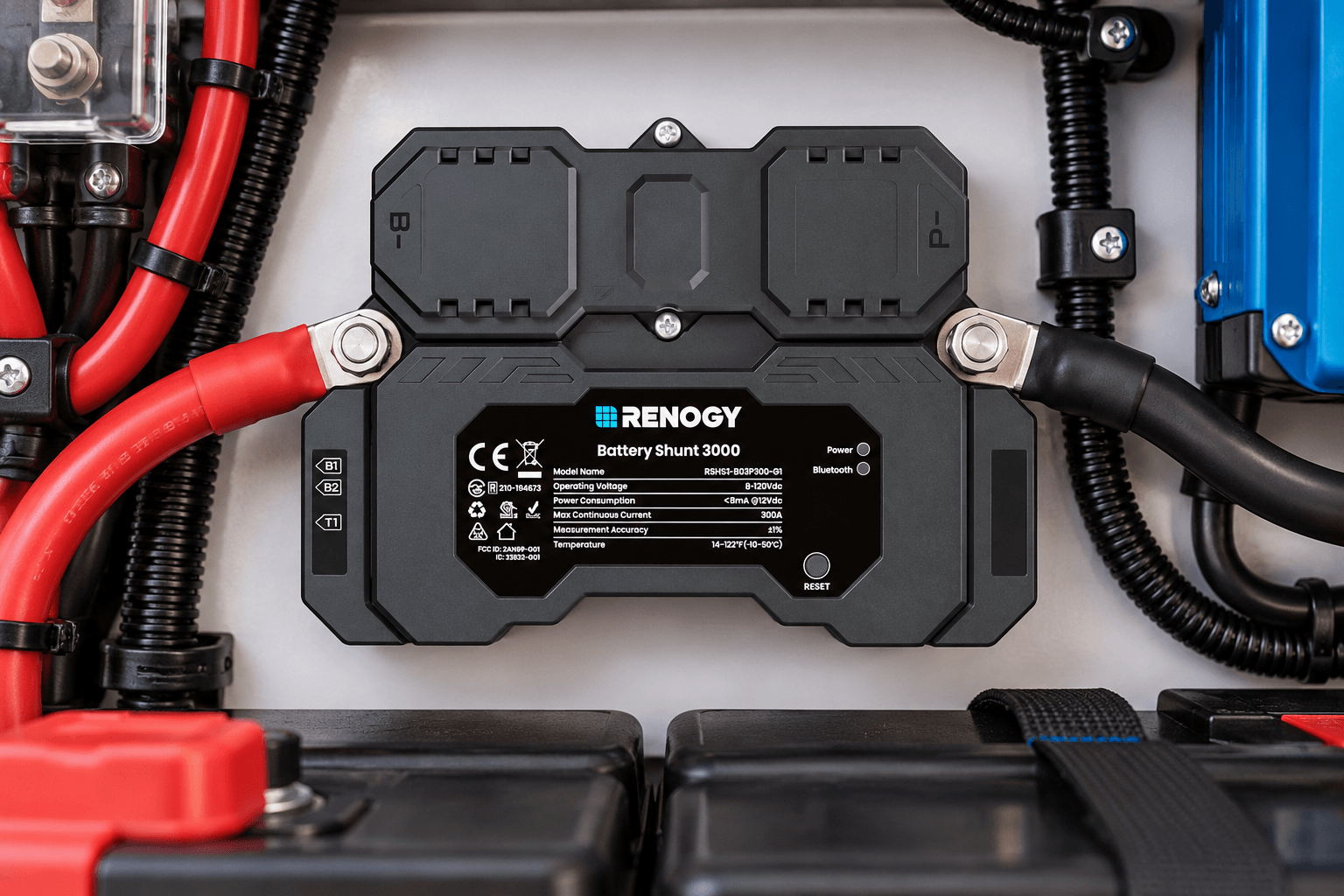
It is easy to look at a brand like this and assume the engineering is outsourced commodity hardware with a logo on the front. That would be missing the point. Renogy invests heavily in the unsexy details that make systems actually work: charge controller algorithms that maximize harvest in partial shade, inverter waveforms that protect sensitive gear, battery management systems that balance cells and prevent abuse, connector standards that reduce field failures, and software that shows users exactly where their power is going.
The brand’s approach to battery chemistry is a good example. Rather than chasing the cheap, higher-density chemistries that degrade quickly, Renogy has leaned heavily into lithium iron phosphate across its higher-end line. That choice means slightly heavier batteries for the same capacity, but it also means a battery that survives thousands of cycles, tolerates deep discharge, runs cool, and holds up for a decade instead of a few years. For off-grid users who depend on their hardware, that tradeoff is obvious.
The same practicality shows up in warranties, documentation, and customer support. Manuals are written for humans rather than lawyers. Setup guides exist for common scenarios rather than theoretical ones. The community of self-declared “Renogy nerds” online is evidence that the brand has earned trust with people who have spent years living on its gear.
Sustainability as Design, Not Slogan
A promotional piece about a solar brand would be hollow if it only repeated the word “sustainability.” The more honest angle is that Renogy’s business model is built on a kind of distributed energy resilience that reduces pressure on centralized grids. Every off-grid cabin that draws from its own panels means fewer transmission losses over long distances. Every van that does not idle its generator means cleaner air in campgrounds. Every home that keeps its refrigerator on during an outage reduces strain on overloaded infrastructure.
There is also a longer-term environmental argument. Solar panels are manufactured with energy, and the environmental case for them depends on those panels running for a long time in real conditions. Renogy’s durability focus—weatherproofing, thermal management, cell quality—directly extends the useful life of its hardware. A panel that survives fifteen years on an RV roof is a panel that has already done far more environmental good than a marketing claim could ever measure.
Who Is Renogy For, Exactly?
If the product lineup had to be summarized in one sentence, it would be this: Renogy is for anyone who has ever wished the electrical outlet could follow them instead of the other way around.
In practice, that covers an astonishingly broad group. It covers the retiree touring national parks in a thirty-foot motorhome. It covers the young family living in a converted school bus while they save for a house. It covers the fisherman running lights and a deep freezer in a remote ice shack. It covers the suburban family that got tired of summer outages during heat waves. It covers the farmer running fence chargers and pumps in distant pastures. It covers the photographer charging camera gear on a mountain ridge at dawn. It covers the missionary team bringing power to a village without grid access.
What unites them is not a lifestyle label. It is a preference for self-reliance, a respect for quiet energy, and a willingness to spend money once on equipment that will last rather than repeatedly on disposable solutions.
How to Actually Get Started
For a first-time buyer, the Renogy ecosystem can look intimidating because of the sheer range. A practical starting point is to decide between two questions: do you need to carry your power with you, or do you need to station it somewhere?
If you carry it with you—camping, road trips, emergency kit—begin with a portable power station matched to the devices you actually run, then add a folding solar panel sized to recharge it overnight. If you station it—an RV roof, a cabin, a shed, a boat—begin with a panel count calculated from your daily energy use, pair it with a charge controller and a lithium battery sized for two or three cloudy days of autonomy, and add an inverter only for the appliances that need household-style outlets.
The common mistake is buying underpowered gear in the hope of saving money and then discovering mid-trip that the system cannot run both the fridge and the coffee maker. The common opposite mistake is overbuying a massive system that sits half empty most of the time. Renogy’s sizing guidance and community forums exist precisely to help new buyers navigate that middle ground, and the brand tends to reward customers who think through their real usage rather than their aspirational usage.
Why the Brand Matters Beyond Its Products
Step back for a moment and the larger story becomes visible. For most of the twentieth century, access to electricity was treated as a given of modern life, something provided by large utilities and taken for granted until it failed. The last decade has quietly inverted that assumption. Climate instability, aging infrastructure, remote work, and a global hunger for mobility have combined to make personal energy a thing people actively choose.
Renogy rode that wave, but it also helped shape it. The brand did not just sell products into a market; it educated a market. Through its guides, its community, its YouTube-tested setups, and its consistent user experience, it taught millions of people that solar power was no longer a hobbyist project. It showed that a normal person could design, install, and live on their own electrical system without becoming an electrician.
That is the deeper reason behind the brand’s loyalty. Customers do not just buy a panel. They buy into a narrative of competence. They learn a skill that serves them for the rest of their lives. They move from dependence to confidence. In an age of manufactured scarcity and planned obsolescence, that is a remarkably refreshing thing to sell.
Looking Forward
The next decade of portable energy looks increasingly like the world Renogy has been preparing for. Batteries are getting denser and cheaper. Solar panels are getting more efficient. Electric vehicles are beginning to double as mobile power banks. Homes are becoming microgrids. Off-grid and on-grid living are blurring into a spectrum rather than two separate worlds.
In that future, a brand that already makes the full stack—panels, controllers, batteries, inverters, stations, monitoring—has a significant advantage. It can keep customers as their needs grow, from one folding panel on a camping trip to a multi-battery system powering a whole home during a storm. It can keep the wiring standard, the app consistent, and the warranty straightforward.
For the customer, the message is simple. Wherever you are heading, whatever device you want to run, and whatever backup scenario you are quietly preparing for, the chances are that there is a Renogy system already built for it. The question is no longer whether you can live beyond the outlet. It is how far beyond the outlet you want to go.