Ask ten people what they spent the most time choosing in their last home refresh and you will hear about sofas, paint colours, kitchen taps and mattresses. Ask the same ten people when they last thought about a mirror, and most of them will pause. That pause is the whole opportunity. A mirror is the one object in a room whose job is to make everything else in the room visible — the outfit you are about to wear, the face you are about to show up with, the light you paid good money to place in the ceiling. Yet it is nearly always the final afterthought, grabbed from a big-box shelf in unopened plastic, hung crooked for six years.
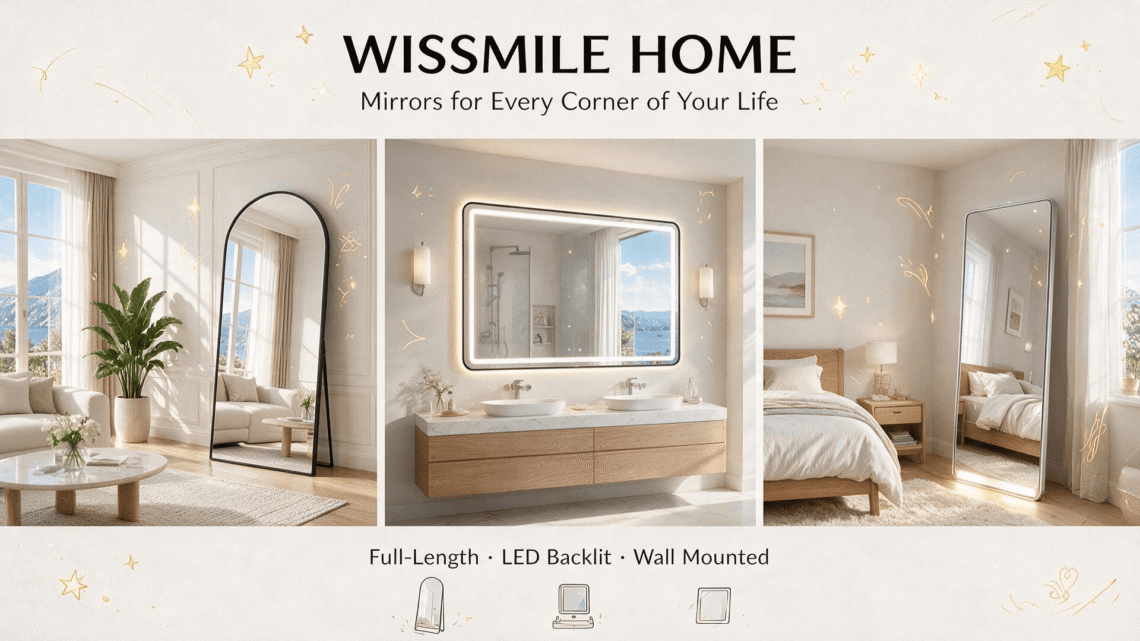
WISSMIELS is a home brand that built its catalogue around that neglected slot. Rather than chasing the showpiece furniture market, it concentrates on reflective surfaces: illuminated bathroom mirrors, arched full-length standing mirrors, vanity and wall pieces, framed mostly in moisture-resistant aluminium, glazed with thick tempered safety glass, and priced in a band that sits comfortably between throwaway builder-grade hardware and the four-figure custom mirror a designer will specify on your behalf. The tagline on the brand banner reads “Reflect Your Modern Space,” which is a modest claim, and the modesty is deliberate. This is not a brand promising to transform how you live. It is a brand promising that the thing you look into every morning does the job properly. 💡
What follows is an unhurried look at what that actually means in practice — how to read a mirror spec sheet without being talked into paying for features you will never touch, where WISSMIELS’s construction choices earn their place, and where a shopper should still slow down and think.
A Brand Built on an Unglamorous Question
Most home brands start from an aesthetic and reverse-engineer a product. WISSMIELS appears to have started from a much less photogenic problem: the ordinary frustrations of living with bad glass.
Consider what goes wrong with a standard bathroom mirror. Overhead lighting casts a shadow straight down off the brow, so the face is half-dark exactly where you need it lit. Steam from a hot shower erases the surface for twenty minutes. The silvering at the edges begins to grey and spot within a couple of years in a humid room. And if the glass ever takes a hard knock, ordinary annealed glass breaks into long blades. None of those problems are glamorous. All of them are solvable with engineering that costs a modest amount at scale: a heated demister pad behind the glass, LEDs distributed at the perimeter instead of a lamp above, sealed edges, and 5 mm tempered panes that crumble into small blunt granules rather than shards.
⚙️ That last point is worth dwelling on, because it is the least visible and most consequential decision in the catalogue. WISSMIELS specifies shatter-resistant tempered glass across its mirror line, at a thickness above what a lot of similarly priced product uses. Tempering is not a coating applied afterwards; the pane is heated and rapidly cooled so the surface goes into compression. It changes how the glass fails. In a bathroom, a hallway, or a child’s bedroom, that difference is not cosmetic.
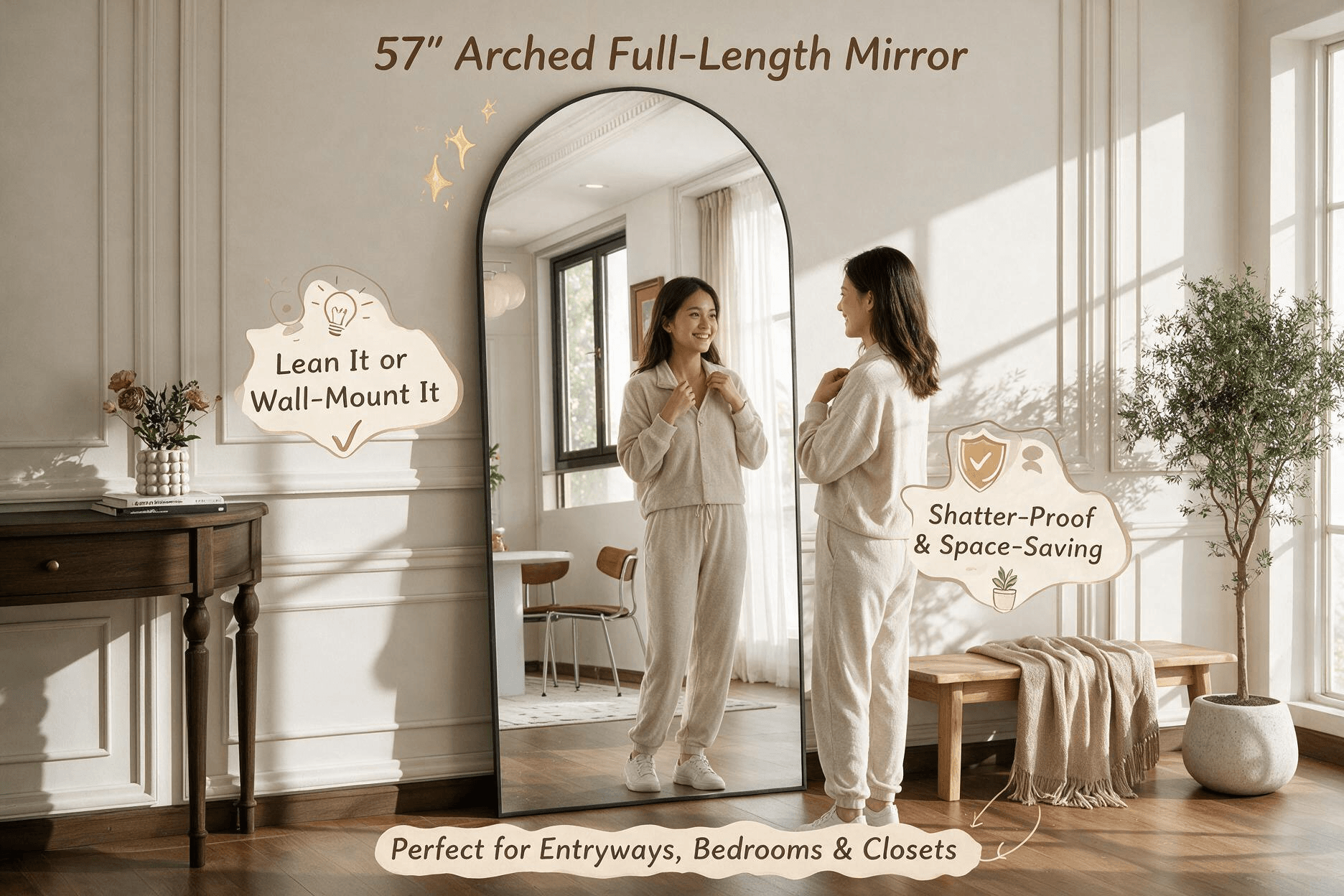
The arched full-length mirrors follow the same logic from a different angle. An arch top is a shape that reads as bespoke — it is the silhouette of an eighteenth-century dressing-room glass and a boutique hotel corridor — but executing it in a mass-market price requires a frame material that can be cut, mitred and finished cleanly without warping. Aluminium alloy solves that. It is light enough for a tall panel to be moved by one person, it does not rust in a bathroom, and it takes a gold or black finish that holds up. 🏷️ The brand’s framing choices are therefore not decorative decisions that happened to be cheap; they are the cheapest way to make a genuinely expensive-looking shape survive real humidity.
Reading a Mirror Properly: Four Tests Worth Running Before You Buy
📐 You do not need a design background to evaluate a mirror. You need four questions, in this order.
Test One: Thickness, Tempering and Edge Work
Look for the pane thickness in millimetres and whether it is tempered. Anything under 4 mm in a full-length format will show a slight waviness at the reflection — a funhouse effect so subtle you only notice it when a straight door frame bends as you walk past. WISSMIELS’s use of 5 mm tempered safety glass clears both the distortion threshold and the safety threshold, which is why the number matters even though nobody can see it in a listing photo. Then look at the edge: a polished, chamfered or bevelled edge resists chipping far better than a raw cut, and it catches light in a way that signals quality from across a room.
Test Two: Colour Temperature Range and How the Dimming Behaves
A bathroom mirror with one fixed colour is a mirror with one job done badly. Skin reads differently at 2700 K than at 6000 K, and a light that cannot shift will lie about one of those readings every time. The useful specification is a range spanning roughly 3000 K to 6000 K with selectable steps, because that covers warm evening light, neutral daytime colour, and cool task lighting. Just as important is whether the dimming is stepless rather than two or three preset levels, and whether the unit remembers where you left it. 🕯️ Memory is the difference between a mirror that feels considered and one that makes you re-adjust every single morning.
Test Three: Colour Rendering Index — the Spec Sheet’s Quiet Hero
CRI measures how faithfully a light source reveals colour compared with natural daylight, on a scale of 100. A cheap LED at CRI 70 will render a foundation shade close enough, but it will flatten undertones and muddy anything with subtlety — concealer, contour, lipstick, the actual flush of your face. Products that publish a CRI figure at 90 or above are making a verifiable claim, and WISSMIELS’s illuminated line sits in the 90 to 95-plus region. ✨ If you wear colour on your face with any regularity, this single number is a better predictor of daily satisfaction than the frame finish, the brand, or the price.
Test Four: Mounting Flexibility
A mirror that only installs one way limits the room forever. A full-length panel that can be wall-fixed, stood freestanding on an inconspicuous bracket, or leaned against the wall opens up rentals, awkward corners, walk-in wardrobes and narrow hallways where a recessed mirror is impossible. The presence of a hidden stand that supports all three configurations is a strong signal that the product was designed by someone who thought about where it would actually live.
The Illuminated Bathroom Mirror, Dissected
Strip away the marketing and a smart mirror is four subsystems bolted to a pane of glass: the light engine, the demister, the control layer, and the protective structure. Here is how each behaves in use.
Dual Illumination and Why a Single Light Source Never Works
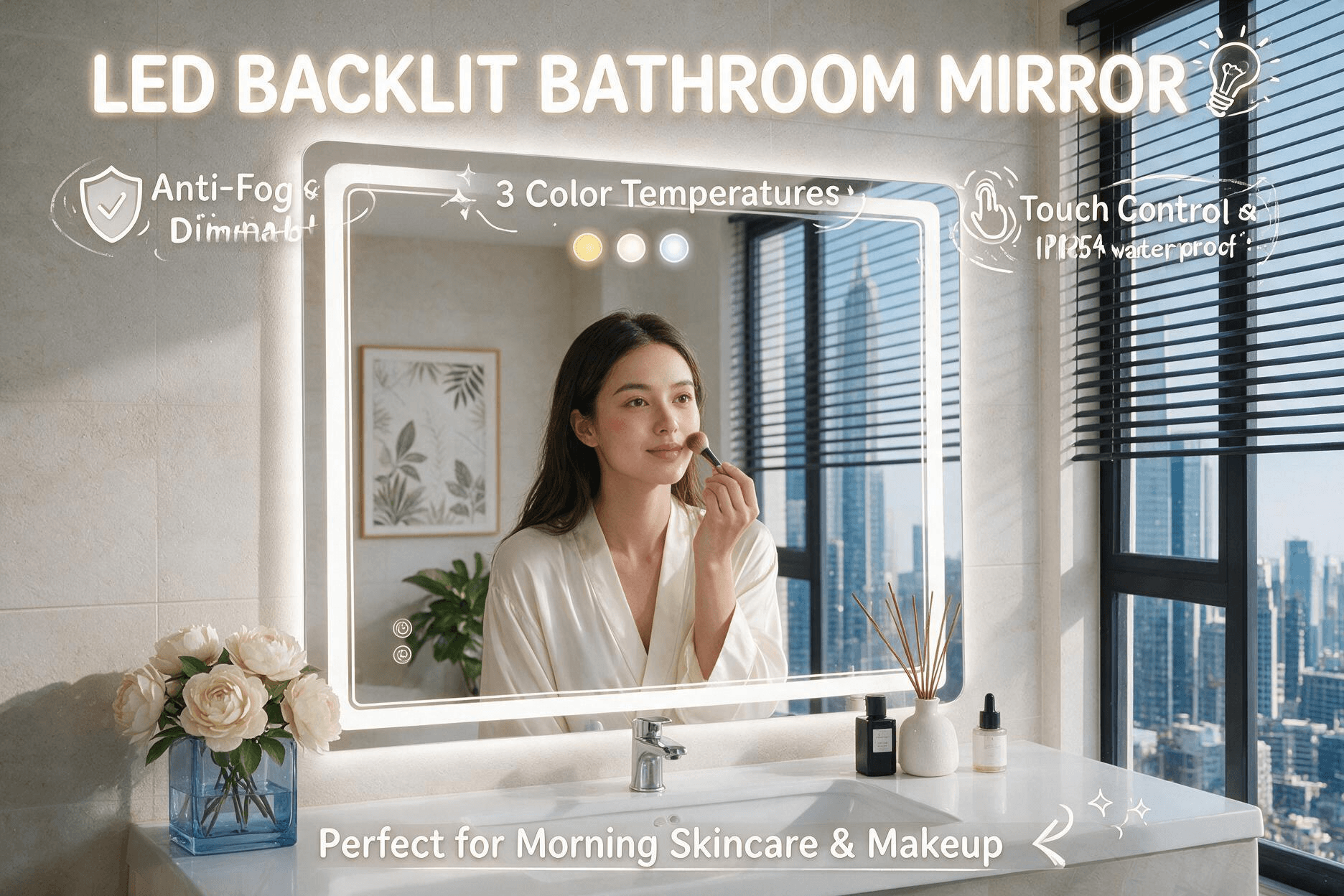
WISSMIELS’s LED mirrors light from both sides — front-facing illumination for the face, and rear backlighting that washes the wall behind the glass. The front light is the working tool: it removes the downward shadow that ceiling fixtures create, which is precisely the shadow that makes eyes look tired and makes application uneven. The backlight is the comfort feature: it gives the eye a soft gradient to adjust to when you come in half-asleep at 6 a.m., instead of a black rectangle punctuated by a glare strip. 🔆 Used together, they also flatten the contrast between mirror and wall, which makes a small bathroom feel less enclosed. Rear light alone is decorative and useless for grooming; front light alone is functional and a little clinical. The pairing is the correct answer, and it is the answer the catalogue takes as standard rather than as a premium tier.
Anti-Fog: The Feature You Only Notice When It Is Missing
A demister pad is a thin resistive heater laminated to the back of the glass. It raises the surface temperature a few degrees above the dew point so condensation cannot form there. There is no elegance to it and nothing to look at. It is also, anecdotally, the feature owners mention most often in the first month, because it removes a small daily irritation they had resigned themselves to. ⏱️ The practical detail is that a demister draws power continuously while active, which is why an automatic cut-off matters: WISSMIELS’s units include a sixty-minute auto-shutoff so the pad cannot be left running overnight by accident. That timer is a genuine efficiency and safety feature, not a gimmick.
Memory, Timers and the Small Mercies of Automation
Touch controls on the glass surface are now expected; what separates products is state management. A memory function restores your last brightness and colour temperature on power-up, so the mirror does not reset to factory default every time someone flips the breaker or unplugs it for cleaning. Combined with the auto-off timer, the result is a fixture you set once in the first week and never think about again. That invisibility is the whole point of good hardware.
| Specification | Typical WISSMIELS figure | Why it matters day to day |
|---|---|---|
| Pane glass | 5 mm tempered, shatter-resistant | No reflection wobble; granular breakage |
| Colour temperature | 3000 K – 6000 K, selectable | Warm evening, neutral day, cool task light |
| Dimming | Stepless, touch-controlled | Fine control instead of three blunt levels |
| Colour rendering | CRI 90 – 95+ | True skin and cosmetic colour |
| Lighting layout | Front-lit plus rear backlit | Shadow-free face, soft wall wash |
| Demister | Integrated anti-fog pad, 60-min auto-off | Clear mirror straight out of the shower |
| State | Power memory for brightness and colour | No re-setting every morning |
| Common sizes | 24×36, 30×36, 30×48 in | Fits standard vanity widths |
Arched Full-Length Mirrors: The Silhouette Doing the Heavy Lifting
If the illuminated bathroom mirror is the rational purchase, the arched floor mirror is the emotional one — and it is a genuinely interesting case of a shape earning its keep rather than a shape being decorative for its own sake.
Why the Arch Reads as Custom
Rectangles are cheap because straight mitres are easy. An arch requires a curved head with a consistent frame profile, which historically meant joinery skill and therefore money. Our eyes have not unlearned that association. A curved top over a doorway, a console, or a bed headboard introduces softness into interiors that are otherwise built almost entirely from right angles — kitchens, panelling, tile grids, door casings. It is the fastest available way to make a rented apartment look like it has a designer on retainer. In a WISSMIELS arch frame, the curve is carried in aluminium, so it will not swell in a humid bathroom the way a compressed wood moulding eventually will. ✨
Three Ways to Stand One
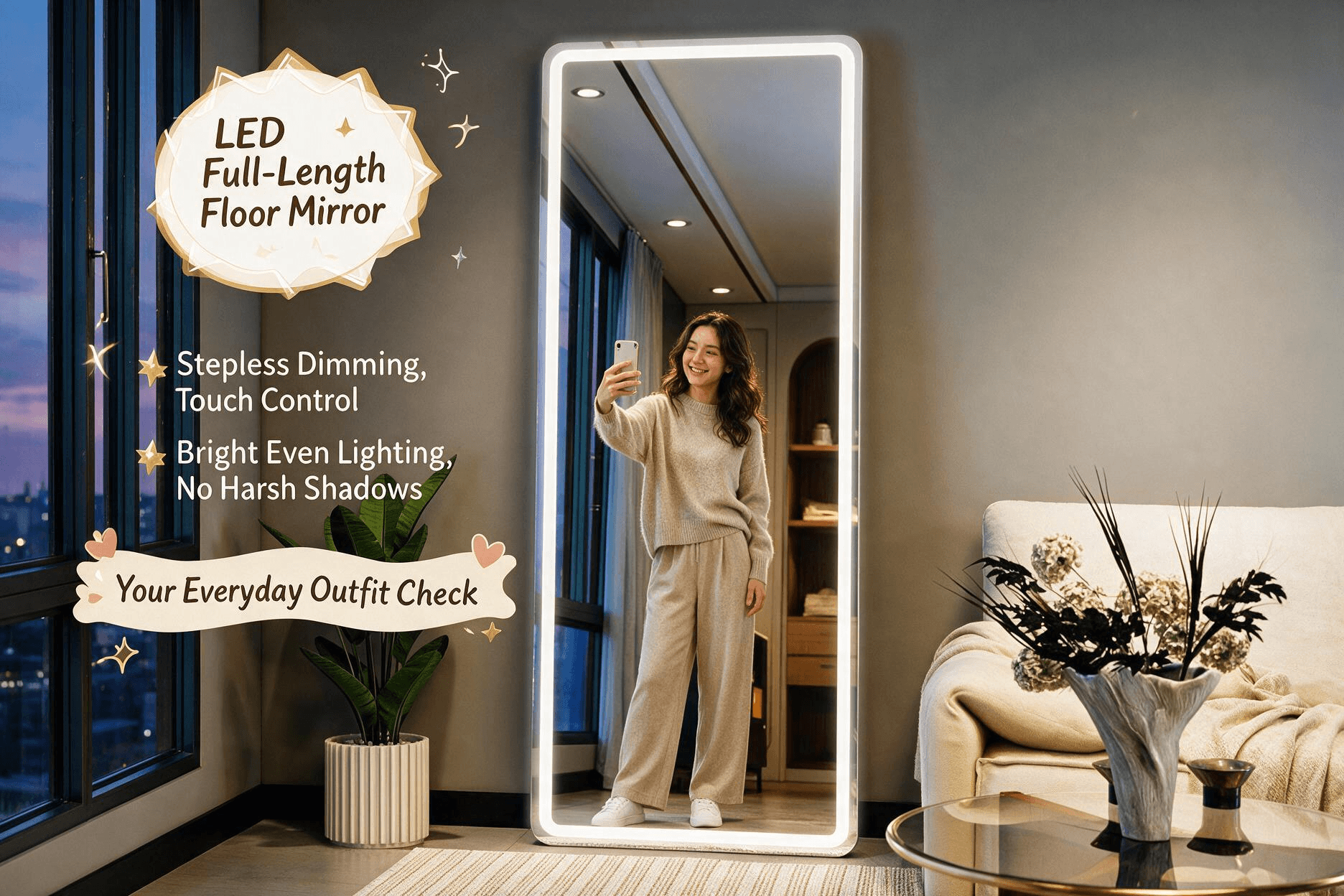
The versatility detail that matters here is the concealed stand. With it fitted, the panel is freestanding and can be moved for cleaning or redecorating. Removed or reconfigured, the same mirror wall-mounts flush. Or it leans, at a shallow angle, which is the most forgiving installation of all — no fixings into plasterboard, no studs, no landlord conversation, and the tilt can be adjusted to control how much of the room enters the reflection. A twenty-eight-by-seventy-one-inch panel leaning against a hallway wall will visually double the perceived width of that hallway. The same panel standing in a bedroom corner replaces a second, smaller mirror entirely.
Sizing Without Guesswork
| Format | Typical dimensions | Best placement | Effect |
|---|---|---|---|
| Compact full-length | 20×57 in | Behind a door, in a dressing nook | Head-to-knee check, minimal footprint |
| Standard full-length | 28×71 in / 30×71 in | Hallway, bedroom, walk-in robe | Full reflection, strong light bounce |
| Statement arch | 36×80 in | Living room wall, against a console | Room-widening, sculptural anchor |
The 20×57 has been the perennial best-seller in this category for a reason: it is tall enough to be genuinely useful and narrow enough to fit spaces a larger panel cannot enter. 📏 Measure the door it must pass through before you measure the wall it must live on. That single ordering error sinks more mirror purchases than style indecision does.
Rooms That Change the Most From One Mirror
Some placements deliver disproportionate returns, and they are rarely the ones people think of first.
A powder room with no window is the classic case. A backlit mirror in a room like that does not just light the face — it gives the space a second light source, at eye level, which removes the cave effect. Pair it with a pale grout and the room reads roughly twice its size. 👁️
A bedroom with a wardrobe that cannot accommodate an internal mirror has probably been using a door-mounted or handheld one for years. A tall arched panel leaning near the window turns the getting-dressed routine into something you can actually assess in daylight, and it reflects the window itself, doubling the natural light in the room for free.
An entryway with a console underneath is the third quiet winner. The mirror serves the departure check, the console holds the keys, and the reflected light means you are not fumbling at the coat hooks. It is also the one spot guests see first, which makes the frame finish — brass-toned gold rather than black — a small but legible statement about how the rest of the home was chosen. 🎯
Voices From the Renovation Trenches
💬 A few exchanges that recur whenever this subject comes up among people who have actually lived with the hardware for a year or more.
“Is the CRI thing real or is it just a number for the listing?” It is measurable and it is visible. The quickest demonstration is to look at something with a saturated colour — a red lipstick tube, a green plant leaf — under a cheap LED and then under a high-CRI one. Under low CRI, reds go slightly brown and greens go clinical. Under CRI 90-plus, they look like daylight. If you own anything you care about the exact colour of, the difference is not imaginary.
“My bathroom gets steamy. Is the demister enough?” Yes, provided it is switched on early. The pad works by keeping the glass above the dew point, so it is far more effective running during the shower than after. Ten minutes of pre-warm clears a pane that would otherwise need a squeegee. 🔥
“Do I actually need the rear backlight, or is that vanity?” Rear light is comfort, not task. It matters at night and in windowless rooms. If your bathroom has a bright window and you only use the mirror in daylight, front light plus demister covers ninety per cent of it. If it is interior, the backlight earns its place quickly.
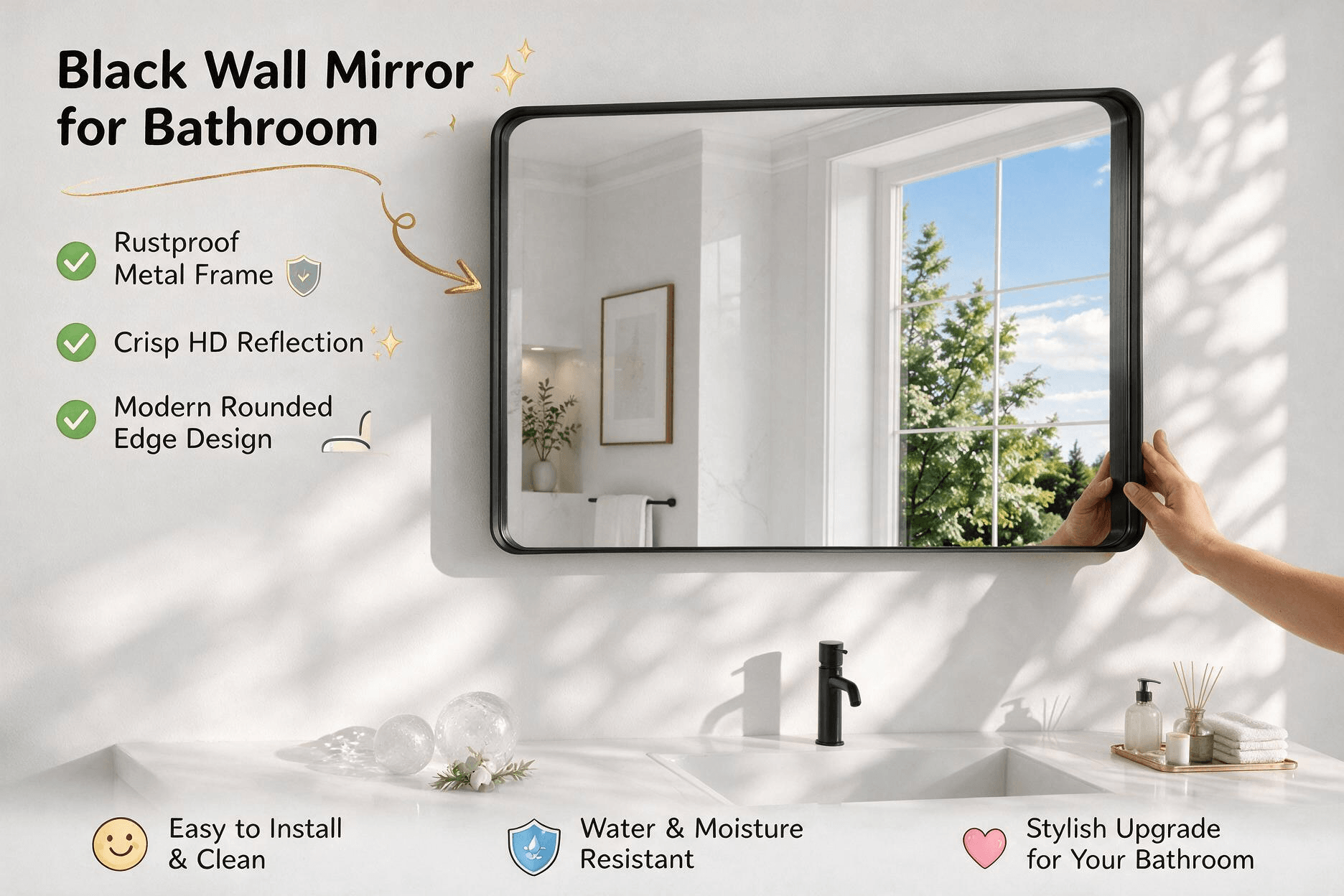
“Aluminium frame in a bathroom — will it pit?” Anodised or powder-coated aluminium is precisely the material chosen to avoid that. The failure mode you are looking for in cheap frames is corrosion at the fixings, not the profile itself. Moisture-resistant alloy with sealed edges is the correct specification for a wet room. 🛡️
Buying Smart: Budget Bands and What They Actually Buy
Pricing across the catalogue moves, and individual listings shift with promotions, but the broad structure is stable and useful for planning.
| Band | What it typically includes | Reasonable expectation |
|---|---|---|
| Entry (roughly US$60–$90) | Smaller non-illuminated wall and full-length panels, compact arch formats | Solid tempered glass, clean frame, no electronics |
| Mid (roughly US$90–$150) | Illuminated mirrors in common vanity sizes, larger arch standing panels | Full LED feature set, demister, memory |
| Upper (roughly US$150–$200 and above) | Wide-format illuminated pieces, oversized 36×80 statements | Larger glass area, wider vanity coverage |
🏷️ The rule that saves the most money: buy the electronics in the size your vanity actually needs, and buy the largest non-illuminated panel your budget allows. A giant unpowered mirror is a cheap piece of drama. A giant powered mirror multiplies in price with area, because the light engine, driver and demister all scale with it. If you want spectacle, take it in the hallway. If you want performance, take it over the sink at thirty-six inches wide.
Care, Longevity and the Five-Year View
🧼 Mirrors fail in predictable ways, and almost all of those failures are at the edges. Water that runs down the face and pools behind the silvering is what causes the grey foxing people blame on “bad glass.” The countermeasure is dull but effective: spray cleaner onto a cloth rather than onto the top edge of the mirror, wipe dry along the perimeter after showers, and do not let liquid sit at the frame seam.
For illuminated units, the driver electronics are the component with a finite life, and heat is what shortens it. Enclosed, ventilated installations outperform airtight recesses. If a unit ever dims unevenly across its width, that is usually one LED branch failing rather than the whole panel — and it is a reminder to buy from a seller that answers emails. 🔧 The frame needs nothing beyond an occasional wipe with a damp cloth; abrasive cleaners will dull a matte black finish faster than use will.
Tempered glass will not quietly degrade. Silvering will. That asymmetry is why build quality at the edges matters more than the frame style you fell for.
Who This Brand Suits — and Who Should Look Elsewhere
🤍 WISSMIELS fits a specific buyer honestly: someone renovating or refreshing on a practical budget who wants the two or three surfaces in the home they look into every day to be properly engineered, and who cares more about light quality and glass safety than about a rarefied designer name. The catalogue’s concentration is a strength here — a brand that sells mirrors tends to solve mirror problems better than a generalist that sells everything.
It is a weaker fit if you want a truly one-of-a-kind antique, an irregular bespoke dimension, or a full smart-home integration with voice control and app scenes. The illuminated line is intelligently automated but deliberately simple, and simplicity is a feature until it is the thing you wanted. ⚠️ Nor is this a luxury-materials brand; the frames are alloy, chosen for durability and cost, and anyone seeking solid brass with hand-applied patina is shopping a different market entirely.
Naming that boundary is not a knock on the brand. It is the actual product proposition, stated plainly: engineered reflective hardware, correctly specified, at a price that leaves budget for the rest of the room.
Making the Choice Final
✨ Here is the shortest path through the decision. Pick the illuminated mirror first, by vanity width, and confirm four numbers on the listing: 5 mm tempered glass, a 3000–6000 K range with stepless dimming, a published CRI above ninety, and an auto-off timer on the demister. If all four are present, the specification is genuinely good and the frame finish becomes a matter of taste rather than compromise. Then pick the statement piece by the space it must pass through, not the wall it must live on, and choose the configuration — leaning, standing, or mounted — that your landlord and your cleaning routine will tolerate in six months’ time.
Most rooms in this country are decorated around their expensive items and finished, hastily, around their cheap ones. The mirror is where that habit shows, because it is the object that reflects everything else back at you. WISSMIELS has built a catalogue on the unglamorous premise that the last thing on the shopping list should not be the least considered. 🪞 It is a modest ambition, and it happens to be one of the more useful ones in home retail — a brand reminding us that the surface you meet every morning is infrastructure, and deserves to be treated like it.