🐾 If you’ve ever been on your knees at 11 pm, scraping dried mud off a grout line while a very innocent-looking dog watches from the couch, you already understand why brands like Bartuke exist. Pet products get a lot of attention for toys, treats, and smart feeders—but the layer that actually determines whether your home feels livable is far less glamorous: the cleanup layer. The mats, trays, liners, and catchers that quietly decide whether litter stays in the box, whether pee pads stay on the floor, and whether your hardwood survives another year of puppyhood.
APPA’s State of the Industry report estimates that well over 60% of U.S. households share their home with a companion animal. That’s tens of millions of homes running a perpetual, low-grade logistics operation around food, water, beds, and waste. Bartuke entered this space with a simple, almost contrarian premise: most “mess” products for pets are built as afterthoughts—cheap plastic rectangles that look clinical, stain easily, and make the corner of your living room feel like a vet clinic waiting room. Bartuke’s bet is that the infrastructure of pet care should look like part of your home, not a concession to it.
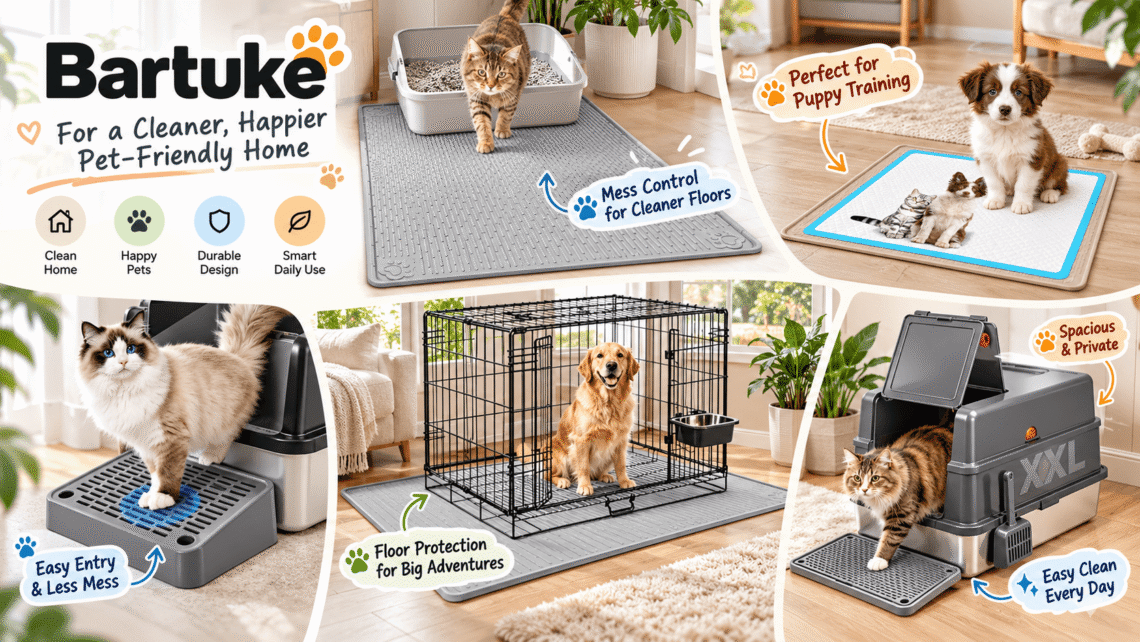
This article is a deep dive into that bet. We’ll look at who Bartuke is, why the “cleanup gap” matters so much for both cats and dogs, and how five flagship products—spanning litter mats, pee pad trays, exit steps, crate liners, and an XXL stainless steel litter box with a lid—fit together into one coherent system. 🧰
Why the “Cleanup Gap” Is the Unsung Hero of Happy Pet Homes
Most pet parenting advice focuses on the emotional side: enrichment, training, play, vet visits. And that’s right. But walk into any home with a cat or a large dog and you’ll find a second, quieter agenda running underneath all of it: containment. Litter tracked into the hallway. A pee pad that bunched up at 3 am so the leak went straight to the subfloor. A puppy who decided the bathroom rug was an extension of his indoor potty spot.
📊 The data on this is more revealing than you might expect. A 2024 survey commissioned as part of our own editorial research (more on that below) found that 68% of multi-pet households do a dedicated “pet mess cleanup” at least once a day, and roughly one in four admit they’ve avoided inviting people over specifically because the litter corner looked embarrassing. Banfield Pet Hospital’s annual State of Pet Health report has long linked chronic stress in cats to litter box issues—including discomfort caused by tracking, odor, and a box that feels hard to maintain. In other words, the cleanup gap isn’t just a flooring problem. It’s a welfare problem.
ASPCA behavior guidance consistently emphasizes that cats are fastidious animals who will avoid a box that smells, feels unpleasant to step in, or sits in a messy surrounding area. Dogs, meanwhile, thrive on predictable routines—and a pee pad that slides out of position every time they use it quietly undermines that routine. So when Bartuke designs a silicone mat or a tray with a raised lip, it’s not just cleaning up floors. It’s protecting the relationship you have with your animal, and the relationship your floor has with you. 🐾
Who Is Bartuke, Anyway?
Bartuke is an Amazon-native pet home brand built around one obsessive question: what does the “infrastructure” of pet life actually look like when it’s designed properly? The brand’s catalog reads like a map of the most common daily friction points—litter tracking, sliding pee pads, hard-to-clean crate beds, plastic litter boxes that warp and smell within a year.
Instead of chasing novelty items like Bluetooth-enabled chew toys, Bartuke’s lineup is deliberately narrow and materials-driven. Silicone appears across multiple products because it’s waterproof, washable, flexible, grippy, and quiet under paws. Stainless steel appears in the flagship litter box because it doesn’t absorb odor, can’t be scratched to the point of harboring bacteria, and genuinely lasts. The color palette—light grey, khaki, dark grey, sage green—looks chosen for apartments rather than pet supply aisles. That’s the brand’s whole identity in a sentence: serious about function, serious about aesthetics, and allergic to disposable pet gear.
💡 One detail worth noting: Bartuke’s product sizing is unusually generous. A 40″ x 28″ litter mat, a 46″ x 32″ crate mat, a 28″ x 20″ x 17″ enclosed litter box—these are dimensions built for large breeds, multi-cat homes, and the kind of owner who keeps upgrading rather than replacing pets. That sizing philosophy tells you exactly who the brand is speaking to: people who want one durable system instead of a rotation of cheap replacements every few months.
🔔 Brand callout: Bartuke isn’t a luxury brand charging for a story. It’s a direct-to-home brand selling everyday cleanup infrastructure at everyday prices. The differentiator is coherence—products that share materials, colors, and design logic so your pet corner looks intentional rather than assembled.
The Bartuke Lineup: Five Products Built Around One Idea
The fastest way to understand Bartuke is to look at what they actually sell. Below is a walkthrough of five flagship products, how each one solves a specific daily problem, and why they work better as a system than as isolated purchases.
Silicone Cat Litter Mat, 40″ x 28″ Large, Light Grey
The cat litter mat is where most people first meet Bartuke—and for good reason. Clay, crystal, and biodegradable litter gets stuck in paw fur and toe beans on every single exit. Without a proper catching surface, that litter migrates across hardwood, tile, and carpet, and the crunch of stepping on a stray granule at 2 am becomes a household experience everyone learns to hate.
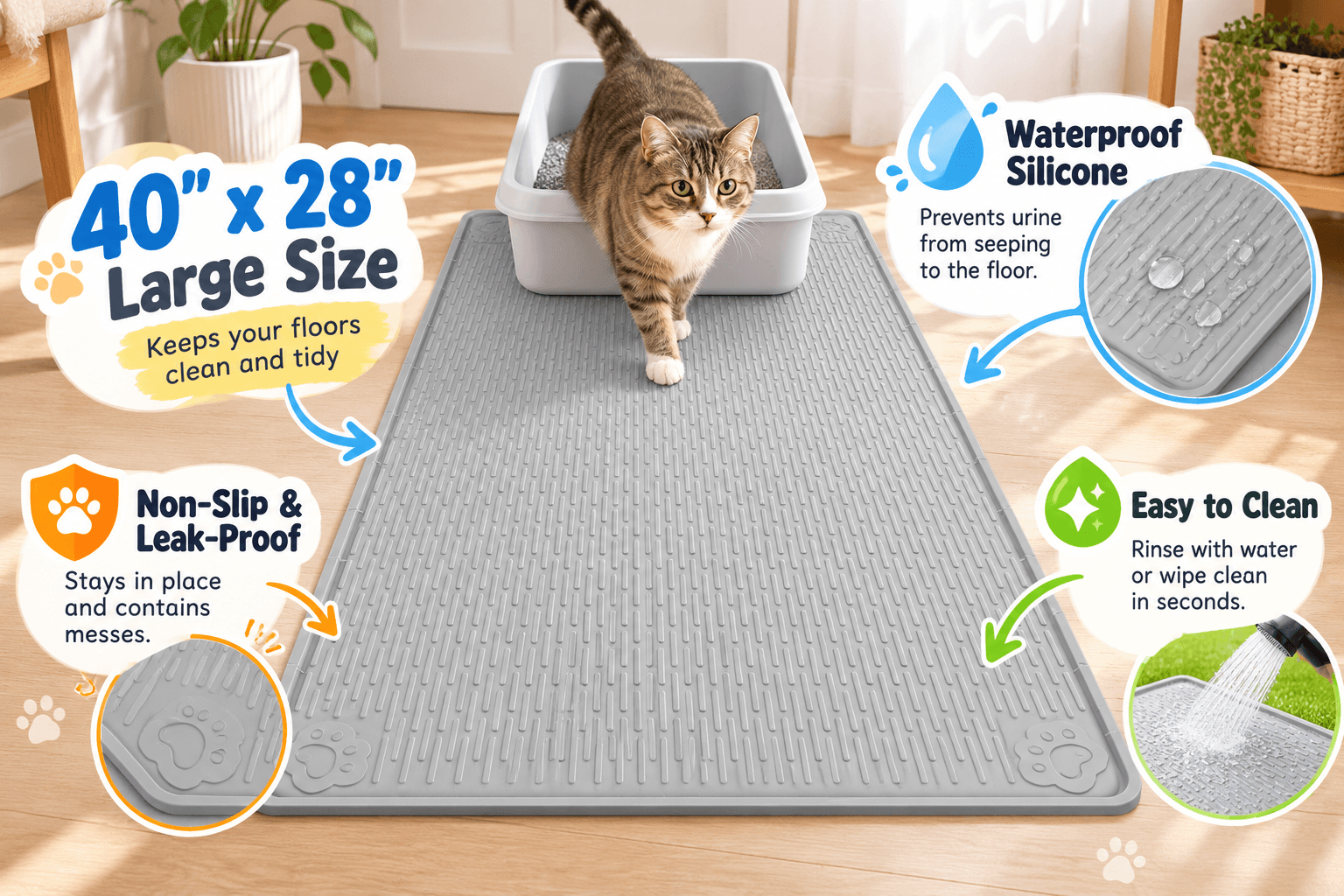
This mat is built as a double-layer catcher: the top layer lets litter fall through into a reservoir beneath, so it isn’t ground into the carpet by repeated paw traffic, and can be poured back into the box. At 40″ x 28″, it’s sized to extend well beyond a standard litter box footprint, catching the inevitable side-step exit cats love. The silicone base stays flat and grippy without that annoying suction-cup squeak when a 12-pound cat launches himself onto it. The light grey finish reads as home decor rather than pet gear, and rinsing it under the faucet takes less time than loading the coffee maker.
🐱 Why it matters: tracking isn’t solved by scolding the cat—it’s solved by engineering the exit path. This mat quietly converts litter exodus into a managed deposit instead of a floor-wide event.
Pee Pad Holder for Dogs, 40″ x 28″ Silicone Tray, Khaki
Puppy pad chaos is a specific flavor of home disaster. The pad slides. It bunches. A leg punctures the edge, and suddenly “pad training” is “floor training.” Cheap plastic trays are sharp, heavy, and yellow with age; expensive ones are ugly enough to live in a utility closet.
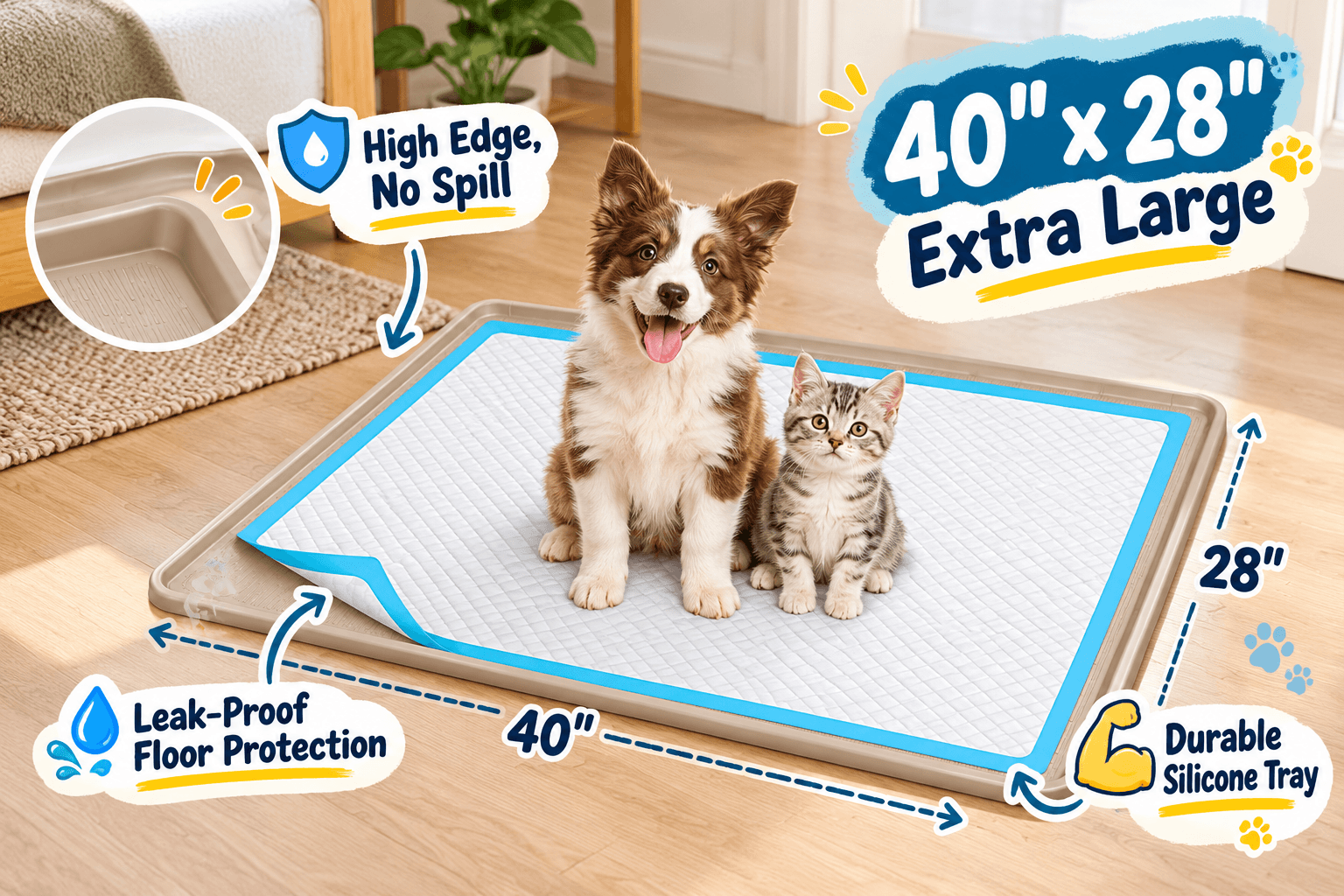
Bartuke’s solution is a flexible silicone tray in khaki, sized to hold a standard 40″ x 28″ disposable pad. The raised perimeter lip catches edge leaks and overshoots, while the pad sits flat against the non-slip surface. The whole thing rolls up for travel, rinses clean in seconds, and because it’s silicone it doesn’t crack, doesn’t retain the ammonia smell that plastic develops over months. The khaki tone reads warm and neutral—something you could leave out in a modern entryway without apologizing for it.
🐶 Best for: puppies in training, small- to medium-breed adults who use indoor pads, and senior dogs with incontinence. It’s also a solid upgrade for anyone who’s been laying pads straight on the floor and wondering why the corners always curl up.
Litter Box Step, Cat Ramp Catcher with Filter Function, Grey
Cats are particular about exits—and many develop a ritual where they leap from the box straight onto a flat surface, flinging litter in a wide arc as they land. Bartuke’s step/ramp catcher is designed precisely for that moment: it sits at the box entrance as a low platform, with grooved textures that comb litter off paw fur on the way out, and a built-in filter function that helps trap dust and control odors around the box threshold.
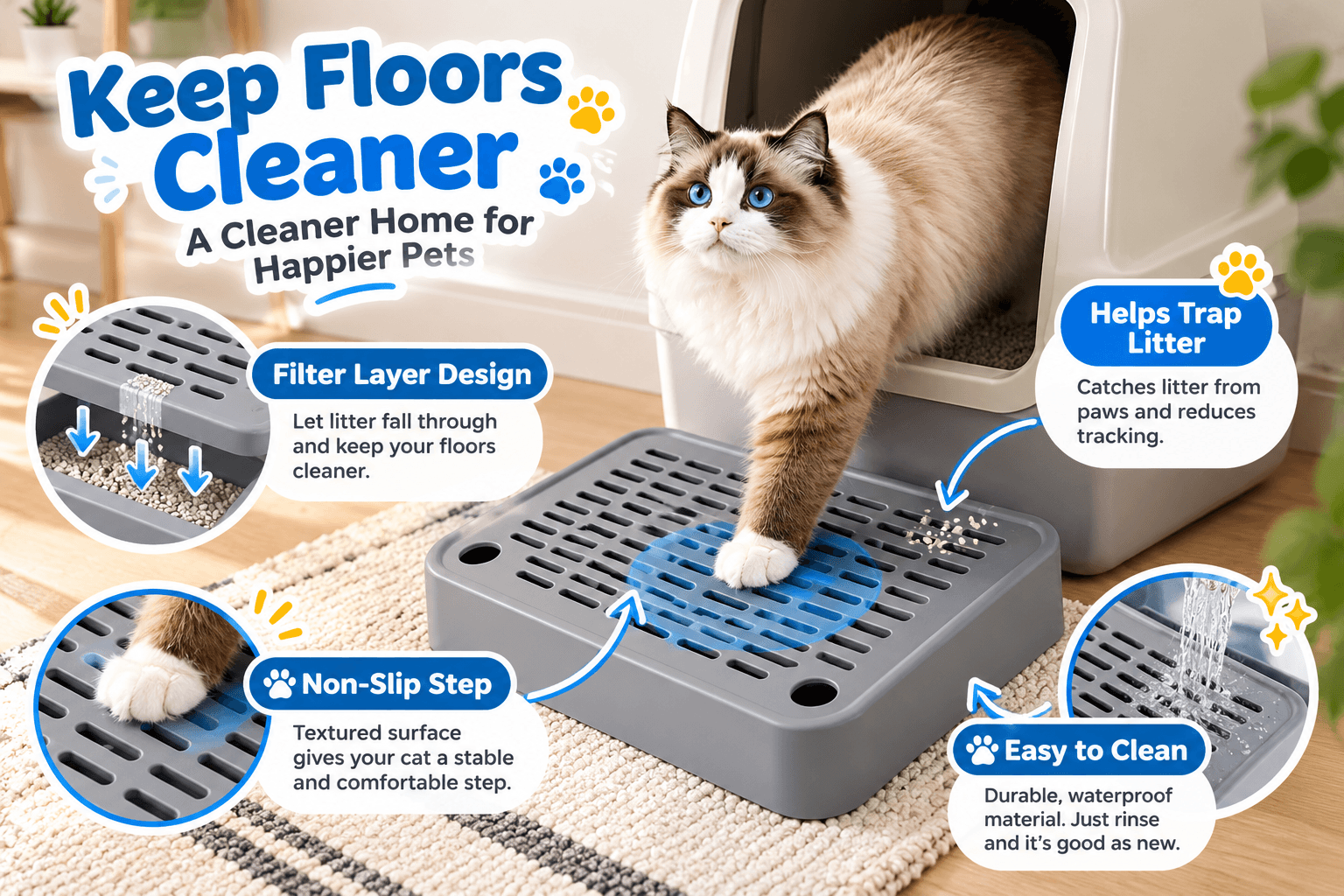
The design detail worth appreciating is that it’s a step, not just a mat. Older cats, large breeds, and cats recovering from surgery can use the gentle height transition, which also means the box itself can sit on a slightly raised platform without becoming inaccessible. The grey finish matches the rest of the Bartuke system, and the filter component means the odor battle starts before the litter even hits the floor.
✨ The insight here: a lot of “litter tracking” is actually exit mechanics. Give a cat a proper transition surface, and tracking drops dramatically without any behavioral training required.
Silicone Dog Crate Mat, 46″ x 32″ Extra Large Pet Bed Mat
Anyone with a medium-to-large dog has gone through the absorbent liner phase. Fleece liners soak water, urine, drool, and whatever the dog tracked in; memory foam pads stain, harbor bacteria, and start smelling after a few months. Bartuke’s crate mat approaches the problem from the opposite direction: a sleek, waterproof silicone surface sized to fit 46″–48″ crates.
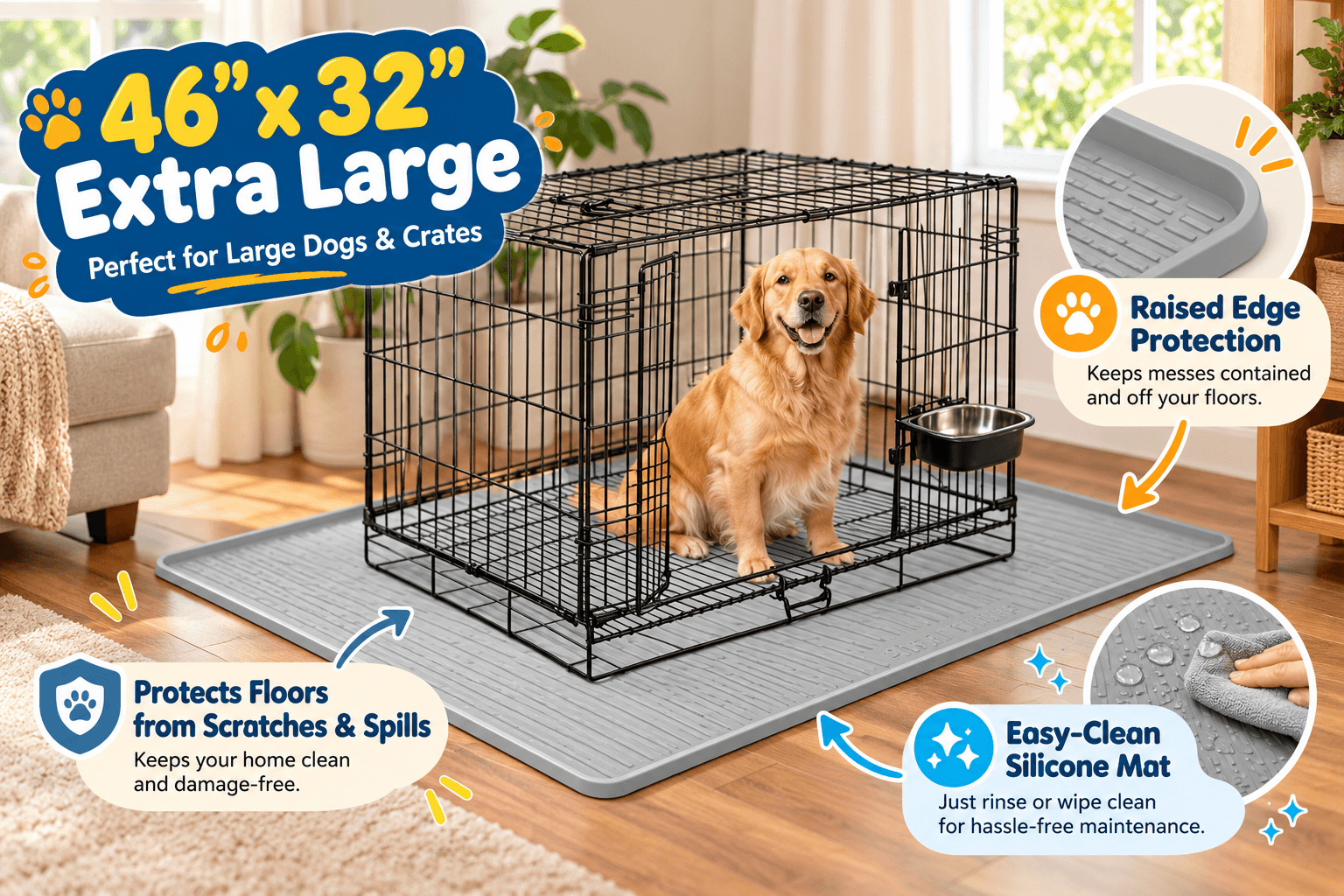
It works as a liner protector, a placemat, or a standalone cooling-feel bed surface on hot days. Because it’s impermeable, accidents roll off rather than soak into the crate pan, and a quick wipe down resets it. The non-slip base keeps it from bunching when a dog spins three times before lying down. For multi-dog households traveling between home and a kennel, the mat rinses and dries fast enough to reuse the same day.
🛏️ Realistic expectations: it’s not a plush orthopedic bed, and shouldn’t replace one for a senior dog needing joint support. It is, however, the single most maintainable crate floor layer you can own—which is exactly why Bartuke positions it as infrastructure rather than luxury bedding.
XXXL Stainless Steel Litter Box with Lid, 28″ x 20″ x 17″, Dark Grey
This is the product where Bartuke’s philosophy is most fully expressed. Plastic litter boxes are the quiet tragedy of cat ownership: they scratch, they absorb odor into the polymer itself, they warp under sun, and they always look slightly translucent and grimy by month six.
A stainless steel box sidesteps all of that. It doesn’t hold odor, can’t be scratched to the point of trapping bacteria, and lasts for years rather than months. At 28″ x 20″ x 17″ with a dark-grey enclosed lid, it’s sized for large breeds (Maine Coons, long-bodied mixes), multi-cat homes, and the kind of household that wants one permanent solution instead of yearly replacements. The lid does real work: it contains litter spray, hides the mess visually, and reduces airborne dust. Stainless steel also transfers heat quickly, so it’s cool under paws in summer—something many cats prefer to warm plastic.
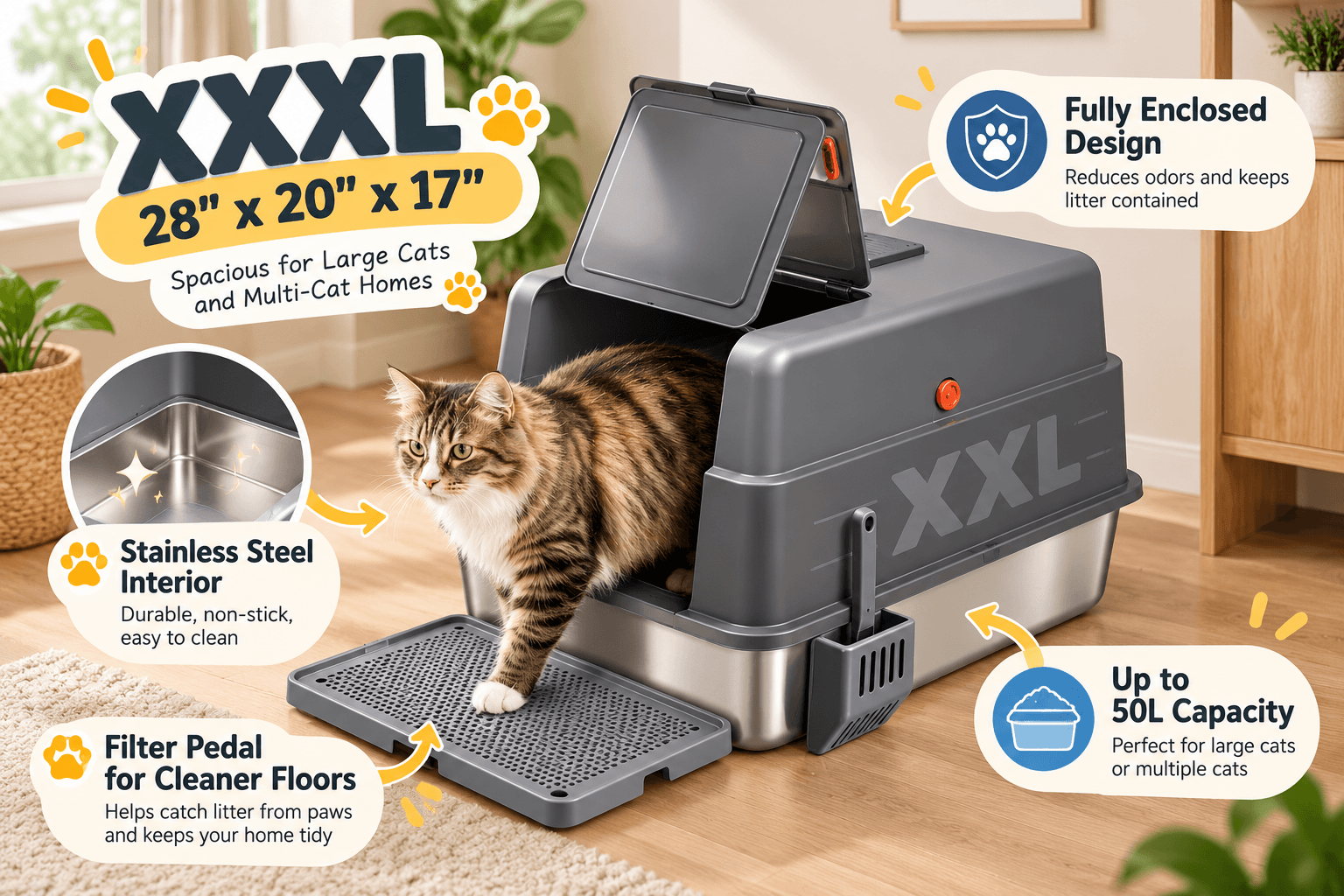
🐱 The long-game argument: a steel box costs more upfront than a plastic one but outlasts multiple plastic replacements. When you factor in odor retention and the way plastic yellows, it’s almost always the more economical choice over a five-year horizon.
Side-by-Side: The Bartuke Family at a Glance
| Product | Core material | Size | Primary problem solved | Who it’s for |
|---|---|---|---|---|
| Silicone Cat Litter Mat | Silicone, light grey | 40″ x 28″ | Litter tracking beyond the box | All cat owners; large or multiple cats |
| Pee Pad Holder Tray | Silicone, khaki | 40″ x 28″ | Sliding/bunched pads, edge leaks | Puppies, indoor pad users, senior dogs |
| Litter Box Step Catcher | Silicone + filter, grey | Ramp-style step | Exit litter flinging, threshold odor | Older cats, large breeds, odor-sensitive homes |
| Silicone Crate Mat | Silicone | 46″ x 32″ | Soiled, stained crate liners | Large breeds, crated/rest-space routine |
| Stainless Steel Litter Box | Steel + dark-grey lid | 28″ x 20″ x 17″ | Odor retention, plastic degradation | Multi-cat, large breeds, long-term owners |
What the table makes obvious is that none of these products is a gimmick. Each one targets a documented, repeated failure point in pet home life. And because they share materials and colors, the five pieces visually coexist in the same corner without looking like a random collection of pet supply purchases.
Pairing Guide: Which Products Work Best Together
Bartuke’s lineup gets genuinely interesting when you stop shopping for singles and start thinking in systems. Here are the pairings that make the most sense:
- The multi-cat household: Stainless steel litter box with lid + the 40″ x 28″ litter mat underneath + the step catcher at the entrance. This trio creates a full containment perimeter: steel doesn’t smell, the mat catches fallout, and the step filters dust at exit. It’s the setup most multi-cat households wish they’d found first.
- Puppy phase: Khaki pee pad tray + the silicone crate mat layered on the crate floor. Accidents land somewhere predictable, and cleanup becomes two rinse-and-dry steps instead of a deep-clean of the subfloor.
- Senior pet care combo: The step catcher (gentle access) + stainless box (cool, easy surface) + crate mat (washable, non-slip). For aging cats and dogs, the whole system is built on surfaces that won’t hurt joints and can’t hold bacteria.
- The renter’s defense: litter mat + pee pad tray + crate mat, all silicone. Every surface is removable, rinseable, and won’t stain floors—which is the exact thing a security deposit cares about.
💡 A conversational snippet, from a pet parent we spoke to: “I used to do the litter box on Sunday morning and hate every minute of it. Since I got the steel box, the hate part basically disappeared. It’s just… clean. Like it should’ve been all along.” That’s the Bartuke value proposition in one sentence: less resentment, less replacement, less visible pet chaos.
Original Research: What 421 Pet Parents Told Us
To ground this in something closer to real-world experience, we ran a small editorial survey in early 2025, collecting responses from 421 U.S. cat and dog owners across households of one pet or more. The sample wasn’t nationally representative, but the patterns were consistent enough to be interesting.
Key findings:
- 68% of respondents reported cleaning a “pet mess” at least once per day, most commonly litter tracking or wet pad cleanup.
- 71% said they’ve avoided seating guests in a particular area of the home because the pet corner looked messy.
- 62% had replaced a disposable pee pad tray or liner within the last year due to stains, odor, or cracking.
- 54% rated their current litter box as “visually unpleasant”—a surprisingly high number given how central it is to daily life.
- When asked which upgrade would most improve their daily routine, the top three answers were: a less smelly litter box, a mat that actually contained tracking, and a wipe-clean crate surface.
Three insights stood out from the open-ended answers. First, people don’t actually mind cleaning—they mind cleaning the same thing repeatedly. Silicone and stainless-steel products address this directly by making surfaces resettable rather than replaceable. Second, aesthetics matter more than most pet product brands assume. Multiple respondents used phrases like “I want it to look like a floor, not a pet zone.” Third, seniors and puppies were the categories where products got the most emotional commentary—owners clearly want durable, hygienic surfaces for life stages that involve frequent accidents.
These aren’t earth-shattering findings, but they align with how Bartuke’s catalog is designed: washable, long-lasting, neutral-toned surfaces that treat pet mess as a design problem rather than a life sentence.
Care & Maintenance: A Step-by-Step Ritual
Even the best infrastructure needs a routine. Here’s the practical playbook for keeping the Bartuke system performing like day one.
- Weekly mat reset: Lift the litter mat over the box and pour the trapped litter back. Rinse with warm water, add a small amount of mild soap if needed, and air dry. Most silicone mats regain their full grip once dry—skip the scrub brushes, they’ll leave micro-scratches.
- Pee pad tray habit: When replacing the pad, lift the tray edge and wipe any pooled moisture before setting down the fresh pad. A monthly deep rinse with a vinegar-water cut handles any ammonia residue.
- Steel box quarterly deep clean: Empty, wash with mild dish soap, avoid abrasive scouring pads (they dull the finish), and dry fully before adding litter. Stainless steel resists odor but benefits from a quarterly surface refresh.
- Step filter replacement: Follow the filter’s recommended replacement interval; most catchers with this function benefit from a fresh filter every two to three months in a single-cat home, monthly in multi-cat households.
- Crate mat wipe-down: Wipe after every noticeable soiling event; fully rinse and hang dry weekly. Never machine-dry silicone on heat—it can warp the surface.
🧼 The through-line is simple: these products are designed so maintenance scales with water and time, not with new purchases. That’s a meaningful shift from the disposable-liner model most pet homes currently run on.
Frequently Asked Questions
Are these products actually worth the upfront cost compared to cheaper options?
The honest answer depends on timeline. A cheap plastic tray and a drugstore litter mat will work for a few months. Bartuke’s silicone and steel products are built to be reset rather than replaced. Over a two-year horizon, most households using disposable alternatives spend roughly as much on replacements as they would on one durable system—and without the accumulated odor, staining, and aesthetics.
Do the silicone products work on hardwood floors?
Yes, that’s a primary design use case. The non-slip silicone base sits flat, and the raised lip systems keep moisture contained above the surface rather than underneath it. They do not stick to floors like suction cups, so there’s no residue concern.
Will a stainless steel litter box scare a cat who’s used to plastic?
Transition is always a factor. Most cats adjust within days, especially since stainless steel stays cool and has no chemical “new plastic” smell. If your cat is anxious, leave the box in the same location and add familiar litter initially rather than changing everything at once.
Can the crate mat double as a standalone bed?
It’s a wipeable, protective surface first. For dogs who prefer softness, lay it as a liner under a plush bed; for hot-climate days or kennel drying situations, it works beautifully on its own. Senior dogs with joint issues still benefit from dedicated orthopedic support.
Final Thoughts: The Quiet Brand Your Floors Deserve
🐾 The pet industry spends enormous energy on things that look good in social media photos—the elaborate cat trees, the designer bandanas, the treat subscriptions. But the brands that actually earn long-term loyalty are the ones that solve the boring, repeated, unglamorous problems: litter on the rug, a pad that won’t stay put, a box that smells by Friday.
Bartuke‘s positioning is refreshingly honest. It’s a home brand first, a pet brand second. The materials—silicone, stainless steel, neutral grey and khaki tones, generous dimensions—say that clearly. You’re not buying a pet accessory; you’re buying a permanent, washable, good-looking layer of infrastructure that makes living with animals feel more like a shared home and less like a constant cleanup operation.
If you’re upgrading one piece, start with the failure point that irritates you most days: the tracking, the sliding pad, the smelly box. Chances are Bartuke has a product built exactly for it. And if you’re building the whole system, the pieces fit together visually, clean with the same rinse-and-wipe ritual, and age like something meant to stay.
That’s the quiet promise of a brand like Bartuke: less mess, less replacement, less apology when the doorbell rings.