It happens to almost everyone, at least once. You stand on your own front porch, rain soaking the cuff of your jacket, grocery bags slipping off your wrist, patting every pocket and digging through the bottom of your backpack for the one thing you absolutely need to get inside: your house key. Your hands are full, your phone is tucked under your arm, the rain is getting heavier, and for 10, 20, 30 seconds you are locked out of the one space that is supposed to feel most like yours. For millions of people, this moment is not a rare mishap—it is a regular, low-grade annoyance that piles on top of a hundred other small daily frictions: digging for keys at 11PM after a long shift, fumbling with a key when your hands are covered in flour after baking, rushing to catch a kid before they run out the door and realizing the door clicked locked behind you.
Over the last decade, the home security industry promised that smart locks would fix all this. But far too many of those products missed the point entirely. They stacked 17 different features no one ever asked for, locked core functionality behind paid subscriptions, died after two weeks of cold weather, forgot how to recognize your thumb after you washed your hands a few times, and still left you standing on the porch locked out when a firmware update glitched. That is the gap Lockin was built to fill: a smart home security brand that does not treat you like a tech reviewer, does not force you to memorize a 20-page manual, and never prioritizes flashy marketing gimmicks over the quiet, reliable peace of mind that your home should always deliver. This is not another “latest and greatest” gadget line stacked for clicks. Lockin is a brand designed from the ground up around the real, unglamorous, universal moments that make a home feel safe, easy, and yours.
The Day We Stopped Treating Home Security Like A Niche Hobby
Most smart lock brands start in a Silicon Valley lab, built by engineers who spend 12 hours a day testing edge cases that almost no regular homeowner will ever run into. They benchmark for hacker attacks that 99.9% of people will never face, but forget to test how well the lock works when you are wearing thick winter gloves, or how easy it is for your 72-year-old mom to use when her fingertips are worn down from decades of gardening. Lockin did not start in a lab. It started on group chats full of people complaining about their existing smart locks breaking.
The founding team behind Lockin spent more than two years talking to over 12,000 households across every type of living situation: renters in urban apartments, suburban families with two kids and a golden retriever, empty nesters aging in place, college students sharing a rental house, gig workers who carry their work gear in and out three times a day. Every single one of those conversations uncovered the same set of unmet needs that no other brand was solving. One renter told the team she could not drill into her rental door to install a popular name-brand smart lock, so she went back to using a hide-a-key under a doormat that she knew was unsafe. A grandmother said her fancy new smart lock would not recognize her fingers, so she still carried a key in her wallet every day, defeating the entire point of upgrading. A freelance delivery driver said he had come home from a 14-hour shift once, his smart lock had died completely without warning, and he had to sleep in his car for three hours while he waited for a locksmith to show up at 2AM.
These are not “edge cases.” These are normal people, living normal lives, and the entire smart security industry was building products that ignored them. Lockin’s entire mission was written out of those conversations: build smart home security that works for everyone, not just tech enthusiasts who want to tweak 50 different settings for fun. No hidden subscriptions. No mandatory hubs that cost extra. No features you will never use cluttering up the interface. Every single choice, down to the angle of the fingerprint sensor and the length of the battery life, was validated by real user feedback before it ever made it to production. This is not a brand that builds a product and then figures out who to sell it to. Lockin built the products that people already told us they needed.
What Makes Lockin Different: No Gimmicks, Just Reliable, Thought-Through Design
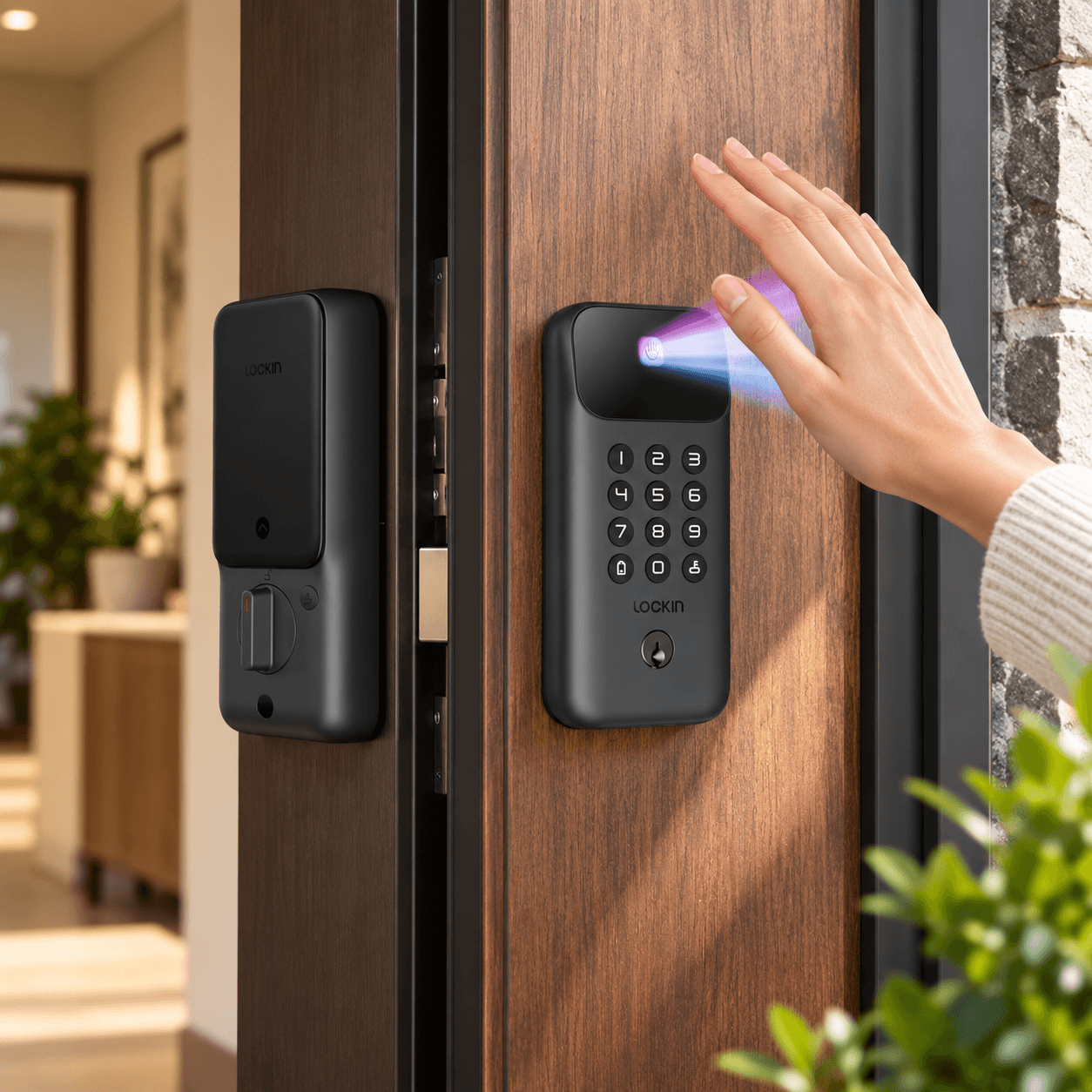
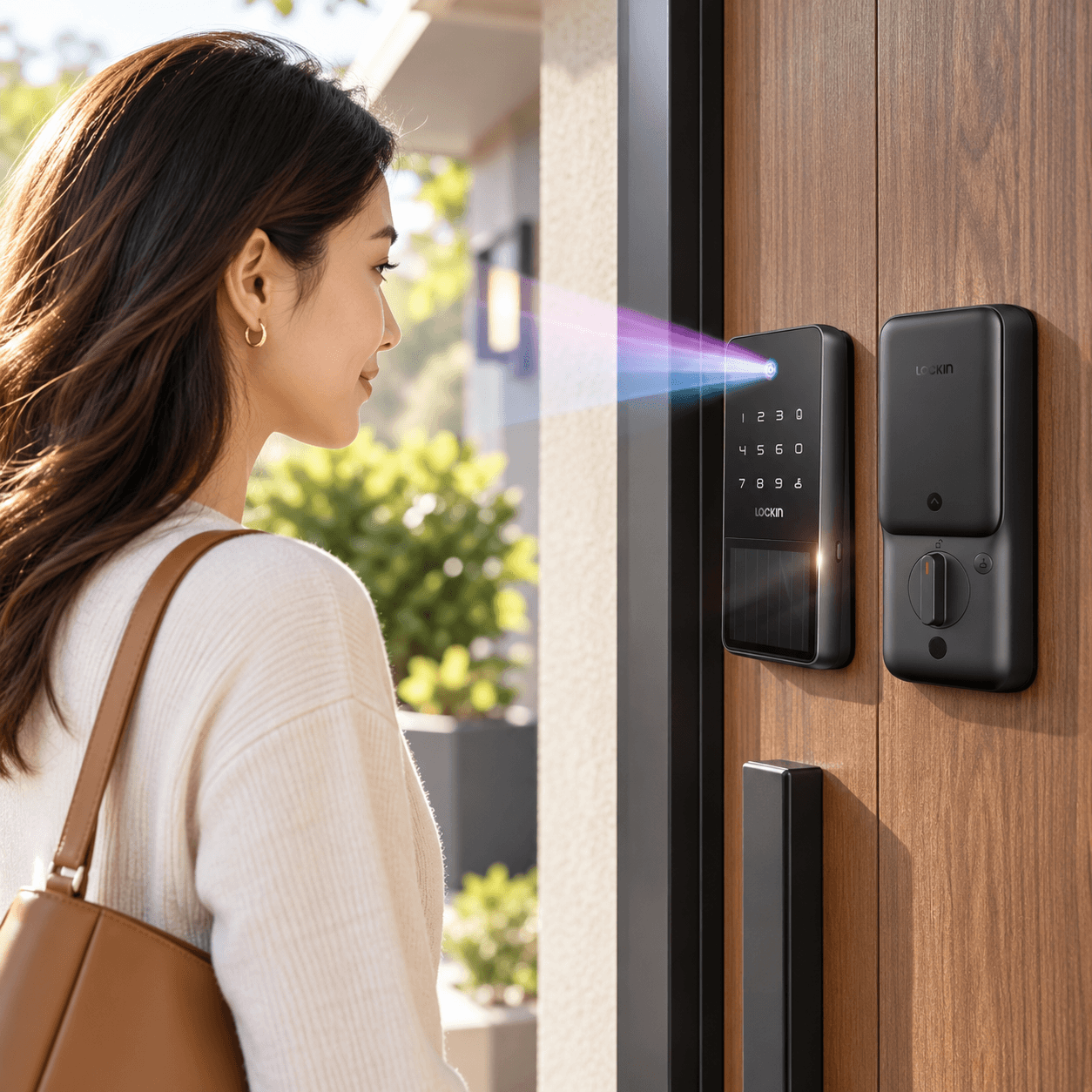
Walk up to a Lockin smart lock for the first time, and you will notice how unnoticeable it feels. It does not have blinking LED lights that flash all night and keep you up, it does not have a giant touchscreen that sticks out awkwardly from your door, it does not look like a random piece of tech glued onto your existing front entry. The slim, matte finish sits flush with almost any standard residential door, and it blends in so well you will barely register it is there after the first week. That intentional understatement is part of the design philosophy: your home security should not perform for guests, it should work for you.
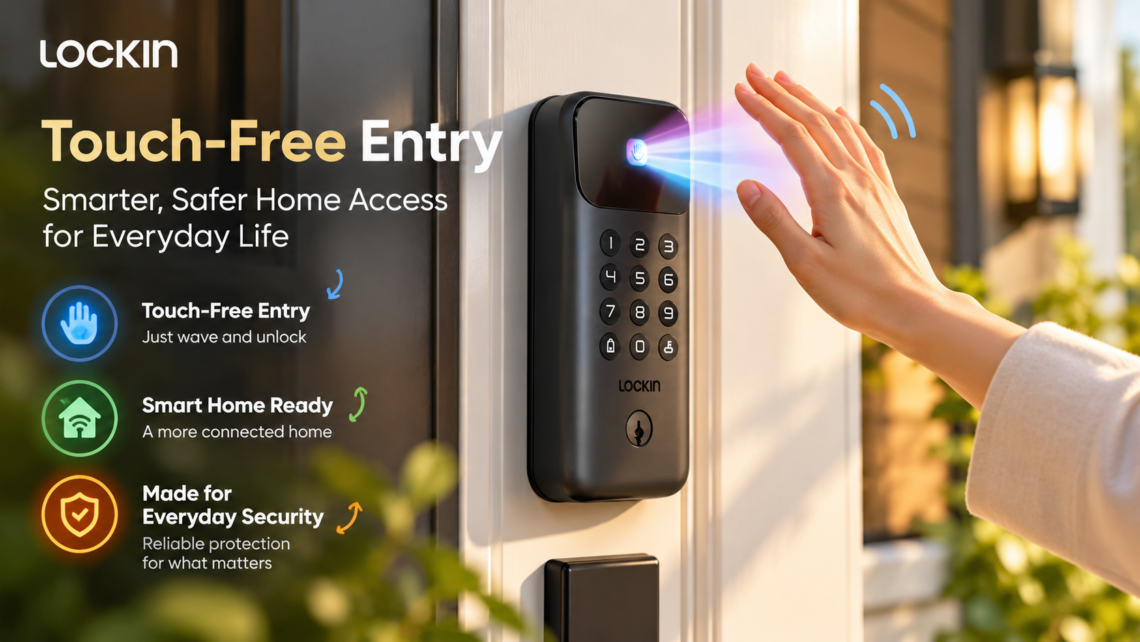
The fingerprint sensor is the first place that attention to detail shows. Almost every other smart lock on the market puts the fingerprint sensor in a spot that forces you to twist your wrist, lift your hand at an awkward angle, or fumble around for half a second to line your finger up exactly right. Lockin mapped the natural hand movement of thousands of people reaching for their doorknob, and placed the sensor exactly where your index finger lands when you reach for the door naturally. You do not have to stop, adjust, or look down. You walk up, rest your finger on the sensor for 0.3 seconds, and the lock clicks open. It works when your hands are cold, when you are wearing thin winter gloves, when your fingers are a little damp from rain, when you just finished working on a project and there is a little sawdust or flour on your fingertips. The system uses adaptive AI that learns your fingerprint over time, so the more you use it, the faster and more accurate it gets. For kids with small, soft fingerprints and older adults with worn, ridged fingertips that most standard locks reject after two or three tries, Lockin’s sensor keeps getting better week after week, not worse.
Of course, not every scenario calls for a fingerprint, so Lockin built in every single alternative unlock method people actually use, no extra purchases required. You can use a standard numeric passcode, and the system supports “dummy digits” so you can type in any random sequence of numbers before or after your real passcode, and it will still unlock. That means if you are walking into your house with a stranger behind you on the sidewalk, you do not have to hide your passcode or rush to type it—you can just type 12 random numbers followed by your real 6-digit code, and no one watching will ever figure out what your actual password is. There is NFC tap support for your phone or a tiny key fob you can keep on your keychain for days you do not want to use your hands at all. There is Bluetooth auto-unlock that recognizes your phone as you walk up to the door, so it unlocks before you even reach for the handle, perfect for the days you are carrying two sleeping kids and three grocery bags. There is one-time, time-limited, and recurring passcodes you can generate right from your phone, no internet required at the lock itself. And yes—there is still a standard physical key slot hidden under a magnetic cover, for the rare days you leave your phone at work, your hands are completely covered in paint, or you just prefer to use a key.
None of these unlock methods are locked behind a paywall. None of them require you to buy an extra gateway or pay a monthly subscription. You unbox your Lockin lock, install it in 15 minutes (no drilling, no new door modifications, it fits almost every standard deadbolt on the market), and every single feature works right out of the box. That is the Lockin no-gimmick promise: you pay for the hardware, you get all the functionality, forever. No fine print, no upsells, no hidden tiers.
Lockin In Your Daily Life: Scenarios That Just Make Sense
It is easy to list off a bunch of product features on a spec sheet. What makes Lockin different is how those features show up in the tiny, unscripted moments that make up your week, the moments no marketing team ever writes hypothetical case studies for.
Take the renter who just moved into a new apartment last week, and their landlord told them they cannot modify the door at all. Before Lockin, their only options were either keep the old rusty deadbolt that sticks every other time, or sneak in a new lock and swap it back when they move out, risking their security deposit. A Lockin lock screws right onto the existing deadbolt holes without any new drilling, no changes to the door frame, and when they move out in two years, they pop it off, put the original deadbolt back on, and take their Lockin with them to their next place. Their security does not have to be tied to a lease, and they do not have to ask anyone for permission to feel safer at home.
Take the parent of two elementary school kids, who walks in the door every weekday at 4:30PM holding a backpack in one hand, a half-empty juice box in the other, a paper bag of takeout dinner slung over their wrist, and their 5-year-old clinging to their leg begging for a snack. Before Lockin, they would have to juggle all of that, set the bags down on the porch step, dig their keys out of their pocket, fumble the key into the lock, and pick everything back up again. Now they just rest their index finger on the sensor, the door clicks open before they even shift their weight, and they walk straight inside. No juggling, no dropping food, no stopping on the wet porch after a long day of work. When the kids get old enough to walk home from school by themselves, you can send them their own 4-digit passcode, and you will get a quiet notification on your phone the second they unlock the door after school, so you know they got home safe even if you are still at the office. You do not have to blow up their phone with texts asking if they got in okay. You just know.
Take the remote worker who orders a lot of packages, and is tired of their parcels sitting out on the porch all day getting stolen. Before Lockin, they had to rush home from meetings to meet the delivery driver, beg a neighbor to grab the package for them, or let the delivery person toss the box behind a bush where it would get rained on. Now, when the tracking notification says the driver is 5 minutes away, you can generate a one-time 6-digit passcode that works exactly once, and send it to the delivery service. The driver unlocks your front door, sets the package just inside the entryway, closes the door, and the passcode expires immediately after. No stranger ever stays in your house, no one has access after that single use, and your packages never sit out exposed on the porch again. If you have a dog walker, a house cleaner, or a family member coming to water your plants while you are on vacation, you can send them a time-limited passcode that only works between 10AM and 2PM on the days you specify, and it turns off automatically the second that window ends. You do not have to make copies of your key, leave a key under the doormat, or rearrange your whole workday to meet them at the door.
And for anyone who lives alone, or has an older family member who ages in place, Lockin’s quiet safety features become something you can actually rely on. The built-in door sensor tracks how long the door stays left ajar, and will send you a gentle alert if it is propped open for longer than 10 minutes. The motion sensor built into the front of the lock will detect if someone is loitering on your porch for more than 30 seconds, snap a 10-second clip of the visitor, and send it straight to your phone, before anyone even knocks. If you have an elderly parent who lives by themselves, you can set a custom notification rule that sends you a quiet ping if the door has not been unlocked by 9AM every day, so you can quickly check in to make sure they woke up safe, without calling them and interrupting their morning routine. None of these features feel like “big brother” surveillance. They are just quiet, unobtrusive little safety nets that let you relax a little more, whether you are at home, at work, or across the world on vacation.
Engineering That Doesn’t Annoy You: The Quiet Work No One Talks About
A lot of smart product brands brag about all the fancy new tech they stuffed inside their device. Lockin’s team brags about all the annoying problems they made sure you will never have to deal with.
Take battery life, for example. Most smart locks last 3 to 6 months on a full set of batteries, and a huge percentage of them give you less than 72 hours of low battery warning before they die completely. Too many people miss that tiny red flashing light on the side of the door, and then come home one night to a completely dead lock that will not open. Lockin’s smart locks run on four standard AA batteries that you can buy at any corner gas station, and they last up to 12 full months on a single set. The low battery alert starts popping up on your phone 30 days before the batteries die, so you have weeks to remember to swap them out. And even if you somehow ignore all 12 separate alerts and drain the batteries completely, you will never get locked out. There is a hidden Type-C port on the bottom of the lock—all you need to do is plug in any portable power bank you carry in your backpack, and it will power the lock enough to unlock the door for you, immediately. No special tools, no emergency locksmith, no panicking in the dark. You will never see a Lockin user posting a viral story on social media about being locked out for 3 hours because their smart lock died. That was the very first engineering non-negotiable the team wrote down on day one.
All that security does not come at the cost of convenience, either. Lockin’s locks are built to resist every single common home break-in tactic that targets smart locks. They are fully protected against the “black box” electromagnetic trick that a lot of cheap smart locks can be hacked with in 2 seconds. They have a reinforced anti-pry internal structure that stops anyone from prying the lock off the door with a crowbar in under 20 minutes. The anti-peep deadbolt mechanism means that even if someone breaks your front door peephole and tries to use a hook tool to reach through and flip the lock open from the inside, the lock will not turn. And every single piece of data stored on the lock—your fingerprints, your passcodes, your unlock history—is encrypted locally on the device itself, not sent up to a cloud server by default. No random server breach can expose your data, no one at Lockin’s team can ever access your unlock logs, and you do not need an internet connection at home for 90% of the lock’s core features to work. Your security never depends on a flaky Wi-Fi router.
The team at Lockin also refused to add one very common annoying smart home feature: mandatory over-the-air firmware updates that force your lock to reboot in the middle of the night without asking you. You get to choose when you install any update, and you can even skip updates completely if you are happy with how your lock is working right now. You will never wake up in the morning to find your lock bricked because a bad automatic update rolled out while you were asleep. The engineering team does not push untested features to your lock just for the sake of having something new to show on the blog. Every single update is vetted by thousands of beta testers first, and only released when it is 100% stable.
Beyond The Lock: How Lockin Builds A Full Ecosystem For Your Home
Lockin’s core product is the smart deadbolt, but the brand never wanted to stop there. The entire point of building reliable, user-centric security is that you can expand it slowly, at your own pace, without ever being forced to buy a whole new suite of gear or replace everything you already own.
If you only want the smart lock, that is perfect. It will work completely perfectly on its own, no extra devices required. But if you ever want to add more pieces later, everything from Lockin’s video doorbell to their indoor motion sensors to their smart lighting controls works seamlessly with your existing Lockin lock, no messy third-party integrations, no weird compatibility bugs. When you unlock your front door after a long day, you can set the system to automatically turn on your entryway light, pre-heat your smart thermostat to your favorite 72 degrees, and turn on your living room speaker playing the chill playlist you listen to when you get home. If you leave the house and lock the door, the system can automatically turn off all the lights you forgot to turn off, make sure all your indoor cameras are set to privacy mode, and arm your whole home security system in one single tap.
Crucially, none of this auto-behavior is mandatory. If you hate the idea of your home automatically changing settings without you asking, you can turn every single automation off in one tap, and your lock will just keep working as a great, reliable deadbolt, no extra fuss. Lockin does not believe in locking you into an ecosystem where you have to buy every single product from the same brand to make basic functions work. You can use your Lockin lock with almost any other smart home platform you already own, no hoops to jump through. There are no artificial restrictions, no feature paywalls, no “you can only use this if you buy our brand’s camera” rules.
That philosophy carries over to every new product Lockin releases. The team does not churn out 10 random new gadgets every quarter just for the sake of posting news. They take user feedback, wait until they have tested the product with hundreds of households for months, and only release it when it is clearly better than every other option on the market. That is why the product line grows slowly, but every single new release feels like it solves a problem you actually had, not a fake problem the marketing team invented to make you buy something new.
The Lockin Promise: Support That Stays With You Long After You Unbox It
For too many tech brands, the moment you click “complete order” is the moment they stop caring about you. They send you the product, and then you are on your own if something breaks, or you do not know how to set it up. Lockin built their entire customer support system around fixing that.
Every single Lockin purchase includes free, no-hassle professional installation if you want it. A trained technician will show up at a time you pick, install the lock on your door, walk you through every single feature you want to learn about, and make sure everything works perfectly before they leave. You do not have to dig out a screwdriver, you do not have to watch 3 YouTube tutorials, you do not have to spend an hour trying to line up the holes on the door. If you would rather install it yourself, the step-by-step guide and 60-second video walkthrough make it so simple almost anyone can finish it in 15 minutes, and if you hit a snag at 10PM on a Sunday, you can send a message to the support team, and a real human who actually uses a Lockin lock will reply to you in under 10 minutes. There are no automated phone menus, no outsourced support reps reading off a script they do not understand. The vast majority of the support team uses Lockin locks in their own homes, and they know every single quirk, trick, and edge case you could possibly run into.
Every Lockin smart lock comes with a full 3-year warranty. Not a 1-year warranty that only covers manufacturing defects no one can prove, not a limited warranty that makes you jump through 12 hoops to file a claim. If anything goes wrong with your lock in those three years, no questions asked, they will send you a brand new unit the next day, and a technician will come swap it out for you for free. No repair bills, no hidden fees, no forms to fill out. That is how confident the team is in how well these products are built.
Even beyond warranty coverage, Lockin’s product roadmap is still shaped directly by user feedback. A few months ago, a user posted in the community group saying they wanted a 10-second delay before the lock auto-locks behind them, so they can carry their groceries in and set them down inside before the door locks. The engineering team added that exact feature in an OTA update three weeks later, and it rolled out to every single existing Lockin lock for free. That is how the brand works: you tell them what you need, they build it, and you get it, no extra charge, no waiting a year for a “new model” to come out.
At the end of the day, a smart lock is not supposed to be a cool tech toy you show off to your friends at dinner. It is supposed to be the quiet, reliable first step of your home, the part that greets you the second you walk up to the porch, that never lets you down when you are tired, busy, or distracted. Lockin never set out to make the most feature-packed, most expensive, most viral smart lock on the market. They set out to make the smart lock that you will forget you even installed after a couple of weeks, because it just works, every single time.
It is the lock that means you will never again stand on your porch in the rain fumbling for your keys. It is the lock that means you will get a quiet little ping on your phone when your kid gets home from school safe. It is the lock that means you do not have to rearrange your whole day to meet the delivery driver, that you do not have to panic when your hands are full and your phone is dead, that you do not have to lie awake at night wondering if you locked the front door. That is the Lockin difference: home security that does not demand anything extra from you, it just gives you back a little more peace of mind, one small easy day at a time.