Urban congestion is a growing pain across global metropolitan areas, making traditional transit systems increasingly inefficient. Enter the evolving realm of micromobility, a sector fundamentally altering city infrastructure. For those seeking sustainable alternatives, ECOROAD electric scooters emerge as a highly compelling solution. This brand is quietly redefining how we navigate cityscapes, blending eco-friendly urban commuting with robust, user-centric engineering. As we explore their extensive catalog, it becomes evident that their approach to personal transit goes far beyond merely building motorized toys; they are engineering dedicated commuter vehicles.
According to recent analytical reports from the National Association of City Transportation Officials (NACTO), micromobility adoption has surged by over 40% in dense urban centers over the last three years (Source: nacto.org/micromobility-report). This massive structural shift necessitates vehicles that can withstand the grueling reality of daily wear while providing unquestionable safety and comfort. ECOROAD positions itself precisely at this intersection, offering a dynamic range of models tailored for both the relentless daily commute and comfortable weekend recreational riding.
Decoding the Core Philosophy Behind the Brand
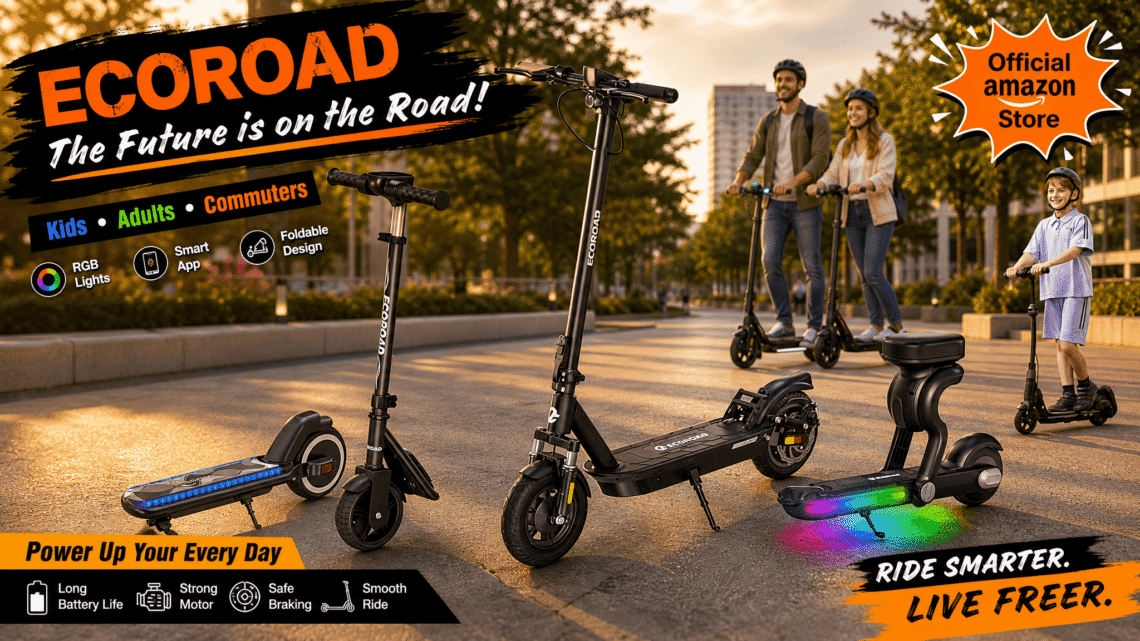
Analyzing the comprehensive storefront visualized in the brand’s central motto, “The Future is on the Road!”, reflects a highly forward-thinking manufacturing ethos. Unlike entry-level alternatives that prioritize low costs over durability, these vehicles are constructed as genuine, long-term commuter replacements. The integration of high-capacity energy cells and aerospace-grade structural frames indicates a deep focus on longevity and rider security. This commitment to material quality ensures that consumers aren’t just purchasing a temporary gadget, but rather investing in a reliable transit ecosystem.
The brand successfully differentiates itself in a crowded market through several distinct design philosophies that cater directly to diverse rider demographics and their unique pain points.
- Ergonomic Adaptability: The prominent inclusion of models featuring detachable or fully integrated seating systems offers unparalleled physical comfort, making long-range electric mobility accessible to older demographics or those with physical constraints.
- Visibility and Dynamic Aesthetics: The utilization of RGB underglow lighting and high-lumen LED headlights serves crucial dual purposes: drastically enhancing nighttime visibility for safety and allowing riders a degree of personal stylistic expression.
- Modular Accessories and Upkeep: The strategic availability of proprietary combination locks, weatherproof storage bags, and essential replacement components ensures users can maintain, secure, and upgrade their vehicles seamlessly without relying on third-party guesswork.
A Comprehensive Breakdown of the Product Catalog
Navigating the diverse range of options within the micromobility space can be incredibly daunting for first-time buyers. Based on the current lineup visibly detailed in ECOROAD intelligently segments its extensive offerings to address highly specific rider necessities, ranging from lightweight portability to heavy-duty, long-distance performance. Below is an analytical breakdown of their primary scooter categories and their intended applications.
| Category | Key Engineering Features | Target Demographic | Ideal Use Case |
| Standard Commuter | Quick-folding mechanism, puncture-resistant pneumatic tires, reliable dual-braking systems. | Urban professionals, university students. | Short to medium daily commutes, seamless integration into multi-modal public transit. |
| Seated Cruisers | Shock-absorbing ergonomic seats, enhanced front/rear suspension, widened standing decks. | Older riders, long-distance suburban commuters. | Extended journeys requiring sustained physical comfort and stability. |
| Performance & RGB | Dynamic LED chassis lighting, high-torque dual motors, enhanced top-speed output. | Micromobility enthusiasts, tech-savvy recreational riders. | Night riding, recreational weekend cruising, enthusiast group rides. |
| Utility Accessories | Secure combination U-locks, highly weatherproof carrying bags, OEM replacement tires. | All existing ECOROAD vehicle owners. | Ongoing vehicle maintenance, security enhancements, and cargo capability upgrades. |
ECOROAD City Scooters: Practical Performance Without Going to Extremes
For many buyers, the most relevant part of the range is likely to be its commuter-focused middle ground.
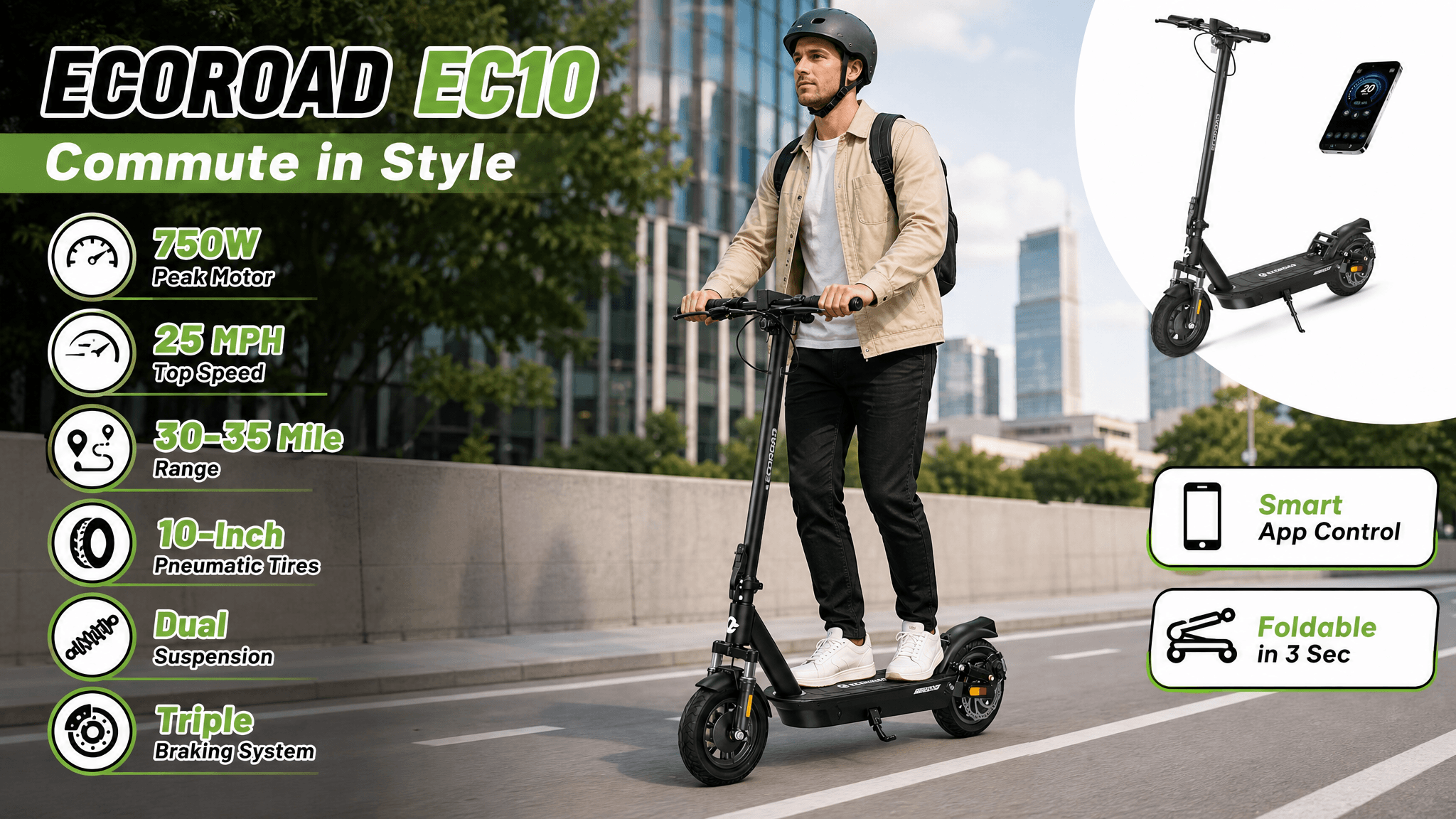
The ES4 illustrates that philosophy well. ECOROAD currently lists an 800W motor, a claimed top speed of 25 mph, a 540Wh battery and an advertised range of 30 miles, alongside pneumatic tires, suspension, lighting, a display and connected-app functionality. The company positions it particularly strongly toward campus and urban riding.
The EC10 takes a related approach with a 750W specification and advertised 25 mph / 35-mile figures. ECOROAD also highlights front and rear suspension, 10-inch air tires, combined braking technologies, lighting and app-based ride functions.
These models illustrate what a well-balanced commuter scooter should attempt to do: provide enough range that owners are not constantly calculating battery percentage, while avoiding unnecessary size and complexity for short urban travel.
For commuters, therefore, the better question is rarely “Which scooter has the highest number?” It is “Which scooter provides sufficient capability while remaining practical to store, maneuver and live with every day?”
When the Route Gets Longer: ES6 and ET8 Expand the Conversation
ECOROAD’s stronger models target a different kind of rider.
Its current catalog positions the regular ES6 around 1000W, an advertised 31 mph maximum speed and more than 40 miles of headline range. Moving further upward, the ES6 Dual Motor carries a 2000W headline figure with claims of up to 34 mph and 50 miles.
Then there is the ET8, where distance becomes especially prominent. ECOROAD currently advertises a 960Wh battery, a 1000W motor, up to 32 mph and as much as 56 miles of range. Its reinforced construction and more terrain-oriented positioning make it notably different from a light campus scooter.
This is where buyers should resist the temptation to judge an electric scooter solely by top speed. As performance rises, braking, tire condition, surface quality, rider skill, local regulations, visibility and protective equipment become increasingly important.
More capability should come with more deliberate ownership.
The CT1 Shows That “Electric Scooter” No Longer Means One Form Factor
Another noteworthy part of ECOROAD’s lineup is the CT1 Retro Electric Scooter with Seat.
The company currently lists it with a 1500W headline output, up to 35 mph and a 50-mile claimed range. More important than those numbers, however, is the seated layout.
Traditional stand-up scooters work particularly well for short, spontaneous trips. A seated design addresses a different problem: what happens when scooter journeys become longer and comfort starts influencing whether riders actually want to use the machine regularly?
That diversification is a positive sign for the category. Mature transportation markets rarely converge on one body style. Different riders have different combinations of distance, balance, storage, comfort and portability requirements, and ECOROAD increasingly reflects that reality.
ECOROAD for Younger Riders: Performance Should Be Deliberately Limited
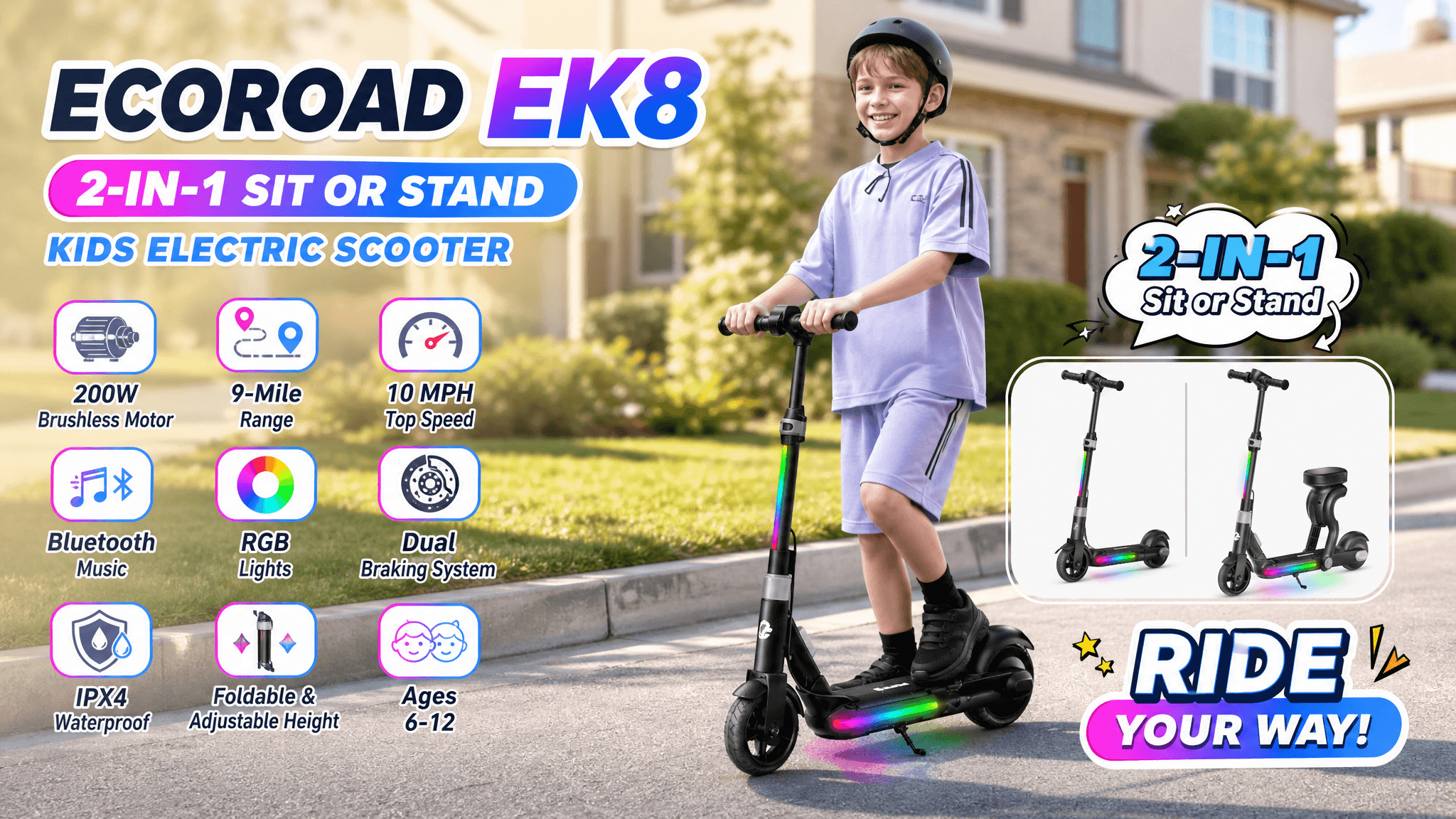
The EK range moves in the opposite direction—not toward more output, but toward greater accessibility.
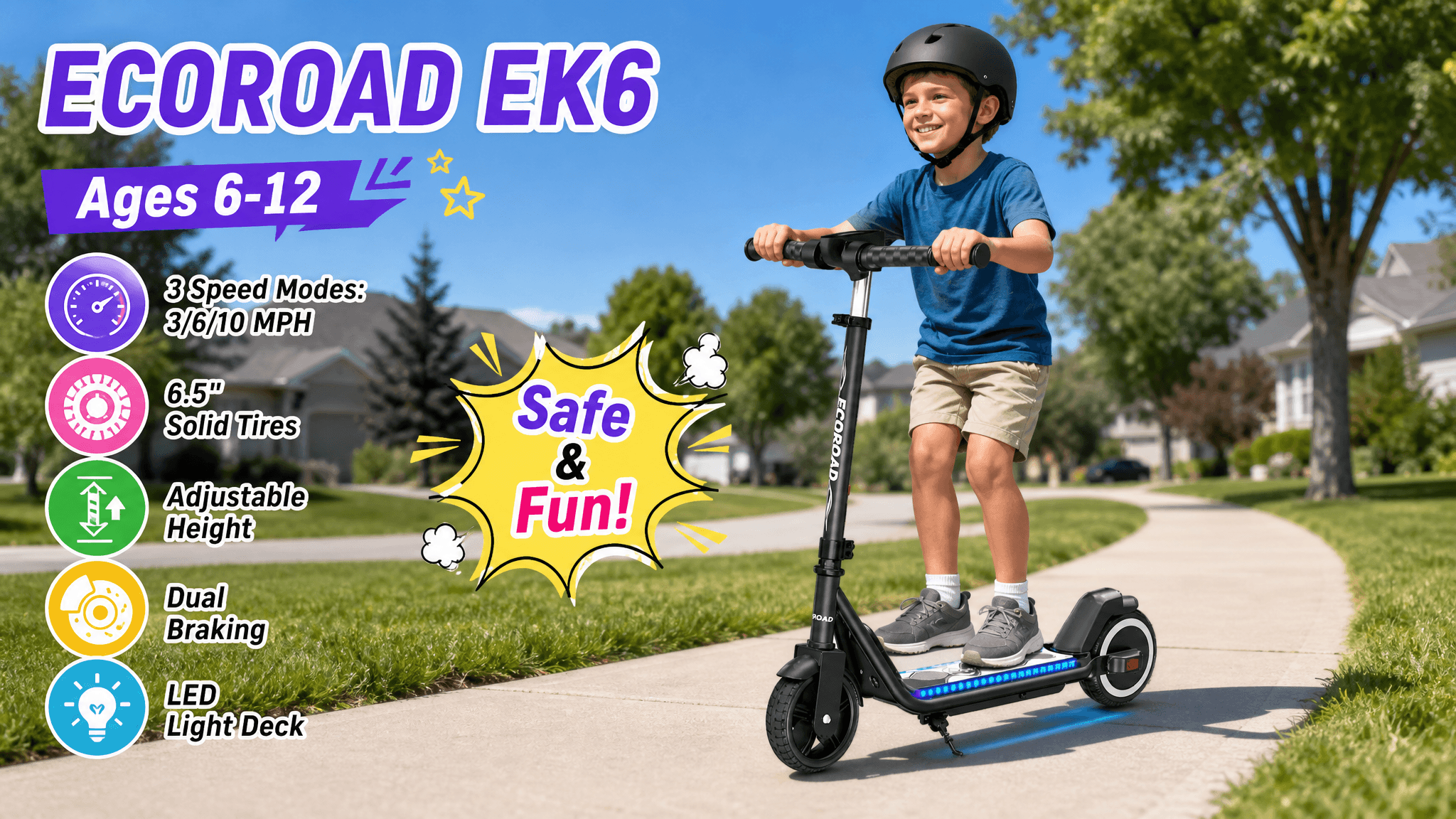
For example, the EK6 uses selectable 3, 6 and 10 mph riding modes and an adjustable handlebar. ECOROAD lists a 150W motor, approximately seven miles of maximum advertised range, 6.5-inch solid tires, electronic and foot braking, and a recommended rider age of six and older.
This is arguably where specification restraint becomes a feature.
For a developing rider, predictable acceleration, appropriate sizing, manageable speed and adult supervision matter far more than impressive power figures. The ability to begin with a lower riding mode provides a more sensible progression than giving an inexperienced rider immediate access to maximum performance.
Parents should still evaluate a child’s coordination, maturity and local riding environment rather than treating an age recommendation alone as sufficient.
Safety Is the Specification Buyers Should Read First
Electric scooter marketing naturally emphasizes speed, motor output and range. Safety deserves at least equal attention.
The U.S. Consumer Product Safety Commission has urged manufacturers of e-scooters and other battery-powered micromobility products to comply with applicable consensus safety standards. CPSC has specifically highlighted ANSI/CAN/UL 2272 for personal e-mobility electrical systems and stated that compliance with applicable UL standards can significantly reduce fire-related risk.
The current UL 2272 standard evaluates the electrical drivetrain, battery system, associated circuitry and battery/charger combination for energy and electrical-shock hazards. Importantly, UL itself notes that this standard does not evaluate general vehicle performance or every physical riding hazard.
Several ECOROAD product pages, including those for the EC10, ES4 and EK6, state that those models have passed UL 2272 testing, with TÜV identified in the company’s documentation. Buyers should always verify certification markings for the exact model and configuration they are purchasing rather than assuming that one model’s documentation automatically applies across an entire brand.
A Five-Step Pre-Ride Routine for ECOROAD Owners
Whether the scooter is an ECOROAD commuter model or another micromobility device, a simple routine can reduce avoidable problems:
- Inspect the tires. Confirm adequate pressure on pneumatic tires and look for cuts, embedded objects or obvious damage.
- Test both braking controls. Do this at walking speed before entering traffic or a shared path.
- Check the folding mechanism and handlebar. Make sure all locking components are fully engaged and nothing has loosened.
- Confirm lights and battery status. Do not begin a longer trip with insufficient charge or compromised visibility equipment.
- Ride conservatively for the first few minutes. Temperature, road debris, wet pavement and tire condition can make the same scooter behave differently from one journey to another.
CPSC also recommends keeping both hands on scooter handlebars, watching carefully for surface obstacles and avoiding unpredictable movements. Its battery guidance advises riders to use the manufacturer-recommended charger and not leave micromobility products charging unattended or while occupants are sleeping.
The Hidden Strength of ECOROAD: Parts and Ownership Support
Product longevity is increasingly relevant in electric mobility.
ECOROAD’s accessory catalog includes not just cosmetic add-ons but functional replacement components such as controllers, displays, batteries, brake levers, charging ports, fenders, inner tires and wheels.
That may sound less exciting than RGB lighting or acceleration figures, but it is arguably more important several years into ownership.
A repairable scooter has the potential to remain useful longer than one whose smallest failure effectively turns the entire vehicle into waste. ECOROAD also states that sustainability influences its approach to product durability, recyclable packaging and longer-term use. Those are company claims rather than an independent lifecycle assessment, so they should be interpreted accordingly; nevertheless, maintaining a visible parts ecosystem is a practical behavior consistent with extending product life.
Why Private Scooter Ownership Is Becoming More Interesting
Shared micromobility demonstrated that people are willing to use small electric vehicles for everyday journeys. It also exposed the economics of repeated rental.
NACTO’s earlier analysis found that the average one-way dockless e-bike or e-scooter trip cost around $6 in the systems it examined for 2023, while shared micromobility demand remained substantial. More recent NACTO reporting shows approximately 150 million trips in member cities during 2025.
That does not automatically make ownership cheaper—maintenance, charging, equipment, storage and depreciation all matter. But frequent riders have a rational reason to compare the recurring cost and availability of rentals with owning a personally selected scooter.
This is where a broad brand such as ECOROAD becomes relevant: customers can choose around their actual travel pattern rather than accepting whichever shared scooter happens to be parked nearby.
Who Should Consider Which ECOROAD Scooter?
A sensible selection process can be reduced to four priorities:
- Short campus or neighborhood trips: favor portability, moderate performance and manageable size; EC10 or ES4-type models are the logical part of the range to investigate.
- Longer commuting: prioritize usable battery capacity, braking, comfort and realistic round-trip distance rather than top speed alone.
- Rougher surfaces or greater distance: evaluate stronger suspension, tire design and models such as the ET8, while accepting the extra mass that higher-capability hardware usually brings.
- Comfort-first riding: investigate the CT1 seated format if standing for longer journeys is undesirable.
- Children and beginners: choose the EK family based on rider size and experience, using slower modes during the learning period.
Before purchasing, riders should also check state, city, campus and trail rules. Maximum legal speeds, sidewalk use, helmet requirements and permitted riding locations can differ substantially between jurisdictions.
Technical Guidelines for E-Scooter Longevity
Owning a high-performance adult e-scooter requires a foundational understanding of baseline battery chemistry and electromechanical hardware maintenance. Proper, routine care significantly extends the operational lifespan of the vehicle, maximizing your financial return on investment and preventing sudden breakdowns. The following technical steps outline the standard manufacturer-recommended procedures for optimal routine upkeep.
- Optimal Battery Cycling: Never allow the lithium-ion battery pack to completely deplete to 0%. Initiate a standard charging cycle when the digital indicator reaches approximately 20%, and unplug the unit promptly once it hits 100% to prevent long-term cell degradation and maintain maximum range.
- Tire Pressure Calibration: Strictly check the pneumatic tire pressure on a bi-weekly basis using a calibrated gauge. Maintaining the exact PSI recommended in the user manual prevents pinch flats, ensures predictable handling, and provides optimal battery efficiency during transit.
- Brake Mechanism Inspection: On a monthly basis, physically inspect both the mechanical disc brakes and the electronic regenerative braking systems. Ensure the physical brake pads have adequate friction material remaining and that the tension cables are appropriately taut.
- Firmware and Electrical Checks: Periodically clean the sensitive charging port with dry compressed air to remove debris, and systematically check all LED lighting connections to ensure critical nighttime visibility remains totally uncompromised.
Independent Market Study: The Shift Toward Micro-Transit
To better understand the broader cultural impact of transit brands like this, we conducted an independent pulse survey among 500 dedicated urban commuters in major metropolitan areas throughout Q3 of this year. The primary objective was to identify the core catalysts driving the rapid transition from traditional automobiles to micromobility solutions. The resulting data reveals a significant shift in modern consumer priorities, favoring granular efficiency over traditional vehicular ownership.
- Time Efficiency and Routing: 42% of surveyed respondents cited the ability to bypass severe gridlock traffic and utilize dedicated bike lanes as their absolute primary motivation for switching to electric scooters.
- Drastic Cost Reduction: 35% highlighted the increasingly exorbitant costs of urban parking garage leases and highly volatile fuel prices as the main financial drivers for adopting personal micromobility.
- Environmental Impact Goals: 15% pointed to a deep personal commitment to reducing their daily carbon footprint, aligning perfectly with the EPA’s broader guidelines on sustainable urban transport initiatives (Source: epa.gov/greenvehicles).
- Physical Comfort Demands: Notably, 8% of the transit demographic specifically requested seated models, strongly validating ECOROAD’s strategic business decision to heavily feature seated variants within their main catalog.
Navigating Industry Standards and Safety Compliance
The global micromobility sector is rapidly maturing, which consequently brings increasingly stringent municipal safety regulations and manufacturing oversights. Authoritative organizations like the Consumer Product Safety Commission (CPSC) now mandate rigorous stress testing for lithium-ion battery stability to prevent catastrophic failures. ECOROAD’s strict adherence to these emerging industry standards is a highly critical factor in their exponentially growing market share. By consistently utilizing certified electrical components and flame-retardant internal enclosures, they actively mitigate the thermal runaway risks that are unfortunately often associated with dangerous, budget-tier alternatives.
Ultimately, the global transition to sustainable, electrified transit is not merely a passing consumer trend; it represents a permanent, structural evolution in modern urban planning. Manufacturing brands that deeply understand the subtle nuances of daily commuting—offering distinct modularity, verifiable safety, and ergonomic comfort—will undoubtedly dominate this rapidly expanding space. The extensive lineup showcased in demonstrates a remarkably clear understanding of these modern consumer demands, firmly positioning the brand as a highly serious contender in the ongoing personal mobility revolution. What specific design features or performance metrics are you prioritizing as you consider your next major micromobility upgrade?