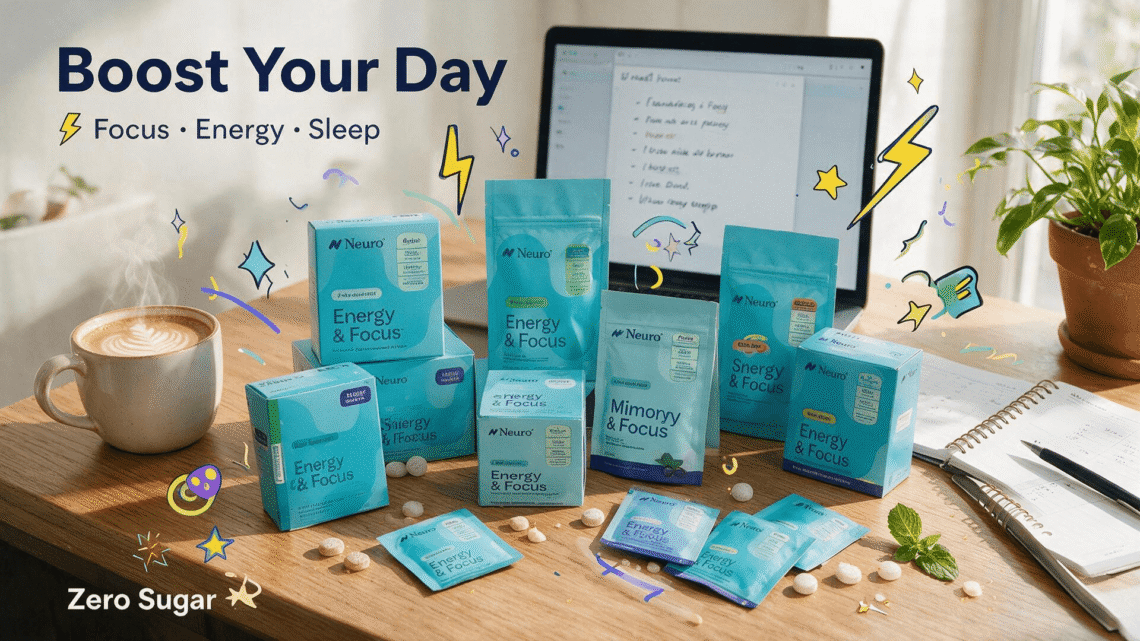
☕ There is a specific moment, usually somewhere between 2:15 and 3:30 in the afternoon, when the desk stops being a place you work and becomes a place you negotiate with. You know the negotiation. Your eyes are on a document. Your attention is somewhere else entirely. And your hand is already reaching for a third cup of coffee you do not actually want, because what you want is not more liquid, more bitterness, or another bathroom trip scheduled for 4 p.m.
That gap — between needing a different mental state and the awkward delivery systems currently available — is where Neuro gum sits. Not in the energy drink aisle, not in the medicine cabinet full of amber supplement bottles, but in the pocket, the desk drawer, the console of a car, the zippered front pocket of a laptop bag. It is a functional chewing gum and mint brand, and it has spent roughly the last decade doing something quietly unusual: treating the route of delivery as a design problem worth solving, rather than treating the ingredient list as the whole product.
This guide is a working document for anyone who has looked at the lineup, seen four color-coded formulas and two formats, and thought “which of these is actually for me?” We will take the brand apart, read the label the way a regulator reads it, run the arithmetic against the café habit, and be honest about the places a chewable format is the wrong tool. 🧠 No hype required — the interesting part is the mechanism.
What Neuro Is, and What It Deliberately Is Not
Start with the storefront’s own joke, because it explains the positioning better than a mission statement would: “Gums is dumb. Neuro is smart (gum).” That is a brand announcing that it intends to break a category assumption. The assumption being broken: that gum is a breath product with a sugar coating and no business making claims about cognition.
Neuro — sold as NeuroGum, with a house line simply reading “Gum & Mints” — builds around two formats and four functional intents. The gum is the flagship. The mints, sold in small slide-top tins under the Smart & Sour banner, are the portable cousin. Across both, the recurring architecture is the same: a modest, defined dose of natural caffeine, paired with L-theanine, rounded out with B vitamins, then differentiated by a single hero botanical depending on the intended state.
The brand’s own framing on its Amazon storefront is refreshingly unglamorous: “From energized mornings to evening wind downs, we’ve got a formula for every part of your day.” Notice what that sentence does not say. It does not promise transformation. It proposes coverage — the idea that a body needs different chemistry at 7 a.m. than at 10 p.m., and that carrying four small packets is more realistic than maintaining a shelf of bottles.
💬 Two founders, Kent and Ryan, appear on the storefront under a “Meet Kent & Ryan” panel, which matters for one reason beyond biography: small founding teams tend to ship fewer SKUs, and Neuro has indeed resisted the category’s usual drift toward fifteen flavor variants. The catalog is tight. Tight catalogs are easier to reason about, which is precisely what this article attempts.
What Neuro is not, stated plainly so expectations land correctly: it is not a medication, it is not a nootropic stack in the six-figure-price sense, and it is not a substitute for sleep. Every one of its formulas is a dietary supplement sold under the labeling regime that governs that class of product in the United States — the Dietary Supplement Health and Education Act framework, administered by the FDA, which permits structure/function language but requires a disclaimer and does not pre-approve efficacy. Hold the products to that standard and they look reasonable. Hold them to a pharmaceutical standard and you will be disappointed by a category that was never claiming to be pharma. ✔︎
The Delivery Question: Why the Route Matters More Than the Dose
⚡ Here is the insight the chewable category is built on, and it is worth understanding before you pick a flavor: the amount of caffeine in your body at minute ten is not determined by the amount you swallowed at minute zero. It is determined by how much had to survive stomach acid, pass through the liver, and enter circulation on the other side.
Three Ways Caffeine Actually Enters a System
- Swallowed liquid. Coffee, tea, energy drinks. The caffeine travels to the stomach and then the small intestine, where most absorption happens, before the portal vein carries it to the liver for first-pass metabolism. Onset is typically measured in the 30-to-60-minute range, with peak plasma concentrations often around the 45-minute mark, though individual timing varies widely with gastric contents, genetics and formulation.
- Encapsulated solid. Capsules, tablets, gummies. Same general route, plus an extra disintegration step. A hard gelatin capsule has to break open before anything absorbs; a gummy has to be digested. This can delay onset further, and it is one reason the “gummy equivalent” of a powder product is not always behaviorally identical.
- Buccal or sublingual absorption. Chewing gum and lozenges. The oral mucosa is thin and highly vascularised. Compounds dissolved in saliva during chewing can cross directly into systemic circulation, bypassing a portion of the hepatic first pass. Not all of it — you inevitably swallow some saliva — but a meaningful fraction takes the short route.
The practical consequence is not that gum is “stronger.” It is that gum is faster-arriving and shorter-lived in its ramp, which changes the experience considerably. A 95 mg coffee produces a slow slope you ride up over an hour. A 40 mg chewable produces a shallower but quicker rise. Different tool for different job. 🔍
Research That Supports the Route Claim
This is not marketing folklore. A frequently cited study led by Ashraf Nehra and published in Sleep and Biological Rhythms in 2004 examined caffeine delivered as chewing gum and reported measurable alertness effects within the first ten minutes of chewing, contrasted against swallowed delivery. The European Food Safety Authority’s 2015 scientific opinion on caffeine safety treats dose as the primary variable rather than vehicle, concluding that single doses up to 200 mg and daily intakes up to 400 mg from all sources do not raise safety concerns for healthy adults — a framing that is neutral about gum and therefore useful, because it means the gum question is really a dosing question.
There is a bonus mechanism nobody talks about enough: chewing itself. A well-known body of work beginning with studies published in Physiology & Behavior around 2000 found that the act of mastication produced small but reproducible improvements in certain alertness and attention measures, independent of any active ingredient. Neuro’s format collects that effect for free. You are getting the pharmacology and the motor activity in one action. ↦
A Useful Comparison
| Delivery route | Typical onset | Dose precision | Sugar/calories carried | Portable? | Mess factor |
|---|---|---|---|---|---|
| Brewed coffee (8 oz ≈ 95 mg, per USDA FoodData Central) | 30–60 min | Low — varies by brew, bean, pour | 0–200+ kcal | No | Cup, liquid, caffeine jitters late |
| Energy drink (16 oz can) | 20–45 min | Medium — printed on can | Often 50–60 g added sugar | Yes | Sugar load, half-finished can, disposal |
| Capsule or tablet | 30–90 min | High | 0 kcal | Yes | Water required, swallow-dependent |
| Gummy | 30–75 min | High | 10–25 kcal each | Yes | Heat-sensitive, sticks together |
| Functional gum / mint | ~10–30 min reported | High — per-piece dosing | Typically 0–5 kcal | Yes | Spit-out question, jaw fatigue |
Read the last column honestly. The chewable format’s real weakness is not potency; it is that you end up with a wad of something, and where that goes depends on context. The mints exist partly because of that. 🌿
Inside the Four Formulas
📋 The lineup, as listed on the storefront, breaks into four functional lanes, each available in gum and, in most cases, a mint counterpart. Rather than recite the panels, here is what each lane is for — the situation, not the ingredient list.
1. Energy & Focus — the standard 40 mg proposition
The core formula: approximately 40 mg of natural caffeine, 60 mg of L-theanine, plus B vitamins, per serving. Flavors on the shelf include Peppermint, Spearmint, Cinnamon and Watermelon. Pack sizes run in the 54-count range, with listed pricing in the neighborhood of $24.99 to $36.99 depending on configuration.
The 40/60 ratio is the deliberate signature here, and it is the single most important thing to understand about this brand. Forty milligrams is a low caffeine dose — roughly two-fifths of a brewed cup. It is not trying to replace your morning coffee. It is trying to be the thing you take at 2:40 p.m. when you need ninety productive minutes and cannot afford a sleep-disrupting dose.
The L-theanine at 60 mg is doing the pairing work. This amino acid, found naturally in tea leaves, has been tested in double-blind trials alongside caffeine — including published work in Psychopharmacology and Nutrition & Food Science — with results pointing toward smoother subjective alertness and fewer of the peripheral jitter effects than caffeine alone. The classic explanation is that L-theanine supports alpha-band brain activity associated with relaxed attention. Treat that as a mechanistic hypothesis with supportive human data, not a proven claim. What matters practically: the pairing is at least a considered formulation decision rather than a random dose in a wrapper. ✔︎
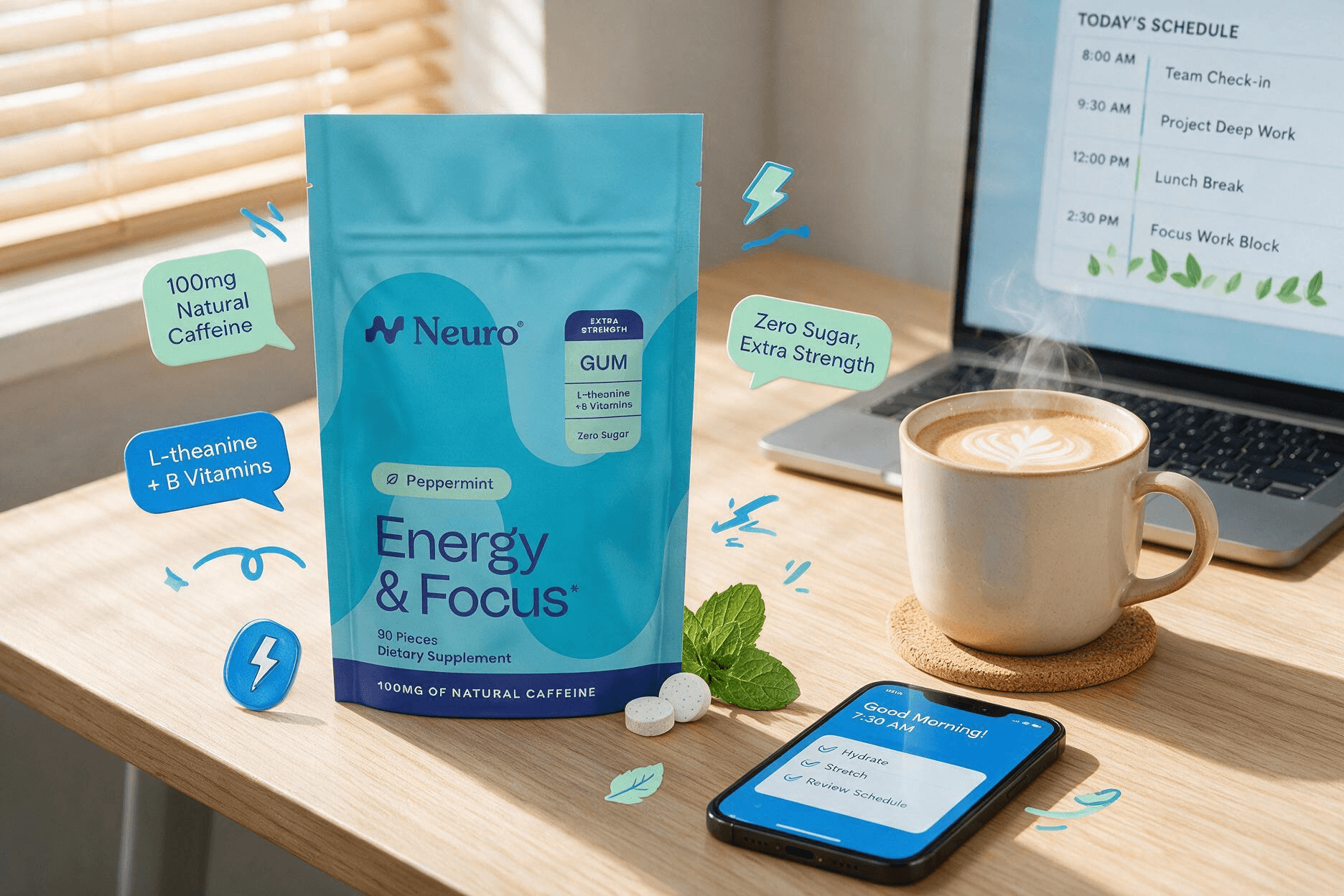
2. Energy & Focus Extra Strength — the 100 mg proposition
Same architecture, roughly 100 mg of natural caffeine per serving. This is the version for a genuinely long day, and it is also the version that deserves the most caution, because 100 mg arrives faster than 100 mg in a capsule and is easier to repeat by accident. If you take this one, take it once, and take it early enough that its tail does not sit under your sleep. 🌙
3. Smart & Sour mints — the format answer
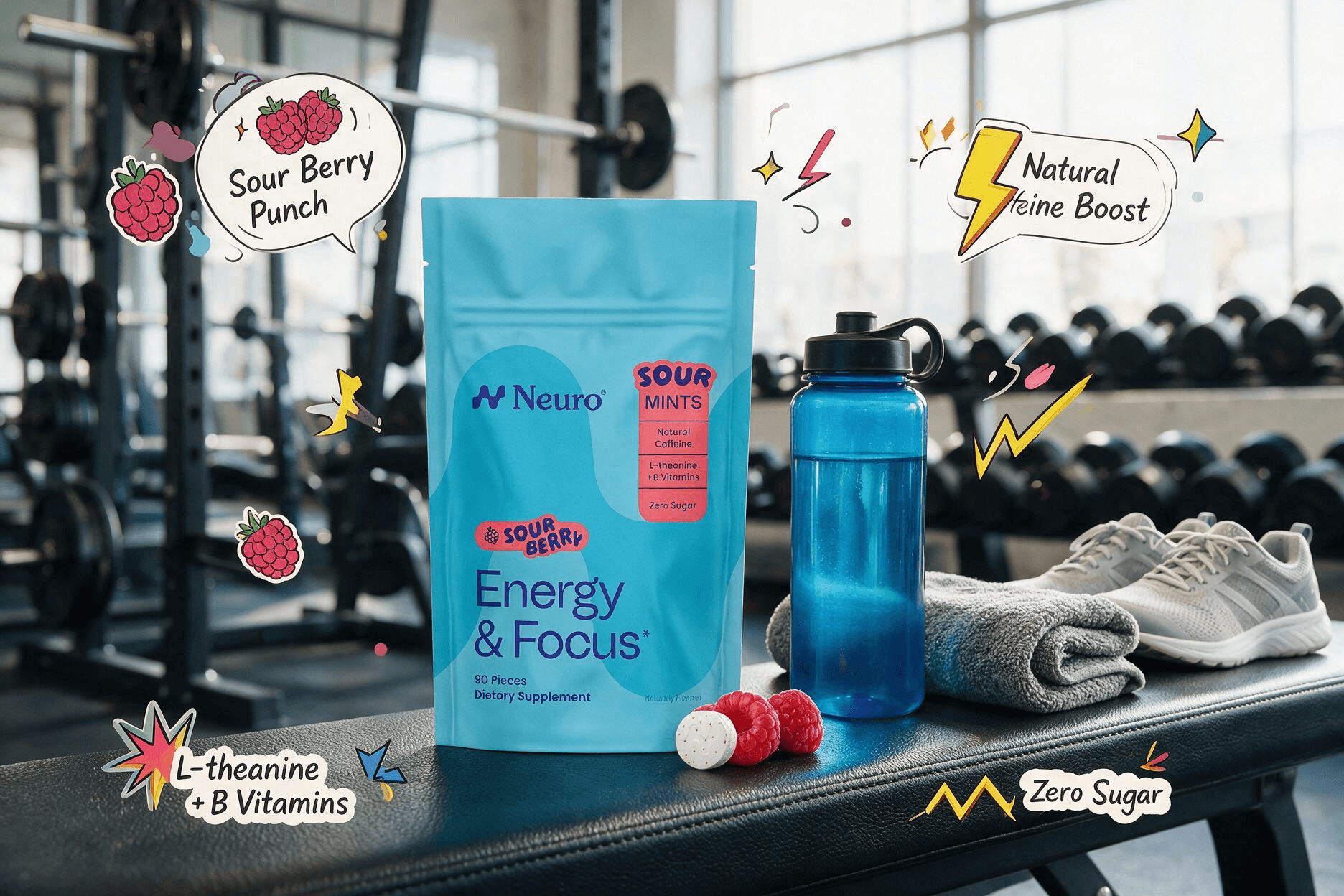
Sour Apple, Sour Berry and Sour Citrus, in 12-mint tins, sold in six-packs for 72 pieces total. The panels list natural caffeine, L-theanine, B6 and B12, and zero sugar. The sour coating is not decoration; tartness is a mild salivation trigger, which is genuinely relevant to how quickly a compound dissolves in the mouth. More than that, though, the sour is a behavioral feature: it announces that something is happening, which is exactly the feedback a low-dose product needs.
The tin solves the gum’s two social problems. No spit. No visible chewing. It slips into a jacket pocket, a conference room, a plane seatback. 💬 If your hesitation about functional gum is really hesitation about looking like you are chewing, the mints were designed for you.
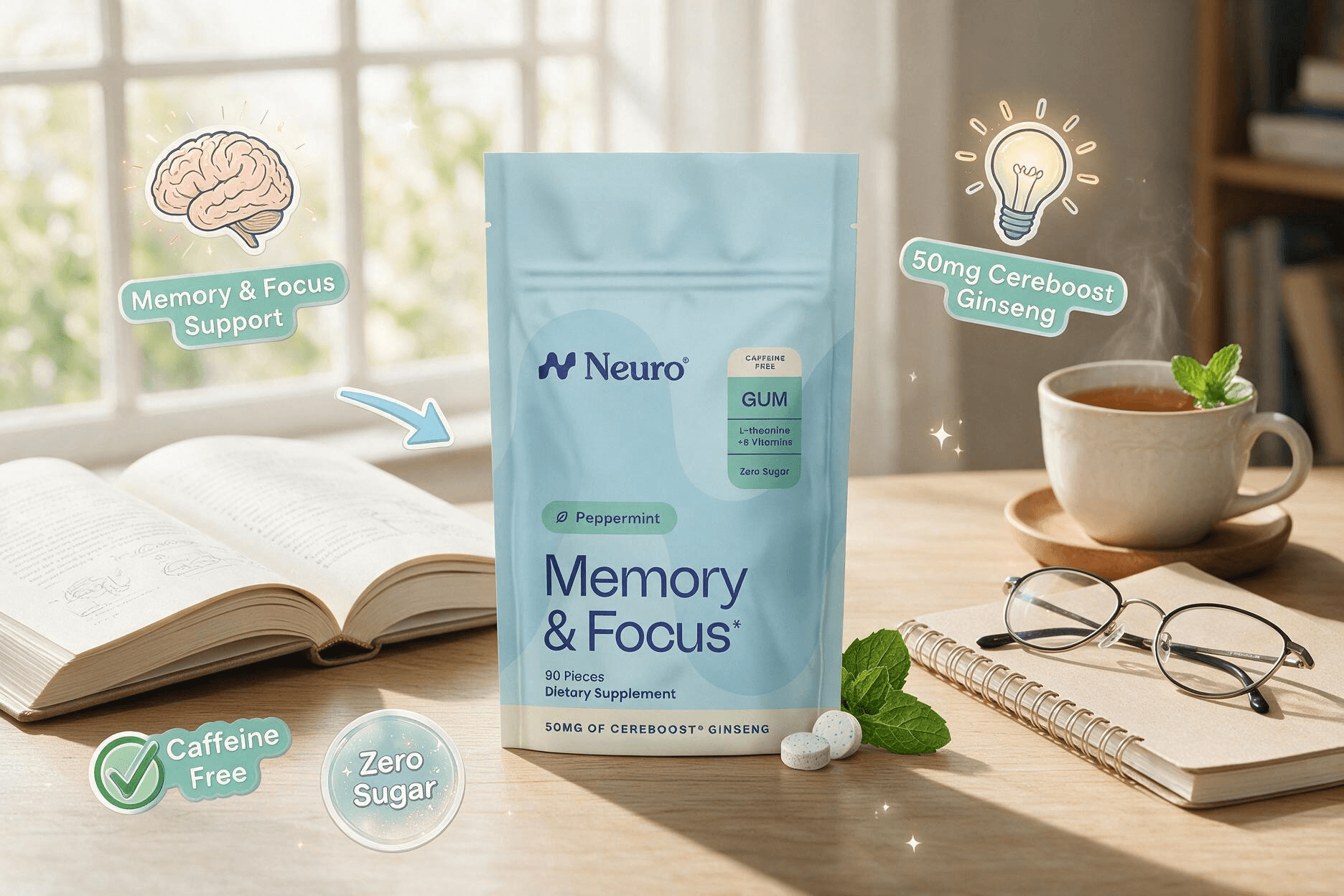
4. Memory & Focus — the caffeine-free lane
This one drops stimulants entirely and leans on Cereboost, a water-soluble Panax ginseng extract, alongside supporting nutrients. It is the formula for the person who wants the cognitive lane without the stimulant lane: late-afternoon takers, caffeine-sensitive takers, anyone whose doctor has an opinion about caffeine.
Expectations deserve calibration here. The ginseng literature is real but mixed; systematic reviews of Panax ginseng and cognitive outcomes consistently find signals for subjective fatigue and secondary measures, tempered by heterogeneous study designs and modest sample sizes. This is a “reasonable bet with a longer evidence horizon” product, not a guaranteed effect. Buying it for the caffeine-free property is the sound decision; buying it expecting a nootropic result is the fragile one.
5. Calm & Clarity — the daytime adaptogen
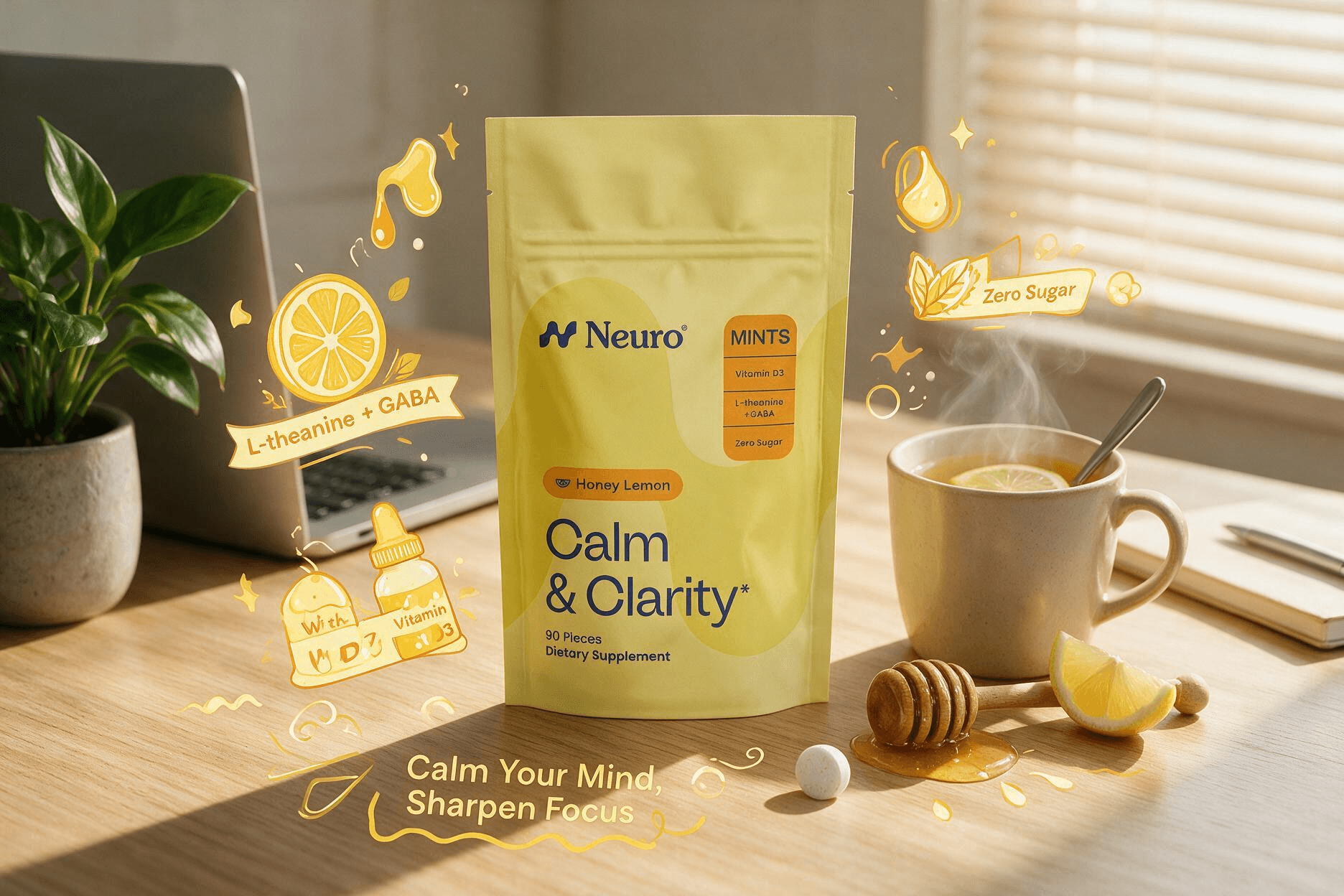
Built on KSM-66 Ashwagandha, a full-spectrum root extract standardized under a licensed trademark that has become shorthand for “the version actually used in most of the trials.” The relevant human study is Chandrasekhar and colleagues, published in the Indian Journal of Psychological Medicine in 2012: 300 mg twice daily over sixty days, with reductions in perceived stress scores and serum cortisol. Note the word sixty. Ashwagandha is a chronic-supplement, not an acute one, and anyone taking it expecting relief within twenty minutes will misjudge it. ⛅
The placement in a daytime format is smart, though. Stress management that only happens at night leaves the workday unaddressed.
6. Sleep & Recharge — the melatonin-free night lane
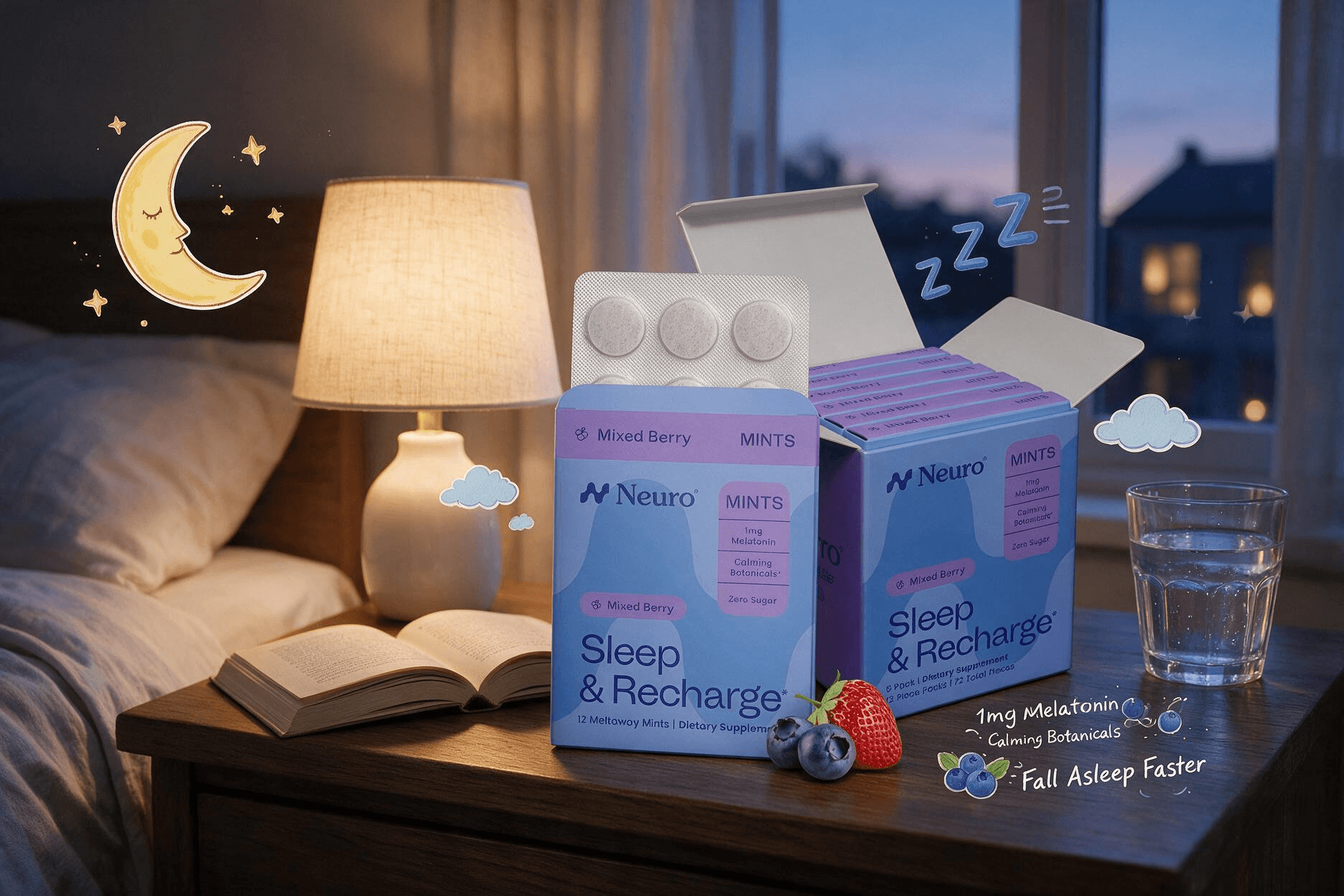
Magnesium and chamomile, and pointedly no melatonin. That exclusion is the most commercially interesting decision in the whole catalog, because it landed in the middle of a genuine regulatory shift: in mid-2025, the FDA communicated to trade press that melatonin is not a suitable dietary ingredient for supplements in its current framing. The market did not vanish overnight, but a brand designing for longevity now has a strong reason to build a sleep product that does not rest on melatonin at all.
Magnesium’s evidence base for sleep is modest and mostly drawn from small trials — an often-cited Abbasi-led study in the Journal of Research Medical Sciences looked at 500 mg daily over eight weeks in older adults. Chamomile has its own literature, including work indexed by the National Institutes of Health, generally showing small effects on sleep quality rather than dramatic sleep induction. Translation: this is a gentle, cumulative, non-dependence-forming approach. That is a feature for anyone who has felt uneasy about nightly hormone supplementation. 🛏
The State-Switch Framework
✦ Here is where this article departs from the catalog recap. Most buyers approach a four-formula lineup as four separate purchases. That is the wrong mental model, and it is why carts fill with one random SKU and produce disappointment.
The correct model is that Neuro is a four-state switching kit. Each formula is an instruction for moving between named states, and the value comes from having all four available rather than owning one. I call this the State-Switch Framework, and it reframes which product you should buy first.
| State | The switch you need | Formula | Timing logic |
|---|---|---|---|
| Ignite ↗ | Offline → engaged | Energy & Focus, 40 mg | 10–20 minutes before a demanding block, not after you’ve already stalled |
| Sustain → | Stall → steady | Smart & Sour mints, or Memory & Focus | Small, spaced top-ups across the afternoon; zero sugar load |
| Settle ↘ | Activated → decoupled | Calm & Clarity | Early evening, deliberately, as a wind-down cue rather than a rescue |
| Descend ⌄ | Awake → asleep | Sleep & Recharge | 30–60 minutes before bed, in a routine that already exists |
▸ The critical observation: most first-time buyers only ever use Ignite, and then conclude the brand is “just another caffeine product.” They miss that the lineup’s actual design thesis is coverage across the whole day. A person who takes Ignite at 9 a.m., Sustain at 3 p.m., Settle at 8 p.m. and Descend at 10:30 p.m. is not consuming supplements. They are running a schedule. That is a meaningfully different relationship with a pocket.
There is a second, subtler point in the framework. Notice that Settle and Descend are non-stimulant, and Ignite and Sustain are separated by dose philosophy rather than by ingredient: Ignite is a dose event, Sustain is a rate event. Getting that distinction right prevents the most common failure mode, which is stacking Ignite on top of Ignite. 🚫
Reading the Label Like a Regulator
🔍 Before spending money on any functional supplement, spend five minutes on the panel. This is the fastest way to separate a considered formula from a themed one, and it takes about ninety seconds per product.
The six-check label audit:
- Is the caffeine source declared as “natural caffeine” or specified further? Anhydrous caffeine and green-coffee-derived caffeine are chemically similar, but a brand that names its source is signalling it has a source.
- Is every active dose printed, or is anything hidden behind a “proprietary blend”? Proprietary blends in a stimulant product are a red flag, full stop. You are entitled to know the milligrams. Neuro prints its numbers, which is the baseline expectation the category keeps failing to meet.
- Does the named botanical have a trademarked standardisation? Cereboost and KSM-66 are licensed, specifiable extracts. That means batch-to-batch consistency is contractually enforced rather than hoped for. Unnamed “ashwagandha root extract” gives you no such guarantee.
- What is the serving size, and how many servings per container? This is where “54 count” becomes ambiguous. One piece, two pieces, or a chew-to-dissolve standard? Confirm before computing cost.
- Added sugars, counted. The storefront panels indicate zero sugar across the energising range, which is the entire point of choosing a chewable over a gummy. Verify per SKU.
- Third-party testing mark? NSF, Informed Sport, USP, or a listed certificate of analysis. Supplements in the US are not pre-approved; a verification mark is the buyer’s substitute for regulatory review. If a listing does not surface this, ask the seller directly before a repeat purchase. ✅
EU claim context, because it is genuinely informative: Regulation (EC) No 432/2012 authorises specific caffeine claims for Europe — increased attention and alertness, and a reduction in the time taken to regain concentration when feeling drowsy. Those are narrow, approved statements. Any product language that strays far beyond them, in any market, deserves a raised eyebrow.
The Arithmetic Nobody Runs
💰 Functional gum costs more per packet than a bag of chewing gum, and almost everyone evaluates it on that basis, which is the wrong comparison. The right comparison is the habit it displaces.
Using the storefront’s stated price band of $24.99 to $36.99 for a 54-count gum pack, and treating one printed serving as one dosing event:
| Scenario | Assumed unit cost | Caffeine delivered | Cost per 100 mg of caffeine |
|---|---|---|---|
| Café latte, 8 oz brewed-equivalent (~95 mg) | $6.00 | ~95 mg | ≈ $6.30 |
| Convenience-store energy drink, 16 oz | $3.50 | ~150–160 mg | ≈ $2.30 |
| Neuro Energy & Focus gum, at $24.99 / 54 ct | ≈ $0.46 per serving | 40 mg | ≈ $1.15 |
| Same, at $36.99 / 54 ct | ≈ $0.69 per serving | 40 mg | ≈ $1.72 |
| Neuro Extra Strength, at $24.99 / 54 ct | ≈ $0.46 per serving | 100 mg | ≈ $0.46 |
Assumptions stated: café and energy-drink prices are typical US retail figures used as a benchmark, not quotes; per-serving caffeine is taken from the storefront listing; confirm serving size on your specific panel before relying on the totals.
Read the bottom row before the top row. At Extra Strength, the per-milligram economics beat both beverages by a wide margin — and carry no sugar, no cup deposit, no liquid volume and no disposal problem. At standard strength, you are paying a modest premium per milligram in exchange for the low dose being pre-divided, which is the actual product. Portion control has a price, and roughly fifty cents is a reasonable one. ⚖︎
Then factor the invisible line item: the fourth cup of coffee that ruins a night’s sleep, and the 25 percent of adults who, according to CDC sleep-health data, are already not getting enough of it. A 40 mg dose at 2:40 p.m. has a materially different half-life footprint than a 95 mg one. Caffeine’s elimination half-life is commonly in the 3-to-6-hour range for healthy adults, with substantial variation driven by the CYP1A2 enzyme, oral contraceptives, pregnancy and smoking status. If you are a slow metaboliser, the difference between 40 mg and 95 mg at 3 p.m. is the difference between sleeping and not. 🌗
A Candid Conversation: The Skeptic and the Optimizer
💬 Every category attracts two permanent positions. Rather than pretend there is only one, here they are, argued properly — the skepticism is useful and the enthusiasm is informed, and both survive contact with the products.
🤨 The Skeptic: “It’s gum with caffeine in it. I can buy caffeine pills for a tenth the price. What I’m actually paying for is a minty flavor and a wrapper.”
📈 The Optimist: “You’re paying for dose architecture. 40 mg plus 60 mg L-theanine is a specific ratio that would take me three separate products and a calculator to assemble. Pre-splitting a dose so it travels in a jacket pocket is the entire value.”
🤨 The Skeptic: “And the sleep one? Magnesium and chamomile. My grandmother’s remedy with a modern tin.”
📈 The Optimist: “Melatonin-free in 2026 is a real design decision, not a nostalgia one. FDA’s position on melatonin as a dietary ingredient shifted publicly in 2025. A sleep product built on magnesium and chamomile won’t need reformulating if enforcement tightens. That’s durability.”
🤨 The Skeptic: “Fair. But ashwagandha took sixty days in the trial that made its name. A daytime Calm formula is not doing anything on day two.”
📈 The Optimist: “Correct, and anyone selling it as acute is wrong. It’s a standing-dose adaptogen that happens to be in a format I’ll actually remember to take. Adherence is a legitimate efficacy multiplier.”
🤨 The Skeptic: “Now you’re just reframing my objection as a feature.”
📈 The Optimist: “That’s what good formulation does. Also — try the Sour Berry mints before you decide you hate the whole concept.”
▸ The exchange ends where it should: the skeptic keeps two valid objections (acute expectations for a chronic botanical, and price-per-milligram reality), and the optimist wins on the two things that actually determine whether a supplement helps — dose specificity and whether you take it consistently. Neither position is foolish. Holding both at once is the mature read. 🤝
Building a Day Protocol
⏱ Do not improvise this. A protocol with a written ceiling outperforms an enthusiastic improvisation every single week. Here is a conservative structure that assumes you also drink coffee.
- Inventory your total daily caffeine first. Write down every milligram already in your day: the morning mug at roughly 95 mg, the soda at lunch, the chocolate, the pre-workout. EFSA’s 400 mg daily reference for healthy adults is a ceiling, not a target, and it is from all sources.
- Choose one anchor point, not four. The single highest-value slot for most people is the early-afternoon dip. Deploy one standard-strength serving there, 10 to 20 minutes before the block of work that needs protecting.
- Set a hard cutoff time and honor it. Given a 3-to-6-hour half-life, a 3 p.m. dose still has meaningful circulating caffeine at 10 p.m. For most adults, an absolute cutoff around 2 to 3 p.m. for standard strength is prudent; move Extra Strength to before noon.
- Never re-dose inside 90 minutes. The temptation is real because the first dose’s ramp is quick and the plateau feels underwhelming. It is not underwhelming; it is 40 mg. Re-dosing is how people accidentally discover jitters.
- Log the first ten days. Two columns: dose time, and a one-word verdict on the following 90 minutes. You are calibrating your own CYP1A2 reality, and ten data points will teach you more than any article, including this one. 📝
- Add the non-stimulant lanes separately, one at a time. Start Calm & Clarity as a consistent early-evening habit for at least four weeks before judging it. Start Sleep & Recharge on nights where your wind-down routine already exists, so you can tell whether it is the magnesium or the ritual doing the work.
- Keep a mint tin as the low-commitment backup. For meetings, travel, driving, or anywhere a chewing motion is socially awkward, the Smart & Sour format lets you hold the Sustain state without announcing it.
- Cycle deliberately. Taking a stimulant format every single day for months invites tolerance. Two clear days a week off the energising lane keeps 40 mg feeling like 40 mg. 🔄
Safety, Ceilings, and Who Should Walk Past This
🚨 The honest section, because a promotional piece that skips contraindications reads as either naive or untrustworthy, and neither serves a brand well.
- Pregnancy and breastfeeding. ACOG guidance has long held that caffeine intake below 200 mg daily is not associated with miscarriage or premature birth, but the explicit recommendation is to consult a clinician, and individual advice varies. Do not treat a reference ceiling as permission.
- Children and adolescents. EFSA flags 3 mg per kilogram of body weight per day as a non-concern level for this population, and no functional stimulant gum is an appropriate answer to a homework problem. Keep it out of school bags.
- Medication interactions. Ashwagandha can interact with thyroid medication, sedatives and immunosuppressants. Magnesium interacts with certain antibiotics and bisphosphonates through absorption timing. Ginseng has documented interaction considerations with anticoagulants. If you take prescription medication daily, the pharmacist is a fifteen-minute conversation that protects you from a month of wrongness. 💊
- Anxiety and sleep disorders. A stimulant format, however gentle, is a poor fit for someone with an active anxiety disorder or insomnia, and the adaptogen lane is not a treatment. Work the underlying issue with a clinician first.
- Jaw and dental reality. Chronic chewing is associated with temporomandibular strain, and sugar-free gum contains polyols that cause gastrointestinal discomfort at high intakes. If your jaw aches, the mints are simply the better format for you.
And one structural note about the category itself: US dietary supplements are not pre-approved for safety or efficacy before market. Quality assurance is the manufacturer’s legal obligation, and verification is the buyer’s practical one. Look for the third-party marks named earlier, and treat a missing COA as a legitimate reason to buy elsewhere. ✅
The Pocket Audit
🧭 Six questions, scored honestly, will tell you more than any review. Answer in your head; one point per “yes.”
- Do you reach for a third or fourth caffeinated beverage on most weekdays, and feel mildly guilty about it?
- Have you abandoned an energy drink because of the sugar, the half-can waste, or the 4 p.m. crash it caused?
- Do you currently own at least two supplement bottles that you forgot about within three weeks?
- Is your 2:30–4:30 p.m. productivity the single most valuable unscheduled asset in your workday?
- Does a late coffee reliably cost you 45 minutes of sleep onset?
- Would you pay roughly $0.50 per dosing event to solve questions 4 and 5 simultaneously?
Scoring. Four or more: the format addresses a problem you actually have, and the four-lane kit is worth exploring rather than a single SKU. Two to three: buy one thing — standard-strength Energy & Focus or the Sour mints — and give it two weeks before expanding. Zero to one: your current system is working, and this is a novelty purchase. Nothing wrong with that, but expect the shelf to collect dust. 📦
Where It Falls Short
✋ No credible guide ends in applause. The specific limitations:
- Flavor fatigue is real. Mint-forward delivery is pleasant at dose four per day and tiresome by week three. Watermelon and the sour range exist for this reason; rotate rather than commit.
- The 40 mg dose can be too little for a habitual 400 mg-per-day drinker, who will perceive it as ineffective rather than as the gentle floor it was designed to be. Read your own baseline before judging the product.
- Texture and residue. Gum requires a disposal decision. In an office with a bin, trivial. On a trail, on a train, in a coat pocket, annoying.
- Availability and price volatility. The storefront’s listed band is $24.99 to $36.99, but Amazon pricing on supplements moves constantly with subscriptions, promotions and third-party sellers. Confirm current pricing at the moment of purchase rather than relying on any figure quoted in an article.
- The memory lane is the longest shot. Of the four formulas, the caffeine-free ginseng product has the least settled evidence. Buy it for the stimulant-free property, and stay agnostic about the outcome.
Frequently Asked Questions
Is Neuro gum stronger than coffee?
Per milligram, no — a standard serving carries about 40 mg against roughly 95 mg in an eight-ounce brewed cup, per USDA FoodData Central. Per minute, the onset is faster because part of the dose crosses the oral mucosa rather than waiting on digestion. Stronger and faster are different axes, and confusing them causes most disappointing reviews.
Can I take it with my morning coffee?
Yes, if your running daily total stays comfortably under 400 mg and your last dose is early. The real question is not safety at those levels but necessity — if the coffee is working, the gum’s value is in the afternoon slot, not the morning one.
Are the mints as good as the gum?
Different job. The tin is more socially portable and requires no spit decision. Chewing itself contributes a small independent alertness effect that a dissolving mint does not fully replicate. For a meeting room or a flight, the mints win. For a desk, the gum is fine.
Is the melatonin-free sleep formula weak?
It is gentle, which is the design intent. Magnesium and chamomile produce gradual sleep-quality shifts in the published literature rather than acute sedation. Anyone wanting a knockout dose will be underwhelmed; anyone who has decided to stop taking a nightly hormone will find it appropriately serious.
Will it show up on a drug test?
Standard employment panels screen for substances of abuse, not for caffeine, L-theanine, ashwagandha or ginseng. If you compete under a federation’s testing program, check your organization’s prohibited list — ashwagandha in particular has appeared on monitoring programs — and prefer products with an Informed Sport or NSF Certified for Sport mark. 🏁
How should I store the tins?
Away from heat and direct sunlight. Mints and gum soften in a hot car, which affects texture more than potency, but a melted tin in a laptop bag is a bad afternoon. 🌡
The Verdict, Stated Plainly
✦ Neuro is not a miracle and does not claim to be one, which is somehow the most persuasive thing about it. What it offers is a coherent answer to an underrated question: how does a low, controlled dose of an active compound get into a working adult’s day without requiring a beverage, a glass of water, a swallow, or a bottle on the counter?
The chewable route answers the delivery question. The 40/60 caffeine-to-L-theanine ratio answers the dose-character question. The four-lane lineup — Ignite, Sustain, Settle, Descend — answers the coverage question, and the melatonin-free and caffeine-free options answer the regulatory-and-sensitivity question that the rest of the category has been slow to face.
Buy one packet of the standard Energy & Focus gum, put it in the place where your afternoon normally dies, and take it 15 minutes before the work that matters. Then run the ten-day log. If the arithmetic in this article holds for your situation, you will already know it from column two of your own notebook, and the rest of the lineup becomes an obvious expansion. 🎯