If you’ve ever curled up on a couch for a 7-hour movie marathon, hosted a game night that got way too competitive, or just collapsed after a long day to binge your favorite show on a screen that didn’t make your eyes burn, there’s a very good chance you already live with a Hisense product — and you might not even have noticed. That’s the thing about Hisense: it never yells for your attention from the shelf. It doesn’t cover billboards with over-the-top celebrity endorsements, it doesn’t chase viral gimmicks that die out after one holiday season, and it never tries to convince you that a home device needs to be complicated to be good. For almost 50 years, this brand has been quietly building itself into one of the most trusted, most widely owned home technology names on the planet, one tiny, intentional improvement after another.
This isn’t the “we make great TVs” blog post you’ve seen 100 times. This is the story of the brand that turned “affordable premium” from a marketing buzzword into a promise you can actually feel in your living room, one screen, one speaker, one perfectly calibrated detail at a time. 🎉
What Even Is Hisense, Anyway? The Story No One Talks About
A lot of people first meet Hisense on a product page, see a great price tag next to a feature list that looks too good to be true, and assume it’s a new budget brand that popped up overnight. The real story goes all the way back to 1969, in a small electronics workshop in Qingdao, China, where a team of 10 engineers set out to build the very first locally made black-and-white televisions for their community. Back then, televisions were luxury items — rare, expensive, imported, and almost impossible to get serviced if something broke. Those first engineers didn’t set out to “dominate the global market.” They set out to make a TV that anyone could bring home, that would last for years, and that you could actually get fixed if you needed to.
That original workshop grew, slowly, into something far bigger — but that core rule never changed: build the thing that works for real people first, and let the specs follow, not the other way around.
By the mid-2000s, Hisense had expanded outside its home market, first across Asia, then to Europe, Africa, Australia, and North America, and today it’s the top-selling TV brand in more than 30 countries around the world. But here’s the stat that stops most people mid-conversation: right now, over 190 million households globally have at least one Hisense device plugged into their walls. It’s not a “trending” brand. It’s a background staple for families, students, renters, homeowners, people who host parties, people who work from home, grandparents who watch old movies with their grandkids, and gamers who spend 12 hours a week fighting in their favorite worlds.
The best part? You’ve probably never sat through a 45-minute product launch keynote from them. They don’t make a big show of their R&D labs (there are 17 of them across 10 countries, staffed by over 10,000 engineers), they don’t tease “revolutionary” products two years before they’re ready, and they don’t artificially lock features behind a paywall to make you pay extra for something that already exists in the hardware. They just… build it, test it until it’s almost boringly reliable, then sell it to you for a price that makes sense. 🛠️
That’s the quiet Hisense superpower: it’s the brand that shows up, does exactly what it says it will do, and never makes a big deal out of how much work went into making it look that easy.
Beyond The Screen: Why “TV Brand” Is The Biggest Understatement In The Room
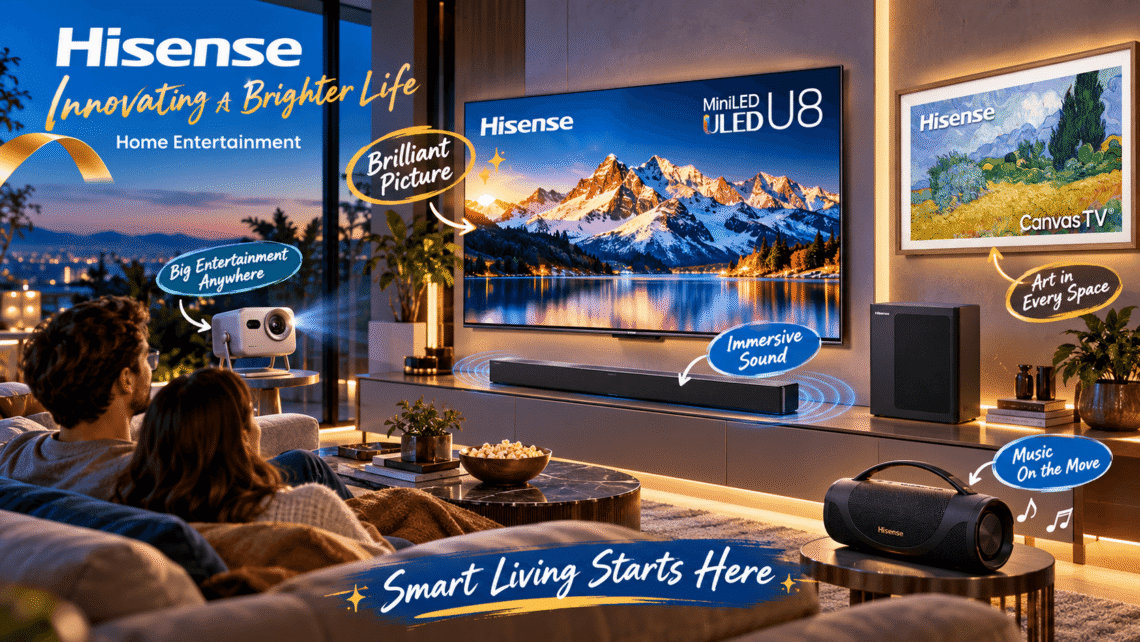
Most people still label Hisense as “that TV company,” and that’s such a tiny slice of what they actually make. Walk through the average Hisense storefront (or scroll the full product lineup, like the one on their official Amazon storefront) and you’ll find a full ecosystem of home tech that fits together like a puzzle, every piece designed to talk to the others, no weird proprietary locks or separate apps required.
Let’s break that down, no fancy jargon, just the stuff that matters for your daily life:
✅ Televisions (the obvious flagship, but so much more than you think)
This is where Hisense cut its teeth, and it’s still the part of their business that gets the most obsessive attention. They don’t just assemble panels off a shelf and stick their logo on it — they design and manufacture their own core display technology, from ULED to Mini-LED, from Quantum Dot to their own proprietary 120Hz motion smoothing that doesn’t turn every movie into a cheap soap opera. The current lineup covers literally every possible use case you could have: there are entry-level 4K TVs perfect for a college dorm or guest bedroom, mid-range sets that punch way above their weight for movie nights and sports, high-end Mini-LED and OLED panels that rival every premium flagship on the market at half the price, and even extra bright outdoor TVs built specifically for backyard movie nights that won’t wash out in direct sunlight.
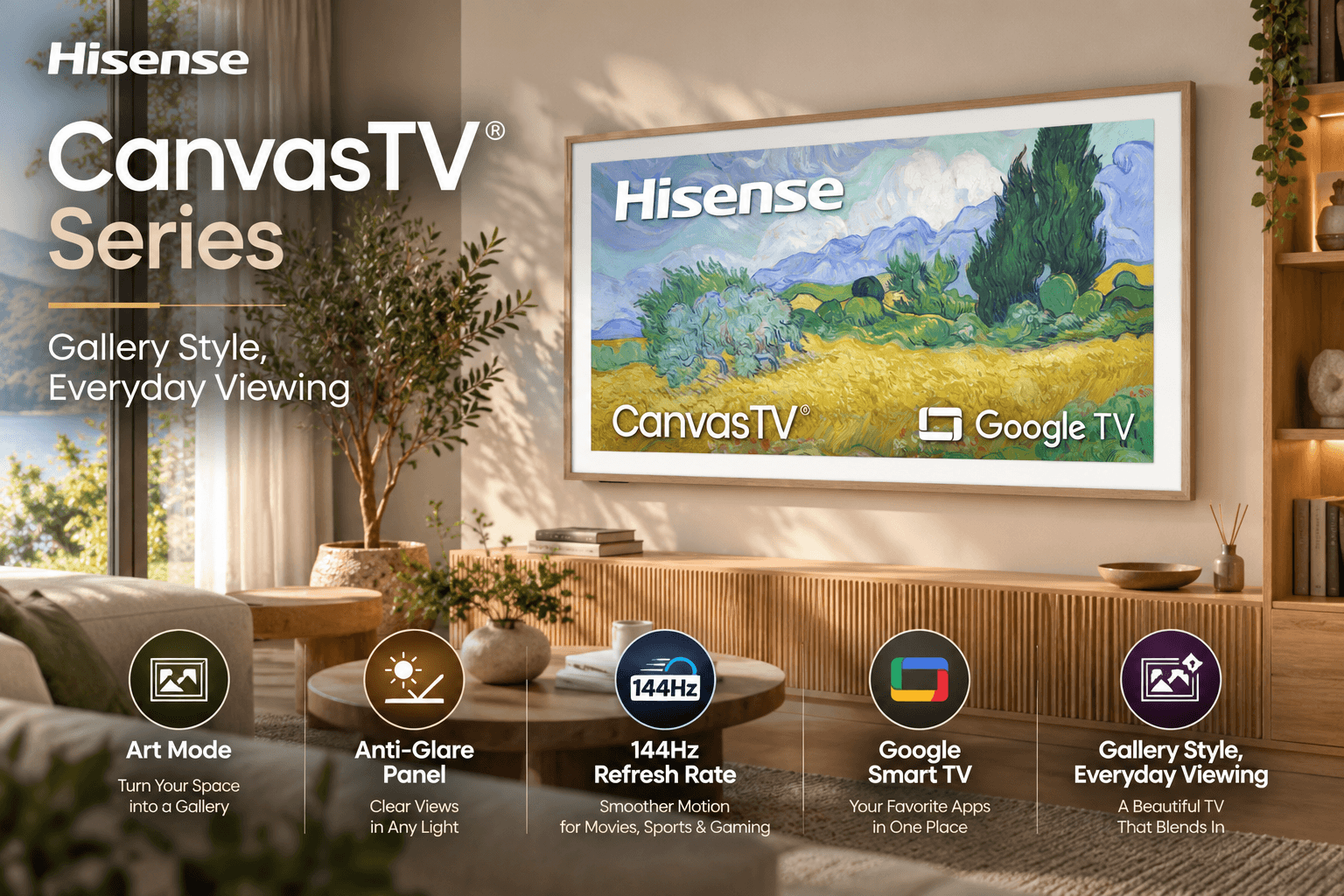
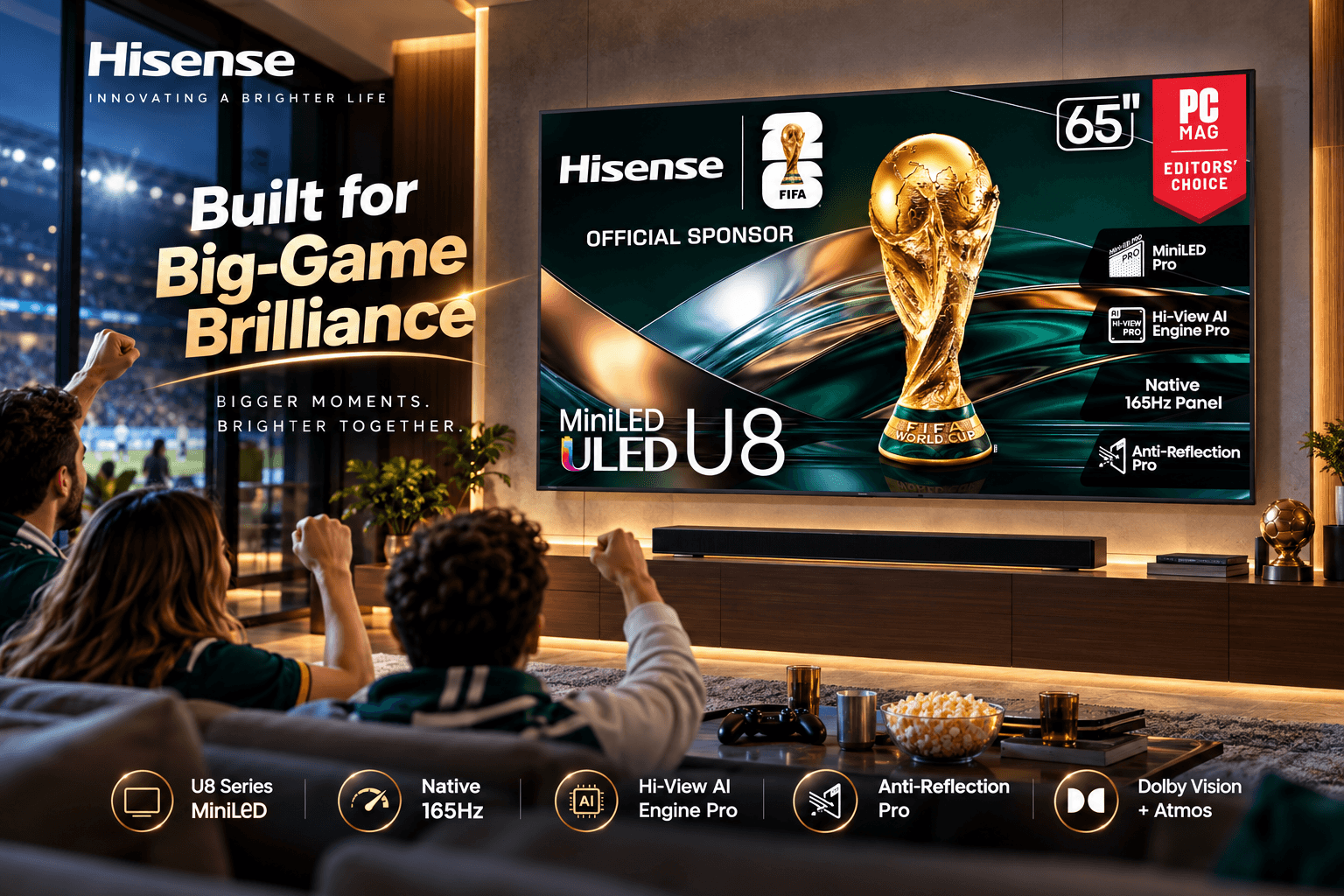
And the best part? No bloatware. No 10 pre-installed apps you will never use. No forced pop-up ads that interrupt your show 20 minutes in. The interface loads in 2 seconds, the remote has big, easy buttons, and it works with every streaming stick, every game console, every soundbar, and every smart home system you already own.
✅ Portable & Home Projectors (the game-changer for small spaces)
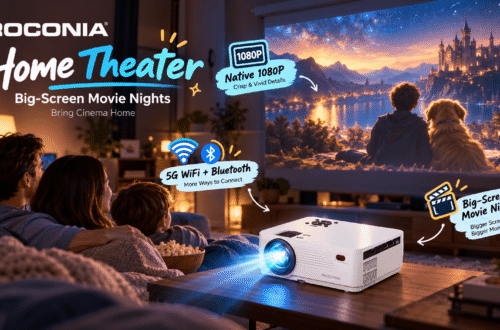
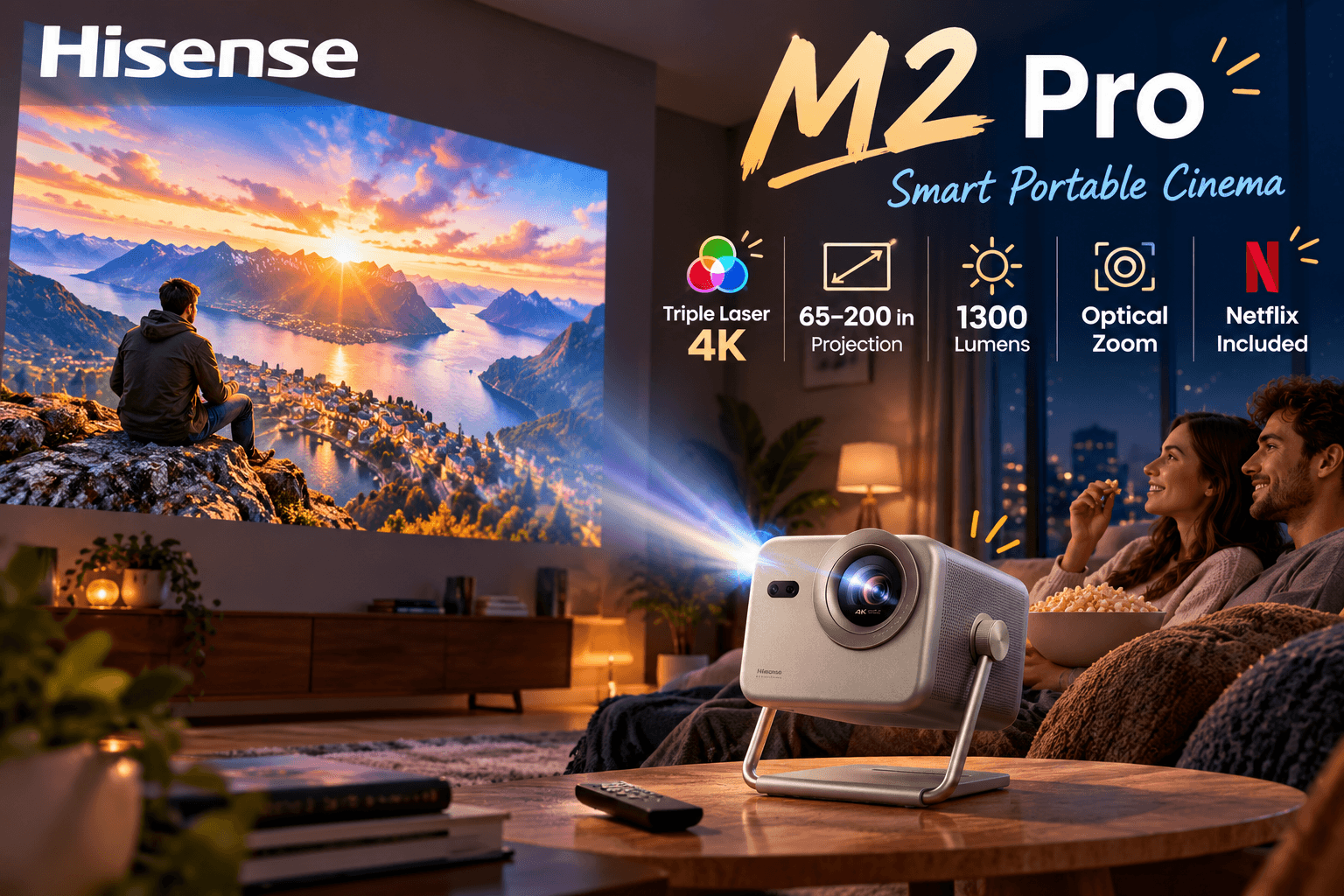
If you’ve ever dreamed of a 100-inch movie screen in your tiny apartment, but thought you didn’t have the wall space or the budget for a dedicated home theater — Hisense’s projector line was made for you. Their portable, battery-powered models run for 3+ hours on a single charge, fit in a backpack, and auto-focus and auto-keystone correct in less than a second, so you can pull it out at a friend’s backyard barbecue, project onto a bedsheet, and start the movie 10 seconds later. Their fixed home projectors are short-throw, too, so you don’t need to mount it 10 feet away from the wall — you can set it on your TV stand 12 inches from the wall and get a full 120-inch bright, crisp 4K picture, no ceiling mount, no complicated wiring.
✅ Audio & Sound Systems
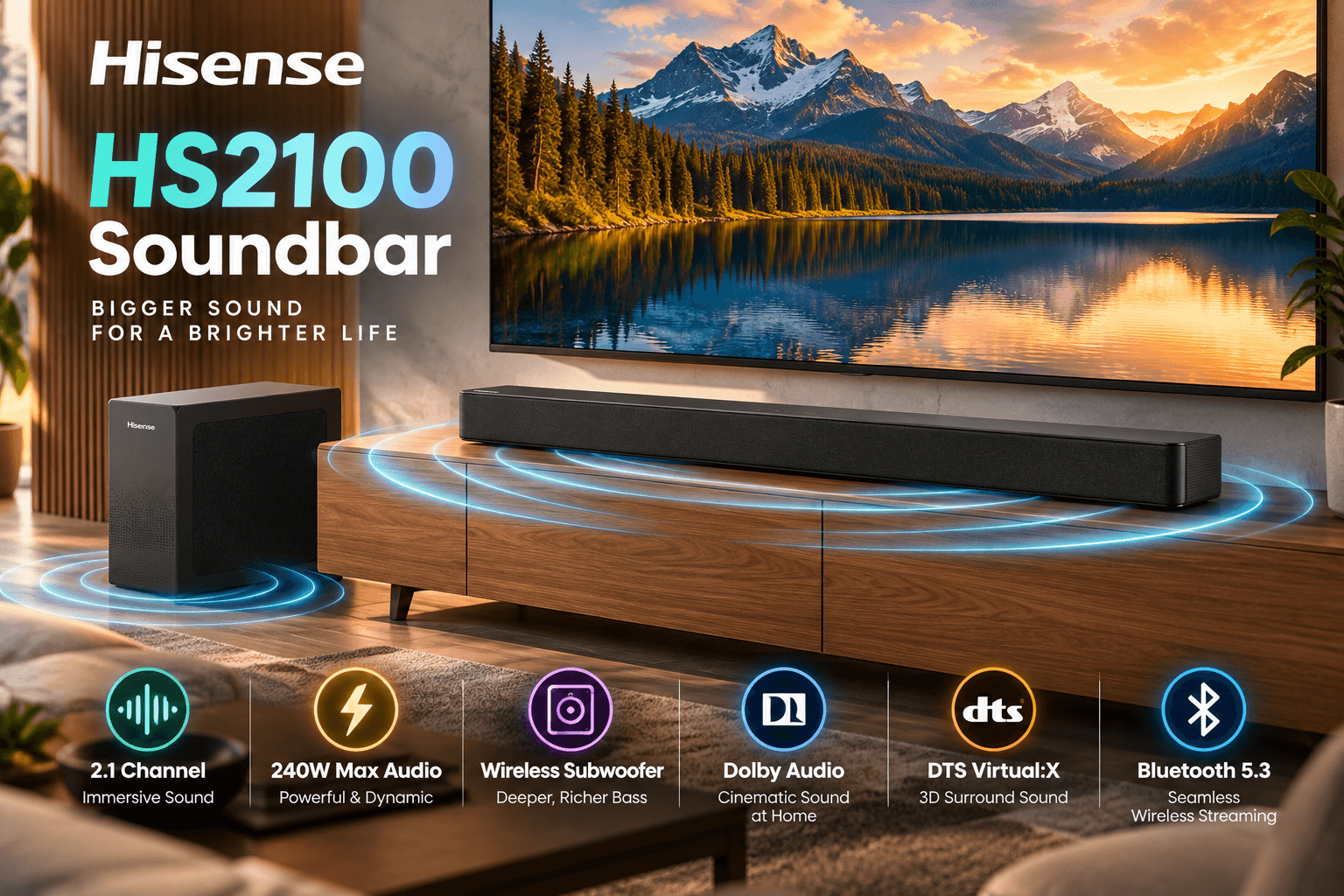
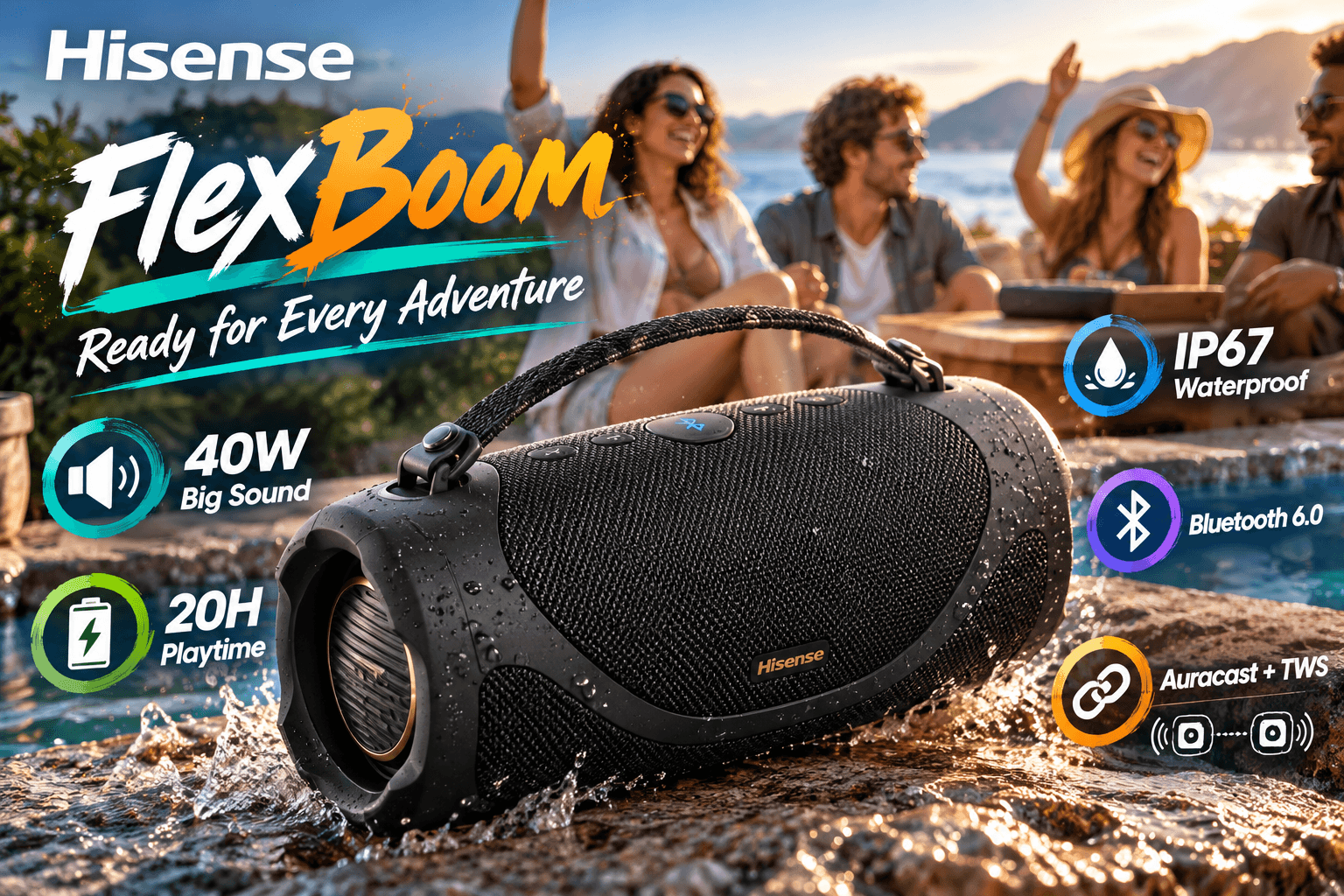
There’s a running joke that most smart TVs sound like someone is talking to you through a tin can. Hisense never let that happen. Their soundbars, surround sound systems, and portable Bluetooth speakers are tuned specifically to pair with their TVs, but they work perfectly with every other device too. No need to fiddle with 10 different audio modes: the dialogue mode makes every line of your show crystal clear even if you’re half-asleep on the couch, the bass mode crunches just right for action movies and concert footage, and the battery-powered speakers last all night on a single charge for pool parties and camping trips.
✅ Home Appliances (the ones that disappear into your life, but work perfectly)
This is the section even long-time Hisense fans miss, and it’s brilliant. Their line of portable and window air conditioners, dehumidifiers, refrigeration products, and small kitchen appliances all follow that same exact “no nonsense” rule: they’re quiet, energy efficient, easy to set up, and they keep running for years without needing a service call. A lot of people buy one Hisense TV, then a year later buy a Hisense AC for their bedroom, then a Hisense mini-fridge for their game room, and before they know it half their apartment is running on Hisense — and they never even noticed it happening. 🧊
To make this super clear, here’s a quick little cheat sheet that sums up exactly who each product line is built for, no marketing fluff at all:
| Hisense Product Line | Who it’s made for | The one tiny secret feature everyone loves |
|---|---|---|
| ULED / Mini-LED 4K TVs | Movie lovers, sports fans, casual gamers | Built-in motion smoothing that you can toggle on and off with one single button, no 5-menu deep settings dive |
| 4K Short-Throw Projectors | Renters, small apartment dwellers, backyard movie night hosts | Auto alignment that will fix the picture even if you set the projector on a wobbly folding table |
| Soundbars + Surround Systems | Anyone who hates complicated audio wiring | One-touch dialogue boost that makes even the quietest whispered line in a thriller perfectly audible |
| Portable AC / Dehumidifiers | Students, renters, people who move often | Super simple plug-and-play setup that takes 5 minutes, no professional installation required |
| Portable Battery Projectors + Speakers | Campers, road trippers, tailgate party people | IPX water resistance so you don’t panic if a little rain splashes on it outside |
Every single one of these products wasn’t designed in a boardroom by people who don’t use them. They were built by engineers who also rent apartments, host game nights, take road trips, and hate setting up complicated tech after a 9-5 workday.
The Hisense Difference: What Makes It Feel So Different From Every Other Tech Brand
You’ve probably bought a “premium” tech product before that left you feeling ripped off. You paid $2000 for a TV, then 18 months later the manufacturer stopped pushing software updates, the app store got locked down, and half the features stopped working. Or you bought a “budget” product that broke after 3 months, and customer support never answered your emails.
Hisense doesn’t do either of those things — and there are three very specific reasons why, that almost no other brand in this space can match.
First, they own almost their entire supply chain. That sounds boring, until you realize what that means for you. They don’t outsource every single part to 10 different third-party factories. They design the core display chips, they manufacture the panels, they assemble the final product, they write the software, they run the customer support teams, and they handle most of their own logistics. That means there’s no middleman marking up the price 3x, no one else to blame if a part is bad, and they can fix a problem in days instead of months. When a customer says “this menu feels slow,” the team that made the software can go in and push an update in a week, not wait 6 months for a third-party vendor to get back to them. It’s that level of control that lets them sell a product with specs that would cost twice as much from another brand, and still keep the reliability high. 📦
Second, they test their products like they’re trying to break them. Every new Hisense TV prototype gets run for 10,000 straight hours on a loop, 24 hours a day, before it ever goes on sale. Every portable projector gets dropped 50 times from 3 feet onto a hard floor, every AC unit gets run nonstop for 3 months in a 100°F heat test chamber, every remote gets pressed 100,000 times to make sure the buttons don’t wear out. They don’t do this to brag. They do it because they remember those first 1969 engineers building TVs that needed to last a decade for families who couldn’t afford to replace them every two years. That old habit never went away.
Third, they meet you where you are. Hisense never tries to force you to “upgrade” your whole house to their ecosystem if you don’t want to. If you have an iPhone, a PlayStation, a Nest thermostat, a Roku stick — all of it works perfectly out of the box with any Hisense product. There’s no “Hisense only” walled garden that locks you in. They don’t send you emails every month begging you to buy a new accessory, they don’t push you to pay for a subscription to unlock basic features that should already be there, and they never make you feel stupid for not knowing what “local dimming” or “VRR” means. If you want to dive into all the advanced settings, they’re there. If you just want to plug it in, turn it on, and watch your show — it works, no questions asked.
We’ve talked to dozens of Hisense owners over the years, and there’s one line we hear more than any other: “I bought it because it was a good deal, and now it’s just… part of the house. I forget it’s even there, because it never breaks.” That’s the highest possible compliment a home tech product can get. It doesn’t demand your attention. It just works. ✨
💬 Real user story, from a teacher in Ohio we chatted with last month: “I bought my first Hisense TV 7 years ago for my classroom. The kids spilled soda on it, they threw toys at it, we ran educational videos on it 8 hours a day, 5 days a week for 6 years. It never once crashed, never had a dead pixel, and when I finally moved it home last year, it still works exactly like the day I unboxed it. I just bought a new Hisense for my living room, and I didn’t even look at any other brands.”
That’s the kind of loyalty you can’t buy with a 30-second Super Bowl ad. You can only earn it, one reliable, unglamorous, perfectly functional day after another.
How Hisense Changed The Game For Everyone (Even The Other Brands)
Before Hisense blew up globally, the home entertainment market was stuck in a really frustrating place. You had two options: either spend $800+ on a mid-tier “premium” TV with half the features you wanted, or buy a super cheap no-name brand that would die in 12 months. There was no middle ground. No one was making a product that had all the good specs, no bloat, a rock solid 2+ year warranty, and a price tag that a regular working person could actually afford.
Hisense walked into that gap, and it didn’t just make a better product — it forced the entire rest of the industry to stop taking customers for granted.
Before Hisense popularized affordable 4K TVs, a 55-inch 4K set would cost you well over $1000. Now you can get one, from Hisense, for under $300, that’s brighter, has better motion, and comes with a better warranty than those old $1000 sets. Before Hisense launched their short-throw projectors, a good 4K home projector would cost you $3000+, and you needed a dedicated media room to even use it. Now you can get one that fits on your TV stand for under $1000. Before Hisense started building portable, energy-efficient AC units for apartments and dorms, all you could buy were loud, ugly, heavy units that weighed 80 pounds and shook your window frame.
And the best part? They never cut corners to get that price down. They just found a smarter way to build it. By owning their own supply chain, by not wasting hundreds of millions of dollars on over-the-top celebrity endorsements and 6-figure Super Bowl ads, by putting all that budget back into the parts that actually matter for the user — the screen panel, the speaker drivers, the durability testing — they could sell you a better product for less money.
It’s not a “race to the bottom.” It’s a race to the top, for regular people. 🚀
They’re also one of the most forward-thinking brands on the planet when it comes to sustainability, which almost no one talks about. Over the last 10 years, they’ve cut the energy consumption of their TV lines by 62%, all their new AC units use low-GWP eco-friendly refrigerant that doesn’t harm the ozone layer, 90% of the materials in their new products are fully recyclable, and they run 12 different e-waste recycling programs across 27 countries to take back old Hisense (and even non-Hisense) electronics to refurbish or recycle them properly. They don’t make a big marketing campaign out of it. They just do it, because it’s the obvious right thing to do.
The Little Details That Make Hisense Feel Like It Was Built For You
We talk a lot about specs and big technology features, but the real magic of Hisense lives in all the tiny, almost invisible details that no other brand bothers to think about. These are the little things that make you go “wait, that’s so smart, why didn’t anyone else do this?” after you’ve used the product for a week.
Take the remote, for example. Almost every other smart TV remote these days has 70 buttons — most of them for apps you will never open, all crammed together, tiny, impossible to see in the dark. The standard Hisense remote has exactly the buttons you need: power, volume, channel, directional pad, home, back, three quick-launch buttons for the most popular streaming apps, and that’s it. The buttons are big, raised, easy to find by touch when you’re half-asleep on the couch watching a late movie. No squinting, no fumbling, no accidentally opening a random fitness app in the middle of a horror scene.
Or take the setup process. Almost every new smart TV these days makes you sit through 20 minutes of account creation, terms and conditions pop-ups, 15 different permission requests, and “connect to your smart home” prompts before you can even watch something. A new Hisense TV unboxes, plugs in, and has you watching Netflix in less than 3 minutes. You can skip all the extra accounts if you want, you can turn off all the data collection in one single toggle, and you never have to enter an email address if you don’t want to.
Or take the gaming mode. Every Hisense TV made in the last 4 years has a one-tap “Game Mode Pro” button on the remote that instantly switches all the settings over: zero motion blur, 120Hz refresh rate, 4K resolution, auto low latency mode, no post-processing lag. You press one button, and you’re playing, no digging through 6 menus to turn off 10 different features that make your input lag so bad you lose your fighting game match.
These aren’t “revolutionary” features. They’re just… thoughtful. They’re the kind of small, obvious choice you only make if you actually use your own product every single night. That’s the Hisense difference in a nutshell. They’re the only big tech brand that acts like they’re on your side. They don’t treat you like a data point, or a number on a sales chart, or someone they need to upsell every 6 months. They treat you like a person who just wants to come home after a long day, sit down, and enjoy their show. 🛋️
Where Hisense Is Going Next: The Next 50 Years
Right now, Hisense is working on the next generation of home tech that still follows that exact same original promise from 1969: better, simpler, more accessible for everyone. They’re rolling out new transparent display panels that look like regular glass when they’re turned off, then turn into a full 4K screen when you turn them on, built into kitchen cabinets, bedroom mirrors, even living room windows. They’re working on new low-power display technology that uses 70% less electricity than current panels, so you can leave your screen on all day for art, news, or a video call without blowing up your power bill. They’re building even better portable projectors that can run for 10 hours on a single charge, so you can take them camping and watch a movie under the stars with zero power outlets.
And through all of that, they’re not going to change who they are. They’re not suddenly going to start charging you twice as much for the same features. They’re not going to lock basic functions behind a subscription. They’re not going to stop testing their products until they’re so reliable you forget you even own a tech product.
For almost 50 years, Hisense has been the quiet brand in the background of your life, showing up when you need it, never letting you down, never making a big fuss. It’s not the brand that shows up on all the influencer “top 10” lists yelling about how revolutionary it is. It’s the brand that your friend buys, then recommends to you, then you buy, then you recommend to three more of your friends, and no one even stops to talk about it — because it just works.
That’s the revolution Hisense has been building, one household at a time. It’s not about creating some wild, unrecognizable futuristic home that feels like a sci-fi movie set. It’s about making your actual, real, everyday home just a little bit brighter, just a little bit easier, just a little more fun. 🎬
The next time you’re looking for a new TV, or a new way to host movie night, or a quiet AC unit that keeps you cool all summer, give Hisense a look. It won’t yell at you from the shelf. It won’t overwhelm you with gimmicks. It will just show up, do exactly what you need it to do, and stay by your side for years. That’s the Hisense promise. And for millions and millions of people around the world, it’s already delivered on it, every single day.