A front door lock has a quiet but important job: it needs to work every single day without demanding much attention. The best ones fade into the background until you are carrying groceries, expecting a visitor, checking on a rental property, or trying to get the kids inside before the rain starts. That is where a thoughtfully chosen smart lock can make a real difference.
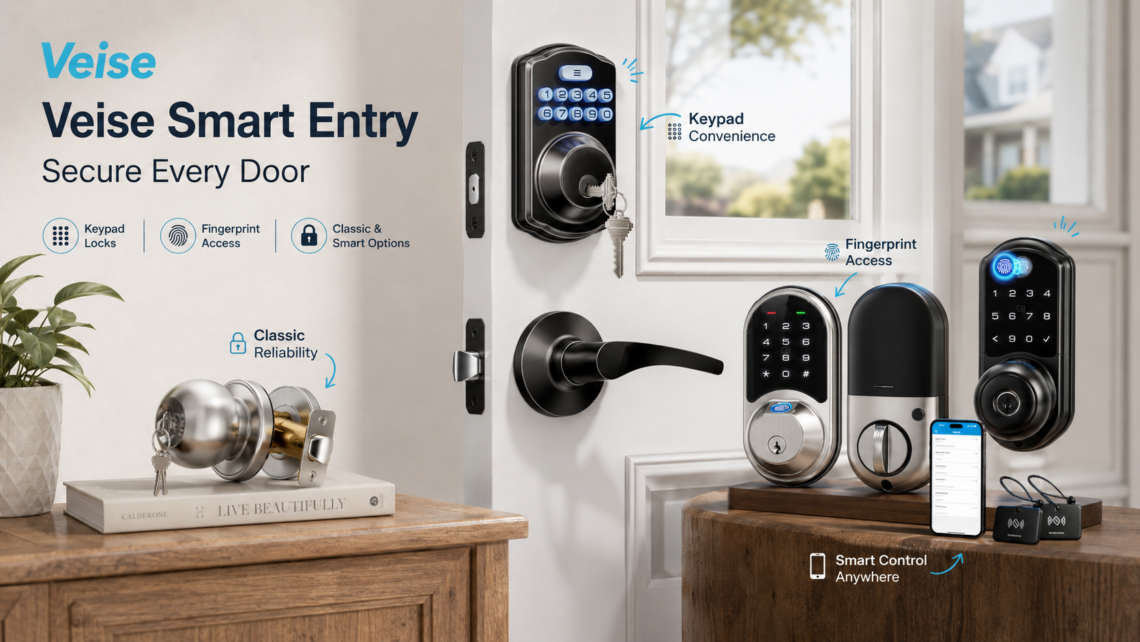
Veise offers a broad range of door hardware that moves from familiar keyed entry to keypad, fingerprint, app-connected, and lever-handle smart lock options. Rather than treating “smart home” as a single all-or-nothing upgrade, the lineup gives homeowners practical choices based on the door, the household, and the amount of access control they actually want.
For some homes, a straightforward keypad deadbolt is enough. For others, fingerprint recognition, temporary passcodes, fob access, app controls, or remote access sharing may be more useful. The point is not to add technology for its own sake. It is to make coming and going less complicated while keeping the front door intentionally managed.
Keyless Entry Is Really About Everyday Flow
The appeal of a keyless lock is easy to understand, but it is often described too narrowly. Yes, it means fewer moments spent digging through a purse, backpack, work bag, or coat pocket for a key. But the bigger benefit is flexibility. A code can be shared with a family member, a trusted neighbor, a dog walker, or a house cleaner without needing to make and later retrieve another physical key.
That flexibility becomes especially useful in busy households. One person may prefer a fingerprint unlock after a morning run. Another may find a keypad easier. A guest may be given a temporary code, while a homeowner can still keep mechanical keys available as a backup. Different access methods are not just a feature list; they reflect the fact that real households rarely operate in one neat, predictable way.
The Veise selection includes models designed around those different routines. A keypad-and-lever set, for example, can make sense for an exterior entry where homeowners want both a matching handle and electronic deadbolt. A fingerprint deadbolt may be a better fit for someone who wants quick personal access plus the ability to manage codes and users. A smart door knob can be a practical choice for a bedroom, home office, apartment interior, or other door where controlled access matters but a full deadbolt setup is not necessary.
It is worth remembering that keyless entry is not identical to key-free living. Many homeowners still appreciate a mechanical-key option. That is not a contradiction. It is sensible redundancy. Technology should simplify an entry routine, not leave a household wondering what happens when a phone is unavailable, a battery is low, or a guest is more comfortable using a traditional key.
A Lock Should Fit the Door Before It Fits the App
Smart lock shopping can get overly focused on the digital side: fingerprint speed, mobile access, voice controls, or the number of codes. Those details matter, but they should come after the fundamentals. Start with the door itself. Is it an exterior door, an interior door, a bedroom, a garage entry, or a rental unit? Does it already have a deadbolt? Is a lever handle needed? Is the door left- or right-handed? What finish will work with the existing hardware?
These questions sound ordinary because they are. And they are exactly what makes the difference between a lock that feels integrated and one that feels like an awkward add-on.
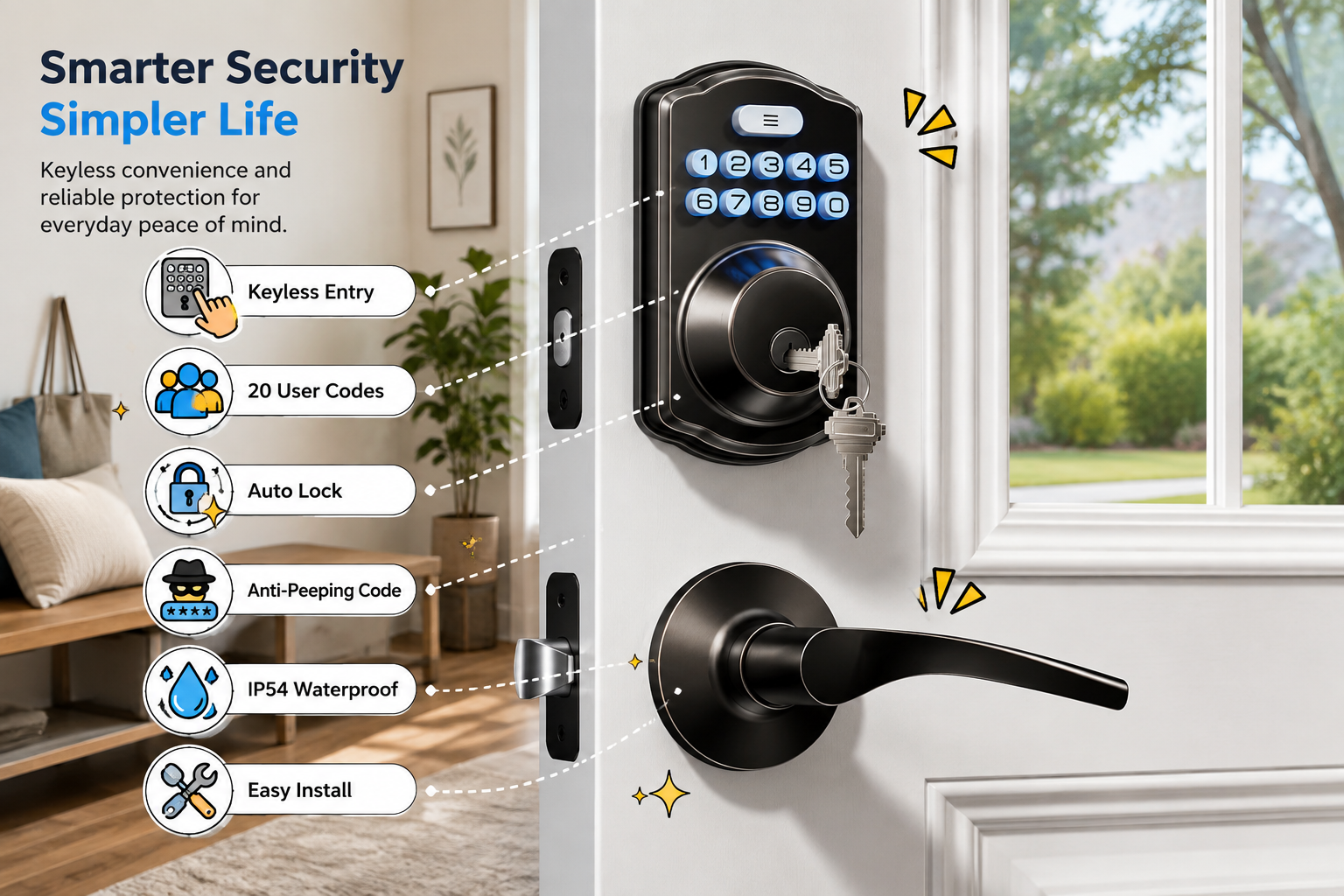
Veise’s current assortment reflects this practical distinction. The KS01B keypad lock set combines an electronic deadbolt with two lever handles, making it relevant for homeowners who want a coordinated front-door update rather than replacing only the deadbolt. Its listed features include keypad access, multiple user codes, auto-lock capability, anti-peeping code support, and an IP54 water-resistance rating. That combination speaks to a familiar exterior-door use case: convenient access, a clean matching look, and features that do not require a complicated daily routine.
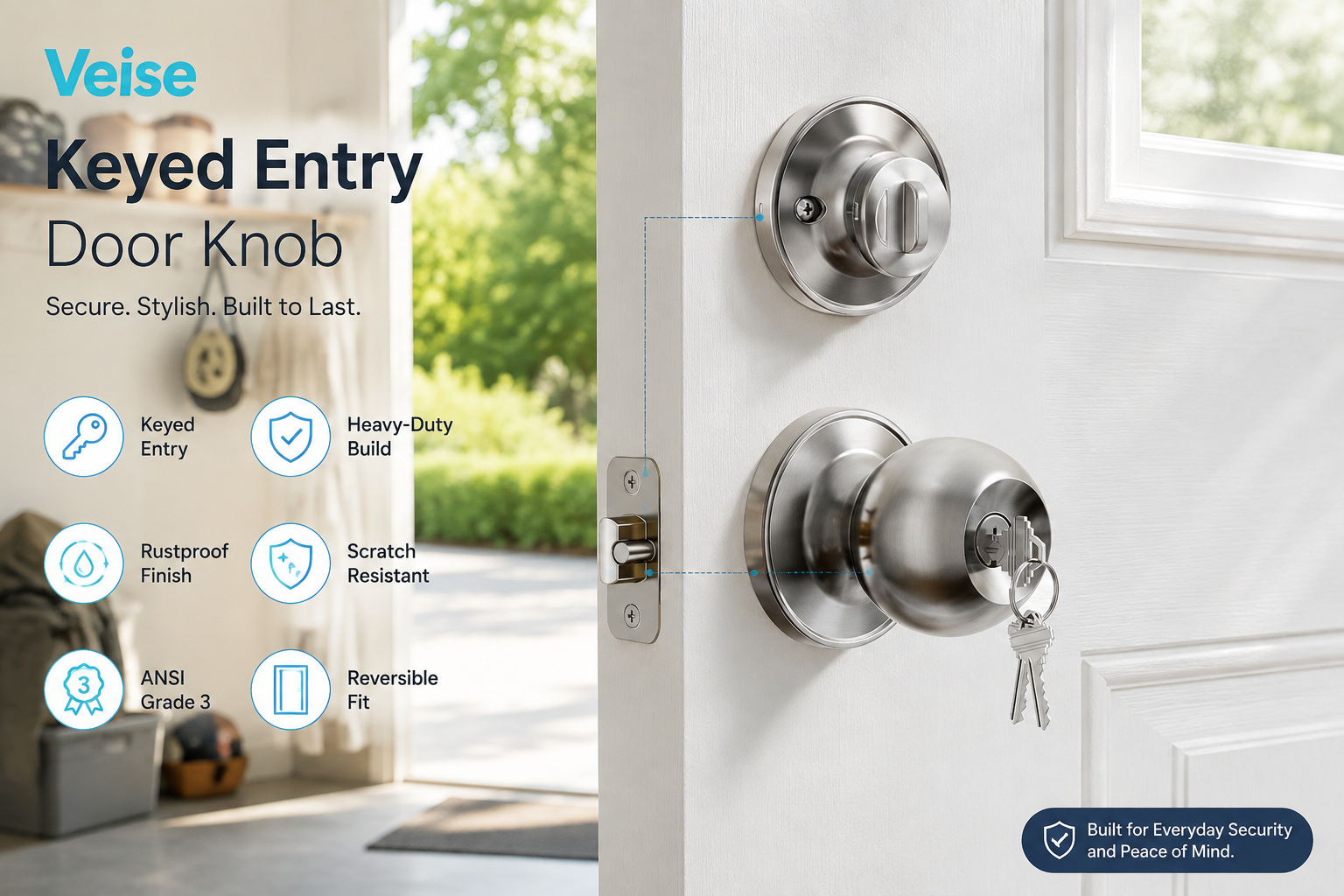
Meanwhile, a conventional keyed entry door knob still has a place. Not every door needs to connect to an app, and not every project needs a smart solution. Veise also offers a keyed entry knob described as reversible for left- or right-hand doors, with a satin nickel finish and ANSI Grade 3 designation. That can be a sensible option for a side door, utility room, storage area, or a homeowner who simply wants durable-looking hardware with traditional operation.
This range is a strength because it allows a home to be upgraded with some consistency. The front entry might benefit from a smart deadbolt, while secondary doors may only need a reliable keyed knob. There is no rule that every door must use the same technology. What matters is creating a setup that makes sense room by room.
Fingerprint Access: Convenient, but Best Used with a Plan
Fingerprint locks have become an attractive option because they reduce one more step at the door. There is no key to locate and no code to enter. For the people enrolled in the lock, the gesture can feel direct and natural: touch, unlock, enter.
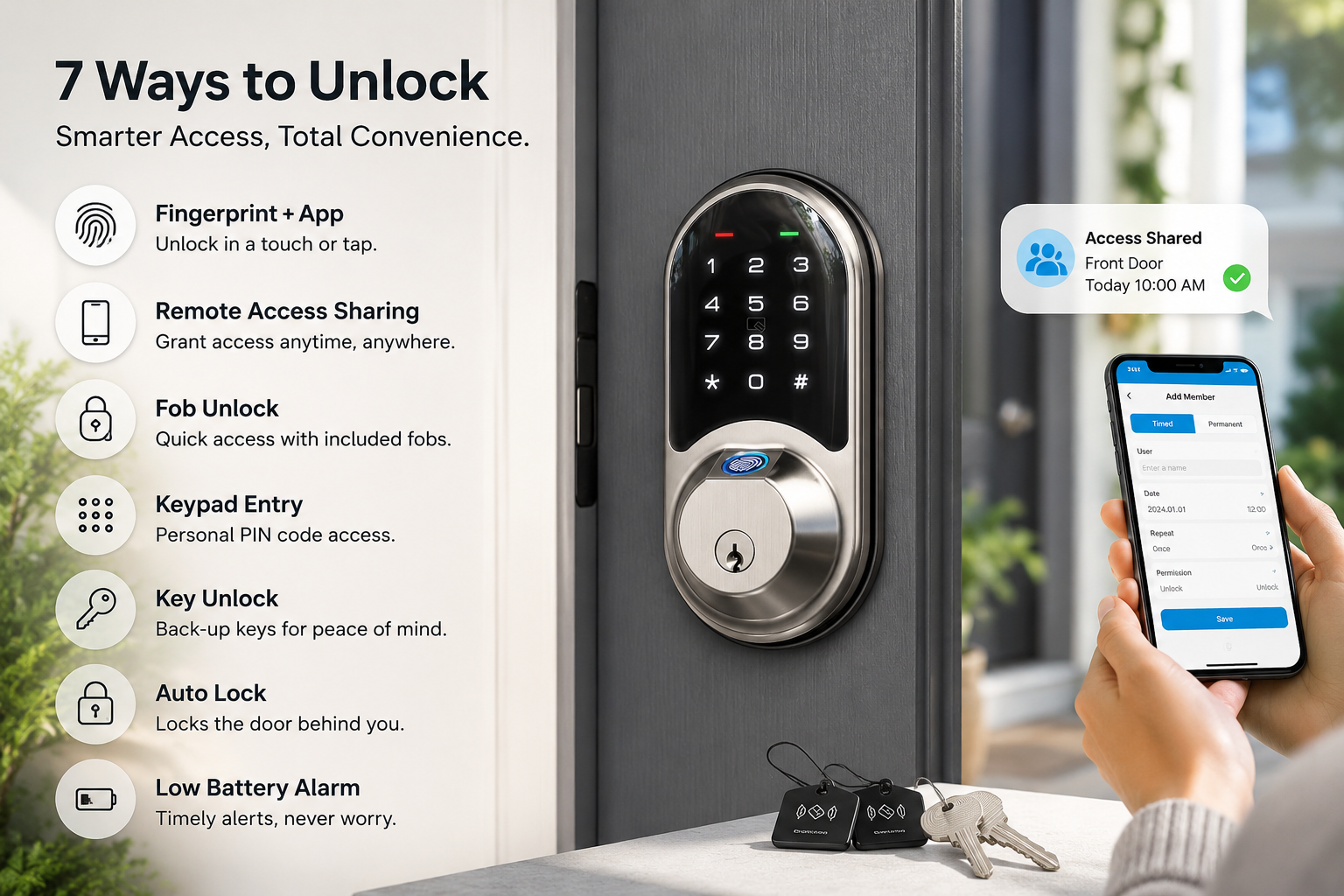
Veise’s RZ07 fingerprint smart deadbolt is positioned as a multi-access lock, with listed entry options that include fingerprint, app, web portal, fobs, codes, eKey sharing, and a mechanical key. That broad selection is useful because it avoids treating fingerprint recognition as the only answer. A homeowner may use a fingerprint every day, assign a code to a teenager, give a fob to someone who dislikes phone apps, and retain a key for emergencies.
That said, fingerprint access deserves realistic expectations. It is ideal for primary users, but it should not be the sole plan for everyone who may need to enter. Small children, visiting relatives, contractors, and short-term guests may be better served by a code or another approved access method. A good smart-lock setup considers the people who use the door frequently as well as the people who use it occasionally.
For a household with changing schedules, user management can become more valuable than the fingerprint reader itself. The ability to create and remove access rather than handing out spare keys offers a clearer way to stay organized. When a service arrangement ends, a code can be removed. When a family member returns home from college, access can be added again. These small adjustments can make home entry feel more manageable without turning it into a daily task.
The Smart Knob Option for Rooms That Need Boundaries
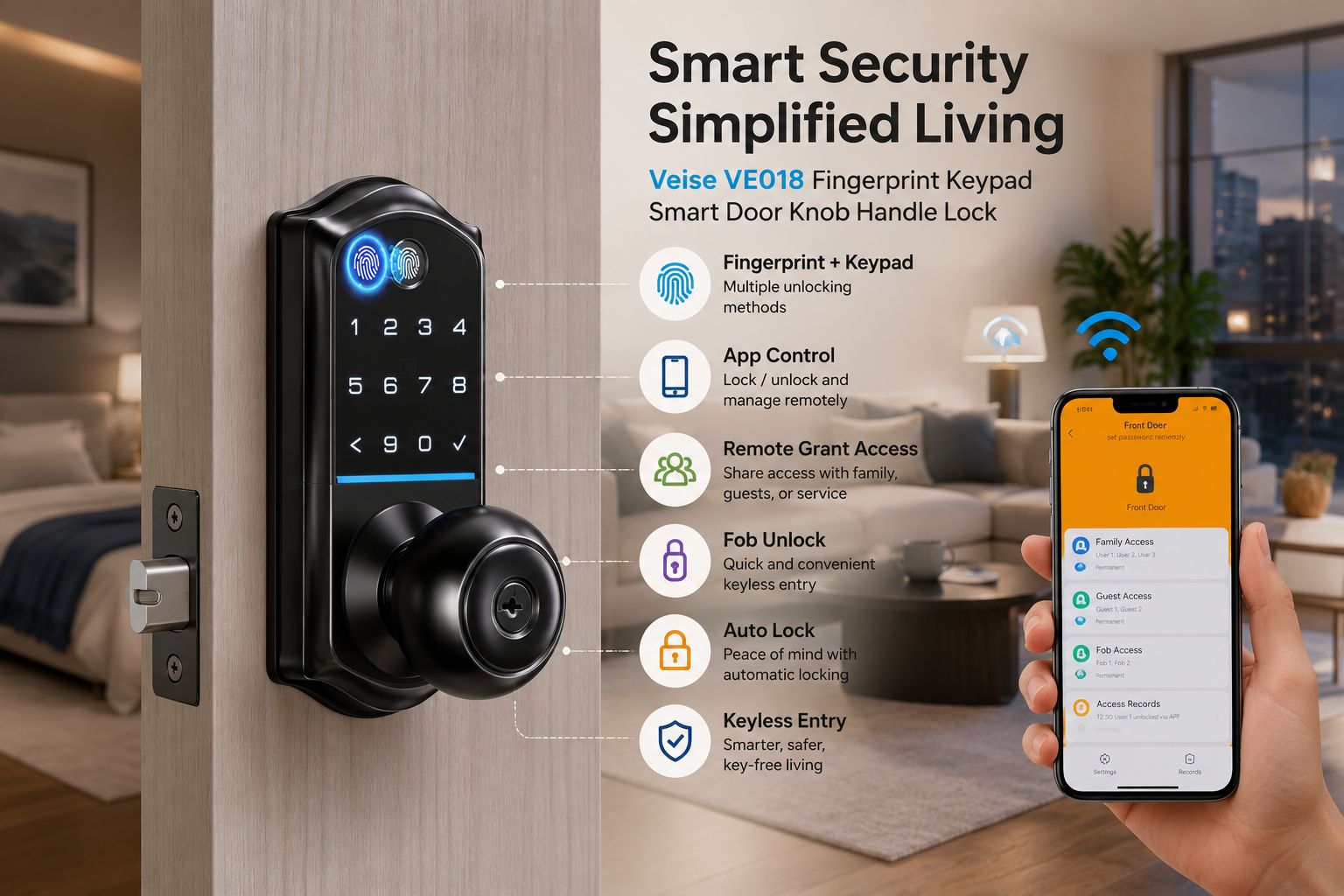
Not every access-control need happens at the front door. Bedrooms, offices, home studios, shared apartments, and certain rental spaces can benefit from a lock that is more flexible than a basic privacy knob. The Veise VE018 smart door knob is designed for that category, combining a handle-style knob with a touchscreen keypad, fingerprint access, fob access, app control, remote authorization, and auto-lock functions.
This type of lock can be particularly relevant in homes where work and personal space overlap. A home office may contain documents, equipment, or inventory that should not be freely accessible. A shared home may require individual room access without the hassle of maintaining a collection of physical keys. In a rental setting, an owner may want a simpler way to change access between occupants than rekeying a lock after every turnover.
There is a useful distinction here: a smart knob is not necessarily meant to replace a high-security exterior deadbolt. It serves a different purpose. It can create a defined boundary inside the home or on a compatible entry door while giving the user more control over who has access and when.
When choosing between a smart deadbolt and a smart knob, think less about which product sounds more advanced and more about the door’s role. Exterior doors often call for the security architecture and familiar operation of a deadbolt. Interior doors may be better served by a compact smart knob or handle lock. Matching the product to the location is more important than maximizing features.
Small Features That Matter More Than They Seem
Some lock features sound minor in a product listing but become meaningful in everyday use. Auto-lock is one example. For people who regularly leave the house with full hands or tend to second-guess whether they locked up, automatic locking can remove a little friction from the routine. It should be configured thoughtfully, of course. A very short lock delay may not suit a household where people step outside often, take out trash, or move between a garage and the house.
Low-battery alerts are another practical feature. Battery-powered electronic locks are designed to signal when power is running down, but the homeowner still needs to respond. It is smart to keep the correct replacement batteries on hand, test access methods periodically, and make sure adult household members know where the mechanical backup key is stored.
Anti-peeping code functions are also worth understanding. On compatible keypad locks, this feature can allow extra digits to be entered before or after the correct passcode, helping prevent someone nearby from easily identifying the true code. It is a small detail, yet it reflects a broader principle: security often improves through ordinary habits, not just through one headline feature.
- Use unique codes rather than one shared household code whenever possible.
- Delete temporary access when it is no longer needed.
- Keep a backup entry method available and known to trusted adults.
- Review auto-lock timing after the first week of use.
- Check door alignment before blaming the lock for a difficult latch or bolt.
Installation Starts with Preparation, Not the Screwdriver
Many modern replacement locks are designed to work with common door preparations, but “easy installation” still depends on the condition of the door. Before selecting any electronic lock, measure the existing bore hole, backset, door thickness, and the deadbolt or latch opening. Check whether the door closes smoothly. If the bolt drags against the strike plate, a new lock will not solve the alignment issue by itself.
It is also important to think about connectivity before buying. Some smart lock functions work locally through Bluetooth, while remote operation, voice assistant functions, or web-based access may require a compatible gateway or hub. For example, certain listed features on the VE018 are tied to use with a G1 gateway. That is not a drawback; it is simply a reminder to understand which capabilities are available directly from the lock and which depend on an additional component.
Homeowners who prefer a clean, low-maintenance experience may decide that a keypad model with auto-lock is all they need. Others may see real value in app management and remote authorization. There is no universally right answer. The better choice is the one that matches how the door is used on an ordinary Tuesday afternoon, not just how impressive the lock looks in a product photo.
Who Might Find Veise a Good Fit?
Veise is worth considering for homeowners who want more choice than a one-style-fits-all smart lock catalog provides. The brand’s mix of keypad lock sets, fingerprint deadbolts, smart knobs, and traditional keyed hardware makes it easier to think in terms of an entire property rather than a single front-door purchase.
A family home may pair a keypad lever set at the main entrance with conventional hardware elsewhere. A homeowner who frequently grants temporary access may lean toward a fingerprint smart deadbolt with code and eKey-sharing options. Someone updating a private office, bedroom, or shared apartment room may prefer a smart knob with flexible credentials. And a more traditional household may start with a straightforward keypad lock that preserves familiar mechanical-key backup.
That variety gives buyers room to make a measured upgrade. You do not need to turn every door into a connected device to benefit from better access management. One well-chosen lock at the entry used most often can be enough to change the daily experience.
For homeowners comparing styles, access options, and finishes, browsing the Veise range is a useful starting point. Focus on the door first, then the people who need entry, then the access methods that will genuinely make life easier.
A Better Door Routine Starts with the Right Level of Control
The strongest case for a smart door lock is not that it makes a home feel futuristic. It is that it can make an ordinary routine feel more deliberate. Instead of hiding spare keys, wondering who has copies, or rushing to the door with hands full, homeowners can choose a clearer approach to access.
Veise smart locks and door hardware offer options across that spectrum, from traditional keyed entry to keypad, fingerprint, app-based, and multi-method access. The most successful installation will be the one that feels intuitive for the household, works with the existing door, and includes a sensible backup plan.
In the end, a secure home entry should not be complicated. It should simply let the right people in, keep the wrong people out, and make the front door one less thing to think about.