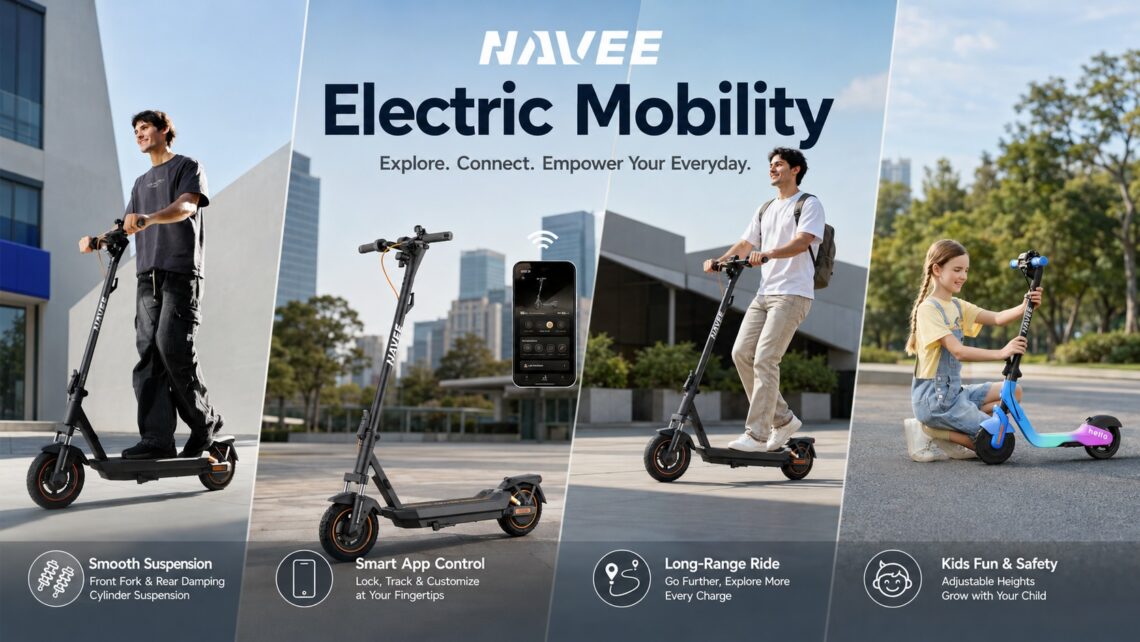
City life has a rhythm of its own—fast, crowded, and often unpredictable. Whether you’re weaving through morning traffic or making a quick grocery run after work, the way you move matters more than ever. Over the past few years, electric scooters have quietly shifted from novelty to necessity, especially for urban commuters who value efficiency without sacrificing flexibility. Among the brands gaining attention in this space, NAVEE has carved out a reputation for offering practical, thoughtfully designed electric scooters that fit seamlessly into everyday routines.
What makes a scooter worth considering isn’t just speed or range—it’s how well it integrates into real life. Can it handle uneven sidewalks? Is it easy to fold and carry upstairs? Does it feel stable during longer rides? These are the kinds of questions that matter, and they’re exactly where NAVEE seems to focus its attention.
Urban Mobility, Reimagined
There’s something quietly liberating about stepping onto a scooter and bypassing the usual frustrations of city travel. No waiting for delayed buses. No circling endlessly for parking. With a reliable electric scooter, your commute becomes predictable—and often faster.
In this context, NAVEE positions its scooters not just as gadgets, but as everyday tools. The designs reflect an understanding of real-world commuting: compact frames for easy storage, intuitive controls that don’t require a learning curve, and enough power to handle both short errands and longer cross-town rides.
Unlike some scooters that feel built purely for speed, NAVEE models tend to balance performance with comfort. That balance is especially noticeable during longer rides, where stability and ride smoothness start to matter more than top speed.
Design That Makes Sense
One of the first things you notice about a well-designed scooter is what you don’t notice. No awkward folding mechanisms, no confusing display panels, no unnecessary bulk. That’s where NAVEE stands out—it leans into simplicity without feeling stripped down.
The frames are typically clean and understated, making them feel at home whether you’re riding through downtown streets or storing them in a small apartment. The folding systems are straightforward, which is crucial if you’re carrying your scooter onto public transit or tucking it under a desk at work.
Details like handlebar ergonomics and deck space might seem minor at first glance, but they add up quickly during daily use. A slightly wider deck can mean more stable footing; a well-positioned display can reduce the need to glance down repeatedly while riding.
Performance Where It Counts
When people talk about electric scooters, performance often gets reduced to speed. But in reality, performance is about consistency—how the scooter behaves across different conditions and over time.
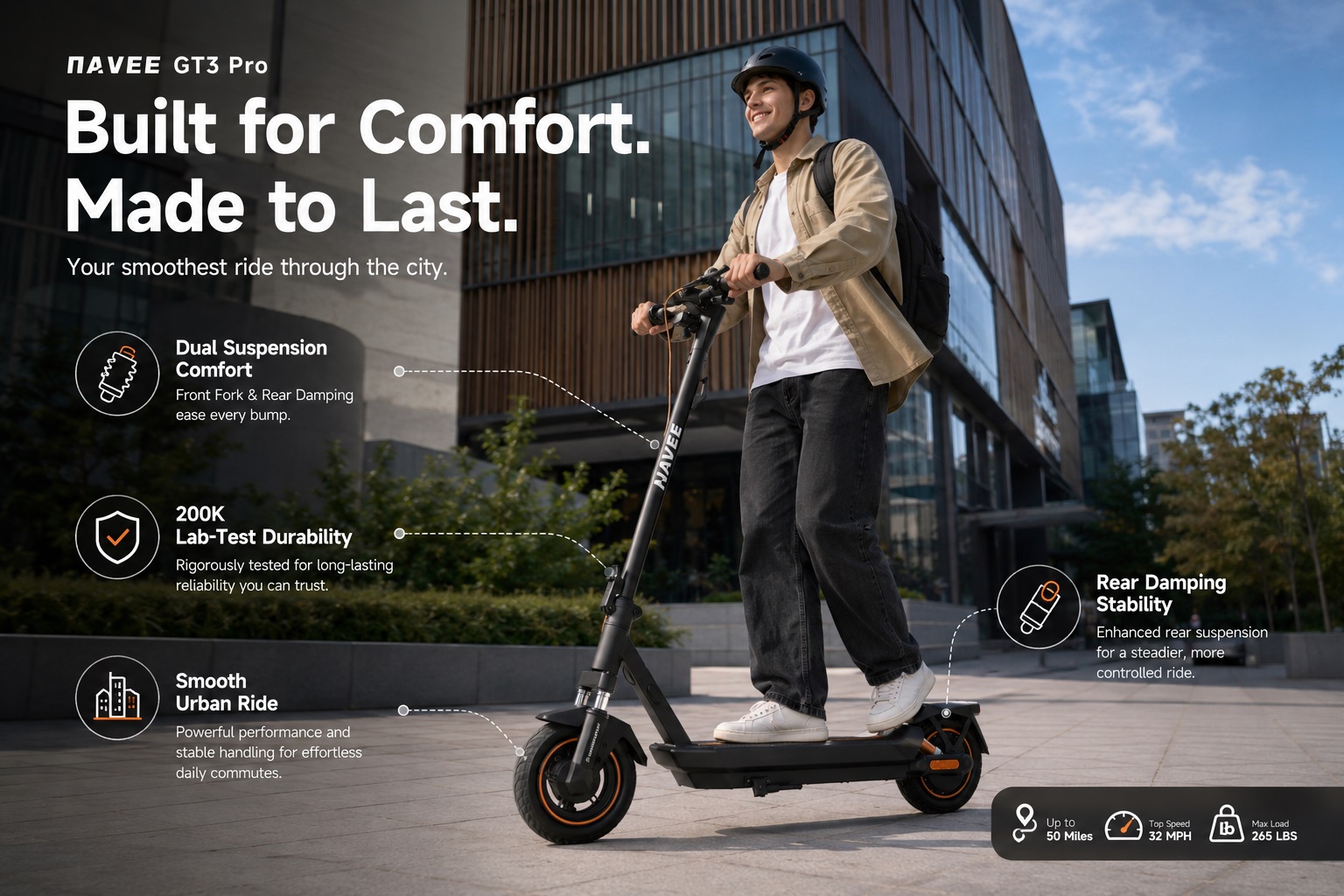
That’s where NAVEE models tend to feel reliable. Acceleration is generally smooth rather than abrupt, which makes a difference in crowded areas. Braking systems are designed to feel controlled, not jerky. And perhaps most importantly, the scooters are built to handle everyday terrain—think uneven pavement, small inclines, and occasional bumps.
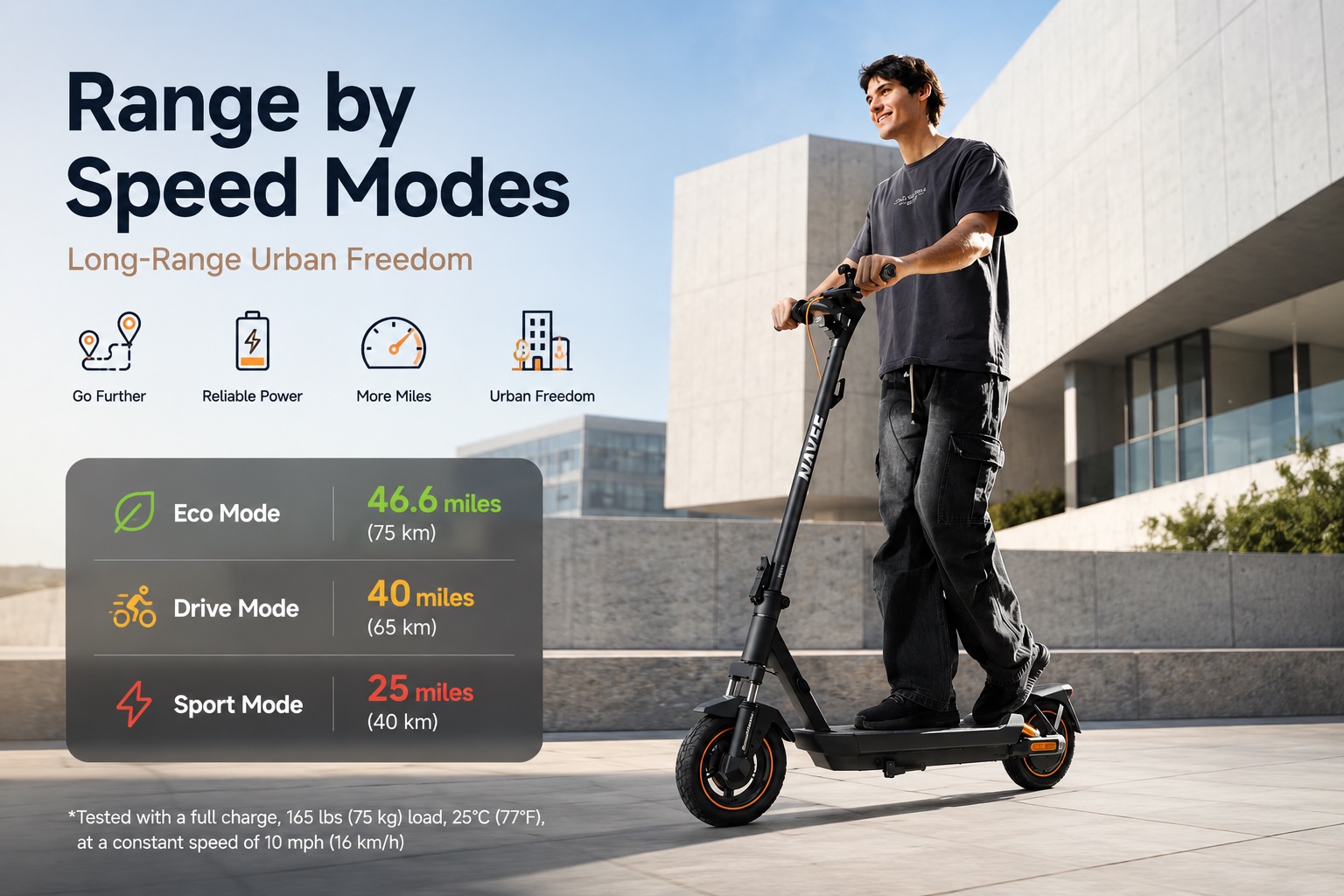
Battery performance is another key factor. While exact ranges vary depending on the model and riding conditions, the goal is clear: provide enough range for daily commuting without constant recharging anxiety. For most urban riders, that means being able to complete multiple trips before needing to plug in.
Real-World Usability
Specs on paper only tell part of the story. What really matters is how a scooter fits into your day. Can you quickly fold it before stepping into a café? Does it feel manageable when you need to carry it up a flight of stairs? These are the moments where design decisions become tangible.
With NAVEE, usability seems to be a consistent theme. The scooters are generally designed with commuters in mind—people who aren’t just riding for fun, but relying on their scooter as part of their daily routine.
Lighting systems, for example, play a bigger role than many expect. Riding at dusk or early morning demands visibility, and integrated lights can make a meaningful difference in both safety and confidence. Similarly, intuitive control layouts help reduce distractions, allowing riders to stay focused on the road.
A Closer Look at Everyday Scenarios
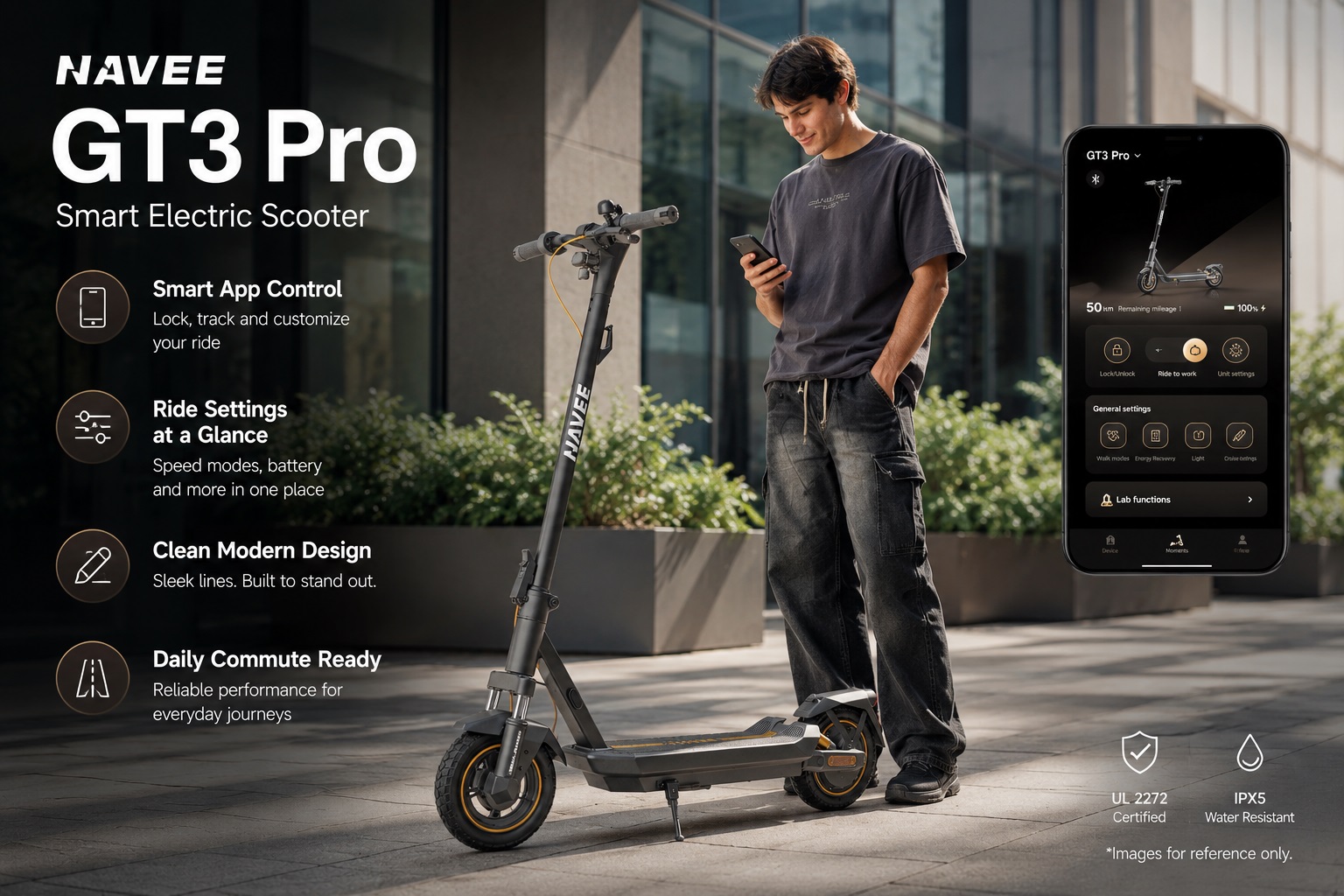
Imagine a typical weekday. You leave your apartment, unfold your scooter, and glide through side streets to avoid traffic. The ride is smooth enough that you don’t feel fatigued by the time you arrive at work. Later, you use the same scooter for a quick lunch run or an evening errand.
This kind of flexibility is where electric scooters truly shine, and it’s exactly the use case that NAVEE seems to target. Instead of designing for extreme performance scenarios, the focus is on reliability across everyday situations.
Even weekend use feels natural. Whether it’s exploring a nearby park or meeting friends across town, the same scooter adapts to different contexts without feeling out of place.
Comparing the Experience
It’s worth acknowledging that the electric scooter market is crowded. Many brands offer similar specifications, and at first glance, it can be difficult to tell them apart. But the differences tend to emerge over time—through repeated use, varying conditions, and daily wear.
What distinguishes NAVEE is less about headline-grabbing features and more about consistency. The scooters are designed to be dependable rather than flashy, which often translates to a better long-term experience.
For riders who prioritize practicality, this approach can be more valuable than chasing the highest speed or the most advanced feature set. After all, the best scooter is the one you actually enjoy using every day.
Thoughtful Details That Add Up
Sometimes, it’s the smaller touches that leave the biggest impression. A stable kickstand, a responsive throttle, or a display that remains visible in bright sunlight—these elements don’t always make it into product headlines, but they shape the overall experience.
With NAVEE, there’s a sense that these details aren’t afterthoughts. Instead, they’re integrated into the design from the beginning, contributing to a more cohesive and user-friendly ride.
Another aspect worth mentioning is portability. In cities where space is limited, being able to fold and store your scooter easily can make a significant difference. NAVEE models typically aim to strike a balance between sturdiness and manageable weight, which is crucial for everyday use.

Who Is It For?
Not every scooter is built for every rider, and that’s a good thing. The question is whether a particular brand aligns with your needs.
NAVEE scooters are especially well-suited for:
– Daily commuters looking for a reliable alternative to public transport
– Urban residents who need a compact, easy-to-store mobility option
– Riders who value comfort and stability over extreme speed
– Anyone seeking a practical solution for short to mid-range travel
They may not be aimed at thrill-seekers or off-road enthusiasts, but for everyday city use, they hit a practical sweet spot.
Have A Bigger Picture of Navee
Electric scooters are part of a broader shift toward more flexible, sustainable urban mobility. As cities continue to evolve, the demand for compact, efficient transportation options is only likely to grow.
In that landscape, brands like NAVEE play an important role. By focusing on usability and real-world performance, they contribute to making electric scooters a viable option for a wider range of people.
It’s not about replacing every other mode of transport, but about offering an alternative that fits seamlessly into modern urban life.
A Final Thoughts on NAVEE
Choosing an electric scooter isn’t just about specs—it’s about how the scooter fits into your daily rhythm. The best models are the ones that feel intuitive, reliable, and easy to live with.
That’s where NAVEE makes a compelling case. By prioritizing practical design and consistent performance, it offers scooters that don’t just look good on paper, but actually work well in the real world.
For anyone navigating the complexities of city life, that kind of reliability can make all the difference—turning everyday travel from a chore into something a little more effortless.